

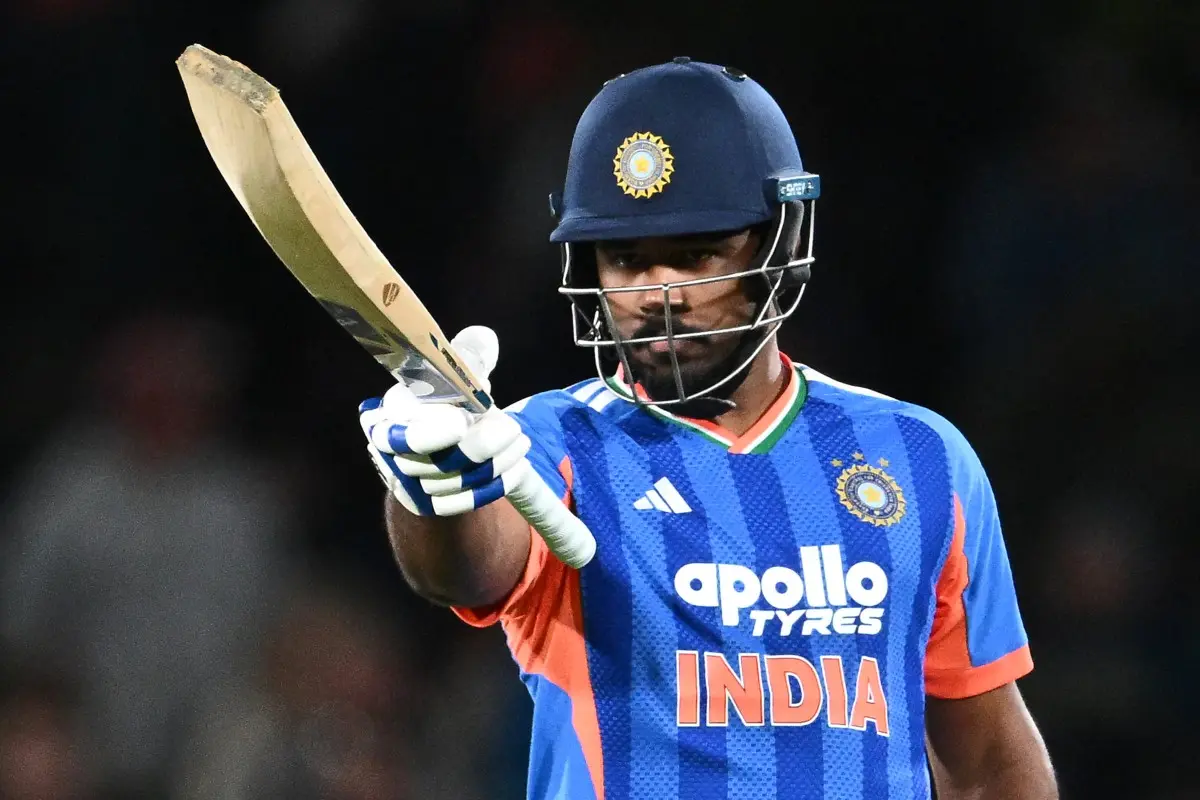
Christchurch, New Zealand – India overcame a spirited New Zealand fightback after a blazing start to secure a thrilling four-wicket victory in Christchurch on Thursday, seizing a crucial 1-0 lead in the five-match T20 International series. The encounter at Hagley Oval was a statistical landmark, witnessing New Zealand register their highest home total against India, 225-4, only for India to successfully complete their highest-ever T20I run chase, surpassing a daunting 226-run target with four balls to spare. This monumental chase underscored the evolving dynamics of T20 cricket, where no target, however formidable, is truly safe.
The match, played under clear skies and on a pitch renowned for its batting-friendly characteristics, delivered an exhilarating spectacle of power-hitting and strategic resilience. India’s pursuit, orchestrated initially by a blistering opening partnership between Sanju Samson and Abhishek Sharma, navigated a tense mid-innings wobble before Shreyas Iyer’s composed innings and Naman Dhir’s ice-cool finishing touches guided the visitors to an emphatic victory in 19.4 overs. The result not only provided an immediate psychological advantage to India but also set a high benchmark for the remainder of the series, promising more high-octane cricketing action.
Context and Pre-Match Build-up
The bilateral T20I series between New Zealand and India carries significant importance for both nations, serving as a crucial platform for player assessment and strategic fine-tuning ahead of future ICC tournaments. For India, the series is an opportunity to test their bench strength, integrate new talents, and solidify their core T20 squad. Coming off a recent home series victory, India arrived in New Zealand with confidence, though historically, touring teams often face unique challenges adapting to the fast, bouncy pitches and diverse weather conditions characteristic of New Zealand.
New Zealand, on the other hand, aimed to assert their dominance on home turf. Known for their competitive spirit and tactical acumen, the Blackcaps sought to leverage local conditions and their experienced campaigners to gain an early advantage. The Hagley Oval in Christchurch, a venue that has increasingly become a staple for international cricket, was expected to offer a true surface, conducive to high scores, setting the stage for an explosive opener. The build-up focused on key player matchups, particularly between India’s formidable batting lineup and New Zealand’s versatile bowling attack, alongside the home team’s own explosive top order.
New Zealand’s Record-Breaking Innings: A Display of Aggressive Batting
Having won the toss, India captain Shreyas Iyer elected to bowl first, a decision often made in T20s to allow the chasing side to assess the target and manage the run rate. However, New Zealand’s openers, Tim Seifert and Finn Allen, had other plans, exploiting the favourable conditions and a flat pitch to launch a ferocious assault from the outset. Their aggressive approach immediately put India’s bowlers under pressure, signalling the kind of high-scoring encounter that was to unfold.
Finn Allen, in particular, was in destructive form, blasting 45 runs off just 24 deliveries. His innings was laced with five boundaries and three towering sixes, showcasing his ability to find gaps and clear the ropes with ease. Seifert provided solid support, ensuring the run rate never dipped. The duo stitched together a rapid 65-run partnership in the powerplay, setting a robust platform for the innings. The first wicket fell in the seventh over when Allen, looking for another big hit, was caught attempting to accelerate further.
The departure of Allen brought Glenn Phillips to the crease, who would go on to play a magnificent, unbeaten innings that defined New Zealand’s total. Phillips, a dynamic middle-order batsman, took charge, displaying a masterful blend of power and precision. He formed crucial partnerships, first with Mark Chapman, who contributed a quick 18 off 10 balls, and later with Bevon Jacobs, who added a valuable 31 runs before being run out in the death overs.
Phillips’ innings was a masterclass in T20 batting. He smashed an unbeaten 82 runs off just 40 deliveries, an innings embellished with eight fours and three powerful sixes. His strike rate of 205.00 ensured that New Zealand maintained a blistering pace throughout the middle and death overs. Phillips expertly manipulated the field, finding boundaries with surgical precision and dispatching any loose deliveries with brute force. His acceleration in the final five overs, particularly against India’s struggling bowlers, propelled New Zealand past the 200-run mark. The hosts ultimately finished on a formidable 225-4, marking their highest T20 score against India on home soil, a testament to their exceptional batting performance.
India’s bowlers, facing an onslaught, struggled to contain the scoring. All five bowlers utilised by Captain Iyer conceded more than 10 runs an over, highlighting the challenging nature of the pitch and the aggressive intent of the New Zealand batsmen. Bhuvneshwar Kumar, making his return to T20 international cricket after four years – his last appearance being against New Zealand in 2022 – endured an expensive comeback, finishing with figures of 0-49 from his four overs. His struggle underscored the pressure faced by the entire bowling unit, which failed to pick up wickets consistently or stem the flow of runs.
India’s Historic Chase: A Test of Nerve and Skill
Chasing 226 runs, a target that historically has been difficult to achieve in T20Is, India needed an exceptional start. They got precisely that, and more. Openers Sanju Samson and Abhishek Sharma launched a breathtaking assault on the New Zealand bowlers, setting a new benchmark for aggression and intent. The duo’s partnership was a spectacle of fearless batting, immediately shifting the pressure back onto the home side.
Sanju Samson, in particular, was in sublime form, showcasing his explosive power and elegant stroke play. He hammered 67 runs off a mere 33 balls, an innings punctuated by eight fours and four magnificent sixes. His strike rate of 203.03 was instrumental in India’s rapid scoring. Abhishek Sharma, not to be outdone, provided excellent support, ensuring that the boundaries flowed from both ends. Their opening stand of 93 runs came in just 6.3 overs, a blistering pace that saw India surge to 94-1 in the powerplay, effectively dismantling New Zealand’s early psychological advantage. This powerplay score was one of India’s highest in T20Is, setting the tone for a potentially record-breaking chase.
However, the chase was not without its moments of tension. New Zealand, despite the early onslaught, fought back admirably in the middle overs, capitalising on a brief period of uncertainty in the Indian batting lineup. They managed to remove three batters in quick succession, triggering a mid-innings wobble that threatened to derail India’s momentum. The dismissals of Abhishek Sharma, followed by Suryakumar Yadav and the aggressive Hardik Pandya, brought a palpable sense of pressure into the Indian dugout. The required run rate began to climb, and the disciplined bowling by New Zealand’s spinners, particularly captain Mitchell Santner, created genuine discomfort for the new batsmen.
It was at this critical juncture that Shreyas Iyer, the Indian captain, stepped up to play a captain’s knock. Displaying remarkable composure and strategic acumen, Iyer anchored the innings, absorbing the pressure while keeping the scoreboard ticking. He scored a vital 42 runs off 28 balls, an innings that included crucial boundaries and intelligent rotation of strike. His partnership with the emerging Naman Dhir was pivotal in wresting back the momentum from New Zealand. Their collaboration stabilised the chase, ensuring that the required run rate remained within reach.
Naman Dhir, a relatively newer face in the international arena, demonstrated incredible maturity and nerves of steel under immense pressure. With the game finely poised and the target still substantial, Dhir took on the responsibility of finishing the innings. He unleashed a late flourish, scoring an unbeaten 42 runs off just 18 deliveries, an innings highlighted by aggressive stroke play and calculated risks. His ability to find boundaries at crucial moments, including two fours and three sixes, ultimately sealed the victory for India. Dhir hit the winning runs in the penultimate over, guiding India to 226-6 in 19.4 overs, completing the highest successful run chase in their T20I history.
Statistical Deep Dive and Historical Context
This match was a statistical goldmine, rewriting several records for both teams.
- New Zealand’s Highest Home Total vs. India: The 225-4 posted by New Zealand surpassed their previous highest T20I total against India on home soil. This achievement underscores the growing potency of their batting lineup, particularly at home.
- India’s Highest Successful T20I Run Chase: India’s chase of 226 was not only their highest but also one of the highest successful chases in T20I history globally. This feat surpasses their previous best, highlighting the exceptional batting depth and aggressive intent within the squad. The previous record for India was 211 runs chased against Sri Lanka in 2009.
- Powerplay Dominance: India’s 94-1 in the powerplay was a significant marker, demonstrating an unprecedented level of aggression and setting a new benchmark for powerplay scoring in high-stakes chases.
- Individual Milestones: Sanju Samson’s explosive fifty was his fastest against a major cricketing nation, cementing his reputation as a dynamic top-order batsman. Glenn Phillips’ unbeaten 82 was a career-best T20I score at home, further establishing him as a linchpin of New Zealand’s middle order.
- Hagley Oval Records: The match saw the highest T20I total ever recorded at Hagley Oval, and subsequently, the highest successful chase. The average first innings score at this venue is usually around 170-180, which was dwarfed by the scores achieved in this encounter.
The match also reinforced the global trend in T20 cricket towards increasingly higher scores and successful chases, driven by powerful batting, smaller boundaries, and flatter pitches. Teams are now more confident in chasing targets well over 200, relying on aggressive starts and deep batting lineups.
Official Responses and Player Perspectives
Following the thrilling encounter, both captains offered their reflections on the game’s extraordinary events.
Shreyas Iyer, India Captain:
"When they [the openers, Samson and Abhishek] click, they set up the game for us, and the rest of us try to steady the ship and finish," Iyer stated, acknowledging the pivotal role of the opening partnership. "Their fearless approach upfront allowed us to manage the middle overs, even when we lost a few quick wickets. That buffer was crucial." He specifically lauded Naman Dhir’s performance under pressure: "He [Dhir] gives us lots of options with his all-round ability. I personally feel the calm and composed nature he showed tonight, it was magnificent. To come in at that stage, with the required rate climbing, and deliver such a fluent innings, speaks volumes of his character and talent. We have a lot of confidence in his ability to finish games." Iyer also subtly hinted at the challenges faced by the bowlers: "We know this was a batting paradise, and our bowlers had a tough night, but we’ll review our plans and come back stronger."
Mitchell Santner, New Zealand Captain:
"They [Indian openers] put us under pressure right from the start. Another big powerplay from them. We were not at our best with the ball initially," admitted Santner, highlighting India’s aggressive opening salvo as a key factor. "We struggled to find our rhythm and length early on, and they capitalised effectively." He praised his team’s mid-innings fightback: "In the middle, we did well to squeeze them, and for a moment, we thought we had them. Our spinners did a great job to pull things back." Reflecting on the narrow defeat, Santner acknowledged the fine margins in T20 cricket: "It was a tight game, and both teams might look at things that could have gone here or there. Perhaps we could have picked up one more wicket or conceded a few less boundaries in the death. But credit to India, they chased it down brilliantly. We’ll learn from this and come back stronger in the next match."
Inferred reactions from key players would echo these sentiments. Sanju Samson would likely express satisfaction with his explosive start and contribution to the record chase, emphasizing the team’s belief in their batting depth. Glenn Phillips would probably reflect on his personal best performance, perhaps also noting the disappointment of not being able to defend such a high total despite his best efforts. Naman Dhir would likely speak about the calm guidance he received from Iyer and his focus on executing the team’s plan under pressure.
Broader Impact and Series Implications
The thrilling victory hands India a crucial 1-0 lead in the five-match series, providing a significant psychological boost. It demonstrates India’s resilience and their ability to chase down mammoth totals, a quality that will be invaluable in future tournaments. The match also highlighted the immense depth in India’s batting lineup, with contributions from various players at different stages of the chase.
For New Zealand, despite posting a record total, the defeat will sting. It exposes potential vulnerabilities in their bowling attack, particularly against an aggressive batting unit on flat pitches. The Blackcaps will need to re-evaluate their bowling strategies, perhaps focusing more on variations, changes of pace, and tighter lines in the powerplay and death overs. Their batting, however, proved its mettle, showcasing their ability to set formidable targets.
The series is now poised for an even more intense contest. Both teams have had their strengths and weaknesses exposed. India will aim to consolidate their lead, while New Zealand will be desperate to level the series. The performances of players like Sanju Samson and Naman Dhir will undoubtedly garner attention from selectors, potentially influencing future squad selections for upcoming T20 World Cups. The match served as a stark reminder of the ever-increasing demands of T20 cricket, where power-hitting, strategic resilience, and nerves of steel are paramount.
The second T20 International is scheduled to be played on Saturday, once again in Christchurch. With the series momentum firmly in India’s favour but New Zealand keen to respond, fans can anticipate another electrifying encounter as both teams vie for supremacy. The high-scoring nature of the first game sets a thrilling precedent, promising more fireworks and captivating cricket for the remainder of the series.
