

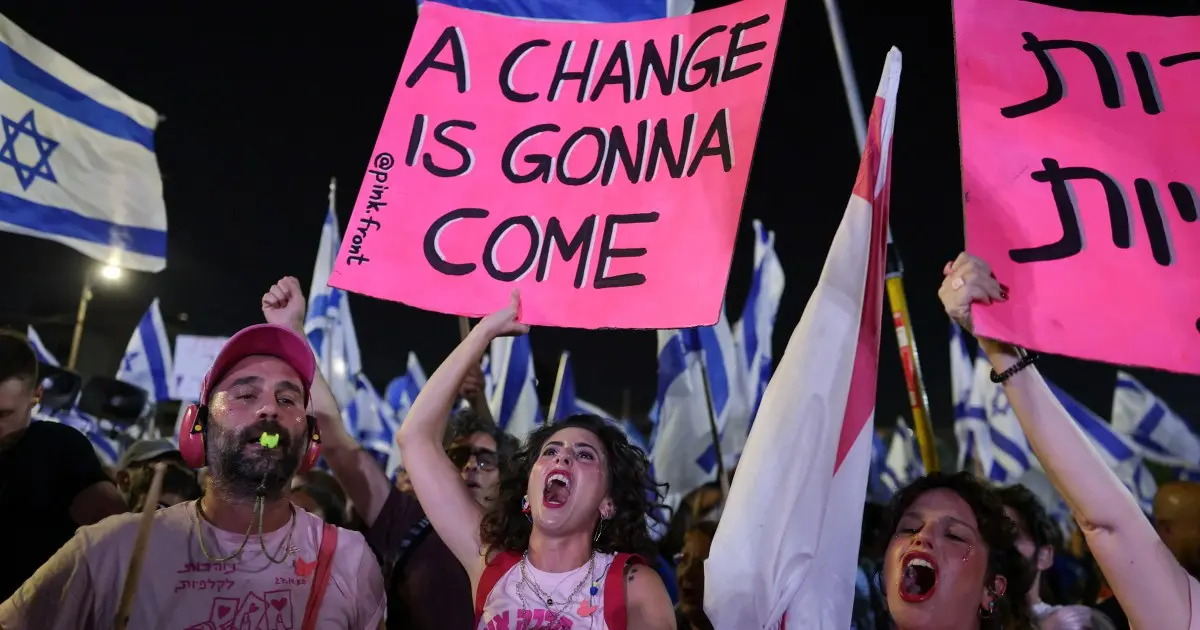
As Israel prepares for its upcoming elections, the discourse often frames the political landscape as a contest between two distinct blocs: one loyal to Prime Minister Benjamin Netanyahu and another united in opposition to his leadership. This binary framing, frequently adopted by external observers and international diplomats, typically suggests that the electoral outcome will dictate fundamentally different visions for the country and, consequently, a significant divergence in governmental policies. However, a deeper examination reveals a striking and often overlooked consensus within the Israeli political spectrum, particularly concerning policies related to Palestinians and the broader regional conflict. The perception that a change in leadership would automatically herald a new era of policy, especially regarding the Israeli-Palestinian conflict, may be a profound misreading of Israel’s deeply entrenched political realities.
The Illusion of Divergent Visions
Across democratic nations, electoral campaigns are characteristically platforms where candidates articulate differing blueprints for national governance, economics, and foreign relations. Voters are presented with choices that, theoretically, lead to distinct policy trajectories. In Israel, while there are certainly internal debates on economic policy, the role of religion in public life, and social issues, the core approach to the Palestinian question, the occupation of the West Bank, and the status of Gaza demonstrates a remarkable degree of continuity across the political divide. This consensus challenges the international community’s frequent assumption that the removal of a particular leader, such as Benjamin Netanyahu, would inherently alter the fundamental direction of Israeli policy towards Palestinians.
Foreign diplomatic circles frequently engage with the "two-state solution" as a potential pathway to peace and discuss reconstruction efforts in Gaza, often positing that the current Israeli leadership is the primary impediment to progress. There is an implicit belief that a post-Netanyahu government would be more amenable to international proposals and willing to make concessions. Yet, the history of Israeli politics suggests that such hopes are largely unfounded, as a broad alignment on security doctrines and territorial claims pervades both the "pro-Netanyahu" and "anti-Netanyahu" camps.
A Broad Political Consensus on Palestinian Policy
The period leading up to these elections has been marked by escalating violence and a heightened focus on human rights concerns. The International Court of Justice (ICJ) is currently deliberating on allegations of genocide, and numerous reports from reputable international and Israeli human rights organizations consistently document what they describe as atrocities and violations of international law. One might reasonably assume that such grave accusations, coupled with the immense human cost of the ongoing conflict, would compel Israeli voters to critically re-evaluate their nation’s actions and their long-term implications, both for Palestinians and for Israel itself. However, public discourse and electoral campaigns rarely reflect this introspection.
Instead, the prevailing sentiment among the vast majority of Israeli voters appears to favor a continued policy of denying Palestinian self-determination, expanding Israeli settlements in the West Bank, maintaining control over Gaza, and asserting military dominance in the region. This is evident in the rhetoric and campaign materials disseminated by candidates across the political spectrum.
Rhetoric Across the Political Divide
The campaign slogans and public statements from candidates in the "pro-Netanyahu" bloc have been particularly stark. Some have openly advocated for the "flattening" of Gaza, the transformation of the occupied West Bank into a Gaza-like scenario, and the assertion that there are "no innocents" among Palestinians. Campaign advertisements have reportedly featured imagery of bulldozers demolishing Palestinian homes, scenes depicting Palestinian suffering, and Israeli bombs exploding in civilian areas, often accompanied by promises of even more assertive military action. Slogans such as "Occupy. Expel. Settle" encapsulate a clear and uncompromising vision for territorial expansion and demographic control.
Crucially, the opposition bloc, despite its stated aim to replace the current government, often echoes similar sentiments regarding Palestinian policy. For instance, Avigdor Liberman, a prominent figure and staunch rival of Netanyahu, has consistently maintained the position that there are "no innocents in Gaza." His party members have been instrumental in advocating for measures that restrict humanitarian aid to Gaza and have openly called for military actions extending to neighboring sovereign nations, such as Lebanon.
Even politicians traditionally categorized as "leftists" within the Israeli political landscape, such as Yair Golan, have demonstrated positions that align with the broader consensus on Palestinian issues. Golan, for example, has criticized international recognition of a Palestinian state and voiced support for Israel’s settlement enterprise in the occupied West Bank, which is widely considered illegal under international law. This illustrates that the political "left" in Israel, as understood by international standards, often holds views that would be considered hardline in many other democracies, especially concerning the future of Palestinian statehood.
A significant indicator of this overarching consensus is the absence of any major opposition party candidate who explicitly supports the establishment of an independent Palestinian state. This foundational tenet of the internationally recognized "two-state solution" has largely disappeared from mainstream Israeli political debate, regardless of which bloc is campaigning.
The Election Agenda: Internal Debates, External Consequences
Therefore, the upcoming elections are unlikely to be a referendum on the "two-state solution" or a debate on the morality of Israel’s long-term occupation and military actions. These critical issues, which dominate international diplomatic discussions, are largely absent from the Israeli ballot. Instead, the electoral contest will likely revolve around internal Israeli issues, such as the extent of Haredi (ultra-Orthodox) Jewish participation in military service, economic policies, and the precise modalities of continued control and "punishment" of Palestinians. The outcome, in essence, may merely change the faces in government, not the fundamental trajectory of state policy towards Palestinians.
The Normalization of Conflict and Its Societal Roots
This raises a profound question: what kind of society overwhelmingly votes for political leaders who openly advocate for actions that international bodies and human rights organizations classify as war crimes or severe violations of international law? The answer lies in the deep normalization of these actions within Israeli society. For decades, the ongoing conflict and the associated military and civilian measures have become so commonplace that not advocating for a strong, uncompromising stance on security and territorial control is often perceived as an anomaly, or even a weakness.
Since its establishment in 1948, following what Palestinians refer to as the Nakba (catastrophe) – the displacement and dispossession of hundreds of thousands of Palestinians – Israeli society has, from its perspective, rarely faced meaningful international consequences for its actions. This perceived impunity extends to land expropriation, military operations resulting in civilian casualties, mass detentions, collective punishment, and, more recently, allegations of genocide.
The consistent message perceived by many Israelis from the international community has been one of tacit acceptance or, at best, rhetorical condemnation without tangible repercussions. This has arguably fostered a belief that Israel operates with exceptional rights, free to pursue its objectives concerning Palestinians without significant external constraints. This belief, according to critics, fuels a vision of "Palestine without Palestinians," where territorial control and security imperatives supersede Palestinian rights and aspirations.
The Call for External Intervention and Consequences
While foreign diplomats and governments may hope that a change in Israeli leadership, particularly the removal of Benjamin Netanyahu, would resolve the core issues, this perspective misses the broader societal and political consensus that underpins Israeli policy. The central problem, from this critical viewpoint, is not merely the individual at the helm, but a deeply embedded societal belief in superior rights and an unchallenged ability to act as it deems fit concerning Palestinians.
For too long, Israel has, from this perspective, operated under a de facto license to act without facing significant international accountability. The argument put forth by critics is that genuine change is unlikely to emanate from within the country’s political system alone, given the widespread consensus on these fundamental issues. Instead, substantive policy shifts, it is argued, can only be catalyzed by external pressure in the form of meaningful consequences.
One frequently cited mechanism for such external pressure is the implementation of wide-ranging sanctions. These could be economic and political measures designed to isolate Israel, making it unequivocally clear that no nation possesses an exceptional right to commit alleged atrocities or violate international law without facing severe repercussions. The objective of such sanctions would be to alter the cost-benefit analysis for Israeli policymakers and the public, compelling a re-evaluation of current policies.
Broader Implications and the Future
Regardless of which political bloc ultimately prevails in the Israeli elections, the critical analysis suggests that the international community must move beyond its traditional policy of silence, rhetorical condemnations, and accommodation. The current trajectory, if left unchecked, risks further entrenching a status quo that denies Palestinian rights, perpetuates conflict, and undermines international legal frameworks. The "Occupy. Expel. Settle" slogan, far from being mere campaign rhetoric, is presented as a stark promise that, without significant external intervention, both "blocs" are likely to continue fulfilling, leading to continued regional instability and human suffering. The implications extend beyond the immediate conflict, impacting global norms of human rights, international law, and the prospects for peace in one of the world’s most volatile regions.
