

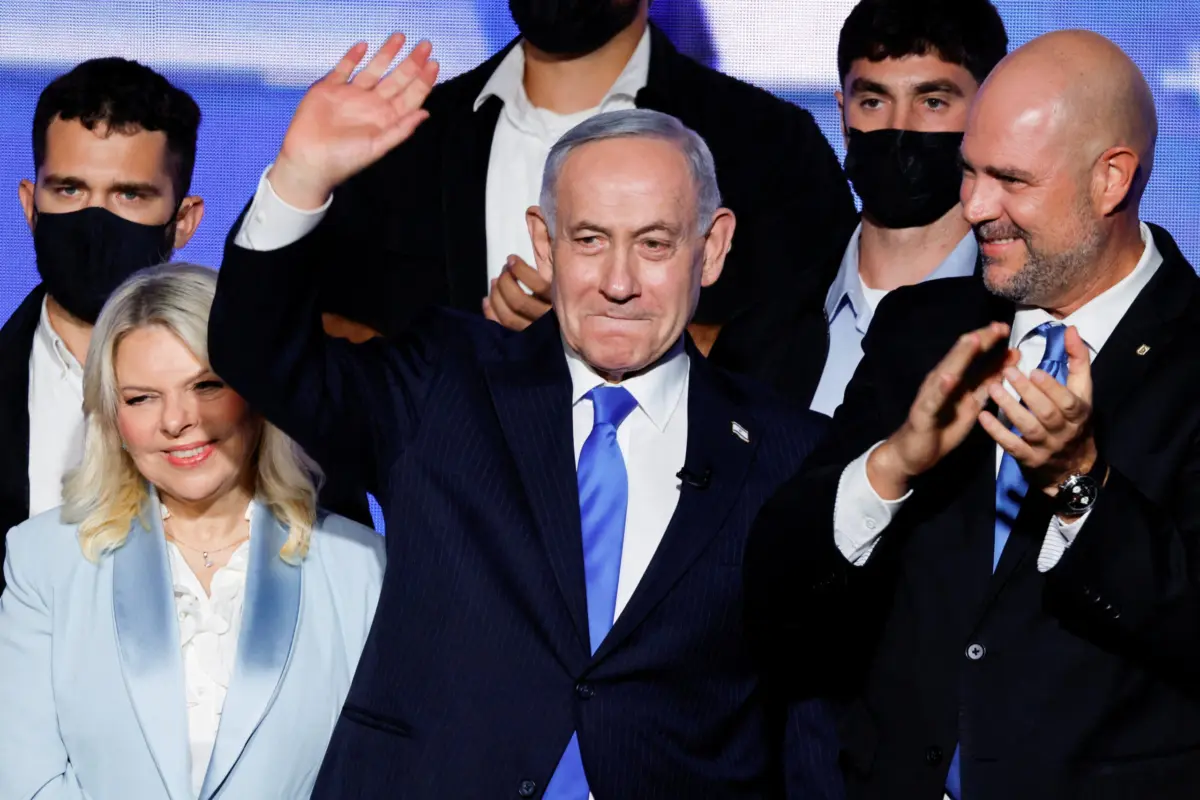
To his supporters, he is known as “King Bibi”; but to his opponents, he is the king of security failures and corruption. Disputes over names aside, what is not in question is that Benjamin Netanyahu, Israel’s longest-serving prime minister, has left an indelible mark on the country’s institutions, politics, and social attitudes during a decades-long career that has been defined by Israel’s pronounced lurch to the right. As he seeks re-election in Israel’s October 27, 2026, polls, analysts contend that his most enduring domestic legacy may be the very right-wing, militaristic opposition that he has inadvertently helped to create and now confronts.
Early Political Formations and the Rise of a Right-Wing Voice
Born in Tel Aviv in 1949, Benjamin “Bibi” Netanyahu entered Israel’s central political stage in the early 1990s, quickly establishing himself as a formidable voice for the right-wing Likud party. His ascent coincided with a period of intense national debate surrounding potential peace deals with the Palestinians and Syria, following the historic Oslo Accords initiated by Prime Minister Yitzhak Rabin. Netanyahu capitalized on and actively fueled public anger and skepticism towards these negotiations, articulating a strong stance against territorial concessions and emphasizing national security above all else. His rhetoric resonated deeply with a segment of the Israeli populace wary of the peace process, laying the groundwork for his future political dominance.
The political climate of the mid-1990s was fraught with tension, marked by passionate advocacy for and fierce opposition to the peace process. Netanyahu, then a prominent opposition leader, was at the forefront of highly charged rallies and demonstrations against Rabin’s government and the Oslo Accords. These gatherings often featured inflammatory imagery and rhetoric. Critically, Israeli political leaders have accused Netanyahu of leading incitement that contributed to the atmosphere motivating the tragic 1995 assassination of then-Prime Minister Yitzhak Rabin. Rabin, a Nobel Peace Prize laureate, was leading negotiations with the Palestine Liberation Organization (PLO) at the time. During these rallies, participants, often spurred by the heated political discourse, depicted Rabin in a Nazi SS uniform and held signs showing him in the crosshairs of a gun, while others openly shouted "traitor."
Netanyahu has consistently denied any direct responsibility for the assassination, maintaining that he did not intend to incite violence. However, Israeli media reports, citing former security officials, indicate that these officials had warned Netanyahu about the escalating rhetoric and its potential dangers prior to the assassination, asking him to temper his language. According to these accounts, Netanyahu refused to comply, a decision that has continued to fuel controversy and debate about his role in the lead-up to one of Israel’s most traumatic political events. The assassination, carried out by an ultranationalist Israeli, Yigal Amir, plunged the nation into a period of profound self-reflection and political upheaval.
The First Premiership and the Consolidation of the Right
Netanyahu’s populist tactics proved successful at the ballot box in the 1996 general election, making him, at 46, Israel’s youngest prime minister at the time. His victory signaled a significant shift in Israeli politics, away from the left-leaning Labor party’s dominance and towards a more nationalist and religious agenda. During his initial term, which lasted until 1999, Netanyahu’s transactional leadership style became evident. He strategically forged alliances and gave prominent positions and influence to extreme-right and religious parties, which had previously held less sway in mainstream Israeli politics. This approach cemented these factions as indispensable components of his broader right-wing coalition, a dynamic that would profoundly shape future Israeli governments and policies.
Under Netanyahu’s leadership, particularly in his later, extended terms, the influence of religious institutions expanded considerably. Religious courts, for instance, saw an increase in their powers, including over civil and even business disputes, traditionally the purview of secular legal systems. State institutions began to accommodate religious agendas more explicitly, and record levels of funding were allocated to ultra-Orthodox schools and institutions. This policy direction, often driven by coalition agreements, led to a more pronounced integration of religious principles into public life and state governance, further solidifying the religious-nationalist bloc’s power.
Legislative Cornerstones: Shaping State Identity and Land Policy
Netanyahu’s political ideology, particularly concerning the identity of the state and the status of Palestinian citizens of Israel, was not merely expressed through rhetoric or policy but was inscribed into law. A pivotal moment came in 2018 with the passage of the controversial Nation-State Basic Law by the Knesset. This legislation, which drew widespread condemnation both domestically and internationally, explicitly states, among other things, that Israel is the exclusive nation-state of the Jewish people. It further declares that the right to exercise national self-determination in the State of Israel is unique to the Jewish people and makes advancing illegal settlements a national priority.
The law immediately sparked outrage among Israel’s Arab minority, who comprise over 20% of the population, as well as human rights organizations. They argued that the law formalized a two-tiered citizenship system, undermining the democratic character of the state. Human rights organizations within Israel, including Adalah – The Legal Center for Arab Minority Rights in Israel, petitioned the High Court of Justice to halt the legislation from going into effect, contending that it violated fundamental human rights principles and the state’s democratic values. However, the petition was ultimately rejected by the High Court, which upheld the law. International experts and human rights groups, such as Human Rights Watch and Amnesty International, frequently cite this law, alongside other Israeli policies and practices, as evidence of Israel committing the crime of apartheid in its treatment of Palestinians, both within Israel and in the occupied territories.
Re-engineering State Institutions and the Security Apparatus
Beyond legislative changes, Netanyahu systematically sought to re-engineer state institutions, including Israel’s security structures, to align them more closely with his political vision and consolidate his power. This involved appointing loyalists and political allies to senior positions across various governmental bodies and security agencies. Concurrently, he frequently clashed with security chiefs whom he perceived as antagonistic or overly independent, leading to tensions within the defense establishment.

These tensions reached a critical point in the aftermath of the devastating Hamas-led October 7, 2023, attack, which triggered Israel’s ongoing and internationally scrutinized war against Palestinians in the Gaza Strip. In the immediate aftermath of the intelligence and operational failures that allowed the attack to occur, Netanyahu deflected blame and responsibility onto the security establishment, rather than accepting accountability himself. This public deflection provoked a strong reaction from within the security apparatus. Ronen Bar, who was the Shin Bet chief in 2023, subsequently sued Netanyahu for defamation, an unprecedented move highlighting the deep rift and mistrust between the political leadership and the security forces during a time of national crisis. This lawsuit underscored the profound implications of Netanyahu’s governance style on the integrity and independence of Israel’s critical institutions.
The Judicial Overhaul: A Battle for Israel’s Democratic Future
A major and highly contentious change to Israeli institutions spearheaded by Netanyahu during his cumulative 19 years in power affected the judiciary. This area is particularly sensitive, given that the judiciary is examining lingering corruption charges against him – three separate cases of bribery, fraud, and breach of trust filed in 2019 – which could potentially see him serve time in prison if he is convicted. Netanyahu vehemently denies any wrongdoing in all these cases.
Under his leadership, particularly in his latest term beginning in late 2022, the Knesset adopted initial legislation aimed at what he termed "judicial reform." This included changes to the composition of the Judicial Selection Committee, a body responsible for appointing judges, with the explicit goal of ensuring greater political influence for the governing coalition. Netanyahu framed these changes as necessary to curb what he often referred to as a "judicial dictatorship" that, in his view, unjustly ruled over elected officials, thereby undermining the will of the people.
However, opponents, including a broad coalition of former security chiefs, legal scholars, business leaders, and civil society activists, unequivocally called these proposed changes a "coup." They argued that the legislation constituted a direct assault on the independence of the High Court of Justice and aimed to grant politicians undue influence over the courts and ministerial legal advisers. The proposals sparked wide-scale, unprecedented protests across Israel, with tens of thousands of Israelis rallying weekly for months, blocking major highways, and engaging in civil disobedience. These demonstrations, among the largest in Israel’s history, reflected a deep societal anxiety about the erosion of democratic checks and balances and the potential for an authoritarian slide. Critics feared that the reforms would weaken judicial review, allow for political appointments to key legal positions, and ultimately shield politicians from accountability, particularly given Netanyahu’s ongoing legal battles.
In line with his broader efforts to subvert independent oversight, Netanyahu made repeated, though ultimately unsuccessful, attempts to fire the attorney general, Gali Baharav-Miara, who had taken a firm stance against aspects of the judicial overhaul and insisted on maintaining legal boundaries for the government. However, he did succeed in dismissing the military’s advocate general under controversial circumstances. This dismissal was reportedly linked to the leaking of a video depicting Israeli soldiers gang-raping a Palestinian detainee. In a further controversial development, the soldiers involved in the incident were subsequently released and cleared of charges, raising significant concerns about military justice and accountability, particularly regarding actions against Palestinians.
Corruption Allegations and International Scrutiny
The shadow of corruption cases has dogged Netanyahu since 2019. The three distinct indictments—Case 1000 (gifts from wealthy benefactors), Case 2000 (alleged quid pro quo with a newspaper publisher), and Case 4000 (alleged regulatory favors for a telecom giant in exchange for positive media coverage)—have been proceeding through the courts for years. These legal battles have been a constant backdrop to his political career, fueling accusations from opponents that his judicial reform efforts were motivated, at least in part, by a desire to evade conviction or even imprisonment. The trials have been protracted, marked by numerous delays and legal maneuvers, and their outcome remains a critical determinant of his personal and political future.
Adding another layer of international scrutiny, Netanyahu is also wanted by the International Criminal Court (ICC) on charges of war crimes and crimes against humanity in Gaza. In May 2024, the ICC Prosecutor Karim Khan announced that he was seeking arrest warrants for Netanyahu and his defense minister, Yoav Gallant, alongside Hamas leaders, for alleged crimes committed during the conflict. This development has profoundly impacted Israel’s international standing and Netanyahu’s personal legitimacy on the global stage, drawing strong condemnations from Israeli officials who reject the ICC’s jurisdiction.
The Enduring Legacy and Future Trajectories
Despite the controversies and legal challenges, Netanyahu’s supporters and allies continue to view him as a leader who delivers on his promises, a strategic genius who has achieved what others could not, particularly in areas of economic stability (prior to recent conflicts) and security, though this latter claim is heavily contested in light of October 7th. They laud his tenacity and his ability to navigate complex political landscapes, often portraying him as a bulwark against external threats and internal divisions.
Conversely, his opponents pledge to undo the damage they contend Netanyahu has caused over the past decades. They point to the pervasive corruption allegations, the exacerbation of social divisions between secular and religious Israelis, and the increasing international isolation of the country as direct outcomes of his prolonged rule. They argue that his policies have eroded democratic norms, weakened vital state institutions, and deepened the conflict with Palestinians.
As Netanyahu campaigns for re-election in 2026, promising his supporters he will complete the overhaul of judicial review and press on with other highly controversial policies, the nation remains deeply polarized. His ultimate domestic legacy, analysts suggest, is not just the shift to the right, but the creation of a deeply entrenched, right-wing, and often militaristic political culture that he now faces both internally and externally. This is a landscape where the lines between state and party have blurred, where religious influence has grown, and where the independence of key democratic institutions has been fiercely contested. But undoing such formative changes, many of which are now enshrined in law or deeply ingrained in the political fabric, may prove to be an extraordinarily difficult task, regardless of future election outcomes. The battle for Israel’s identity and democratic character, profoundly shaped by the Netanyahu era, is far from over.
