

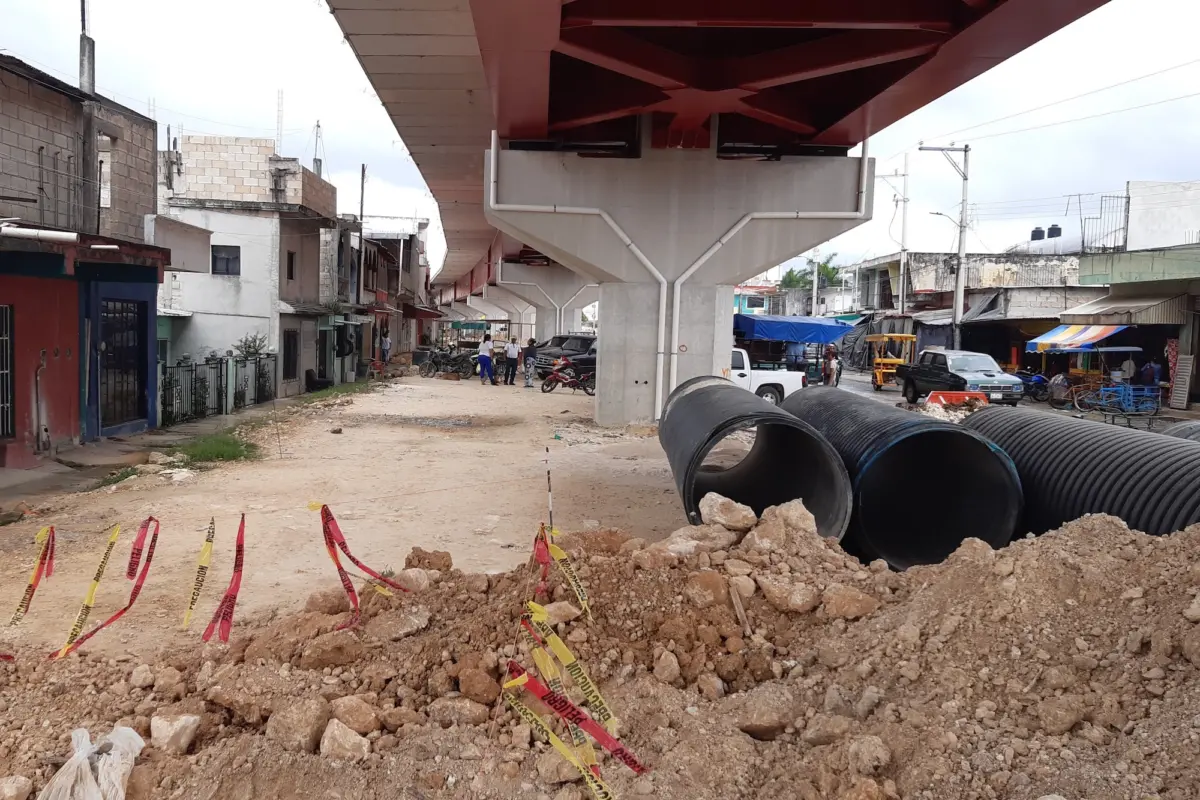
The Maya Train, an ambitious nearly 1,000-mile railway snaking through the dense jungles and ancient heartlands of the Yucatán Peninsula, was inaugurated with the promise of transforming one of Mexico’s most impoverished regions into a global tourism powerhouse. Conceived by former President Andrés Manuel López Obrador as a "monumental work" of social justice, the project was designed to connect the high-density resort hubs of Cancún and Playa del Carmen with secluded archaeological sites and inland Mayan communities. However, nearly three years after its full-scale rollout in late 2024, a growing body of evidence from economists, environmentalists, and local residents suggests that the project has failed to meet its lofty objectives, leaving in its wake a trail of environmental degradation, fiscal instability, and social unrest.
A Chronology of Ambition and Controversy
The genesis of the Maya Train dates back to July 2018, immediately following the landslide victory of Andrés Manuel López Obrador (AMLO). Within a month of his election, the project was announced as a cornerstone of his administration’s National Development Plan. The vision was grand: a 1,554-kilometer (965-mile) loop across five states—Chiapas, Tabasco, Campeche, Yucatán, and Quintana Roo—serviced by modern, high-speed trains.

By 2019, the government initiated a series of indigenous consultations. While officials touted these as a success, the United Nations High Commissioner for Human Rights (OHCHR) issued a stern critique, stating the process failed to meet international standards for free, prior, and informed consent. Despite legal challenges and environmental stay orders, construction began in earnest in 2020, overseen largely by the Mexican military (SEDENA).
The project faced a race against time, with the administration invoking national security provisions to bypass environmental impact assessments and speed up construction. This urgency culminated in the phased inauguration of the line throughout 2024. By December of that year, the "monumental work" was declared fully operational, even as several stations and secondary infrastructure remained incomplete.
The Economic Disconnect: From Boom to Recession
One of the most striking aspects of the Maya Train is its staggering cost. Initially pitched to the Mexican public with a price tag of approximately US$8.5 billion, the project’s budget ballooned during construction. According to data from the Mexican Institute for Competitiveness (IMCO), the final cost surpassed US$30 billion—a nearly 250 percent increase. This capital was diverted from other federal priorities, raising concerns about the long-term fiscal health of the nation’s infrastructure funds.

While construction provided a temporary artificial boost to regional GDP, the long-term economic "spillover" promised to local communities has largely failed to materialize. In Quintana Roo, home to the project’s most active stretches, economic activity grew by 13 percent in 2023 during the height of construction. However, as the workers departed, the state’s economy plummeted into a recession, contracting by more than 9 percent in the first half of 2025.
Economists point to the "extractive" nature of the construction labor force as a primary cause. "Most of the skilled labor was brought in from central and northern Mexico," explains Javier Becerril, an economics professor at the Autonomous University of Yucatán. "These workers were paid well, but they sent their wages back home to their families in other states. The local communities saw the inflation—doubling or tripling prices for food and housing—without the benefit of long-term wealth accumulation."
Operational Realities: Empty Carriages and High Costs
The operational phase of the Maya Train has been marked by underwhelming ridership and logistical hurdles. The government’s initial projections suggested the railway would handle approximately 74,000 passengers daily. However, data from 2025 and 2026 indicates an average of only 3,320 daily users—less than 5 percent of the target.

Several factors contribute to this shortfall. First is the inconvenient location of the stations. Due to local resistance and the complexities of urban land rights, many stations—such as those serving Mérida and Campeche—were built on the extreme outskirts of cities rather than in downtown hubs. For a tourist or a local commuter, the cost and time required to take a taxi to the station often outweigh the benefits of the train itself.
Second is the pricing structure. A one-way ticket between Mérida and Cancún costs roughly 489 Mexican pesos (approximately US$28), which exceeds the daily minimum wage for many local workers. "The train is a luxury most of the people it was built for cannot afford," says Hector Hernández, an engineer who worked on the rail line. "It runs practically empty because it serves neither the budget-conscious local nor the convenience-seeking tourist."
Environmental Devastation: Perforating the Aquifer
The most enduring criticism of the Maya Train concerns its ecological impact. The Yucatán Peninsula sits atop a unique "karst" topography—a porous limestone shelf that houses the world’s largest underground river system. This aquifer is the sole source of fresh water for the region and contains thousands of cenotes (natural sinkholes) and caves of immense archaeological and biological value.

Environmental groups, including Greenpeace Mexico, estimate that at least 7 million trees were felled to clear the path for the tracks. More concerning, however, is the structural damage to the underground caves. To support the weight of the trains over the fragile limestone, engineers drove thousands of steel and concrete pylons directly into the cave systems.
"You cannot recover a cave system that has been perforated or filled with concrete," says Guillermo Christy, an industrial engineer and environmental activist. "These formations took millions of years to create. By driving pylons through them, the government has risked contaminating the aquifer with heavy metals and disrupting the flow of underground rivers that sustain the jungle."
Furthermore, the construction has disrupted the biological corridors of endangered species, such as the jaguar. While the government installed "wildlife crossings," experts argue these are insufficient to mitigate the fragmentation of the habitat caused by a 1,000-mile barrier of steel and concrete.

Social Fallout: Insecurity and the Erosion of Peace
Beyond the environmental and economic data lies a more somber social reality. Indigenous leaders, such as Pedro Uc of the Múuch’ Xíinbal Mayan community, argue that the train has acted as a conduit for organized crime. Previously isolated or peaceful hamlets have seen a surge in violence, abductions, and extortion. In the state of Yucatán, traditionally one of Mexico’s safest regions, crime rates spiked by 50 percent in 2026 compared to the previous year.
"The government promised us schools, hospitals, and running water," Uc says. "Instead, the train brought insecurity and ‘bodies in bags.’ The infrastructure for the train is modern, but the villages it passes through still don’t have consistent electricity."
The militarization of the project has also drawn international scrutiny. By placing the construction and management of the railway under the Secretary of National Defense (SEDENA), the government effectively shielded the project from standard transparency requirements and civil oversight. The United Nations has repeatedly raised concerns that this top-down, military-led approach marginalized the very indigenous populations the project was ostensibly designed to help.

Implications and the "White Elephant" Legacy
As the Maya Train enters its third year of full operation, it is increasingly being labeled a "white elephant"—a project whose maintenance costs far exceed its utility or revenue. With ticket sales failing to cover even the fuel costs of the locomotives, the Mexican taxpayer is left to subsidize the railway’s daily operations indefinitely.
Urbanists like Carlos Veloz argue that the failure stems from a lack of "comprehensive planning." The decision to move sections of the track 5 kilometers inland to appease hotel owners in the Riviera Maya, for example, rendered the train useless for the thousands of hotel workers who might have used it for their daily commute.
The lessons of the Maya Train are now being studied by international observers as a cautionary tale of "megaproject" development. The consensus among critics is that the project prioritized political optics and speed over technical feasibility and social integration.

"What we can learn is that you must listen to the experts and the locals from the beginning," reflects Hernández. "When a project is driven by a single political will rather than by the needs of the soil and the people, you end up with a $30 billion train that goes nowhere."
The future of the Yucatán Peninsula now remains tethered to this iron loop. While the government continues to hope that tourism will eventually catch up to the infrastructure, the environmental scars and social divisions carved by the Maya Train suggest that the "transformation" of the region has come at a price far higher than any ticket could cover.
