

Beirut, Lebanon – The relentless confluence of a protracted economic collapse and escalating conflict has cast a profound shadow over Lebanon, disproportionately impacting its most vulnerable citizens, particularly neurodivergent individuals and their families. For Lena Kouyoumjian, a resilient mother navigating immense personal loss and national upheaval, the daily struggle to provide a stable environment for her autistic, non-verbal daughter, Vana, has become a microcosm of the broader crisis gripping the nation. Having lost her husband to COVID-19 in 2020, Lena relocated to her parents’ home in Mazraat Yachouh, a village a mere 20 minutes from Beirut, seeking the essential support system she needed. This move, while challenging for the energetic and outgoing Lena, was a necessary step to ensure Vana, now 20, received the care she required.
Vana’s journey with autism began manifesting at two years old, characterized by her inability to communicate verbally. Her mother, Lena, has since dedicated herself to understanding Vana’s nuanced expressions and ensuring her well-being. Like many autistic and neurodivergent individuals, Vana thrives on a supportive, stable environment and a highly structured routine. These fundamental needs have been severely undermined by the cascading crises that have enveloped Lebanon, particularly since October 2023. The widespread bombings across the country, coupled with an economic crisis that continues its destructive trajectory, have created an unprecedented state of flux and anxiety.
When Israel intensified its attacks on southern Lebanon in March, Lena, drawing on her professional experience as a trainer for children with disabilities, immediately recognized the dire implications for Vana. "Any sudden change in routine, loud noises, fear, or uncertainty can increase their anxiety and make them feel unsafe," Lena conveyed to Al Jazeera, her voice tinged with concern. "I can see this in my daughter. Since the situation became more difficult, she has become more anxious and sensitive to the changes happening around her." This heightened sensitivity is a hallmark of autism, where sensory processing differences mean that environments perceived as merely stressful by neurotypical individuals can become overwhelmingly distressing for neurodivergent people.
Understanding Neurodivergence in a Crisis Zone
Autism spectrum disorder (ASD) and attention-deficit/hyperactivity disorder (ADHD) are neurodevelopmental conditions that present with a wide range of symptoms, often including sensory issues and emotional dysregulation. These conditions can co-occur, sometimes referred to as AuDHD, where traits from both are observed. In Lebanon, as in many parts of the world, individuals with these conditions frequently face societal stigma stemming from a lack of comprehensive understanding and awareness. The ongoing conflict has not only exacerbated existing psychological issues across the general population, but it has rendered neurodivergent individuals even more vulnerable due to their inherent need for consistent support, predictable routines, and stable environments. The disruption of these elements can lead to significant regression in learned skills and an escalation of challenging behaviors.

Lena candidly shared the immense personal toll of caregiving in such circumstances: "Being a parent of an an autistic child isn’t something every parent can handle. A challenge I often face is deciding the amount of time and energy I should allocate to my child." This sentiment resonates deeply with countless families in Lebanon, where the societal safety nets are fraying, leaving caregivers to bear an increasingly heavy burden.
Lebanon’s Dual Crises: A Vicious Cycle
The challenges faced by Lena and Vana are inseparable from Lebanon’s broader predicament. The country has been embroiled in a severe economic crisis since late 2019, triggered by decades of corruption, mismanagement, and an unsustainable financial system. The Lebanese pound has lost over 90% of its value against the US dollar, plunging an estimated 80% of the population into poverty, according to the United Nations. Hyperinflation, which potentially could reach 17% this year, has decimated savings, eroded purchasing power, and made essential services, including healthcare and specialized education, unaffordable for the vast majority.
This economic devastation created a fertile ground for the current mental health crisis. With the onset of hostilities in October 2023, following the broader regional conflict, the situation intensified dramatically. Southern Lebanon has borne the brunt of Israeli attacks, leading to mass displacement, destruction of infrastructure, and an omnipresent sense of dread. Even areas further north, like Mazraat Yachouh, experience the reverberations through sonic booms from warplanes, distant explosions, and the constant threat of escalation. This creates an environment of pervasive stress, fear, and uncertainty that is profoundly detrimental to anyone, but especially to those whose neurological profiles make them acutely sensitive to environmental shifts.
The Fragile Support System: NGOs and Financial Barriers
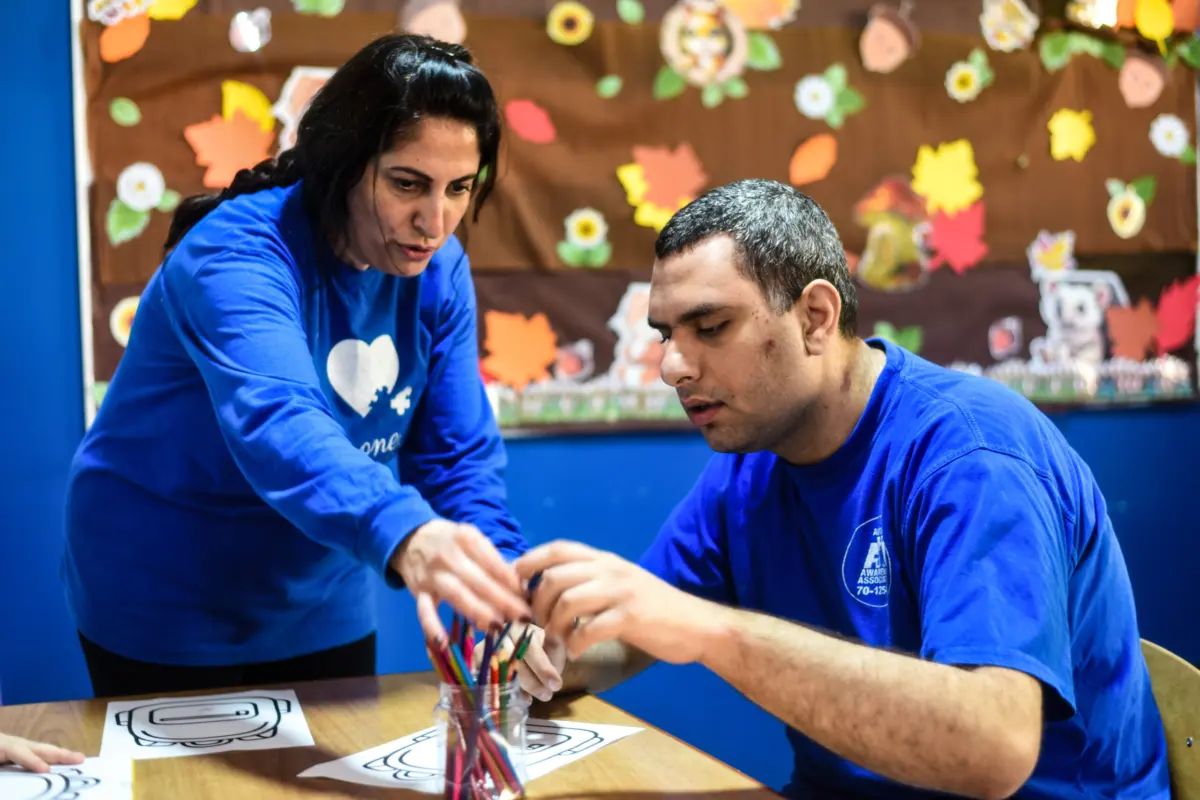
In the absence of robust governmental support, non-governmental organizations (NGOs) have historically played a crucial role in providing specialized care in Lebanon. The Autism Awareness Association (AAA), co-founded in 2015 by Ghada Hayek Makhoul and other parents of autistic children, stands as a testament to these grassroots efforts. Based in Antelias, outside Beirut, AAA serves as an alternative school for young autistic individuals, offering vital classes and therapies. Vana has been a beneficiary of AAA’s services for six years, benefiting from their structured approach and specialized expertise.

However, even these essential services are not immune to the economic ravages. The rising costs of operation, coupled with the diminishing financial capacity of families, have created insurmountable barriers. "Even transportation to her centre became very difficult, especially with the increasing financial challenges. At times, it became impossible for her to go, so she had to stay home," Lena explained, highlighting how a seemingly minor logistical issue can disrupt a neurodivergent person’s critical routine. AAA’s services come at a significant cost of $700 per month for children attending five days a week – an astronomical sum for most Lebanese families living below the poverty line.
Ghada Hayek Makhoul articulated the broader challenge faced by AAA: "Many people don’t know what autism really is. They don’t know the spectrum; how it can vary from mild to moderate to severe." This lack of awareness compounds the difficulties, as societal understanding and acceptance are critical for effective integration and support.
Sensory Overload: The Unseen Battle of War
The war’s impact on neurodivergent individuals extends far beyond routine disruption; it is a visceral, sensory assault. Ghada’s son, Anthony, a calm 27-year-old autistic, non-verbal man, exemplifies this. While unable to articulate his distress verbally, his actions speak volumes: he covers his ears when overwhelmed by sensory discomfort. During the conflict, Lebanon has been subjected to a harrowing cacophony of sounds: the concussive blasts of Israeli bombs, the piercing sonic booms of warplanes overhead, and the constant hum of drones.
"So, imagine the drones all the time [for autistic people], the bombs, and the vibration of the bombs… all of this that we were hearing, so of course it affected him a lot," Ghada recounted, her voice heavy with concern. Anthony’s heightened sensitivity means he can no longer tolerate the news on television; he switches it off and removes the remote control, finding it too "triggering." Beyond auditory stimuli, the generalized tension and anxiety permeating the environment are also profoundly sensed by Anthony, even if his cognitive understanding of the geopolitical complexities is limited. Ghada observed an alarming regression in his behavior, particularly his aversion to activities he once loved. "He doesn’t want to go into a pool any more. He used to love the water. And now, he doesn’t want to go into the pool any more," she lamented, bewildered by the change but attributing it to the pervasive fear and environmental shifts. "I don’t know what changed. Because it’s outside? Because of the sound? I don’t know."
Mental Health Support: A Luxury Beyond Reach

The economic crisis has not only hampered NGOs but has also led to a significant "brain drain" of skilled professionals—therapists, psychologists, and special educators—who have sought better opportunities abroad. This exodus further depletes an already stretched support infrastructure. Ghada highlighted this critical challenge: "We need more trained staff, and we also need to keep the staff that are leaving the country. So, we need to have better salaries, but we cannot afford it, because we will have to increase the load on the parents. Things are in crisis mode for everybody during the war."
Private mental health consultations, if accessible, are prohibitively expensive, often exceeding $100 for a single 50-minute session. While some NGOs endeavor to provide free therapy, their capacity is limited. Nour Toukan, a public health researcher at Enmaeya, a media platform focusing on sustainable development, underscored this grim reality: "At the moment, care for autism or even for ADHD is very much an out-of-pocket expense."
Government initiatives, while present, fall far short of addressing the immense need. The National Disability Allowance, launched in 2023 with support from the European Union and UNICEF, offers a mere $40 per month – a sum insufficient to cover even basic necessities in Lebanon, let alone specialized care. Furthermore, while individuals with autism can obtain a personal disability card from the Ministry of Social Affairs, making them eligible for this meager support, those with ADHD are not accorded the same recognition or aid. This disparity highlights systemic gaps in governmental understanding and provision for the full spectrum of neurodivergent conditions.
The Ministry of Public Health’s National Mental Health Programme, established in 2014, is striving to bridge these gaps. Dr. Rabih El Chammay, the program’s founder and director, confirmed that a national mental health strategy for children and teenagers is being finalized, informed by national studies on autism and ADHD. "We are meeting with several organizations, particularly organizations representing families of persons with autism, to understand priorities and build momentum for further coordinated action," Dr. Rabih stated. However, he candidly acknowledged the monumental hurdle: "War makes this work more difficult because it can increase support needs while disrupting the services people depend on."
Developmental Regression and Long-Term Implications
The cumulative effect of disrupted routines, economic hardship, and the psychological trauma of war is leading to alarming developmental regression among neurodivergent individuals. Adham Faraj, a 23-year-old psychology student at the Lebanese American University in Beirut, diagnosed with ADHD in 2024, experienced this firsthand when his classes shifted online due to the war. "It’s less engaging, especially if you struggle with attention. You’re less motivated to go out, so you just attend classes from bed," Adham shared, illustrating how the lack of structure and direct engagement can severely impact learning and motivation. He also articulated the constant anxiety over medication costs, noting that while cheaper alternatives might exist, they are not universally affordable, creating a stark class divide in access to essential care.

Rim Ajjour, a psychologist and psychotherapist in Beirut specializing in young people with autism, has observed a troubling loss of skills that neurodivergent individuals had acquired before the war. "With the limited resources available in Lebanon and the shift in people’s priorities, there has been more limited access to therapy," she explained. Despite the escalating costs for clinics, Rim and her colleagues are doing their utmost to maintain accessibility by freezing consultation fees, a testament to their dedication in the face of overwhelming adversity.
The shadow of further escalation looms large. With Israeli attacks continuing in southern Lebanon, which remains partly occupied by Israeli forces despite a US-brokered June ceasefire, the fear of a return to full-scale war is palpable. This constant uncertainty profoundly impacts the mental well-being of all Lebanese, but especially those who rely on predictability and routine. "I don’t know how we’ll be able to take it again," Rim confessed, voicing a sentiment of exhaustion and dread shared by many. The international community, aid organizations, and the Lebanese government face an urgent imperative to recognize and address the specific, heightened vulnerabilities of neurodivergent individuals caught in this complex web of conflict and economic collapse. Without targeted, sustained support, the long-term societal and individual costs will be immeasurable.
