

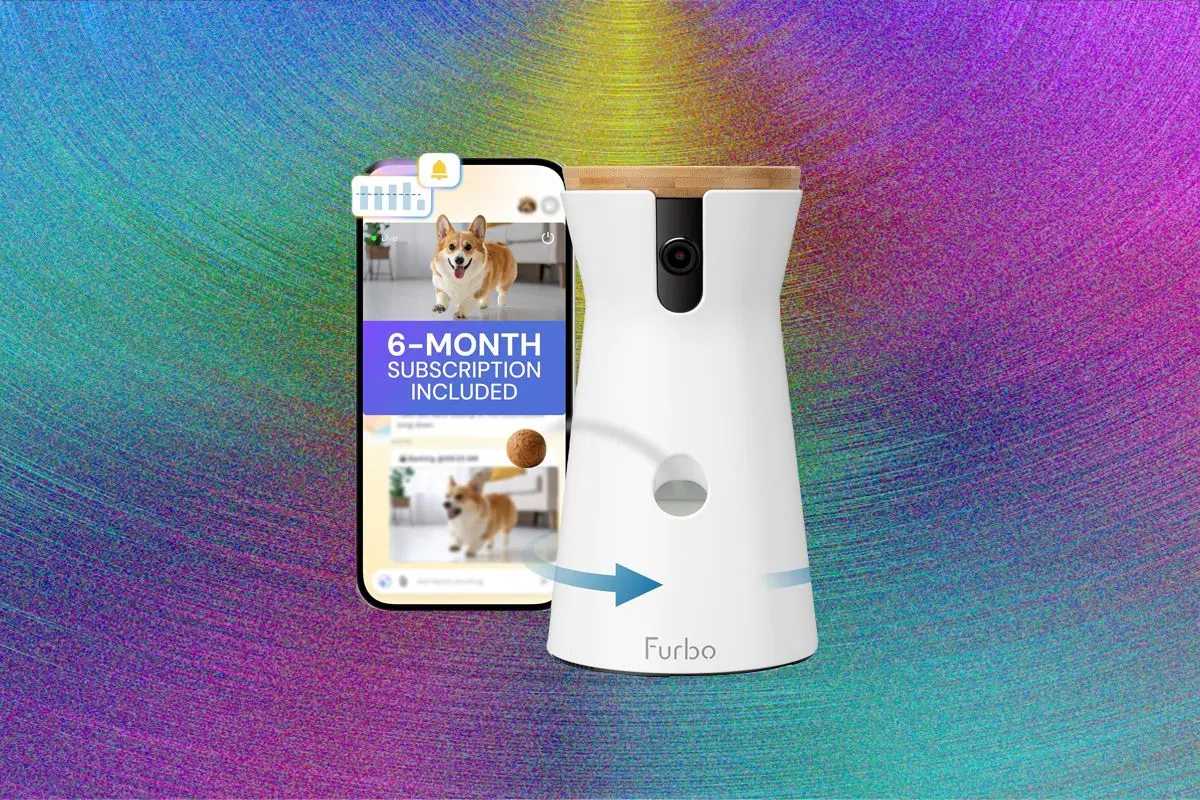
The global pet technology market has undergone a radical transformation over the last decade, transitioning from simple stationary monitors to sophisticated, AI-driven robotic companions. As of 2026, the industry is defined by a dichotomy between ultra-affordable security-focused devices and high-end interactive robots designed to alleviate pet separation anxiety and provide remote enrichment. This evolution reflects a broader trend in the smart home sector, where hardware is increasingly integrated with machine learning and subscription-based software models. Current market evaluations reveal that while hardware capabilities such as 4K imaging and 360-degree mobility have become more accessible, the user experience remains heavily dependent on software stability and the recurring costs of cloud-based ecosystems.

The State of the Pet Monitoring Market in 2026
The contemporary landscape of pet monitoring is no longer restricted to passive observation. Today’s consumers demand interactivity, leading to the rise of three distinct product categories: stationary budget cameras, interactive treat-dispensing hubs, and mobile robotic units. Data from industry analysts suggests that the "pet tech" sector is projected to exceed $20 billion globally by 2030, driven largely by the humanization of pets and the increasing prevalence of remote work-hybrid models.
In this competitive environment, brands such as Enabot, Petcube, and Furbo have emerged as leaders, each carving out niches based on price point and feature density. However, as the hardware matures, the "subscription trap"—where essential AI features like animal recognition and event recording are locked behind paywalls—has become a central point of contention for consumers and tech reviewers alike.

High-End Robotics and AI Integration
At the pinnacle of the current market stands the Enabot Ebo Max FamilyBot, a $600 device that represents the industry’s attempt to merge home security with artificial intelligence. The Ebo Max is marketed not merely as a camera, but as an AI family companion capable of recognizing individual household members and pets, remembering daily routines, and responding to voice commands.
Despite its high-resolution 4K imaging and autonomous navigation capabilities, the transition to such complex hardware has not been without technical hurdles. Early testing cycles for the 2026 models highlighted significant challenges in hardware reliability, specifically regarding docking and charging consistency. While the Ebo Max offers a glimpse into a future where robots autonomously monitor home health and pet well-being, the high price tag remains difficult to justify for many consumers when compared to more stable, lower-cost alternatives.

Bridging the gap between luxury robotics and functional monitoring is the Enabot Ebo Air 2. Retailing at approximately $199, this model focuses on interactivity. It features 2K HD video, two-way audio, and a built-in laser toy. Unlike its more expensive counterparts, the Ebo Air 2 emphasizes "emotional" expression through its front screen and the ability to perform tricks like spinning or zigzagging to engage pets. This segment of the market targets owners of high-energy pets who require active engagement to prevent destructive behaviors during work hours.
The Mid-Range Interactive Segment
Interactive cameras that remain stationary but offer treat-dispensing or play features continue to be a popular choice for cat and dog owners. The Petcube Bites 2 Lite ($80) and the Petcube Play 2 ($75) exemplify this middle ground. The Bites 2 Lite integrates a 1.5-pound kibble container, allowing owners to remotely "toss" treats at varying distances via a smartphone app.

Technical analysis of these devices shows that while the 1080p video feeds and night vision capabilities are standard, the mechanical components of treat dispensers and laser toys are often the primary points of failure. In testing, laser toys—such as the one integrated into the Petcube Play 2—frequently suffer from latency issues, where the delay between the user’s input and the laser’s movement renders the "play" aspect ineffective for faster pets. Furthermore, the placement of these devices is critical; a camera mounted high for a better field of view often results in a laser or treat trajectory that is suboptimal for the pet’s engagement.
Budget Solutions and the Subscription Model
For consumers seeking basic security without the frills of robotics, the budget segment has become increasingly crowded. Devices like the Furbo Mini ($25) and the Petcube Cam ($32) offer 1080p HD video and two-way audio at a fraction of the cost of high-end models. However, these low entry prices are often subsidized by "Software as a Service" (SaaS) models.

The Amazon Blink Mini 2K+ ($40), for instance, provides high-resolution imaging but limits most of its "smart" functionality—including person and animal detection—to those with a monthly subscription. Without a paid plan, users may find themselves limited to short live-view sessions and a lack of historical video storage. While some devices, like the Blink Mini 2K+, allow for local storage via additional hardware like the Sync Module 2 ($50) and a USB drive, the industry trend is moving toward cloud-only models that ensure a recurring revenue stream for manufacturers.
The SwitchBot Pan/Tilt Cam Plus 3K ($50) offers a competitive alternative in this bracket, providing a 360-degree horizontal field of view. However, testing has shown that budget-friendly hardware often suffers from software optimization issues, such as frequent firmware update requirements and app lag, which can be critical when trying to monitor a pet in real-time.

Comparative Chronology of Pet Tech Development
The trajectory of these devices can be traced through several key developmental phases:
- 2010–2015: The Webcam Era. Pet owners largely repurposed standard home security webcams. There was no interactivity, and mobile app support was rudimentary.
- 2016–2020: The Rise of Interactivity. Brands like Furbo and Petcube introduced treat-tossing and laser play. This period marked the beginning of pet-specific hardware.
- 2021–2024: Mobility and AI. Enabot and other startups introduced rolling robots. AI began to be used for "bark alerts" and basic pet detection.
- 2025–2026: The Ecosystem Era. Current devices are now integrated into broader smart home ecosystems (Alexa, Google Home) and utilize advanced machine learning for routine recognition and "smart" event summaries.
Technical Specifications and Data Comparison
| Feature | Enabot Ebo Max | Petcube Bites 2 Lite | Blink Mini 2K+ | Furbo Mini |
|---|---|---|---|---|
| Price | $600 | $80 | $40 | $25 |
| Resolution | 4K | 1080p | 2K | 1080p |
| Mobility | Fully Autonomous | Stationary | Stationary | 360° Rotation |
| Interactivity | AI/Voice/Tricks | Treat Dispenser | Two-way Audio | Two-way Audio |
| Storage | Local/Cloud | Subscription Cloud | Local (with Hub) | Subscription Cloud |
| Wi-Fi | 2.4/5 GHz | 2.4 GHz | 2.4 GHz | 2.4 GHz |
Security, Privacy, and the Professional Outlook
As pet cameras become more pervasive and mobile, privacy concerns have moved to the forefront of the conversation. Because these devices are equipped with microphones and high-resolution lenses—and in the case of robots, the ability to move through private spaces—they represent a significant data security risk if not properly managed.

Security experts recommend that consumers prioritize devices with two-factor authentication (2FA) and physical privacy shutters. Some modern cameras, such as the SwitchBot Pan/Tilt, include a "privacy mode" where the lens physically retracts or covers itself when the owner is home.
The distinction between a general security camera and a pet camera is also narrowing. While a standard security camera can monitor a room, pet-specific AI is trained to ignore "background noise" and focus specifically on animal behavior. This specialized data processing is what manufacturers use to justify subscription costs, claiming that the server-side computation required to distinguish between a dog barking and a window breaking is a significant ongoing expense.

Impact and Future Implications
The proliferation of pet cameras has had a measurable impact on veterinary behavioral science. Veterinarians now frequently use footage from these cameras to diagnose separation anxiety and compulsive behaviors in pets that were previously invisible to owners. By seeing how a pet reacts in the first thirty minutes after an owner leaves, professionals can tailor treatment plans with much higher precision.
However, the "toy" aspect of these devices remains controversial among some animal experts. Over-stimulation from automated laser toys or the startling noise of a treat dispenser can, in some cases, increase anxiety rather than alleviate it. Devices like the Closer Pets TreatView have been noted for having loud dispensing alerts that can frighten sensitive animals, suggesting that hardware design still has room for improvement in terms of animal psychology.

Looking forward, the integration of health-monitoring sensors (such as thermal imaging to detect fever or gait analysis to detect joint pain) is expected to be the next frontier for the high-end robotic segment. Until then, the market remains a balance of finding the right price point between a $25 basic monitor and a $600 robotic companion. For the average consumer, the "sweet spot" currently resides in the $100 to $200 range, where reliability and essential interactive features intersect.
