

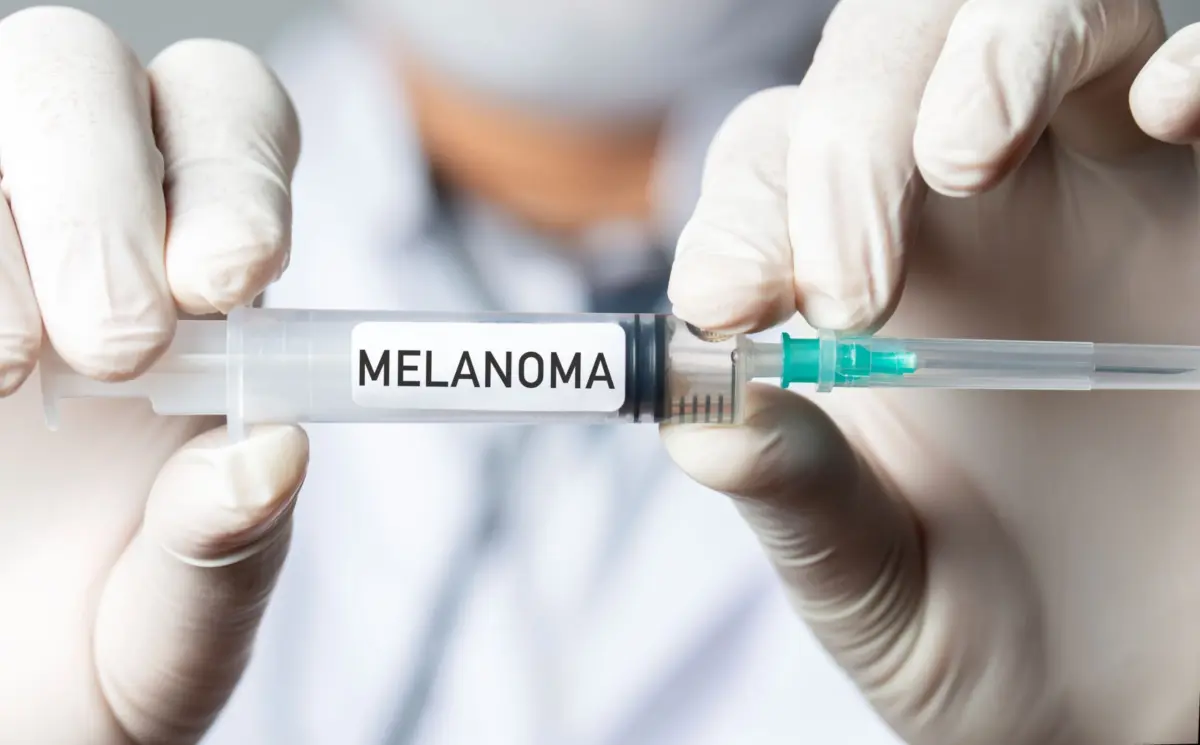
A significant advancement in oncology has emerged as pharmaceutical giants Merck and Moderna released the definitive results of their Phase 3 clinical trial for a personalized mRNA-based cancer vaccine. The study, which evaluated the efficacy of the vaccine in combination with standard immunotherapy for patients with high-risk melanoma, demonstrated a 42 percent reduction in the risk of disease recurrence or death compared to treatment with immunotherapy alone. This landmark finding, presented at the European Society for Medical Oncology (ESMO) 2024 Presidential Symposium, signals a potential paradigm shift in the treatment of one of the most aggressive forms of skin cancer.
The trial, designated INTerpath-001 (also known as KEYNOTE-942), represents a culmination of decades of research into messenger RNA (mRNA) technology, which gained global prominence during the COVID-19 pandemic. However, unlike the prophylactic vaccines used to prevent viral infections, this therapeutic vaccine is designed to treat existing disease by "training" the immune system to recognize and eliminate specific cancer cells unique to each patient’s tumor. Georgina Long, the medical director of the Melanoma Institute Australia and the study’s principal investigator, characterized the results as "transformative," noting that they have the potential to establish a foundational shift in how clinicians manage patients with earlier-stage, high-risk melanoma.
The Mechanics of Personalized mRNA Therapy
At the heart of this medical breakthrough is the vaccine known as Intismeran Autogene (mRNA-4157/V940). Unlike traditional off-the-shelf medications, this therapy is a bespoke medical product tailored to the individual genetic profile of a patient’s tumor. The process begins with a surgical biopsy of the patient’s melanoma. Scientists then perform genomic sequencing on the tumor sample and compare it against the patient’s healthy tissue to identify unique mutations, known as neoantigens.
Neoantigens are proteins produced by mutated cancer cells that are not present in healthy cells. Because these proteins appear "foreign" to the body, they are ideal targets for the immune system. For each patient in the trial, researchers identified up to 34 molecular signatures that were most likely to trigger an immune response. These signatures were then encoded into a single mRNA strand. When injected, the mRNA instructs the patient’s cells to produce these neoantigen proteins, effectively providing the immune system with a "most wanted" poster of the cancer cells it needs to destroy.
This personalized approach addresses one of the primary challenges in oncology: the inherent heterogeneity of cancer. Even among patients with the same type of cancer, the specific mutations driving the disease can vary wildly. By customizing the vaccine to the individual, Merck and Moderna have bypassed the limitations of one-size-fits-all treatments.
Methodology and Patient Demographics of INTerpath-001
The INTerpath-001 trial was a randomized, open-label Phase 3 study that enrolled 1,137 participants. To qualify for the study, patients had to have high-risk (Stage IIB, IIC, III, or IV) melanoma that had been completely resected—meaning the visible tumor had been surgically removed. Despite successful surgery, these patients remain at a high risk of the cancer returning due to microscopic cells that may still be circulating in the body.
The participants were divided into two distinct treatment arms. The control group received Pembrolizumab (marketed by Merck as Keytruda), which is the current standard-of-care immunotherapy. Pembrolizumab is a monoclonal antibody that blocks the PD-1 pathway, a "brake" on the immune system that cancer cells often exploit to remain undetected. By releasing this brake, Pembrolizumab allows T-cells to attack the cancer.
The experimental group received the same regimen of Pembrolizumab but with the addition of the personalized mRNA vaccine, Intismeran Autogene. The vaccine was administered in nine doses, while the immunotherapy continued for approximately one year or until disease recurrence or unacceptable toxicity.
Quantitative Outcomes: A Statistical Breakdown
The data released by the researchers provided a clear indication of the vaccine’s efficacy. After a median follow-up period of 24.6 months, the combination therapy showed a marked improvement over monotherapy across several key metrics:
- Recurrence-Free Survival (RFS): The primary endpoint of the study was the length of time patients lived without the cancer returning. The combination of the mRNA vaccine and Pembrolizumab reduced the risk of recurrence or death by 42 percent (Hazard Ratio [HR] = 0.58).
- Distant Metastasis-Free Survival (DMFS): One of the most critical factors in melanoma prognosis is whether the cancer spreads to distant organs, such as the lungs, liver, or brain. The trial showed that the combination therapy reduced the risk of distant metastasis or death by 38 percent compared to Pembrolizumab alone.
- Overall Survival Rates: At the end of the follow-up period, 82.2 percent of patients in the combination group remained recurrence-free, a significant increase from the 70 percent observed in the group receiving only immunotherapy.
These statistics are particularly notable given that Pembrolizumab is already considered a highly effective treatment. Improving upon the current standard of care by such a wide margin is a rare achievement in late-stage clinical trials.
Safety and Tolerability Profiles
As with any intensive medical treatment, safety was a primary concern for the investigators. The Phase 3 findings mirrored earlier Phase 2 data, suggesting that the addition of the mRNA vaccine does not significantly increase the severity of side effects associated with immunotherapy.
The most common adverse events reported by participants receiving the vaccine included mild to moderate "flu-like" symptoms, such as fatigue, fever, chills, and pain at the injection site. These are typical signs that the immune system is being activated. While some patients experienced more severe immune-related side effects, the researchers concluded that the safety profile was manageable and consistent with the known risks of Pembrolizumab. Stéphane Bancel, CEO of Moderna, emphasized that these results reinforce the company’s conviction that mRNA technology can fundamentally alter the oncology landscape without compromising patient safety.
A New Paradigm in Oncology: Expert Analysis
The medical community has reacted with cautious optimism to the INTerpath-001 results. Eva Muñoz Couselo, head of the melanoma research group at the Vall d’Hebron Institute of Oncology in Barcelona, noted that this is the first time a Phase 3 trial has successfully demonstrated that an individualized therapeutic vaccine can improve the outcomes of conventional immunotherapy.
"The results represent a major breakthrough in the development of personalized medicine," Muñoz Couselo told SMC Spain. "We are moving away from treating the disease and toward treating the specific biology of the patient’s tumor."
However, experts also pointed out the logistical hurdles that lie ahead. Marisol Soengas, a leading melanoma researcher at Spain’s National Cancer Research Center (CNIO), highlighted the complexity of the manufacturing process. "It is literally a bespoke vaccine," Soengas explained. "The challenge is to ensure that this personalization can be scaled up to a large number of patients and that the cost is affordable for health care systems."
The manufacturing process currently requires several weeks from biopsy to injection, as the tumor must be sequenced and the mRNA strand synthesized. In the context of aggressive cancers, time is a luxury many patients do not have. Reducing this turnaround time will be essential for the vaccine’s widespread adoption.
Historical Context and Future Horizons
The success of the melanoma vaccine is part of a broader "renaissance" in mRNA research. While the technology was thrust into the spotlight in 2020, scientists have been working on mRNA cancer vaccines for over twenty years. Early efforts were hindered by the instability of mRNA molecules and the difficulty of delivering them into cells. The development of lipid nanoparticles—tiny fat bubbles that protect the mRNA—solved these delivery issues and paved the way for the current generation of therapies.
The implications of the INTerpath-001 trial extend far beyond skin cancer. Theoretically, the same platform could be used to target any tumor with a high "mutational burden"—that is, a large number of genetic mutations. Earlier this year, a separate trial showed promising results for personalized mRNA vaccines in treating pancreatic cancer, a disease with one of the lowest survival rates in oncology. Merck and Moderna have already initiated clinical trials for other types of cancer, including non-small cell lung cancer (NSCLC).
The Road to Regulatory Approval
Despite the positive data, the vaccine is not yet available for general clinical use. The results must undergo rigorous peer review, and the pharmaceutical companies must submit a formal application to regulatory bodies such as the U.S. Food and Drug Administration (FDA) and the European Medicines Agency (EMA).
The FDA has already granted "Breakthrough Therapy Designation" to the combination of Intismeran Autogene and Pembrolizumab, a status intended to expedite the development and review of drugs for serious or life-threatening conditions. If approved, the vaccine would likely be used as an "adjuvant" therapy—a treatment given after the primary treatment (surgery) to lower the risk of the cancer coming back.
Conclusion: A Turning Point for Patients
Melanoma remains a significant global health challenge, claiming more than 50,000 lives annually. While early detection has improved survival rates, high-risk patients have long faced the daunting prospect of recurrence. The INTerpath-001 trial offers these patients a new level of hope.
By combining the broad-spectrum power of immunotherapy with the precision of personalized mRNA technology, researchers have created a dual-action defense against cancer. As the medical community moves toward a more individualized approach to healthcare, the success of this trial serves as a blueprint for the future of oncology. While challenges regarding cost, logistics, and scalability remain, the 42 percent reduction in risk stands as a testament to the potential of bespoke medicine to save lives.
