


The global transition toward sustainable transportation faced a significant recalibration this week as both Canada and the European Union announced substantial adjustments to their respective vehicle emission reduction schedules. While both jurisdictions maintain that their long-term objectives—specifically the goal of achieving zero-emission vehicle dominance by 2035—remain intact, the immediate path toward those targets has been widened to allow for greater flexibility. This shift highlights a growing tension between urgent climate imperatives and the immediate economic and political realities facing major industrial powers. The metaphor of "paying Tuesday for a cheeseburger today" has become an apt description of the current climate policy landscape, where the difficult work of meeting 2030 and 2050 targets is increasingly being deferred in favor of short-term economic stability.
The Canadian Policy Shift: A Three-Year Freeze
In a move that has surprised climate advocates across North America, the Canadian federal government, in coordination with the government of Ontario, announced a freeze on vehicle emissions standards. Under the new directive, the current fleet average performance standard of 172 grams of greenhouse gas emissions per mile (approximately 107 grams per kilometer) will remain unchanged through the end of the 2029 model year. This pause represents a significant departure from previous trajectories that envisioned a steady, annual tightening of pollution limits.
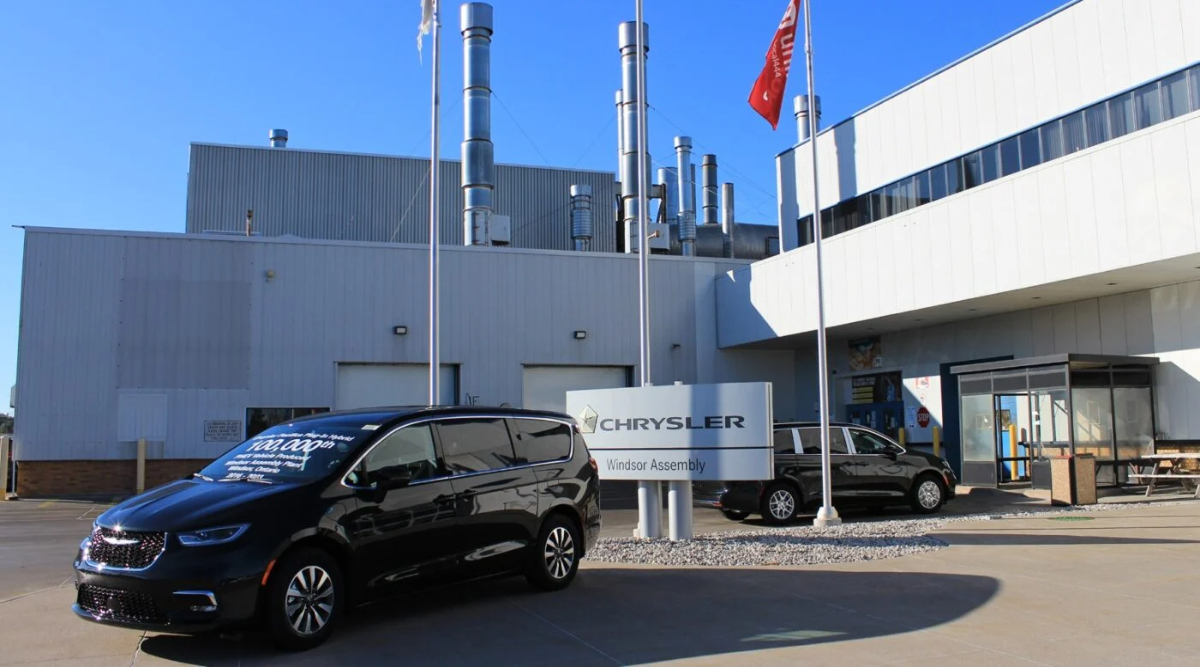
The decision was formalized through a joint announcement by Special Advisor to the Prime Minister, Mark Carney, and Ontario Premier Doug Ford. The rationale provided for the freeze centers on "near-term flexibility" for an automotive sector currently grappling with intense trade pressures and the high costs associated with retooling manufacturing facilities for electric vehicle (EV) production. To further cushion this transition, the federal and provincial governments have committed a combined $2.5 billion over the next two years to support capital projects within the domestic auto industry.
Despite the freeze, the Canadian government insists it will still achieve its target of 75 percent of new light-duty vehicle sales being electric by 2035. However, the mechanism for reaching this goal has shifted toward a credit-based system rather than strict annual mandates. Manufacturers will be permitted to generate greenhouse gas credits in the later years of the decade, effectively backloading the most rigorous emission reductions to the period between 2030 and 2035.
The European Union’s Complexity and the Green Steel Compromise
Across the Atlantic, the European Union is navigating its own set of challenges regarding the "Fit for 55" package, which originally mandated a 100 percent reduction in CO2 emissions from new cars by 2035—effectively banning the sale of new internal combustion engine (ICE) vehicles. The complexity of the EU’s 27-member consensus model has led to a proposed softening of these rules to prevent industrial hollowing out, particularly in automotive hubs like Germany and France.
Recent reports from Brussels suggest a burgeoning consensus among centrist political factions to lower the 100 percent reduction target to 87.5 percent. Under this proposed framework, manufacturers would be allowed to continue selling a small percentage of hybrid or high-efficiency ICE vehicles, provided they meet specific criteria. One notable condition is the requirement for manufacturers to utilize at least 7.5 percent "green steel"—steel produced using hydrogen or renewable energy rather than coking coal—in their vehicle construction. This adjustment would effectively lower the 2035 EV sales target from a total ban on ICE vehicles to a 95 percent EV market share.
The legislative path for this change remains rigorous. The Environment Committee is scheduled to vote on the proposal in early November, followed by a plenary session in the EU Parliament in December. For the policy to become law, it must secure a "qualified majority" in the EU Council, representing at least 15 member states and 65 percent of the total EU population. This intricate process reflects the deep-seated concerns of European automakers who argue that the infrastructure for charging and the supply chains for battery minerals are not yet robust enough to support a 100 percent mandate without risking massive job losses.
A Chronology of Emission Regulation and Recent Retreats
The current rollbacks are part of a broader timeline of climate policy that has seen frequent ebbs and flows based on the global economic climate:
- 2015: The Paris Agreement sets the stage for national commitments to limit global warming to well below 2 degrees Celsius.
- 2020-2021: Major economies, including Canada and the EU, announce "Net Zero by 2050" pledges, with 2035 identified as the cutoff for new ICE vehicle sales.
- 2022: Global energy prices spike following geopolitical instability, leading to increased inflation and a focus on "energy security" over "energy transition."
- Early 2024: Canada signals a shift from rigid mandates to a credit-based system to appease domestic manufacturers.
- October 2024: Canada announces the formal freeze of standards until 2029; the EU begins formalizing the "Green Steel" compromise to allow a percentage of ICE sales to persist beyond 2035.
This chronology suggests that while the long-term destination of a decarbonized transport sector remains the official policy, the interim milestones are being treated as negotiable variables in the face of economic headwinds.
Economic and Geopolitical Drivers of Delay
Several factors have converged to force these policy retreats. First is the looming influence of the Chinese automotive industry. China currently leads the world in EV production and battery technology, benefiting from years of state subsidies and integrated supply chains. Canada recently opened a door for up to 49,000 Chinese EVs to be imported with a relatively low 6.1 percent tariff, a move intended to keep consumer prices down while domestic production scales up. However, this also puts immense pressure on North American manufacturers who cannot yet match Chinese price points.
Second is the political volatility in the United States. With the U.S. midterm elections and the upcoming presidential cycle, Canadian officials like Doug Ford have noted that the cross-border trade relationship has fundamentally changed. The uncertainty regarding future U.S. federal climate policy makes Canadian and European regulators hesitant to impose strict standards that might leave their domestic industries uncompetitive if the U.S. chooses a different path.
Finally, the rising cost of living has made the transition to EVs a sensitive political issue. Electric vehicles, despite falling battery prices, still carry a higher upfront cost than many entry-level gasoline cars. In an era of high interest rates and inflation, governments are wary of appearing to mandate expensive technology for middle-class families.
Stakeholder Reactions: Disappointment vs. Pragmatism
The reaction to these policy shifts has been sharply divided between environmental advocacy groups and industry representatives.

Environmental Advocacy:
Groups such as Clean Energy Canada and the Pembina Institute have expressed profound disappointment. Clean Energy Canada stated that pausing the regulation until 2030 puts "significantly more pressure on the policy’s later years" and could undermine the entire transition. They argue that the delay will cost Canadian households billions in potential fuel savings and deter up to $21 billion in charging infrastructure investments. The Pembina Institute added that the delay makes the 2035 goals "virtually impossible," as the required ramp-up after 2029 would be too steep for the market to absorb.
Industry Representation:
Conversely, the Canadian Vehicle Manufacturers Association (CVMA) welcomed the news. CEO Brian Kingston described the move as an "important step toward a more predictable, competitive, and achievable regulatory environment." Manufacturers argue that without this "breathing room," the rush to electrify could lead to plant closures and the loss of thousands of high-paying manufacturing jobs. They maintain that a successful transition requires the industry to remain profitable enough to fund the billions in research and development required for electrification.
Analysis of Implications: The Risk of the "Sixth Extinction"
The broader impact of these delays extends beyond the balance sheets of Ford, Volkswagen, or Stellantis. From a climate perspective, the atmosphere does not respond to political compromises or "flexible" timelines; it responds to the total concentration of greenhouse gases. By freezing standards for three years, Canada and the EU are effectively allowing millions of additional tons of CO2 to be emitted that would have otherwise been avoided.
Furthermore, there is a risk of a "wait-and-see" culture taking root in the private sector. If manufacturers believe that mandates will be moved or softened whenever economic conditions become challenging, the incentive to innovate aggressively is diminished. This could lead to a self-fulfilling prophecy where the industry is "not ready" for 2035 because the urgency was removed in 2024.
On a public health level, the delay in reducing tailpipe emissions means that urban centers will continue to deal with higher levels of particulate matter and nitrogen oxides for longer than originally planned. This carries a quantifiable cost in terms of healthcare expenditures and lost productivity due to respiratory illnesses.
Conclusion: The Fragile Balance of Progress
The decisions made this week in Ottawa and Brussels represent a calculated gamble. Policymakers are betting that by easing the pressure now, they can preserve the industrial base necessary to complete the transition later. However, as global temperatures continue to break records and the "Sixth Extinction" event—the ongoing loss of biodiversity driven by human activity—accelerates, the window for such flexibility is closing.
The "slip sliding away" of climate commitments reflects a fundamental struggle of modern governance: how to manage a long-term existential crisis within the constraints of short-term political and economic cycles. While the 2035 targets remain the "North Star" for Canada and the EU, the path to reaching them has become significantly more convoluted, leaving open the question of whether "Tuesday" will ever truly arrive for the climate’s overdue bill.
