


Cambridge Heavy Industries (CHI), a technology firm specializing in the development of compact fusion systems, has officially emerged from stealth operations following the successful closure of a $6.2 million seed funding round. The capital injection is earmarked for the construction of the company’s first functional compact fusion reactor, a project that aims to drastically reduce the physical footprint and capital requirements associated with traditional fusion energy research. Based in Massachusetts and operating as a spinout from the Massachusetts Institute of Technology (MIT), CHI is positioning itself as a critical infrastructure provider for the burgeoning fusion sector by focusing on the production of rare isotopes and the validation of high-efficiency shockwave science.
The funding round was led by Azolla Ventures, a prominent investment firm known for its focus on "tough tech" and climate-impact solutions. The round also saw participation from a diverse group of investors, including Overlay, the Massachusetts Clean Energy Center (MassCEC), the Neta Foundation, the Rothrock family, and P3A. This diverse backing underscores the growing interest in modular, scalable fusion solutions that can bypass the decades-long development timelines and multi-billion-dollar costs associated with massive national laboratory projects like the National Ignition Facility (NIF) or the International Thermonuclear Experimental Reactor (ITER).
The Evolution of Laser-Based Fusion Technology
Cambridge Heavy Industries was launched in 2025, founded by a team of experts with deep roots in the MIT scientific community. The founding group includes CEO Dr. Yun Kai, Raffi Freeman, Professor Keith Nelson, and Dr. Steve Kooi. Their collective expertise spans plasma physics, laser optics, and shockwave science, providing the foundational knowledge necessary to pivot fusion technology from massive industrial scales to benchtop-sized modules.
Unlike traditional inertial confinement fusion (ICF) methods, which require enormous laser arrays to compress fuel pellets to the point of fusion, CHI utilizes commercially available, ultrafast lasers. The core innovation lies in the company’s proprietary shockwave science, which CHI claims can achieve compression efficiencies 400 times higher than previous laser-based approaches. This efficiency allows the system to reach extreme physical states—specifically pressures of 350 gigapascals—using only tens of millijoules of energy. To put this in perspective, 350 gigapascals is roughly equivalent to the pressure found at the Earth’s core, yet CHI has demonstrated the ability to generate these conditions on a prototype the size of two dinner tables.
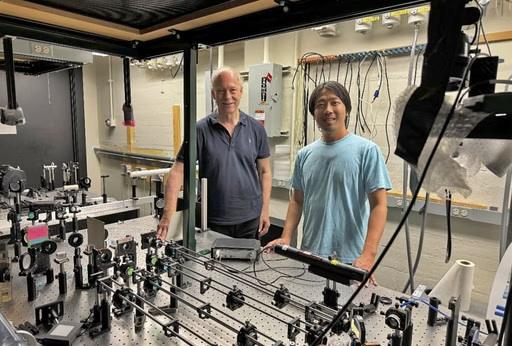
The modular nature of the CHI system represents a paradigm shift in fusion research and development. In the traditional fusion model, testing cycles are measured in years or even decades due to the complexity and size of the machinery. CHI’s technology, however, allows for weekly testing and hardware upgrades. This rapid "test-fail-fix" cycle is similar to the development models used in the modern commercial space and defense industries, allowing for exponential improvements in performance over short periods.
Addressing the Global Tritium Crisis
While the long-term objective of Cambridge Heavy Industries is the generation of clean, limitless fusion energy, the company’s immediate commercial focus is the production of tritium. Tritium, a radioactive isotope of hydrogen with a nucleus containing one proton and two neutrons, is an essential component for the fuel used in most fusion reactor designs. It is also one of the rarest and most expensive substances on the planet.
Currently, the global supply of tritium is extremely limited, primarily produced as a byproduct in heavy-water nuclear reactors, such as Canada’s CANDU reactors. However, many of these reactors are reaching the end of their operational lives, leading to a projected "tritium window" where supply will drop just as the demand from experimental fusion reactors peaks. Current market estimates place the price of tritium at approximately $33 million per kilogram.
Dr. Yun Kai, CEO of Cambridge Heavy Industries, emphasized that this supply bottleneck is one of the greatest threats to the commercialization of fusion energy. "Fusion power leaders have a tritium supply problem that could significantly slow down the sector’s growth," Kai stated during the funding announcement. By using its compact reactors as neutron sources, CHI intends to breed tritium on-site, providing a reliable and scalable fuel source for other fusion startups and research institutions. This "picks and shovels" strategy allows CHI to generate revenue and prove its technology in a high-value niche market while the broader fusion industry works toward net-energy gain.
Beyond tritium production, CHI’s compact neutron sources have potential applications in material science and industrial imaging. The high-energy neutrons produced during fusion reactions can be used for material defect engineering—improving the durability of metals and semiconductors—and for neutron imaging, which allows researchers to see through dense materials that X-rays cannot penetrate.

Strategic Utilization of Capital and Facility Expansion
The $6.2 million in seed capital is designated for several critical operational milestones. A primary objective is the procurement of advanced hardware, including a high-specification ultrafast laser system and precision optical components. These tools are necessary to scale the current benchtop prototype into a fully operational reactor at the company’s Massachusetts facility.
Furthermore, the funds will support the development of sophisticated neutron diagnostics. Measuring the output and behavior of neutrons is essential for validating the efficiency of the fusion reactions and ensuring the safety of the tritium breeding process. CHI also plans to expand its technical team, recruiting specialists in laser physics, nuclear engineering, and vacuum systems to accelerate the development of its first commercial-grade reactor.
The involvement of the Massachusetts Clean Energy Center (MassCEC) is particularly notable, as it reflects the state’s commitment to becoming a global hub for fusion innovation. Massachusetts is already home to several leading fusion firms, including Commonwealth Fusion Systems (CFS), and the presence of CHI further solidifies the region’s "Fusion Alley" reputation.
Contextualizing CHI Within the Fusion Landscape
The emergence of Cambridge Heavy Industries comes at a time of renewed optimism for the fusion sector. In late 2022, the National Ignition Facility in California achieved "scientific energy breakeven" for the first time, producing more energy from a fusion reaction than the laser energy used to drive it. This milestone proved that laser-based inertial confinement fusion is a viable path toward energy production.
However, the NIF remains a $3.5 billion facility that occupies a building the size of three football fields. The challenge for the private sector is to miniaturize this process and make it economically competitive with wind, solar, and traditional nuclear power. CHI enters a competitive landscape that includes various approaches to fusion:

- Magnetic Confinement: Used by companies like Commonwealth Fusion Systems and Tokamak Energy, utilizing high-temperature superconducting magnets to hold plasma.
- Magneto-Inertial Fusion: Used by Helion Energy, which combines magnetic fields with rapid compression.
- Inertial Confinement (Laser-based): The category CHI occupies, alongside firms like Focused Energy and Longview Fusion Energy Systems.
CHI’s unique value proposition is its focus on "shockwave science" and "benchtop scale." By reducing the energy required to achieve extreme pressures, the company lowers the barrier to entry for fusion experimentation. Matthew Nordan, co-founder and General Partner of Azolla Ventures, highlighted this advantage: "Cambridge Heavy Industries’ technology can be demonstrated on a benchtop and assembled in days using standard optical components. We see it as a promising approach to make fusion viable."
Broader Implications for the Energy Transition
The successful development of compact fusion reactors would have profound implications for the global energy transition and ESG (Environmental, Social, and Governance) goals. Fusion energy offers the promise of a carbon-free, baseload power source that does not produce the long-lived high-level radioactive waste associated with traditional fission reactors. Additionally, fusion carries no risk of a "meltdown," as the reaction requires precise conditions to maintain; any disruption simply causes the plasma to cool and the reaction to stop.
For the ESG investment community, CHI represents a high-risk, high-reward opportunity to address the "Scope 3" emissions of the entire global energy grid. If CHI can successfully commercialize tritium production, it removes a primary obstacle for all other fusion technologies, effectively acting as a catalyst for the entire industry. Furthermore, the ability to produce rare isotopes locally could reduce the carbon footprint associated with the transport and specialized handling of nuclear materials.
The timeline for CHI involves moving from its current prototype phase to a pilot production phase for tritium within the next few years. If the company can consistently achieve the pressures and neutron yields predicted by its models, it will validate a new path for fusion—one that favors agility and efficiency over massive scale.
As the global community seeks to meet net-zero targets by 2050, the role of "Tough Tech" startups like Cambridge Heavy Industries becomes increasingly vital. By bridging the gap between academic research at MIT and industrial-scale energy production, CHI aims to turn the promise of the stars into a manageable, modular reality on Earth. The next 24 months will be a critical period for the company as it transitions from a stealth research project to a hardware-producing industrial entity in the heart of the Massachusetts clean energy corridor.
