

Across the road from the Toronto Zoo, tucked away in a low, nondescript industrial building that remains largely invisible to the thousands of tourists visiting the wildlife park, a quiet revolution in renewable energy is taking place. Here, elephant dung and unsold grocery store produce are being systematically converted into clean electricity. This facility, operated by the ZooShare Biogas Co-operative, represents more than just a waste management solution; it serves as a pioneering blueprint for how decentralized energy infrastructure can be financed and owned by the very communities it serves.
The facility exists because the Toronto Zoo, which owns the land leased by ZooShare, sought a sustainable alternative to sending its massive volume of animal and organic food waste to landfills. However, when the co-operative formed in 2011, it faced a hurdle common to many grassroots environmental initiatives: a lack of traditional capital. Conventional financial institutions often view small-scale, innovative energy projects as too risky or too small to warrant significant investment. To overcome this, ZooShare turned to its neighbors, utilizing a financial tool known as a community bond.
The Mechanics of Community Financing
Beginning in 2013, ZooShare launched its first campaign to sell community bonds. These are debt instruments, functionally similar to conventional bonds, that allow individual residents to lend money directly to a local project. In exchange, the investors are repaid their principal with interest over a fixed term. By bypassing traditional banks, ZooShare was able to democratize the investment process, allowing ordinary citizens to put their savings toward a project that aligned with their environmental values.
The response was overwhelming. Approximately 300 people backed the initial $2.2-million raise. Two subsequent funding rounds followed, eventually pushing the total bond financing beyond the $4-million mark. This capital enabled the construction of an anaerobic digester, a piece of technology that breaks down organic matter in an oxygen-free environment to produce biogas.
Rob Grand, ZooShare’s general manager, notes that the motivation for these investors often transcends mere financial gain. While the bonds offer a competitive return, Grand explains that the majority of the membership is primarily concerned with supporting their values. This "emotional investment" has created a robust ecosystem of support; the co-operative now boasts approximately 800 members, each of whom holds a vote in electing the board of directors. Membership costs a nominal $10, and the demand for bonds has been so high that the co-operative maintains a waiting list of over 150 prospective investors.
Environmental Imperatives: The Methane Challenge
The urgency behind projects like ZooShare is underscored by Canada’s aggressive climate targets. The federal government has committed to reducing national greenhouse gas emissions by 40% to 45% below 2005 levels by the year 2030. A significant portion of this effort must be directed toward the waste sector.
Municipal landfills are currently responsible for roughly 23% of Canada’s methane emissions. Methane is a potent greenhouse gas, possessing a global warming potential approximately 86 times greater than carbon dioxide over a 20-year period. While many large landfills have systems in place to capture gas, the federal government’s target of a 50% reduction in landfill methane by 2030 cannot be achieved through large-scale capture alone.
This is where small-scale, local infrastructure becomes critical. By diverting organic waste—such as zoo manure and commercial food scraps—before it ever reaches a landfill, anaerobic digesters like the one at ZooShare prevent the formation of methane at the source. Instead, the gas is captured in a controlled environment and used to generate renewable power, providing a dual benefit to the environment.
A Chronology of Development and Impact
The journey from conception to operation for ZooShare was a decade-long endeavor, reflecting the complexities of pioneering a new model of energy production.
- 2011: ZooShare Biogas Co-operative is officially formed, establishing a partnership with the Toronto Zoo.
- 2013: The first round of community bonds is launched, raising $2.2 million from local residents.
- 2015–2018: Subsequent funding rounds are completed, bringing total community investment to over $4 million.
- 2019: Construction begins on the facility located on zoo-owned land.
- April 2021: The plant officially comes online, beginning its mission to convert waste into energy.
Today, the plant processes approximately 15,000 tonnes of food waste and zoo manure annually. This process generates enough electricity to power the equivalent of 250 average Toronto homes. Furthermore, the process yields a high-quality byproduct: a nutrient-rich fertilizer certified by the Canadian Food Inspection Agency. This fertilizer is distributed to farmers in the nearby Rouge Valley, closing the loop on the circular economy.
National Momentum and the Indigenous Lead
ZooShare is part of a growing tapestry of local energy systems across Canada, though the methods of ownership and financing vary significantly by region. Interestingly, while ZooShare is a prominent example of a co-operative model, much of the momentum in Canadian community energy is currently driven by Indigenous leadership.
In northwestern Ontario, the Kiashke Zaaging Anishinaabek (Gull Bay First Nation) has long struggled with energy security, having been disconnected from the provincial grid and reliant on expensive, polluting diesel generators. In 2019, in partnership with Ontario Power Generation, the community launched a solar-and-battery microgrid. Unlike many private-sector projects, this microgrid is owned outright by the community and is expected to offset approximately 130,000 litres of diesel fuel per year.
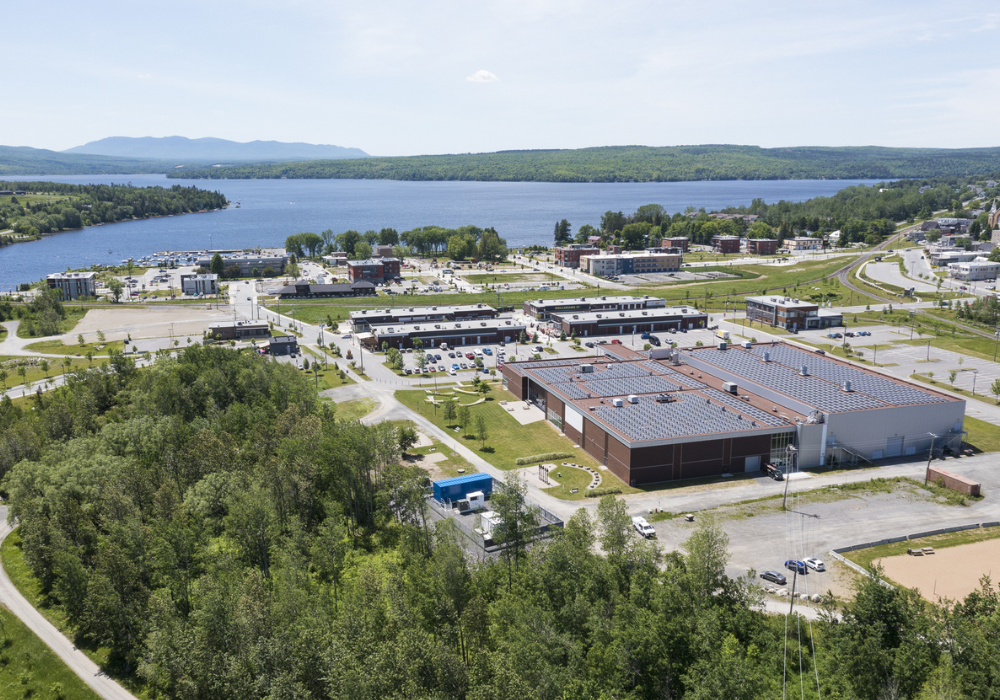
Similarly, in Quebec, the town of Lac-Mégantic—which was devastated by a tragic oil train explosion in 2013—has integrated a microgrid into its rebuilt downtown core. Developed by Hydro-Québec, the grid features "islanding" capabilities, allowing it to disconnect from the main provincial grid and operate independently using solar power and battery storage to serve 30 buildings.
In June 2024, the federal government further signaled its support for this model by committing $21.6 million to the Sayisi Dene First Nation in Tadoule Lake, Manitoba. This funding will support the province’s first integrated renewable microgrid, which is projected to reduce carbon dioxide emissions by 500 tonnes annually upon completion.
Julie MacArthur, the Canada Research Chair in Reimagining Capitalism at Royal Roads University, points out that there is a distinction between projects located "in" a community and those "owned by" a community. She notes that many successful operating microgrids in Canada are Indigenous-led, emphasizing that true community energy involves governance and equity, rather than just benefit-sharing agreements with private developers.
Addressing the Information and Capital Gap
Despite the success of these individual projects, Canada has yet to see a widespread explosion of local energy systems. Basma Majerbi, an associate professor of finance at the University of Victoria and lead researcher for the Accelerating Community Energy Transformation (ACET) initiative, suggests that the primary barrier is not a lack of available money, but a lack of strategic information.
Majerbi’s research indicates that many community groups default to seeking government grants and stop looking for other sources of capital once those grants are exhausted. "There is a big information gap and knowledge gap about what exists," she says. To bridge this divide, Majerbi launched the Community Energy Finance Navigator in May 2024. This pilot database tracks 86 projects across the country, detailing how they were financed, structured, and owned.
The data reveals a clear trend: successful projects almost never rely on a single source of funding. Instead, they utilize a "capital stack"—a strategic layering of grants, low-interest loans, community bonds, co-op equity, and private-sector partnerships. Majerbi argues that the next phase of Canada’s energy transition will require "blended finance," where public and philanthropic funds are used to de-risk projects, thereby unlocking larger amounts of private capital.
The Path Forward: Strategic Thinking in Energy
As Canada moves toward its 2030 and 2050 climate goals, the ZooShare model offers several vital lessons. First, it demonstrates that there is a significant appetite among the public to invest their personal finances into local, tangible green infrastructure. Second, it highlights the importance of transparency; ZooShare maintains its member base through quarterly performance updates and open annual meetings, ensuring that investors remain connected to the project’s operational realities.
However, for these systems to scale, community groups must approach financing with the same rigor they apply to engineering. Majerbi’s advice to emerging projects is to move financing from an "afterthought" to a primary strategic consideration. By understanding the full range of capital sources—including the community bonds that built ZooShare—local groups can create energy systems that are not only environmentally sustainable but also economically democratic.
The transition to a net-zero economy is often discussed in terms of massive offshore wind farms or sprawling nuclear refurbishments. Yet, the nondescript building across from the Toronto Zoo proves that the future of energy is also small-scale, decentralized, and powered by the collective investment of the community. As more regions look to replicate this success, the "capital stack" of grants, bonds, and local ownership may become as essential to Canada’s energy grid as the wires and transformers themselves.
