


Cambridge Heavy Industries (CHI), a fusion technology developer emerging from the Massachusetts Institute of Technology (MIT), has officially announced its exit from stealth mode following the successful closure of a $6.2 million seed funding round. The capital infusion is earmarked for the construction of the company’s first compact fusion reactor, a modular system designed to radically lower the cost and physical footprint associated with traditional laser-based fusion. By leveraging breakthroughs in shockwave science, the startup aims to address critical supply chain bottlenecks in the fusion energy sector, specifically the global shortage of tritium, before pivoting toward long-term power generation.
The funding round was led by Azolla Ventures, a firm known for its focus on climate-impact technologies that require patient capital. The round also saw participation from a diverse group of investors, including Overlay, the Massachusetts Clean Energy Center (MassCEC), the Neta Foundation, the Rothrock family, and P3A. This collective investment underscores a growing trend in the energy transition sector: the shift toward decentralized, smaller-scale fusion architectures that allow for rapid prototyping and iterative development.
A New Paradigm in Laser-Based Fusion
Fusion energy, the process that powers the sun, has long been considered the "holy grail" of clean energy. However, the path to commercialization has been hindered by the immense scale and cost of experimental facilities. For decades, the field has been dominated by two primary approaches: magnetic confinement, exemplified by the multi-billion dollar ITER project in France, and inertial confinement fusion (ICF), utilized by the National Ignition Facility (NIF) at Lawrence Livermore National Laboratory.
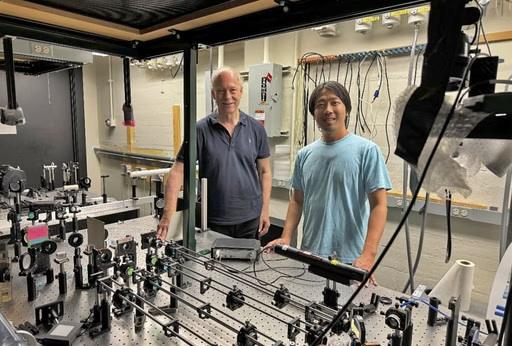
While the NIF achieved a historic "net energy gain" in late 2022, its infrastructure is vast, utilizing a laser system the size of three football fields. Cambridge Heavy Industries is challenging this "bigger is better" convention. Founded in 2025 as an MIT spinout, the company’s core innovation lies in its ability to generate fusion reactions using commercially available, benchtop-scale lasers.
According to technical specifications released by the company, CHI’s technology utilizes advanced shockwave science to achieve compression efficiencies approximately 400 times higher than those of conventional laser-based fusion systems. This efficiency allows the team to reach the extreme pressures necessary for fusion—achieving 350 gigapascals in a prototype the size of two dinner tables—while using only tens of millijoules of energy. For context, 350 gigapascals is roughly equivalent to the pressure found at the center of the Earth.
Solving the Tritium Scarcity Crisis
While the ultimate goal of many fusion startups is to provide carbon-free electricity to the grid, Cambridge Heavy Industries has identified a more immediate and lucrative market: the production of tritium. Tritium, a radioactive isotope of hydrogen, is a vital fuel component for the most common fusion reaction (deuterium-tritium).
Currently, tritium is one of the most expensive substances on Earth, with a market price hovering around $33 million per kilogram. The global supply is extremely limited, primarily produced as a byproduct in heavy-water nuclear reactors, such as the CANDU reactors in Canada. As the global fusion industry expands, with dozens of private companies racing toward commercial prototypes, the demand for tritium is expected to far outstrip available supply.
Dr. Yun Kai, co-founder and CEO of Cambridge Heavy Industries, emphasized that this scarcity represents a significant hurdle for the entire industry. "Fusion power leaders have a tritium supply problem that could significantly slow down the sector’s growth," Kai stated. "Our technology is in the unique position to solve this challenge. By creating compact, modular sources of tritium, we can provide the ‘fuel’ necessary for the broader industry to succeed while proving our technology’s viability for energy production."
Beyond tritium, CHI’s modular neutron sources have potential applications in material science, specifically in defect engineering and high-resolution neutron imaging. These secondary markets provide the company with diverse revenue streams while it scales its core fusion technology.
The MIT Pedigree and Rapid Iteration
The founding team of CHI brings together deep expertise from one of the world’s premier research institutions. Dr. Yun Kai is joined by co-founders Raffi Freeman, Professor Keith Nelson, and Dr. Steve Kooi. Professor Nelson, a distinguished figure at MIT, is renowned for his work in ultrafast optics and spectroscopy, which forms the scientific backbone of CHI’s laser-compression technique.
The transition from academic research to a commercial entity was driven by the desire to escape the "years-long" research cycles typical of government-funded fusion projects. The CHI model is built on the philosophy of rapid "test/fail/fix" cycles. Because their reactors are small and utilize standard optical components, the team can perform tests and implement hardware upgrades on a weekly basis.

Matthew Nordan, co-founder and General Partner of Azolla Ventures, highlighted this agility as a primary factor in their investment decision. "Cambridge Heavy Industries’ technology can be demonstrated on a benchtop and assembled in days using standard optical components," Nordan noted. "The same rapid test/fail/fix model is what brought us modern space and defense technologies; we see it as a promising approach to make fusion viable."
Strategic Use of Capital and Facilities
The $6.2 million in seed funding will be deployed immediately to scale operations at the company’s facility in Massachusetts. A significant portion of the budget is allocated to the procurement of specialized hardware, including an ultrafast laser system and sophisticated neutron diagnostics equipment. These tools are essential for measuring the success of fusion events and optimizing the shockwave compression parameters.
Furthermore, the company plans to expand its engineering and physics teams. By recruiting top-tier talent from the Boston-Cambridge innovation hub, CHI aims to accelerate the development of its first full-scale "compact fusion reactor." This reactor will serve as a proof-of-concept for the commercial production of isotopes and a stepping stone toward a pilot power plant.
The involvement of the Massachusetts Clean Energy Center (MassCEC) is also noteworthy. MassCEC is a state economic development agency dedicated to accelerating the growth of the clean energy sector. Their support suggests that CHI is viewed not just as a high-risk venture, but as a potential anchor for a burgeoning fusion cluster in the Northeast United States.
Chronology of the Fusion Renaissance
The emergence of Cambridge Heavy Industries occurs at a pivotal moment in the history of nuclear fusion. The timeline of the last five years shows an unprecedented acceleration in private sector involvement:
- 2021-2022: Private fusion companies like Commonwealth Fusion Systems (another MIT spinout) and Helion Energy raise billions of dollars, signaling investor confidence in the feasibility of fusion.
- December 2022: The National Ignition Facility achieves scientific breakeven, proving that laser-driven fusion can produce more energy than it consumes in the fuel.
- 2024: The global tritium shortage becomes a central topic of discussion at international fusion forums, with experts warning of a "tritium window" that could close if new production methods aren’t found.
- 2025: Cambridge Heavy Industries is founded, focusing on the intersection of ultrafast optics and shockwave science to miniaturize the fusion process.
- October 2026: CHI raises $6.2 million and exits stealth, positioning itself as a provider of both the fuel (tritium) and the technology for the next generation of reactors.
Broader Impact and Industry Implications
The success of CHI’s approach could have profound implications for the energy transition. If fusion can be achieved at a "benchtop" scale, it democratizes the technology. Instead of massive, centralized power plants that require decades of planning and tens of billions in capital, the world could see the deployment of modular fusion units.

From a geopolitical perspective, the ability to produce tritium locally is a matter of energy security. Currently, only a handful of nations possess the infrastructure to produce and export tritium. CHI’s technology could allow any country with a high-tech manufacturing base to produce its own fusion fuel, reducing reliance on a fragile and limited global supply chain.
However, challenges remain. Moving from a benchtop experiment to a sustained, energy-producing reaction requires overcoming significant engineering hurdles, including heat management and material durability under constant neutron bombardment. CHI’s strategy of focusing on isotope production first allows them to refine their hardware in a commercial environment before tackling the more complex requirements of grid-scale electricity generation.
As the company moves forward with the construction of its Massachusetts facility, the fusion community will be watching closely. If Cambridge Heavy Industries can prove that 400-times compression efficiency is achievable outside of a laboratory setting, it may well represent the beginning of a new chapter in the race for clean, limitless energy. The "mini-reactor" approach might not only solve the tritium crisis but also provide the blueprint for a faster, cheaper, and more scalable path to the fusion age.
