


The global transition toward electric mobility has long faced a significant geographical and psychological hurdle: the performance of lithium-ion batteries in sub-zero temperatures. While the cost of electric vehicle (EV) batteries continues a multi-year downward trajectory and the price of fossil fuels remains volatile, the "missing link" for universal adoption has been a battery chemistry capable of matching the reliability of internal combustion engines (ICE) in extreme climates. Donut Lab, a Finnish startup that has emerged from relative obscurity, recently announced a major technological milestone that addresses this specific challenge. The company’s new solid-state battery has successfully passed a series of rigorous third-party tests, demonstrating the ability to maintain near-peak performance at temperatures as low as -30 degrees Celsius (-22 degrees Fahrenheit).
The results, validated by the VTT Technical Research Centre of Finland, represent a potential paradigm shift for the automotive industry. As manufacturers struggle to balance energy density, safety, and environmental resilience, Donut Lab’s latest data suggests that the limitations of traditional liquid-electrolyte batteries—such as significant range loss in winter and the need for heavy, energy-consuming thermal management systems—may soon be obsolete.
The Path from CES to Independent Validation
The journey for Donut Lab began in earnest at the Consumer Electronics Show (CES) in January, where the company made the bold claim of having developed the world’s first solid-state battery ready for original equipment manufacturer (OEM) vehicle integration. At the time, the startup promised a suite of specifications that many industry analysts viewed with skepticism: an energy density of 400 Wh/kg and the ability to achieve a full charge in just five minutes.
In an industry where "breakthrough" claims are frequent but often fail to materialize in production-ready form, Donut Lab took the unusual step of committing to total transparency. To combat skepticism, the company launched a dedicated portal, cheekily titled "I Donut Believe," where it began publishing exhaustive reports from VTT. As one of Europe’s leading research institutions, VTT’s involvement provided the necessary gravitas to move Donut Lab’s claims from the realm of startup hype into the sphere of serious technological contention.
The timeline of validation has been methodical. Following the initial reveal in January, the company focused on high-temperature stability. In March, VTT issued a report confirming the battery’s functionality at 100°C (212°F). This particular test was crucial because it provided a window into the battery’s safety profile. During the testing process, a thin membrane surrounding the pouch was intentionally breached. In a standard lithium-ion battery utilizing a liquid organic electrolyte, such a breach at boiling temperatures would typically result in catastrophic outgassing and combustion. The Donut Lab prototype, however, remained stable, leading experts to conclude that the chemistry is fundamentally different from the volatile lithium-ion formulations currently dominating the market.
Breaking the Cold Weather Barrier
The most recent phase of testing focused on the opposite end of the thermal spectrum. Cold weather has historically been the "Achilles’ heel" of EVs. In sub-zero conditions, the internal resistance of a standard battery increases, the movement of ions through the liquid electrolyte slows down, and the overall capacity drops. This often results in a 20% to 40% reduction in driving range during winter months, a fact frequently cited by critics of the electric transition.
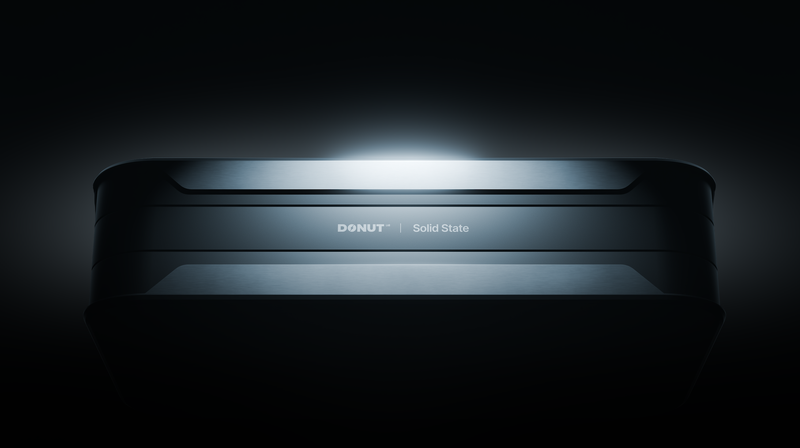
To test Donut Lab’s resilience, VTT researchers utilized a module consisting of 14 individual battery cells. The methodology was straightforward but brutal: the module was placed in a specialized temperature chamber set to -30°C and left for five hours until the core of the module was completely frozen through. No external heating elements, insulation, or thermal management systems were employed during this period.
The results showed that even in a deep-freeze state, the module retained 97% of its ampere-hour capacity when compared to its performance at a standard room temperature of +25°C (+77°F). When the module was allowed to benefit from standard insulation—even without active heating—the capacity retention rose to 99%.
Ville Piippo, Chief Technology Officer at Donut Lab, emphasized the significance of these results in a recent press statement. "We intentionally eliminated all the potential advantages a battery might normally have," Piippo stated. "Despite this, the battery remained unaffected by the conditions. A typical lithium-ion battery would struggle to provide power, even for a brief moment, in such cold temperatures. This validates our promise of 99% capacity, which customers can expect from a fully insulated battery module without any heaters or tricks."
Technical Implications: Eliminating Thermal Management
The implications of a battery that is "thermally agnostic" extend far beyond simply preventing range loss. Currently, EV manufacturers must invest significant weight, space, and cost into complex thermal management systems. These systems use pumps, coolants, and heaters to keep the battery pack within a narrow "Goldilocks" temperature range (typically between 15°C and 35°C).
If Donut Lab’s solid-state technology can operate at 99% capacity at -30°C and remain stable at 100°C without active cooling, the necessity for these secondary systems is greatly reduced. This leads to several secondary benefits:
- Weight Reduction: Removing pumps, hoses, and fluid reservoirs reduces the overall mass of the vehicle, which in turn improves efficiency and range.
- Manufacturing Simplicity: Fewer components mean a less complex assembly process and fewer points of failure over the vehicle’s lifespan.
- Increased Energy Density at the Pack Level: While the cells themselves are high-density (400 Wh/kg), the "pack-level" density increases even more because less of the battery box is occupied by non-energy-storing hardware.
The Chemistry Mystery: Beyond NMC and LFP
Despite the transparency regarding test results, the exact chemical composition of the Donut Lab battery remains a closely guarded secret. Industry speculation initially pointed toward a Nickel-Manganese-Cobalt (NMC) formula, which is common in high-performance EVs like those from Tesla and Lucid. However, the 100°C stability test largely debunked this theory, as NMC chemistries are notoriously sensitive to high-heat thermal runaway.
The broader industry is currently divided between two primary paths. On one hand, companies like Ford and General Motors are exploring Lithium Manganese-Rich (LMR) formulas. These are designed to bridge the gap between the low cost of Lithium-Iron-Phosphate (LFP) and the high energy density of traditional lithium-ion batteries. GM recently indicated that its Spring Hill, Tennessee, facility would begin pivoting toward LMR production to capture the "middle market" of electric mobility.

On the other hand, LFP batteries remain the gold standard for affordability and longevity, though they suffer significantly in cold weather and have lower energy density. Ford’s upcoming Fathom electric pickup truck, expected to be priced under $30,000, is widely anticipated to utilize LFP technology to meet its aggressive price point.
Donut Lab appears to be carving out a third path. By achieving 400 Wh/kg—a figure significantly higher than the roughly 260-280 Wh/kg found in high-end current cells—and combining it with extreme thermal stability, the startup is positioning its solid-state technology as a "universal" solution that could theoretically serve both the luxury performance market and the rugged, all-weather utility market.
Market Context and Broader Impact
The timing of Donut Lab’s breakthrough coincides with a pivotal moment in the global energy transition. While EV adoption continues to grow, the "early adopter" phase has ended, and manufacturers are now targeting the "early majority." This demographic is less likely to tolerate the inconveniences associated with first-generation EVs, such as slow charging times and winter range degradation.
A battery that charges in five minutes and maintains its range in a Finnish winter removes two of the most significant barriers to mass-market ICE-to-EV conversion. Furthermore, the 400 Wh/kg density could enable the electrification of heavier transport sectors, such as long-haul trucking and regional aviation, where the weight-to-power ratio has previously been a prohibitive factor.
However, the transition from lab-validated prototype to mass-produced automotive component is notoriously difficult. Donut Lab must now prove that its solid-state cells can be manufactured at scale with high yields and at a cost that is competitive with existing liquid-electrolyte factories. The company’s "OEM-ready" claim will be put to the ultimate test as it moves toward potential partnerships with major automotive brands.
Conclusion and Future Outlook
The validation of Donut Lab’s performance by the VTT Technical Research Centre provides a rare moment of empirical clarity in the often-opaque world of battery startups. By successfully navigating the extremes of both heat and cold, the Finnish firm has demonstrated that the physical limitations of current battery technology are not insurmountable.
As the automotive world watches, the next steps for Donut Lab will likely involve long-term cycle life testing—proving that the battery can maintain these impressive stats over thousands of charge cycles—and the establishment of pilot production lines. If the startup can maintain its trajectory of transparency and validation, the "mystery" surrounding its chemistry may soon be replaced by the reality of a new standard in electric propulsion. For drivers in cold climates from Chicago to Helsinki, the promise of an EV that doesn’t fear the frost is no longer just a theoretical possibility, but a documented reality.
