

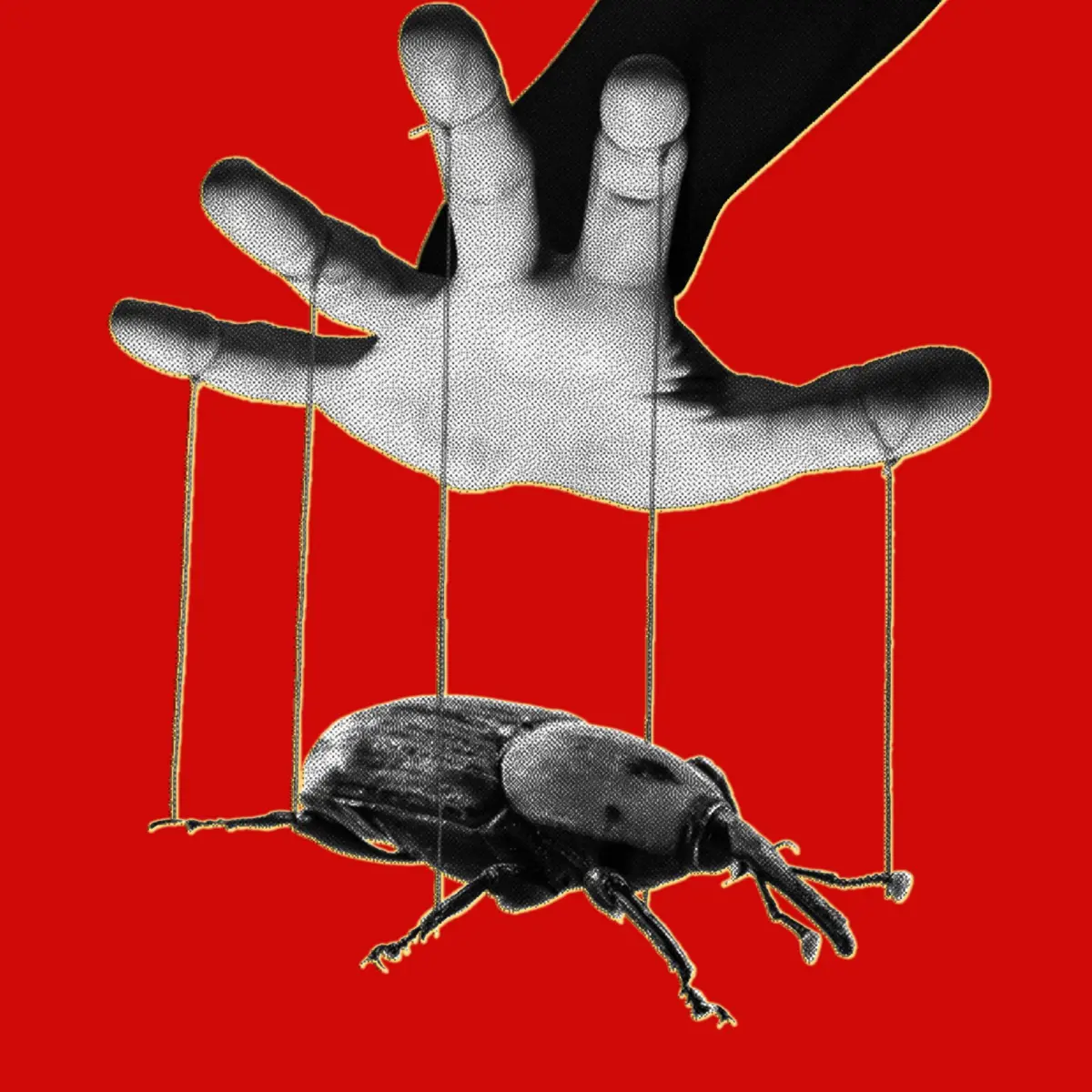
The digital infrastructure of the modern internet faced a significant stress test this week as security professionals and web administrators worldwide rushed to mitigate a series of critical vulnerabilities within PHP, the scripting language that powers a vast portion of the World Wide Web. The vulnerabilities, collectively identified as PHP2Shell, have ignited a fierce debate regarding the role of artificial intelligence in both the discovery and exploitation of software flaws. While the immediate threat of a global "cyber-catastrophe" appears to have been blunted by rapid defensive responses, the incident marks a pivotal moment in cybersecurity history: the transition of theoretical, "unexploitable" legacy bugs into active, weaponized threats through the power of frontier AI models.
The Anatomy of the PHP2Shell Crisis
PHP remains a foundational pillar of the internet, used by nearly 77% of all websites whose server-side programming language is known, including massive platforms like WordPress, Wikipedia, and various enterprise-level content management systems. Because of this ubiquity, any critical flaw in the PHP core represents a systemic risk to global digital stability. The PHP2Shell vulnerabilities (specifically tracked under designations such as CVE-2026-109618 and CVE-2026-109619) involve unauthenticated remote code execution (RCE) capabilities. In practical terms, these flaws allow an attacker to execute arbitrary commands on a target server without requiring login credentials, effectively granting them total control over the affected system.
The most striking aspect of the PHP2Shell discovery is that the underlying weaknesses were not entirely unknown. Records indicate that elements of these flaws were identified as early as 2024. However, at the time, the PHP Foundation and independent researchers deemed the vulnerabilities "too complex to exploit." The logic was that the specific sequence of memory manipulations and environmental conditions required to trigger the bug was beyond the practical reach of human hackers. For years, these bugs sat dormant in the codebase—a "historic vulnerability" that was considered a low-priority risk because it lacked a viable path to exploitation.
Chronology of Discovery and Escalation
The timeline of the current crisis began in early August when researchers at the security firm Calif leveraged advanced AI tools to re-examine legacy codebases. Using OpenAI’s "Patch the Planet" program—a specialized initiative designed to use large language models (LLMs) to identify and fix open-source security flaws—the Calif team, led by researcher Ryan Austin, successfully generated a working exploit for the PHP vulnerabilities. This breakthrough proved that what was once "unexploitable" for a human was well within the analytical capabilities of a frontier AI model.
Following Calif’s internal discovery, the information was shared through coordinated disclosure channels. However, the discovery was not isolated. Researchers at Wiz, a prominent cloud security firm, and OpenAI’s own internal safety teams independently identified the same flaws using similar AI-assisted methodologies. Sagi Tzadik, a security researcher at Wiz, noted that the vulnerability had been known to the PHP team for years but remained unaddressed because it was believed no human attacker could leverage it.
By mid-October, the vulnerabilities were made public alongside official patches. Within hours of the publication, the threat landscape shifted from theoretical research to active combat. Analysis from Cloudflare, a major web infrastructure and security provider, revealed that millions of exploitation attempts were logged within the first few hours of the vulnerabilities being disclosed. The speed of this transition—from patch release to mass exploitation attempts—highlights how AI tools are being used by threat actors to automate the creation of exploit code based on public vulnerability data.
Data-Driven Impact and Defensive Metrics
The scale of the exploitation attempts suggests a highly automated and aggressive environment. Cloudflare’s telemetry data indicated a global surge in malicious traffic targeting PHP-based servers, with a particular focus on enterprise environments and legacy systems that are often slower to update. Despite the volume of attacks, the PHP Foundation has maintained that it has not yet confirmed a successful mass-exploitation event.
The resilience of the web this week can be attributed to several factors. First, the proactive nature of the "Patch the Planet" program allowed for the development of patches before the bugs were widely known in the criminal underground. Second, many of the exploits circulating on public forums and "script kiddie" channels appeared to be ineffective or "broken," likely due to the complexity of the PHP2Shell flaws which still require specific configurations to trigger.
However, the broader data points regarding software vulnerabilities are concerning. Microsoft’s most recent security update cycle included a record-breaking 1,453 vulnerabilities. This volume of flaws creates an overwhelming "patch gap" for IT teams. Furthermore, the economic cost of these discoveries is rising. Recent reports indicate that Bank of America hired approximately 1,000 consultants specifically to address and remediate flaws discovered by Anthropic’s Mythos, another high-performance AI model focused on code analysis. This suggests that the "AI-driven discovery" phase of cybersecurity is creating a massive backlog of technical debt that organizations are struggling to fund and manage.
Official Responses and Expert Analysis
The consensus among cybersecurity experts is that AI is not fundamentally changing the nature of hacking, but it is drastically accelerating its velocity. Jake Williams, vice president of research and development at Hunter Strategy and a former NSA hacker, emphasizes that while PHP2Shell is a significant event, it may be a unique case due to PHP’s massive attack surface. Williams suggests that "low-hanging fruit" in the form of legacy bugs may be limited, as most modern software tools are not as exposed to the internet as PHP.
The PHP Foundation released a statement emphasizing its commitment to strengthening the security of the language’s core, acknowledging that the arrival of AI tools necessitates a re-evaluation of what constitutes an "exploitable" bug. The organization is now working to integrate more automated testing and AI-driven fuzzing into its development pipeline to catch these "long-life bugs" before they can be weaponized.
On the other side of the debate, some experts urge caution against overhyping the "AI threat." Niels Provos, a respected security engineer, argued that while AI assisted in finding the PHP2Shell flaws, it still required a "highly skilled team" to direct the AI and validate the results. Provos suggested that the industry should not yet panic about an overwhelming wave of AI-generated zero-day exploits, noting that the human element remains the primary bottleneck in sophisticated cyberattacks.
Broader Implications for Global Digital Security
The PHP2Shell incident serves as a case study for the future of digital defense. It illustrates a shifting paradigm where the age of a codebase no longer guarantees its stability. As AI models become more adept at understanding complex logic and memory management, every piece of legacy software—from banking systems to power grid controllers—must be re-viewed through the lens of AI-assisted exploitation.
One of the most significant implications is the pressure on under-resourced IT teams. When millions of exploitation attempts occur within hours of a patch release, the window for manual intervention disappears. This necessitates the adoption of automated patching and AI-driven defensive shields (such as Web Application Firewalls that can learn and adapt in real-time).
Furthermore, the role of "coordinated disclosure" is evolving. In the past, researchers might have had months to work with a vendor on a fix. In the AI era, the risk of a "collision"—where a malicious actor and a benign researcher find the same bug simultaneously—is much higher. This may force a change in how vulnerabilities are reported and how quickly patches are mandated across critical infrastructure.
Ultimately, the PHP2Shell crisis was a "near-miss" that provided a valuable warning. The nightmare scenario of mass takeovers did not materialize this time, but the event proved that AI has the power to turn historical vulnerabilities into current crises. The security community is now in a race to ensure that the same AI tools used to uncover these flaws are used even more effectively to defend against them. As organizations move forward, the focus must shift from merely fixing known bugs to proactively auditing the "unexploitable" corners of their digital foundations, before an AI-powered adversary does it for them.
