

In a nondescript industrial corridor directly across from the Toronto Zoo, an unconventional alchemical process is taking place. Inside a low-slung building that most tourists never notice, a mixture of elephant manure and unsold grocery store produce is being systematically converted into renewable electricity. This facility, operated by the ZooShare Biogas Co-operative, represents a significant shift in how Canadian communities are approaching energy production, waste management, and infrastructure financing. By bypassing traditional financial institutions in favor of "community bonds," the project has demonstrated that local residents are increasingly willing to put their capital toward environmental solutions that provide both a social and a financial return.
The ZooShare project was born out of a specific logistical need. In 2011, the Toronto Zoo—which owns the land and leases it to the co-operative—sought a way to divert its massive output of animal waste and organic matter away from landfills. While the environmental logic was sound, the financial pathway was less clear. Traditional banks often view small-scale biogas plants as high-risk or too small to warrant the administrative costs of a major loan. To bridge this gap, ZooShare turned to its neighbors. Beginning in 2013, the co-operative launched its first round of community bonds, a debt instrument that allows ordinary citizens to lend money directly to a project in exchange for interest payments over a fixed term. The response was overwhelming: approximately 300 investors backed the initial $2.2 million raise. Subsequent funding rounds eventually pushed the total bond financing past the $4 million mark, allowing construction to commence.
The Environmental Imperative: Methane and the 2030 Targets
The emergence of projects like ZooShare is not merely a local curiosity; it is a vital component of Canada’s broader climate strategy. Under the Paris Agreement and subsequent domestic policies, Canada has committed to reducing its greenhouse gas emissions by 40% to 45% below 2005 levels by the year 2030. One of the most significant hurdles in reaching this goal is the management of organic waste. Currently, municipal landfills are responsible for roughly 23% of Canada’s total methane emissions.
Methane is a particularly aggressive greenhouse gas; while it remains in the atmosphere for a shorter duration than carbon dioxide, it is approximately 86 times more potent at trapping heat over a 20-year period. The federal government has set a specific target to cut landfill methane emissions by 50% by 2030. Experts agree that this target cannot be met solely through gas-capture systems at existing large-scale dumps. Instead, the solution requires a decentralized network of anaerobic digesters—like the one operated by ZooShare—which process organic waste before it ever reaches a landfill, converting it into usable biogas and nutrient-rich fertilizer.
The ZooShare Model: Powering Homes with "Zoo Poo"
After two years of construction, the ZooShare plant officially came online in April 2021. The facility now processes approximately 15,000 tonnes of food waste and zoo manure annually. Through the process of anaerobic digestion, microorganisms break down the organic matter in an oxygen-free environment, releasing biogas. This gas is then burned to generate electricity, which is fed into the provincial grid. The plant produces enough power to support the equivalent of 250 average Toronto households.
Furthermore, the process adheres to the principles of a circular economy. The solid and liquid remains of the digestion process, known as digestate, are certified by the Canadian Food Inspection Agency as high-quality fertilizer. This byproduct is distributed to farmers in the nearby Rouge Valley, returning nutrients to the soil that originally produced the food waste processed at the plant.
The co-operative’s general manager, Rob Grand, notes that the project’s success is rooted in its democratic structure. ZooShare currently boasts roughly 800 members. Membership costs a nominal $10, granting each person one vote in electing the board of directors, regardless of whether they have purchased a bond. This transparency—including quarterly performance updates and open annual meetings—has fostered a sense of "emotional investment" among the membership. Every bond offering to date has sold out, and the co-operative maintains a waiting list of over 150 prospective investors.
Financing the Future: The Role of Community Bonds
The financial architecture of ZooShare highlights a critical "missing middle" in the Canadian financial system. Basma Majerbi, an associate professor of finance at the University of Victoria and a leader in the Accelerating Community Energy Transformation initiative, argues that community bonds serve as a vital economic development tool. Unlike traditional equity shares in a co-operative, bonds do not necessarily confer ownership, but they allow for a direct flow of local capital into local infrastructure.
"Community financing tends to arrive exactly when it’s most needed—before a project has the revenue certainty a bank wants to see," Majerbi explains. By providing "patient capital" during the risky early stages of development, community members act as the primary catalysts for innovation. This model shifts the focus from wealth extraction to energy equity, allowing communities to retain control over their local resources.
A National Movement: From Lac-Mégantic to the Arctic
The success of the biogas model in Toronto is part of a larger, national momentum toward decentralized energy systems. Across Canada, various communities are adopting different ownership and financing structures to achieve energy independence.
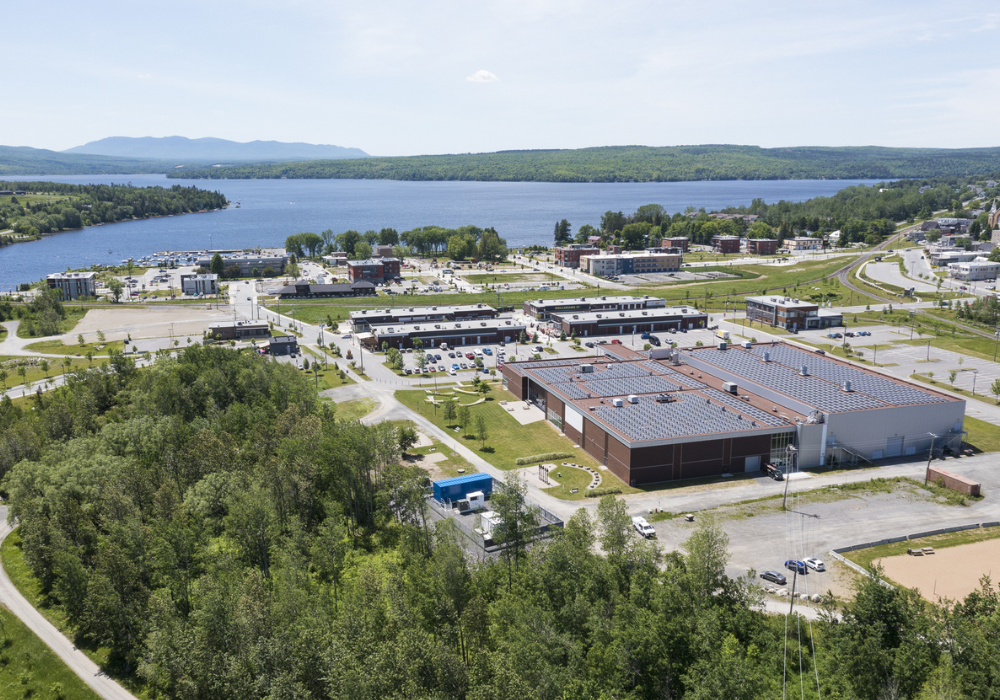
In Quebec, the town of Lac-Mégantic provides a poignant example. Following the devastating 2013 oil train explosion that destroyed its downtown core, the community rebuilt with a focus on resilience. Today, a portion of the downtown area operates on a Hydro-Québec microgrid. This system features solar panels and battery storage capable of "islanding"—disconnecting from the main provincial grid to power 30 buildings independently during outages. Hydro-Québec is currently studying this pilot to determine if it can be replicated in remote northern communities that currently rely on expensive, carbon-heavy diesel generators.
Similarly, in northwestern Ontario, the Kiashke Zaaging Anishinaabek (Gull Bay First Nation) has transitioned away from total diesel dependency. In 2019, in partnership with Ontario Power Generation, the community launched a solar-and-battery microgrid that it owns outright. The project is expected to offset approximately 130,000 liters of diesel fuel annually, reducing both carbon emissions and the environmental risks associated with transporting fuel to remote areas.
The federal government is also beginning to step up its support for these initiatives. In June 2026, Ottawa committed $21.6 million to the Sayisi Dene First Nation at Tadoule Lake, Manitoba. This funding will support the province’s first integrated renewable microgrid, which is projected to cut carbon dioxide emissions by 500 tonnes per year once it becomes fully operational.
The Distinction Between "In" and "By" Communities
As the "community energy" label becomes more popular, academic observers urge caution. Julie MacArthur, the Canada Research Chair in Reimagining Capitalism at Royal Roads University, points out that there is a significant difference between a project located in a community and one owned and governed by a community.
MacArthur notes that many projects labeled as "community-led" are actually developed by private corporations that offer a small percentage of profits to local residents through benefits agreements. In contrast, the most successful and transformative microgrids in Canada are often Indigenous-led, where the community maintains majority equity and decision-making power. For these communities, energy is not just a commodity; it is a matter of sovereignty and long-term self-determination.
Overcoming the Information Gap: The Strategic Capital Stack
Despite the clear benefits of community-led energy, Canada does not yet have hundreds of these systems. According to Basma Majerbi’s research, the primary obstacle is not a lack of available money, but rather a profound "information gap." Many community groups and non-profits are unaware of the diverse range of capital sources available to them, often defaulting to government grants and stopping there.
To address this, Majerbi launched the Community Energy Finance Navigator in May 2026. This pilot database, hosted by the University of Victoria’s Impact Investing Hub, tracks 86 energy projects across the country, detailing how they were structured, financed, and owned. The research reveals a consistent trend: successful projects almost never rely on a single source of funding. Instead, they utilize a "strategic capital stack"—a sophisticated layering of federal grants, low-interest loans, community bonds, co-op equity, and private partnerships.
Majerbi is now preparing to launch a national initiative aimed at scaling "blended finance" in Canada. The goal is to move beyond ad-hoc project development and toward a strategic framework where financing is integrated into the project’s design from day one.
Conclusion: Toward a Democratic Energy Grid
The transformation of elephant dung into electricity at the Toronto Zoo is a vivid illustration of the potential for localized, circular energy systems. However, the broader lesson of the ZooShare experiment lies in its financial and social structure. By empowering residents to become investors in their own backyard, the co-operative model addresses the dual challenges of climate change and economic alienation.
As Canada moves toward its 2030 and 2050 climate targets, the expansion of these distributed energy resources will be essential. The transition from a centralized, fossil-fuel-dependent grid to a decentralized, community-owned network requires more than just technological innovation; it requires a reimagining of how infrastructure is funded and who benefits from it. Through the use of community bonds, strategic capital stacks, and Indigenous-led sovereignty, Canada is beginning to build an energy system that is not only greener but more democratic.
