

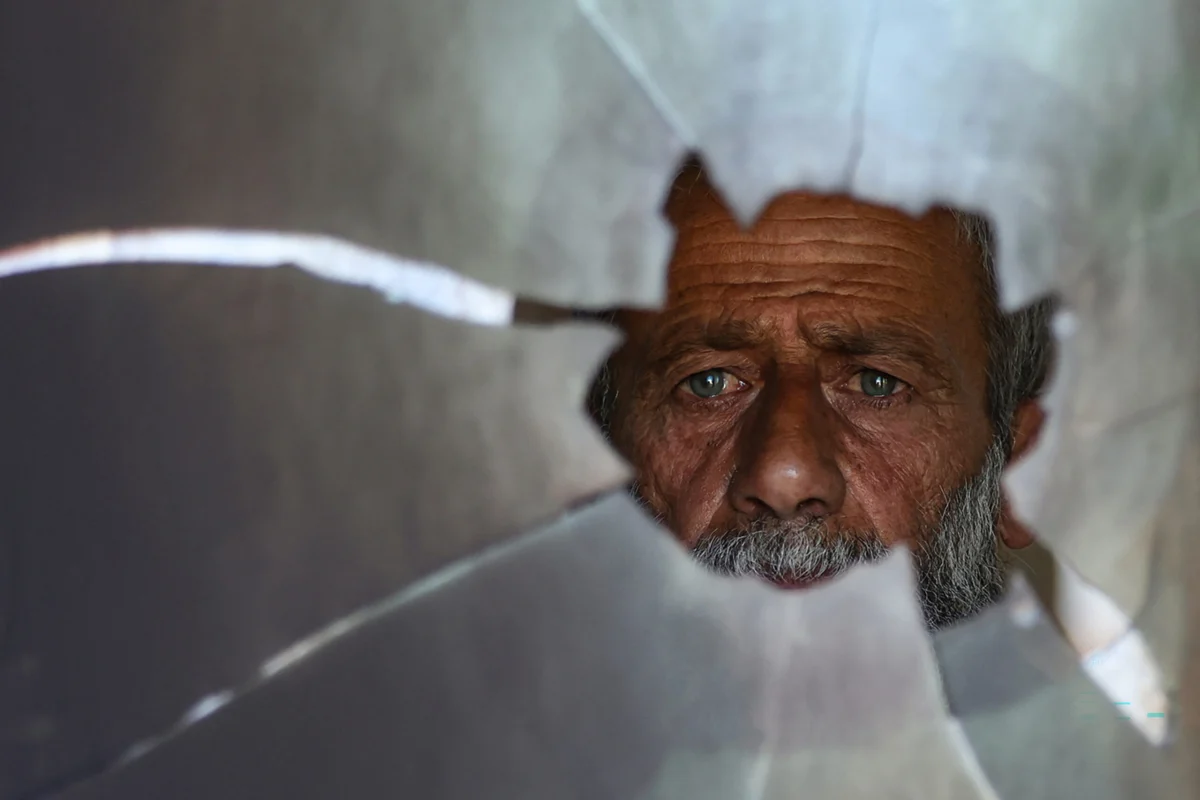
As Israel prepares for crucial elections in October, a dramatic and unprecedented surge in settlement activity across the occupied West Bank has ignited widespread alarm, raising serious concerns that the settler movement is intensifying its efforts to solidify its hold on the territory. This accelerated expansion proceeds in stark defiance of international law and appears intricately linked to the volatile political landscape preceding the polls. The heightened activity is not merely an incremental increase but signals a deliberate and strategic push to create irreversible facts on the ground, fundamentally altering the future prospects for peace and the establishment of a Palestinian state.
Last week, the United Nations issued a stark warning, confirming that attacks by Israeli settlers – frequently carried out with the visible or implicit support of Israeli forces – and the establishment of new illegal settlements and outposts had reached "an all-time high." This alarming assessment underscores a disturbing trend of escalating violence and territorial annexation that has profound humanitarian and political implications. The UN’s Special Coordinator for the Middle East Peace Process highlighted the urgent need for accountability for settler violence and stressed that all settlements are illegal under international law, urging Israel to cease all settlement activities immediately.
This pronounced uptick in settlement activity and related violence coincides with a period of intense political maneuvering within Israel, as members of the hard-right political spectrum seek to galvanize their base and ratchet up the political temperature ahead of the upcoming elections. The current parliamentary term, which began in 2022, has been marked by a concerted effort to entrench Israeli control over the West Bank deeper within the machinery of the state. This strategic shift involved transferring significant authority from the military administration, which traditionally governed the occupied territories, to civilian institutions, thereby normalizing and accelerating settlement planning, construction, and the expansion of supporting infrastructure. This administrative change effectively blurs the lines between sovereign Israeli territory and occupied land, making future disengagement significantly more complex.
However, the political future of the Religious Zionist Party, led by Finance Minister Bezalel Smotrich, remains precarious. Smotrich, widely recognized as the principal architect and most vocal proponent of the settler project within mainstream Israeli political discourse, faces an uncertain electoral outcome. Numerous recent opinion polls suggest that his party is far from guaranteed to meet the electoral threshold required to secure seats in the post-election Knesset. This potential vulnerability has, according to political analysts, triggered a desperate scramble within the party and its allies to aggressively promote the settlement mission. This push aims not only to solidify the party’s ideological platform but also to consolidate the crucial support of the settler minority, a demographic Smotrich himself emerged from and whose interests he passionately represents. The fear of electoral irrelevance is believed to be a powerful motivator behind the current accelerated pace of settlement expansion.
Smotrich’s Vision and the E1 Project
Finance Minister Bezalel Smotrich has been the driving force behind the recent surge in settlement expansion, articulating a clear and unyielding vision for Israeli sovereignty over the entire West Bank. His political career has been characterized by a staunch commitment to the "Greater Israel" ideology, which rejects the concept of a Palestinian state and advocates for the annexation of the West Bank. Upon joining Prime Minister Benjamin Netanyahu’s right-wing coalition in 2022, Smotrich made increased administrative control over the West Bank a non-negotiable condition for his party’s support, demonstrating his leverage and strategic intent.
His influence quickly translated into concrete policy changes. In 2023, he established the influential Settlements Administration agency within the Ministry of Defence, a strategic move given that the ministry oversees the day-to-day occupation of the West Bank. This agency, directly under Smotrich’s purview, effectively centralized and expedited settlement planning and approvals, circumventing previous bureaucratic hurdles. Furthermore, in a move designed to make these changes difficult to reverse, Smotrich legally embedded the Settlements Administration agency within the ministry just last month, effectively institutionalizing its authority and making any future attempt to dismantle or curtail its powers significantly more challenging.
Speaking at a meeting of Prime Minister Benjamin Netanyahu’s right-wing Likud Party in late July, Israel’s Defence Minister Israel Katz publicly boasted about the coalition’s achievements in expanding settlements. According to reports in Israeli media, Katz claimed that under the current governing coalition and Smotrich’s direct supervision, Israel had approved the establishment of 104 new illegal settlements and approximately 160 settlement farms in the West Bank since coming to power in 2022. These figures represent a staggering acceleration of settlement activity, far surpassing the pace of previous administrations and signaling a clear policy of aggressive territorial expansion. The establishment of "settlement farms" is a particularly insidious tactic, often involving the appropriation of vast tracts of Palestinian land for agricultural purposes, effectively creating new facts on the ground with minimal official oversight and frequently leading to displacement and violence against Palestinian farmers.
A cornerstone of Smotrich’s expansionist agenda is the controversial E1 settlement project. In August of last year, Smotrich triumphantly announced the creation of this project, which aims to link occupied East Jerusalem with the existing large settlement of Ma’ale Adumim, located several kilometers to the east. The E1 project is strategically significant because its completion would effectively sever the northern West Bank from the southern West Bank, making the contiguity of a future Palestinian state virtually impossible. Smotrich himself openly acknowledged this devastating impact, brazenly bragging that the E1 project "buries the idea of a Palestinian state." This statement underscores the explicitly political and annexationist goals behind these settlement endeavors, directly challenging the internationally recognized framework for a two-state solution.
The Electoral Crucible and Netanyahu’s Predicament

The current electoral cycle presents a complex web of challenges for both Bezalel Smotrich and Prime Minister Benjamin Netanyahu. For Smotrich, the risk of failing to cross the electoral threshold is a profound concern. Israeli political analyst Nimrod Flaschenberg noted that it is "hard to imagine" that Netanyahu "won’t come up with some kind of imaginative ploy to keep him and the far right on the ticket," referring to Smotrich. Flaschenberg explained, "He has very strong support within the settlements and the ideological far-right, but that might not be enough in and of itself to get him securely past the threshold. He’s being squeezed between the populism of [far-right Israeli National Security Minister Itamar] Ben-Gvir and what many people in the lower middle class see as the security of Netanyahu." This analysis highlights Smotrich’s precarious position, caught between competing factions of the far-right and the broader appeal of the Likud.
Netanyahu, Smotrich’s crucial ally, faces an even more existential battle. Observers describe his current political struggle as not merely an electoral contest but a fight for his personal freedom and his historical legacy. His long-running corruption trial continues to loom large, threatening his political future and potentially leading to imprisonment. Furthermore, the prospect of an independent inquiry into his government’s failings ahead of the Hamas-led attack of October 2023 adds another layer of vulnerability, potentially exposing significant shortcomings in his leadership and defense policies.
Given these immense personal and political stakes, analysts suggest that the incumbent prime minister is far from willing to risk alienating Israel’s hard-right and settler movement by condemning the increasing levels of violence in the West Bank or curtailing settlement expansion. His political survival hinges on maintaining the support of this powerful bloc. Yossi Mekelberg of Chatham House noted Netanyahu’s guarded public statements on the issue, stating, "We saw him come out on US TV and concede that there may have been a few incidents in the West Bank, but nothing serious," regarding the widespread violence that has engulfed the West Bank in recent weeks. Mekelberg added, "He needs the hard right and settlers’ support, if not for him individually, then at least for his bloc." This political calculus explains Netanyahu’s apparent reluctance to take a firm stand against settler violence or the accelerated expansion, as doing so could jeopardize his coalition and his political future.
While Netanyahu might possess some room to maneuver on other highly controversial issues, such as the exemption of ultra-Orthodox Jews from military conscription, no such flexibility exists regarding the hard right and the settlers. Ultra-Orthodox parties, a vital component of the 2022 coalition government, have consistently made the exemption of their constituents from the draft – which almost all Israeli adults are eligible for – a central pillar of their political campaigning. Mekelberg elaborated on this distinction, stating, "Netanyahu knows that the ultra-Orthodox will likely stay with him. The settlers are more binary. You’re either for them or against," he said. This "binary" nature of settler politics means that any perceived concession or opposition from Netanyahu could lead to an immediate and decisive withdrawal of support, a risk he seems unwilling to take.
International Law and Global Condemnation
The international community, including the United Nations, the European Union, and the vast majority of nations, unequivocally considers Israeli settlements in the occupied West Bank to be illegal under international law. This position is rooted in the Fourth Geneva Convention, which prohibits an occupying power from transferring its own population into occupied territory. Numerous UN Security Council resolutions, including Resolution 2334 passed in 2016, have reaffirmed this legal consensus, stating that settlements "have no legal validity" and constitute a "flagrant violation under international law."
Despite this consistent international condemnation, Israel has largely disregarded these pronouncements, continuing its settlement enterprise with increasing vigor. The recent UN warning of an "all-time high" in settlement attacks and outpost creations highlights the growing gap between international legal norms and Israeli actions on the ground. While the United States, Israel’s closest ally, has historically expressed concerns about settlement expansion, its reactions have often been muted or lacked significant punitive measures, contributing to a perception of impunity. The Biden administration has reiterated its opposition to settlement expansion, viewing it as an obstacle to peace, but concrete steps to halt the activity have been notably absent.
The Catastrophic Impact on Palestinians
Irrespective of the intricate Israeli electoral tactics and political maneuvering, the consequences of this escalating settlement activity and associated violence for the Palestinian population living under occupation in the West Bank have been catastrophic. Their daily lives are increasingly defined by dispossession, fear, and a systematic erosion of their rights and livelihoods.
According to the Palestinian Authority’s Colonization and Wall Resistance Commission, July alone witnessed a staggering 2,256 attacks against Palestinians and their property. A breakdown of these figures reveals the dual nature of the threat: 1,458 attacks were perpetrated by the Israeli army, while 798 were carried out by settlers. These attacks range from physical assaults, harassment, and destruction of property to the uprooting of olive trees, vandalism of homes, and direct confrontations leading to injuries and fatalities. The frequent involvement of the Israeli army in settler-related incidents, often providing protection or failing to intervene effectively, exacerbates the sense of vulnerability and injustice among Palestinians.
The expansion of settlements and outposts directly leads to the confiscation of Palestinian land, often fertile agricultural areas, and the disruption of traditional livelihoods. Palestinians are increasingly restricted in their movement, access to resources, and ability to cultivate their lands, leading to economic hardship and displacement. The construction of settler-only roads, checkpoints, and segregated infrastructure further fragments Palestinian communities and entrenches the occupation.

The recent surge in violence has prompted strong reactions even within Israel. Yair Golan, leader of the opposition Democrats party, offered a rare and forthright criticism of the settler "extremism" that he identified as triggering the latest round of violence. His comments, however, were met with swift and harsh rebuke from the right-wing. Defence Minister Israel Katz, in response to Golan’s remarks, accused him of spreading a "blood libel," a deeply inflammatory term with historical anti-Semitic connotations, designed to silence criticism and delegitimize any questioning of settler actions.
Leaks from the same meeting, reported in Hebrew-language media, revealed an even more disturbing sentiment among other ministers present. They reportedly called for a harsher response to any resistance from Palestinians and advocated for the military to be granted even greater freedom to use live fire against them. This rhetoric signals a further hardening of attitudes within the Israeli government and a potential for even greater violence against Palestinians in the coming months.
Yair Dvir, from the Israeli human rights group B’Tselem, underscored the gravity of the situation: "As the election gets closer, we’re seeing an even greater increase in the violence that’s been escalating ever since October 2023." He further emphasized, "It’s important to add this isn’t just the scale of the violence, but also its brutality and the participation of the Israeli state – both the soldiers and the political support they’re receiving." This statement highlights the systemic nature of the violence, where settler actions are often intertwined with state apparatus and political backing, creating a climate of impunity.
Broader Implications and an Uncertain Future
The current trajectory of escalating settlement expansion and violence in the West Bank carries profound and destabilizing implications for the region and the international community. Firstly, it deals a severe blow to the already fragile prospects of a two-state solution. The continuous creation of new facts on the ground, particularly projects like E1, makes the establishment of a viable, contiguous Palestinian state increasingly implausible, if not impossible. This erosion of the two-state paradigm leaves a dangerous void, with no clear alternative path to resolve the Israeli-Palestinian conflict.
Secondly, the humanitarian crisis in the West Bank is deepening. The unchecked expansion of settlements, coupled with settler violence and military actions, exacerbates Palestinian suffering, leads to further land confiscation, and contributes to forced displacement. This creates an environment ripe for further radicalization and conflict, undermining any efforts towards stability and coexistence.
Thirdly, Israel’s international standing continues to be eroded. Its persistent defiance of international law regarding settlements and its perceived inaction or complicity in settler violence increasingly isolates it on the global stage. While some allies may offer political support, the moral and legal arguments against the occupation and settlement enterprise are becoming undeniable for a growing number of nations.
Finally, the internal political dynamics within Israel are becoming increasingly polarized. The reliance of mainstream parties, particularly Likud, on the far-right for political survival empowers extremist elements and pulls the political discourse further to the right. This trend makes it increasingly difficult for any future Israeli government to pursue a path of genuine peace negotiations or to make the necessary concessions for a lasting resolution.
As the October elections approach, the West Bank remains a flashpoint of escalating tensions. The desperate scramble by hardline factions to cement their control, coupled with the political vulnerabilities of key leaders, threatens to plunge the region into deeper instability. Without a significant shift in policy from Israel and a more robust intervention from the international community, the prospects for a just and peaceful resolution to the Israeli-Palestinian conflict appear increasingly dim, with the foundations of a future Palestinian state systematically dismantled block by block. The current events are not merely a reflection of electoral pressures but a profound and potentially irreversible transformation of the geopolitical landscape of the West Bank.
