

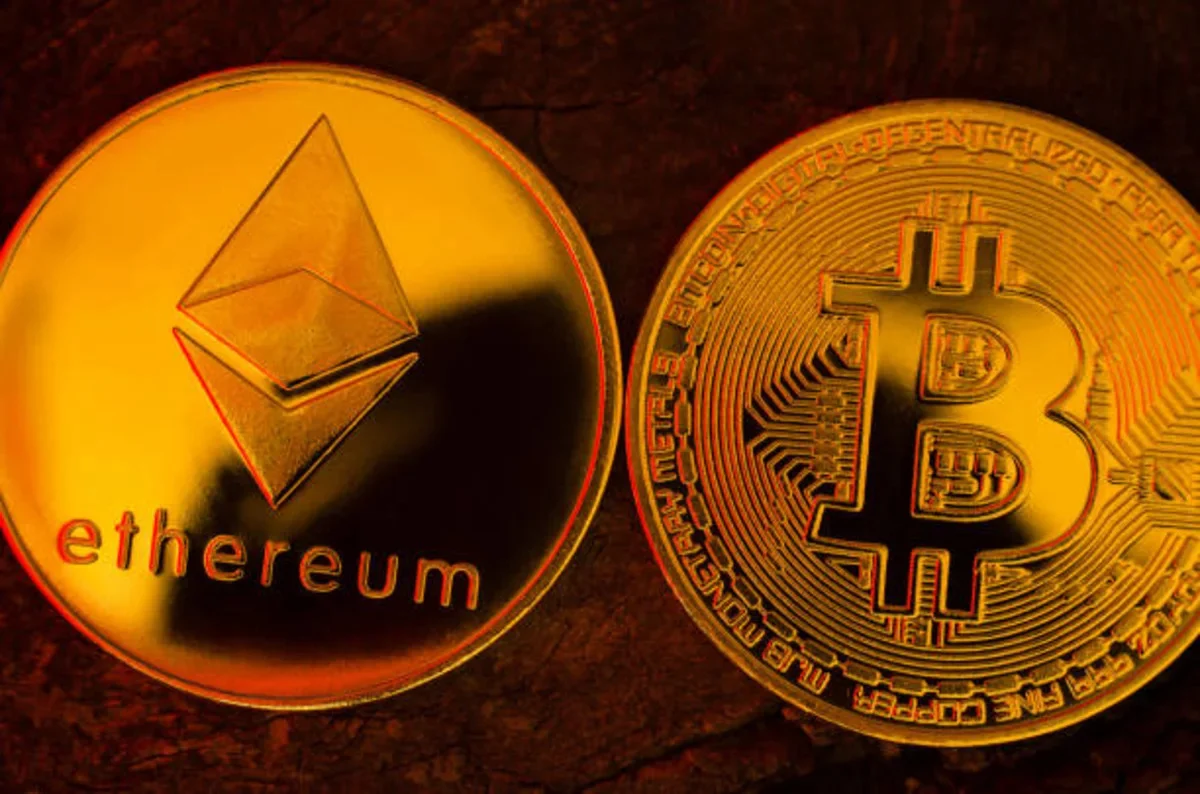
Bitcoin (BTC-USD) commenced trading on Tuesday, August 4, 2026, at $63,463.72, holding steady against Monday’s opening valuation, before advancing to $63,818.70 by 9:02 a.m. ET. Similarly, Ethereum (ETH-USD) initiated the trading day at $1,858.53, a 1.3% dip from the previous day’s open, but quickly rebounded to $1,874.41 by 9:04 a.m. ET. The early trading session for both leading cryptocurrencies reflects a market in a narrow consolidation phase, with slight upward momentum observed this morning, as investors meticulously weigh the immediate implications of legislative progress in Washington and escalating geopolitical developments in the Middle East. The palpable anxiety among crypto stakeholders regarding the passage of the proposed CLARITY Act, particularly before the impending summer congressional recess, underscores the profound influence of regulatory frameworks on market sentiment and future growth trajectories.
The CLARITY Act: A Critical Juncture for Crypto Regulation
The Crypto-asset Legal and Regulatory Innovation and Transparency (CLARITY) Act stands as a cornerstone piece of legislation designed to provide much-needed regulatory certainty to the burgeoning digital asset industry in the United States. Its primary objective is to delineate clear jurisdictional boundaries between key regulatory bodies such as the Securities and Exchange Commission (SEC) and the Commodity Futures Trading Commission (CFTC), thereby clarifying the classification of various digital assets. For years, the crypto industry has grappled with an ambiguous regulatory landscape, often operating under existing securities and commodities laws ill-suited for the unique characteristics of blockchain technology. This lack of clarity has been cited by numerous industry leaders as a significant impediment to innovation, institutional adoption, and robust investor protection.
Introduced earlier in the 119th Congress, the CLARITY Act has seen a protracted journey through legislative committees. Initial bipartisan optimism surrounding the bill’s potential to foster American leadership in the digital economy has been tempered by entrenched political divisions and intense lobbying efforts from various sectors. Proponents argue that a comprehensive framework would unlock substantial economic growth, create jobs, and safeguard consumers from fraudulent schemes by establishing clear rules of engagement for exchanges, custodians, and decentralized finance (DeFi) protocols. Conversely, some critics, particularly within traditional financial circles and certain regulatory agencies, have expressed concerns about potential loopholes, the speed of technological evolution outpacing legislative updates, and the risk of legitimizing what they perceive as speculative or volatile assets without sufficient oversight.
The urgency to pass the CLARITY Act before Congress adjourns for its summer recess is a significant focal point for investors. Historically, legislative momentum often wanes during recesses, and any delay could push the bill’s consideration well into the latter half of 2026, potentially nearing the lead-up to the 2026 midterm elections, where political priorities often shift. Such a delay would prolong the current state of regulatory limbo, which Kavita Gupta, founder and general partner of Delta Blockchain Fund, emphasized in a recent interview with Yahoo Finance. Gupta articulated that the absence of a clear regulatory roadmap continues to deter large-scale institutional investment and stifles domestic innovation, potentially ceding ground to more crypto-friendly jurisdictions globally. The industry’s collective plea for legislative action reflects a desire for a stable operating environment conducive to long-term planning and investment.
Geopolitical Tensions in the Middle East: A Global Market Undercurrent
Beyond domestic regulatory concerns, the global macroeconomic landscape and, specifically, developments in the Middle East, are exerting a discernible influence on financial markets, including cryptocurrencies. While the precise nature of the "developments" remains subject to ongoing analysis, heightened tensions in the region typically trigger a "risk-off" sentiment across global asset classes. This often leads investors to divest from riskier assets like cryptocurrencies and equities, seeking refuge in traditional safe havens such as gold, the Japanese Yen, or U.S. Treasury bonds.
The Middle East, a critical nexus for global energy supplies and international trade routes, has historically been a barometer for global stability. Any perceived escalation – be it political instability, military confrontations, or disruptions to oil production and transit – can send ripples through commodity markets, driving up oil prices and exacerbating inflationary pressures worldwide. In an environment already sensitive to inflation and interest rate hikes by central banks, such geopolitical uncertainties add another layer of complexity. For cryptocurrencies, which have shown increasing correlation with traditional equity markets, particularly tech stocks, during periods of macro-economic stress, this translates into downward pressure or dampened upward mobility. While Bitcoin is often touted as "digital gold" and a potential hedge against inflation or geopolitical turmoil, its performance in recent years has frequently aligned with broader risk assets, challenging this narrative in certain contexts. The current situation highlights this ongoing debate: whether Bitcoin can truly serve as an uncorrelated safe haven or if it remains largely a risk-on asset.
Bitcoin’s Current Trajectory and Historical Context
Bitcoin’s performance this Tuesday, opening flat and then registering a modest gain, comes against a backdrop of significant volatility over the past year. On October 6, 2025, Bitcoin reached an all-time high of $128,198.07, a testament to its explosive growth phase fueled by increasing institutional adoption, positive regulatory sentiment in certain regions, and a broader bull run across risk assets. This peak was a culmination of several factors, including the successful launch of various spot Bitcoin Exchange-Traded Funds (ETFs) in major markets, which significantly expanded access for traditional investors, and a growing narrative around Bitcoin’s role in a diversified portfolio.
However, since that peak, the market has undergone a significant correction and consolidation phase. The current price of $63,818.70 represents a substantial retreat from its all-time high, indicating a period of profit-taking, deleveraging, and increased caution among investors. This downturn was likely exacerbated by a combination of factors: persistent inflationary concerns leading to tighter monetary policies globally, a broader tech sector slowdown, and the lingering regulatory ambiguity in key markets like the U.S. Despite this correction, Bitcoin’s market capitalization remains robust, hovering around $1.25 trillion as of this morning, reflecting its dominant position as the largest cryptocurrency. Trading volumes have also remained substantial, with daily averages well above $20 billion, indicating continued active participation from both retail and institutional traders. The all-time low for Bitcoin, a mere $0.04865 on July 14, 2010, serves as a stark reminder of its nascent beginnings and the unprecedented value appreciation it has achieved over more than a decade, fundamentally reshaping the financial landscape.
Ethereum’s Evolution and Performance Dynamics
Ethereum, the second-largest cryptocurrency by market capitalization, displayed a similar pattern of initial weakness followed by a modest recovery on August 4, 2026. Opening down 1.3% from Monday’s price, it quickly found support, rising to $1,874.41. Ethereum’s journey has been equally dynamic, with its all-time high of $4,953.73 recorded on August 24, 2025. This peak coincided with a period of intense development and excitement around its ecosystem, particularly the successful completion of "The Merge" and subsequent upgrades aimed at improving scalability and efficiency. The transition to a Proof-of-Stake (PoS) consensus mechanism significantly reduced its energy consumption, addressing environmental concerns and making it a more attractive asset for ESG-conscious investors.
The current price of Ethereum, like Bitcoin, reflects a post-peak correction and consolidation. While still considerably below its all-time high, the network continues to demonstrate robust activity. Ethereum’s market capitalization stands at approximately $225 billion, and its daily trading volume consistently hovers around $8-10 billion. The network remains the backbone of the decentralized application (dApp) ecosystem, hosting the vast majority of DeFi protocols, Non-Fungible Tokens (NFTs), and various Web3 projects. This utility-driven demand underpins its long-term value proposition, even amidst price fluctuations. The all-time low for Ethereum, $0.4209 on October 21, 2015, highlights its remarkable ascent from obscurity to a global financial infrastructure layer.
A key aspect of Ethereum’s ecosystem, and a factor influencing its supply dynamics, is "staking." With the transition to Proof-of-Stake, ETH holders can lock up their tokens to help secure the network and validate transactions, earning rewards in return. This process effectively removes a portion of ETH from the circulating supply, potentially creating upward price pressure, especially as more institutional entities participate in staking pools. The growth of staking has become a significant metric for analysts tracking Ethereum’s fundamental strength and investor commitment.
Expert Perspectives and Industry Reactions
The ongoing legislative gridlock surrounding the CLARITY Act continues to elicit strong reactions from industry leaders and market participants. Kavita Gupta’s advocacy for timely passage resonates with a broad spectrum of the crypto community, who view regulatory clarity as the single most critical factor for mainstream adoption and market maturation. "Without a clear rulebook, institutional players will remain hesitant, and innovation will inevitably seek more welcoming shores," Gupta reportedly stated, emphasizing the potential for the U.S. to fall behind other nations already advancing comprehensive digital asset frameworks.
Other prominent voices in the industry have echoed these sentiments. The Blockchain Association, a leading industry advocacy group, recently issued a statement urging Congress to prioritize the CLARITY Act, highlighting the economic benefits and the need for American competitiveness. On the political front, while there is bipartisan acknowledgment of the need for crypto regulation, the specifics of the CLARITY Act have faced hurdles, with some lawmakers pushing for more stringent consumer protection measures, while others prioritize fostering innovation with lighter touch regulation. The White House’s stance, while generally supportive of responsible innovation, has maintained a cautious approach, indicating that any legislation must balance growth with robust risk mitigation.
Regarding the geopolitical situation, market analysts are divided. Some believe that sustained global instability could eventually push investors towards Bitcoin as a decentralized, censorship-resistant asset, reinforcing its "digital gold" narrative. Others maintain that in times of crisis, liquidity remains paramount, and traditional safe havens will continue to dominate. "For now, crypto is still largely seen as a risk asset," commented a senior analyst at a major investment bank, "but the long-term potential for it to decouple from traditional markets during severe global shocks is a narrative that’s continually tested."
Broader Market Dynamics and Future Outlook
The broader market dynamics in August 2026 are characterized by a delicate balance between persistent inflationary pressures, the Federal Reserve’s ongoing monetary policy adjustments, and a nascent recovery in global economic growth. The crypto market, once seen as entirely distinct, has increasingly integrated into the broader financial ecosystem. Its movements are now often influenced by interest rate expectations, quarterly earnings reports of major tech companies, and shifts in global liquidity.
Institutional adoption, though temporarily slowed by regulatory uncertainty, remains a powerful long-term driver. Large financial institutions continue to explore and integrate blockchain technology into their operations, from settlement systems to tokenized assets. The development of institutional-grade custody solutions, sophisticated trading platforms, and the increasing availability of regulated investment products (like spot ETFs) are steadily paving the way for greater capital allocation into digital assets.
Looking ahead, the resolution of the CLARITY Act before the summer recess could provide a significant catalyst for a sustained rally, injecting a much-needed dose of confidence into the market. Conversely, a prolonged delay could exacerbate investor anxiety, potentially leading to further consolidation or downward pressure as capital seeks more predictable environments. The unfolding geopolitical situation in the Middle East will also remain a critical variable, capable of triggering sudden shifts in market sentiment. For both Bitcoin and Ethereum, their respective technological roadmaps—including Bitcoin’s continued scaling efforts and Ethereum’s ambitious sharding implementation—represent fundamental drivers that, over the long term, are expected to enhance their utility and value proposition, irrespective of short-term market fluctuations driven by external forces.
Understanding the Assets: Bitcoin vs. Ethereum
For investors new to the digital asset space, it’s crucial to distinguish between Ethereum, the blockchain platform, and Ether (ETH), its native cryptocurrency. When individuals refer to "buying Ethereum," they are typically acquiring ETH, the digital asset used to power applications on the network, pay for transaction fees (gas), and serve as a store of value. Ethereum’s smart contract functionality has enabled
