

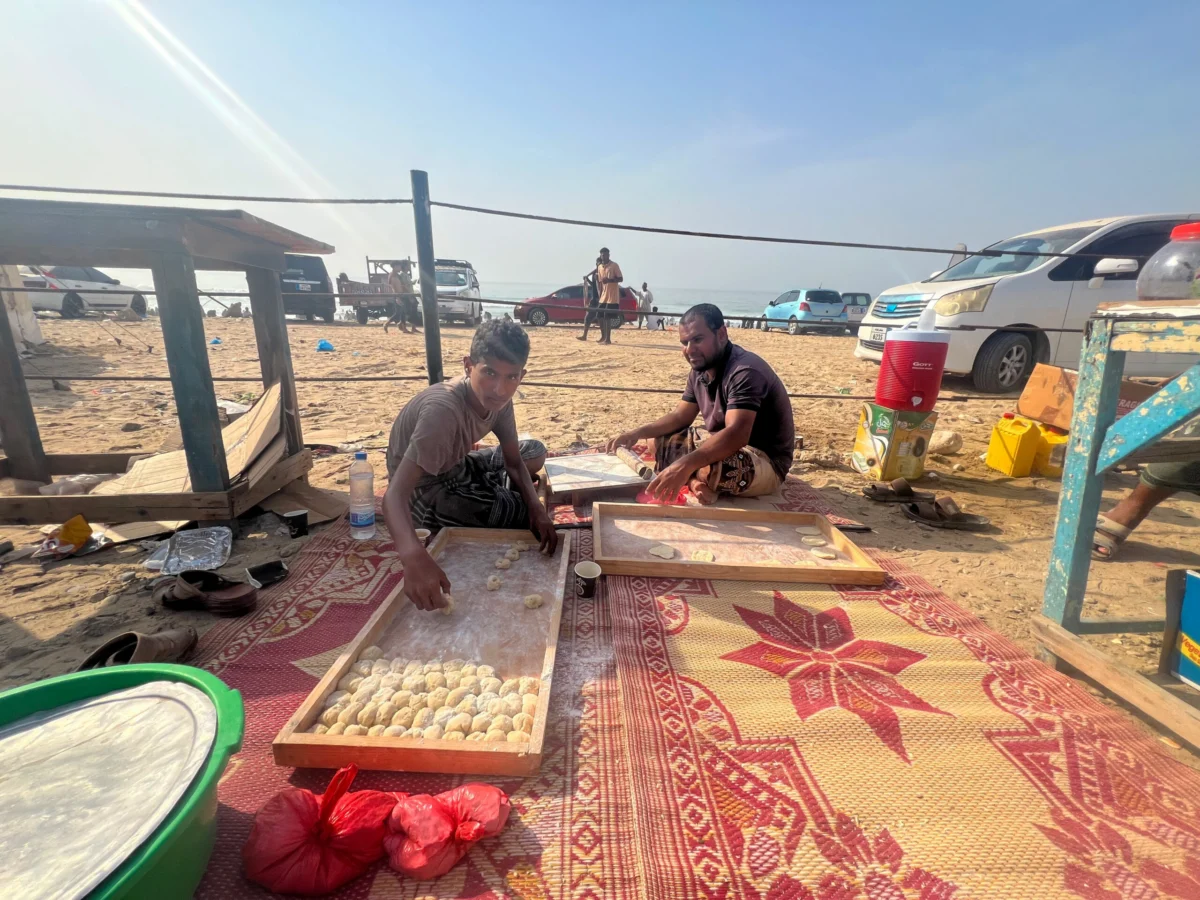
Before the sun crests the horizon over Mukalla’s ancient beaches, 15-year-old Abdulrahman Badr and his friend Tareq are already engaged in a ritual that blends tradition with enterprise. At their customary spot on the sprawling sands, they meticulously brew tea and knead dough, preparing bakhmari, a beloved fermented flatbread native to Hadramout – the vast eastern Yemeni governorate whose capital is the coastal city of Mukalla. Their nascent bakery serves a bustling clientele: thousands of beachgoers who flock to the Arabian Sea shoreline, drawn by a unique annual climate phenomenon that offers a temporary reprieve from the region’s searing summer heat.
This climatic blessing, known locally as Al-Baldah, typically spans from late July to early August. For a few precious weeks, it transforms Mukalla, normally synonymous with scorching temperatures and oppressive humidity, into a vibrant oasis. The phenomenon attracts tens of thousands of visitors not only from across Yemen but also from abroad, seeking solace in the cool waters and refreshing sea breeze that sweep the coastline. Before dawn, the beaches, usually deserted in the face of the unrelenting summer sun, become a hive of activity, packed with men, women, and children immersing themselves in the invigorating embrace of the ocean.
The Al-Baldah Phenomenon: A Meteorological Marvel and Cultural Cornerstone
Al-Baldah is more than just a season; it’s a profound meteorological event deeply embedded in the cultural fabric and economic rhythm of Hadramout. Scientifically, it is understood as a localized manifestation of the wider Indian Ocean monsoon system, specifically linked to the southwestern monsoon winds. These winds drive a process known as oceanic upwelling along the Yemeni coast. As the strong surface winds push warmer surface waters away from the shore, deeper, colder, nutrient-rich water rises to replace them. This upwelling significantly cools the nearshore waters and the coastal atmosphere, drastically lowering temperatures and humidity compared to the interior desert regions and other parts of the Arabian Peninsula during the peak of summer.
Historically, coastal communities in Hadramout have observed and celebrated Al-Baldah for centuries. It marked a period of respite for fishermen, allowing them to venture further into the cooler, more productive waters, and for agriculturalists to benefit from the milder conditions. Over time, it evolved into a significant social and economic gathering, a time when families could escape the relentless heat that defines much of Yemen’s geography. The distinct microclimate created by Al-Baldah makes Mukalla a unique summer destination in an otherwise unforgiving regional climate, offering average temperatures that can be 10-15 degrees Celsius lower than inland areas, alongside a welcome increase in air circulation.
Economic Boom Amidst Adversity
For many, like Abdulrahman Badr, Al-Baldah represents a critical economic opportunity. "Al-Baldah is a wonderful season. Business is booming and people are coming from everywhere," Badr told Al Jazeera, his young hands deftly pressing and shaping pieces of dough. He is one of many who seize this seasonal surge to earn much-needed income. At the start of the season, he and four friends pooled their resources to set up a simple wooden table, offering freshly prepared bakhmari, sambusi (a savory pastry akin to an Indian samosa), and hot tea to hungry swimmers. His motivation is clear and poignant: "I will save what I earn from my work here to buy supplies for the new school year, which is about to begin," said the student, his tired face lightly dusted with flour and beach sand, embodying the resilience of Yemen’s youth.
Yemen has been mired in a devastating civil war for over a decade, a brutal conflict between the Iran-backed Houthis and the Saudi-backed, internationally recognized government. This protracted struggle has claimed thousands of lives, wounded countless others, and displaced millions, plunging the nation into one of the world’s worst humanitarian crises. Millions now face acute hunger and extreme poverty, while vital infrastructure – schools, roads, power stations – lies in ruins. Against this backdrop of profound suffering, Al-Baldah offers not only a precious break from daily hardships but also a rare and vital chance for many to earn a livelihood.
The influx of visitors to Mukalla during Al-Baldah translates into a tangible economic boost, akin to the heightened commercial activity seen during religious festivals like Ramadan and Eid. Hotels report near-full occupancy, while shops, restaurants, and transportation services experience a significant surge in demand. Official figures from the provincial tourism office underscore this trend: approximately 35,000 people visited Mukalla during Al-Baldah this year, a notable increase from 20,000 last year and 30,000 in 2024. This growth, despite the ongoing national crisis, highlights the season’s enduring appeal and its crucial role in the local economy.
Raid al-Sewad, a young receptionist at the Mecca Hotel, which boasts sea views, confirmed the heightened activity: "The hotel’s occupancy is even higher than in other seasons. The hotel is full most of the time during Al-Baldah." This surge in the hospitality sector cascades into other areas, supporting local suppliers, vendors, and service providers. The evenings, after beachgoers retreat from the shore, see Mukalla’s streets clogged with traffic, its shops and malls bustling with shoppers, creating a temporary but potent illusion of normalcy and prosperity.
Social Dynamics and the Quest for Normalcy
The beaches themselves become a canvas of community life and collective joy. Fuad Hassan, a Mukalla resident originally from the embattled city of Taiz, sought refuge on the sand after a refreshing swim, his two children still reveling in the sea. He described how the dawn swim recharges his energy, and how he cherishes the sight of the beaches teeming with happy swimmers. "We come to the beach after the dawn prayer and swim in the cold water for one or two hours before going back home. I love the fun and the hustle. Everywhere you look, people are playing and enjoying themselves," said Hassan, clad in long swimming trunks.

Groups of young men engage in boisterous games, playfully tossing friends into the sand or burying them up to their necks. Women, often dressed in full black abayas, wade into the cool sea, embracing the respite from the heat. Along the beachfront, temporary stalls spring up, offering an array of food, drinks, and snacks, their vendors tirelessly serving the vibrant crowds. This festive atmosphere, however fleeting, provides a much-needed psychological balm for a population constantly grappling with the grim realities of war. It allows families to create cherished memories, children to experience moments of carefree play, and individuals to connect in a shared pursuit of simple pleasures.
Undercurrents of Frustration and Unmet Needs
Yet, beneath the surface of this seasonal merriment, an undercurrent of frustration and unmet needs persists. Not everyone shares in the joyous revelry. Hani Abdullah, an unemployed young man with a neatly trimmed black beard, who mentioned having quit college, sat quietly by the seaside despite wearing swimming attire. He expressed annoyance at some of the downsides of the large crowds and a deeper critique of the situation. "Al-Baldah revives the city of Mukalla as people come from everywhere. But we do not benefit from all this traffic," he lamented.
Abdullah’s perspective highlights a critical point: the desperation that drives many to the beach is not solely for leisure. He pointed out that for many, the beach offers an escape from homes made unbearable by chronic, sweltering power cuts – a pervasive issue across war-torn Yemen. For Abdullah, the priority should not be on organizing festive events for Al-Baldah, however enjoyable they might be, but rather on addressing fundamental deficiencies in basic services. "The state has spent money on activities that are unnecessary while people are hungry. They should take care of the people," Abdullah argued, articulating a widely held sentiment among those struggling with daily hardships. The scarcity of reliable electricity, clean water, and food remains a daily struggle for millions, and for some, the celebration feels like a misplaced effort when basic necessities are lacking.
Official Initiatives and Economic Justification
Local authorities, cognizant of both the opportunities and the criticisms, have made concerted efforts to enhance the Al-Baldah experience. In the second half of July, they organized the Al-Baldah Tourism Festival, a comprehensive program designed to entertain locals and attract more tourists. The festival featured a diverse array of cultural and sporting events, including traditional musical performances, vibrant folk dances, evocative poetry recitals, competitive swimming races, beach volleyball tournaments, and a marathon. Exhibitions showcasing homemade products and traditional foods, alongside open-air musical performances, also added to the festive ambiance, as noted by Arwa al-Akbari, deputy head of the tourism ministry office in Hadramout.
Al-Akbari emphasized the strategic importance of the season. "The season represents the peak of annual tourist activity, as Mukalla and coastal cities such as al-Shihr, Hami, and Burum transform into vibrant destinations receiving hundreds of thousands of visitors," she told Al Jazeera. "This influx revitalizes hotels, parks, and commercial markets, reviving the city after periods of calm and local economic stagnation."
Responding directly to criticisms that funds allocated for Al-Baldah festivities should instead be directed towards improving electricity and other essential services, Al-Akbari provided a crucial clarification. She stressed that the events are primarily funded by local businesses and private sector sponsorships, rather than public money. "The funds allocated to the events do not reduce the budget for operating electricity. They are an investment in the local economy. The money spent on organizing the season is returned many times over through increased commercial activity, supporting thousands of families and small vendors," she explained. This statement aims to position the festival not as a frivolous expenditure, but as a vital catalyst for local economic growth and job creation, particularly in a region where formal employment opportunities are scarce.
Nuances of Economic Impact and Future Aspirations
Despite the official enthusiasm and impressive visitor numbers, some local business owners experienced a more nuanced reality. Ahmed, a home linens shop owner who preferred to be identified only by his first name, noted that this year’s traffic felt lighter than in previous years, which impacted his earnings. "Business usually picks up during Al-Baldah, although not as much this year as in previous years. We used to receive many customers from Marib, Shabwa, and Wadi Hadramout. This year, however, many visitors from Marib, who generally have greater purchasing power, have not come," he observed. This discrepancy suggests that the war’s continued impact on internal displacement, regional travel, and the overall economic well-being of different governorates still affects even the seasonal boom. Wealthier individuals from resource-rich areas like Marib might be facing new challenges, or choosing different destinations, altering the spending patterns within Mukalla.
The Al-Baldah season, therefore, encapsulates the paradox of Yemen today: a vibrant display of resilience and temporary prosperity coexisting with profound national hardship. It highlights the ingenuity of its people in finding opportunities even in the most challenging circumstances, and the enduring power of natural phenomena to shape human lives and economies.
As the season slowly draws to a close, and after weeks of diligent work, Abdulrahman Badr carries not only the savings for his school supplies but also a deeper wish for his homeland. His aspirations extend beyond personal gain to a broader hope for national recovery. "I want the country’s situation to get better. I want reliable electricity, and I want oil and gas to be available," Badr articulated, echoing the desires of millions of Yemenis. His words are a stark reminder that while Al-Baldah offers a vital annual escape and economic lifeline, the fundamental issues plaguing Yemen – peace, stability, and access to basic services – remain paramount and desperately needed for a sustainable future. The cool breeze of Al-Baldah may bring temporary relief, but a lasting solution to the conflict is the ultimate dream for Mukalla and all of Yemen.
