

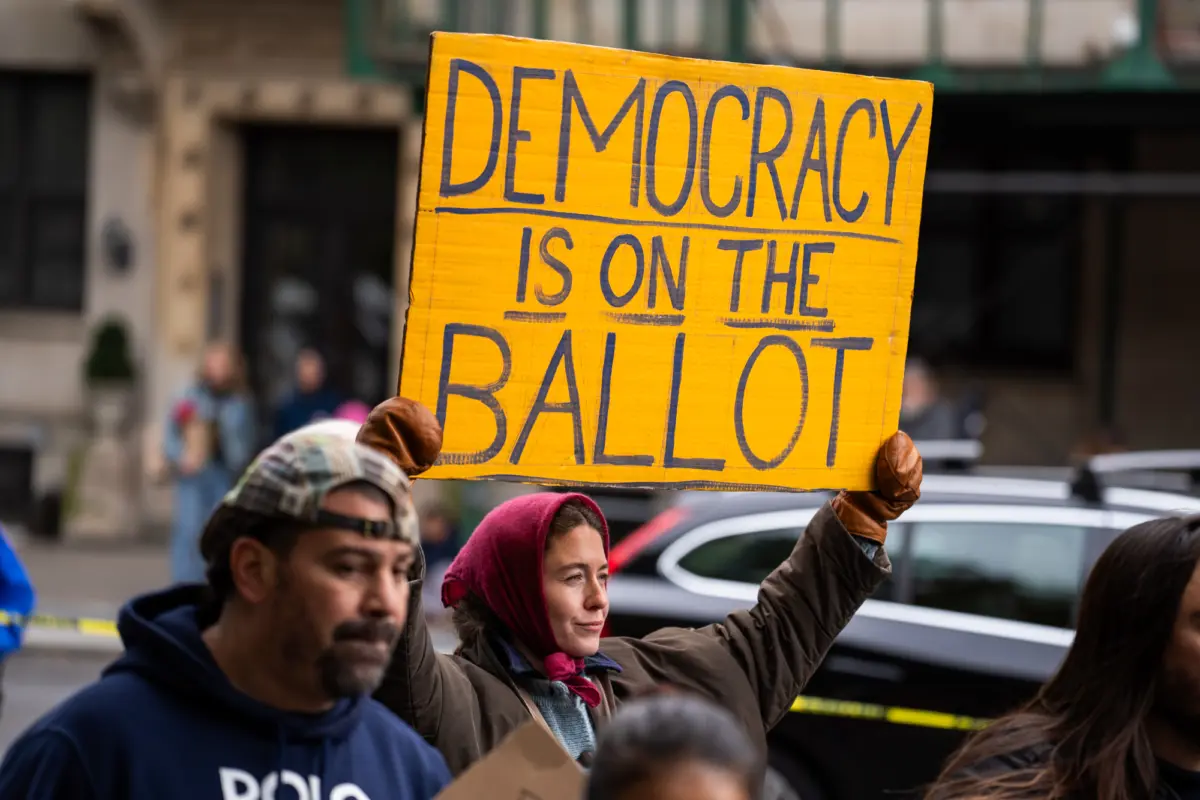
Rallies organized by the No Kings network, a grassroots coalition formed in opposition to United States President Donald Trump, took place on Saturday in cities and communities across the US, with the primary objective of encouraging citizens to cast their ballots early in the upcoming midterm elections. These synchronized events, part of a larger national mobilization effort, underscored a critical juncture in American electoral politics, marked by fervent calls for voter participation alongside escalating concerns and legal challenges surrounding election integrity.
The Evolution of "No Kings": From Protest to Participation
The No Kings network, which emerged during the early days of President Trump’s administration, initially gained prominence through large-scale marches and demonstrations expressing widespread discontent with the presidency. What began as a series of reactive protests has evolved into a sophisticated, nationwide movement focused on proactive voter engagement. With over 3,000 events planned across the United States, the network’s current initiative, aptly dubbed "No Kings: Vote Early," represents a strategic pivot towards direct electoral action. Organizers have deliberately framed these latest efforts as nonpartisan, emphasizing universal voter participation rather than explicit political endorsement, even as the network’s foundational identity remains rooted in its opposition to the sitting president.
"It’s a day of nonpartisan voter participation: we are bringing our community together to make a plan to vote early and ensuring every eligible voter understands their options for how to vote and has the opportunity to make their voice heard," organizers articulated in a public statement. This declaration highlights a dual purpose: to educate voters on the mechanics of early voting and to foster a collective commitment to exercising this fundamental democratic right. By advocating for early voting, the "No Kings" organizers express a clear strategic aim: to preemptively mitigate any potential for malfeasance or disruption that might arise on Election Day itself, thereby safeguarding the integrity of the ballot. This proactive stance reflects a broader sentiment among various advocacy groups that greater early participation can reduce pressure on Election Day infrastructure and minimize opportunities for last-minute challenges or logistical hurdles.
A Nationwide Call to Action: Voices from the Rallies
The rallies on Saturday manifested in diverse forms across the nation, each echoing the central theme of empowered voter participation. In Washington, D.C., despite the crisp, autumnal chill, a spirited gathering convened at the iconic Lincoln Memorial. A band provided musical entertainment for what appeared to be several hundred attendees, many clad in caps and coats. The atmosphere was one of determined optimism, with many in the crowd dancing to the tunes, their energy palpable. A sea of signs bobbed above the crowd, emblazoned with urgent messages like "VOTE EARLY" and "HANDS OFF MY VOTE!", symbolizing both the call for participation and a defiant assertion of electoral rights. The choice of the Lincoln Memorial, a site steeped in American history and civil rights activism, underscored the profound significance organizers placed on the act of voting.
Further south, in Atlanta, Georgia, another vibrant rally took place, featuring impassioned speeches from local leaders. City Councilman Michael Julian Bond delivered a particularly resonant address, urging the crowd to not only vote themselves but to actively encourage others to cast their ballots well in advance of the November 3 general election. Bond’s rhetoric tapped into a powerful narrative of civic duty and personal agency. "The Constitution gives you one power, right? That is the power to vote. Are you gonna use that power?" he challenged the attendees, eliciting a resounding affirmation. He continued, drawing vivid analogies to beloved cultural icons to underscore the preciousness of this right: "You don’t see Superman giving up his power. You don’t see Black Panther giving up his power. You don’t see Wonder Woman giving up her magic lasso. So why would you give up your right, your power, your obligation to vote? Be a superhero, use your power. Go to the polls and vote." His words encapsulated the moral and civic imperative that many see in the act of voting, framing it not just as a right, but as a responsibility and a potent tool for change.
The Broader Landscape: Early Voting and Election Integrity Under Scrutiny
The "No Kings: Vote Early" initiative unfolds against a turbulent backdrop of intense national debate surrounding election integrity and the mechanics of voting. Early voting, encompassing absentee ballots, mail-in voting, and in-person early voting, has become a cornerstone of modern American elections, designed to enhance voter access and convenience. Historically, states began expanding early voting options in the late 20th century to address issues like long lines on Election Day, work conflicts, and accessibility for various populations. By the 2020 election cycle, a significant majority of states offered some form of early voting, and its usage surged, particularly amidst the COVID-19 pandemic, with over two-thirds of all ballots cast before Election Day. Proponents argue that early voting increases overall turnout, provides flexibility for voters, and reduces the administrative burden on Election Day. It also allows election officials more time to process ballots, potentially leading to faster results, although mail-in ballots often have later processing start dates in some states.
However, the expansion of early voting, particularly mail-in voting, has become deeply politicized. President Donald Trump has consistently expressed deep suspicion of mail voting, repeatedly asserting, without presenting credible evidence, that widespread voting fraud cost him the 2020 presidential election. These claims, amplified through various channels, have significantly eroded public trust in electoral processes among a segment of the population and have fueled a contentious national dialogue about the balance between voter access and election security. While numerous state and federal investigations, along with bipartisan election audits, have consistently found no evidence of systemic fraud capable of altering election outcomes, the narrative of widespread irregularities persists in certain political circles.
Federal Interventions and Legal Challenges
The weeks leading up to the midterms have been marked by a flurry of federal legal actions and warnings that directly bear on the very mechanisms of voting championed by groups like No Kings. On Thursday, the Trump administration took a significant step by suing California election officials. The lawsuit requested a judge to prohibit the state from counting mail-in ballots submitted for the midterm elections by individuals whom the federal government had identified as "likely" noncitizens. The administration sought to prevent these ballots from being tallied until the immigration status of the individuals could be definitively confirmed. This action immediately raised alarm bells among civil liberties advocates and voting rights organizations, who argued it represented an attempt to suppress votes and interfere with state-run election processes based on potentially flawed data. Critics pointed out that voter registration systems include safeguards, and while errors can occur, the vast majority of registered voters are eligible.
The following day, Friday, saw further escalation from the Department of Justice (DOJ). The DOJ issued a stark warning, cautioning that local officials who proceed to process and tabulate ballots submitted by suspected noncitizen voters could be exposing themselves to the risk of criminal investigation and potential prosecution. This pronouncement sent a chilling message to election administrators across the country, potentially creating an environment of fear and uncertainty among those tasked with overseeing the democratic process. The warning was widely interpreted as an attempt to exert federal pressure on state and local election officials, potentially delaying or complicating ballot counting, particularly in states with high immigrant populations.
In direct response to these federal maneuvers, a group of prominent Democratic Senators, including Alex Padilla of California, Sheldon Whitehouse of Rhode Island, and Dick Durbin of Illinois, penned an urgent letter to Attorney General Todd Blanche earlier on Friday. Their letter vehemently demanded that the Justice Department commit to refraining from seizing ballots or any other election materials before the midterm elections were officially certified. This demand underscored deep concerns within the Democratic Party that the administration might attempt to physically interfere with the electoral process, potentially disrupting the counting and certification of votes. The senators’ letter highlighted the constitutional separation of powers and the traditional role of states in administering elections, arguing against federal overreach.
The Stakes of the Midterm Elections and Broader Implications
The upcoming midterm elections are traditionally a critical barometer of the sitting president’s popularity and the public’s satisfaction with the ruling party’s agenda. Historically, the party in control of the White House often loses seats in Congress during midterms, as voters use the opportunity to express dissatisfaction or to create a legislative check on presidential power. This particular midterm cycle is no exception, with control of both the House of Representatives and the Senate, numerous governorships, and thousands of state and local offices hanging in the balance. The outcome will significantly shape the legislative agenda for the latter half of the president’s term and could dictate the political landscape for future presidential contests.
Key issues dominating the national conversation include economic concerns such as inflation and employment, social policy debates around healthcare, abortion rights, and gun control, as well as broader questions of democratic governance and the rule of law. The "No Kings: Vote Early" rallies, therefore, are not merely about getting out the vote; they are deeply intertwined with these overarching political battles, representing an attempt by a significant segment of the electorate to directly influence the direction of the country.
The confluence of grassroots mobilization, unprecedented federal legal challenges, and heightened partisan rhetoric surrounding election processes carries several profound implications. Firstly, it highlights the growing politicization of election administration itself, transforming what were once largely technical procedures into battlegrounds for political advantage. Secondly, the actions of the "No Kings" network underscore the enduring power of grassroots activism in American politics, demonstrating how organized citizens can leverage collective action to shape electoral outcomes and advocate for what they perceive as essential democratic principles. Their efforts to simplify the voting process and educate the electorate stand in stark contrast to the administration’s actions, which many view as introducing complexity and doubt.
Furthermore, the legal challenges and warnings from the Trump administration and the DOJ raise serious questions about federalism and the appropriate balance of power between federal and state authorities in overseeing elections. The potential for federal intervention in state-run elections could set dangerous precedents and further erode public confidence in the impartiality of government institutions responsible for upholding democratic norms. The ongoing debate between enhancing voter access and ensuring election security will undoubtedly continue to shape legislative efforts and judicial rulings for years to come, influencing how millions of Americans participate in their democracy.
In conclusion, the nationwide "No Kings: Vote Early" rallies on Saturday were more than just calls for early ballot casting; they were a significant expression of civic engagement amidst a deeply polarized political environment. As the nation inches closer to the November 3 general election, the efforts of grassroots organizations to mobilize voters will continue to clash with federal actions and legal challenges, setting the stage for an election cycle that is as much about the process of voting as it is about the outcomes themselves. The battle for the ballot, framed by concerns over access, integrity, and the very foundations of democratic participation, remains at the forefront of the American political discourse.
