

The critical lifeline of US intelligence sharing with Ukraine, particularly through the advanced Starshield satellite system vital for detecting Russia’s fast-moving ballistic missiles, has become the focal point of a fresh controversy, highlighted by conflicting statements from top officials in Kyiv and Washington. Ukrainian President Volodymyr Zelenskyy asserted that intelligence cooperation had been temporarily suspended before being "deblocked," a claim swiftly refuted by United States Secretary of State Marco Rubio, who insisted there had been "no pause" in the crucial support. This diplomatic friction unfolds against a backdrop of complex geopolitical maneuvering, including potential high-level peace talks and contentious US decisions to waive sanctions on Russian diesel, which Ukrainian officials fear could undermine their war effort and embolden Moscow.
The immediate dispute erupted following President Zelenskyy’s appearance on NBC TV network’s "Meet the Press" program on Sunday, where he conveyed gratitude for the resumption of intelligence sharing after what he described as an interruption. "We are very thankful for this," Zelenskyy stated, adding, "Now it works." However, hours later, Secretary Rubio, speaking to reporters during a visit to Uzbekistan on Monday, offered a starkly different account. "There has been no pause," Rubio asserted, shifting the focus to the broader objective: "What [Zelenskyy] should be focused on and what we want to be focused on is bringing an end to this war." This divergence in narratives underscores the delicate nature of the US-Ukraine relationship, particularly regarding the flow of sensitive information crucial for Kyiv’s defense.
The Indispensable Role of Starshield in Ukraine’s Defense
At the heart of Ukraine’s defensive capabilities against Russia’s relentless missile barrages lies Starshield, the military-grade iteration of SpaceX’s Starlink satellite internet service. This sophisticated system provides Ukraine with unparalleled real-time intelligence, enabling the rapid detection and tracking of incoming ballistic missiles. These missiles, known for their immense speed and complex trajectories, pose a significant threat to Ukrainian cities, infrastructure, and military assets. Without advanced warning, the effectiveness of air defense systems is severely compromised, leading to increased casualties and damage.
Starshield’s robust, encrypted communication network offers a resilient alternative to traditional ground-based infrastructure, which is often targeted by Russian forces. Its high-bandwidth, low-latency capabilities are essential not only for early warning but also for coordinating defensive responses, facilitating troop movements, and maintaining command and control across the battlefield. The system’s importance became evident early in the conflict, with initial deployments of Starlink terminals proving instrumental in maintaining connectivity when traditional communication lines were severed. Starshield, designed for government and defense applications, offers enhanced security and priority access, making it an irreplaceable asset for Ukraine. Any suggestion of a disruption, even if quickly resolved or denied, sends ripples of concern through Kyiv, highlighting Ukraine’s profound reliance on this technological edge provided by its Western allies. Past discussions surrounding the funding and access to Starlink/Starshield services have periodically surfaced, demonstrating the system’s strategic value and the complexities of its operation in a warzone, often involving a blend of commercial and governmental support.
Chronology of Contradictions and Policy Shifts
The recent exchange between Zelenskyy and Rubio marks a pivotal moment in an unfolding political drama. The Ukrainian President’s comments on Sunday, following reports of some Russian strikes occurring without adequate warning, suggested a period of impaired intelligence flow. This perception, whether accurate or not, immediately raised alarms given the critical nature of US intelligence in mitigating the impact of Russia’s aerial assaults. Secretary Rubio’s swift denial from Uzbekistan aimed to quell these concerns, emphasizing continuity and stability in US support.
Simultaneously, the broader political landscape in Washington and its implications for the conflict in Ukraine have taken center stage. US President Donald Trump has actively pursued diplomatic avenues, including floating the idea of a tripartite summit with Russian President Vladimir Putin and Chinese leader Xi Jinping to negotiate an end to the "more than four-year Ukraine war." The prospect of such a high-stakes meeting, potentially bypassing traditional diplomatic channels and excluding Ukraine, introduces an element of uncertainty into the conflict’s future trajectory. Rubio acknowledged these discussions, stating, "There’s been talks of a meeting. I don’t know whether it’s been finalized, but the president [Trump] has been clear. He’d like the war in Ukraine and Russia to end."
Further complicating matters are Trump’s recent policy decisions regarding sanctions on Russia. On Sunday, Trump defended his move to temporarily waive sanctions on Russian diesel, a decision that allows large quantities of Russian fuel to re-enter global markets. This measure, according to Trump, is intended to lower fuel prices for American consumers, a key concern ahead of the November 3 midterm elections. However, this action has drawn sharp criticism from Kyiv, with Zelenskyy expressing profound apprehension. "If the United States will officially take the side of Russia, of course if these two countries will be together, of course, we will not prevail, and we will not be able to stand," Zelenskyy warned, articulating fears that such economic concessions undermine the international pressure campaign against Moscow.
The Sanctions Debate and US Domestic Politics
President Trump’s decision to waive sanctions on Russian diesel is a stark illustration of how domestic political imperatives in the US can intersect with and potentially alter foreign policy, especially concerning a protracted conflict like the one in Ukraine. The existing comprehensive sanctions regime, implemented by the US and its allies since Russia’s full-scale invasion in February 2022 (though the conflict’s roots extend further back, as suggested by the "more than four-year" reference), aimed to cripple Russia’s war economy by limiting its access to international financial markets, technology, and energy revenues. Sanctions on Russian oil and gas, in particular, were designed to reduce Moscow’s capacity to fund its military aggression.
Trump’s rationale for the waiver centers on alleviating pressure on American consumers grappling with high fuel costs. Polling data has consistently shown that economic concerns, particularly inflation and energy prices, are significant drivers of voter sentiment in the US. With the midterm elections looming, the administration is under immense pressure to demonstrate tangible efforts to improve economic conditions. The "war on Iran" launched in late February, as referenced in the original article, further exacerbated global energy market volatility, contributing to the rise in fuel prices and intensifying domestic political pressures on the Trump administration. By allowing Russian diesel back into the market, the administration hopes to increase supply and thereby temper prices at the pump, a move perceived as directly addressing voter grievances.
However, critics argue that this short-term economic relief comes at a significant strategic cost. Waiving sanctions on a crucial Russian export product like diesel provides Moscow with much-needed revenue, potentially blunting the effectiveness of the broader sanctions architecture designed to isolate and weaken the Russian economy. It also risks creating divisions within the international coalition supporting Ukraine, as European allies and other partners have largely maintained stringent sanctions. From Kyiv’s perspective, such a move is not merely an economic adjustment but a profound political statement that signals a softening of US resolve and potentially legitimizes Russia’s economic activities despite its ongoing aggression.
Accusations and Counter-Accusations: A War of Words
Beyond the policy decisions, the rhetoric emanating from Washington and Kyiv has further deepened the complexities. President Trump, in defending his actions, explicitly accused President Zelenskyy of lacking a genuine desire to end the conflict. Writing on his Truth Social platform, Trump stated, "My decision on Russia is a very simple one. I am in the process of negotiating Peace in the war between Russia and Ukraine, and don’t want to do anything that will drive, foolishly, Russia away from the bargaining table." He then claimed, "Zelenskyy doesn’t care" about ending the conflict, adding, "Frankly, with all of the money that Europe is famously giving him… he doesn’t want to end this war, and probably never did."
This assertion directly challenges Ukraine’s stated objective of restoring its territorial integrity and sovereignty, implying that Kyiv benefits from the continuation of hostilities. Such a narrative could undermine international support for Ukraine, portraying the conflict as a choice rather than an existential struggle against aggression.
Trump also reiterated an earlier controversial accusation: that Ukraine was deliberately targeting Russian refineries to influence the November 3 midterm elections in the US, aiming to hurt his Republican Party. From Ukraine’s perspective, targeting Russian energy infrastructure, including refineries, is a legitimate strategic move designed to disrupt Russia’s war economy and reduce its capacity to fund military operations. Such attacks aim to diminish Russia’s ability to produce and export refined petroleum products, which are vital for its budget and military logistics. Presenting these actions as an attempt to interfere in US domestic politics rather than a strategic military objective against an aggressor adds another layer of tension to the US-Ukraine relationship.
Responding to the unfolding narrative, US Treasury Secretary Scott Bessent, speaking on "Meet the Press" after Zelenskyy’s interview aired, strongly pushed back against the Ukrainian president’s perceived framing of the conflict. Bessent stated that Zelenskyy "presents a false binary this morning that Ukraine must ‘win’." He emphasized, "The war must end, and that will be with some kind of a negotiated settlement." Bessent further clarified the US position on the intelligence sharing controversy, robustly denying any US government involvement in slowing SpaceX satellite communications. "President Trump and Secretary Rubio have categorically said that no one in the Trump administration did that," Bessent asserted, adding, "And I think it is very reckless for President Zelenskyy to make such a charge." This strong rebuke from a senior US official highlights the administration’s frustration with what it perceives as unhelpful or inaccurate statements from Kyiv, potentially complicating diplomatic efforts.
The Ongoing Human Cost and Broader Implications
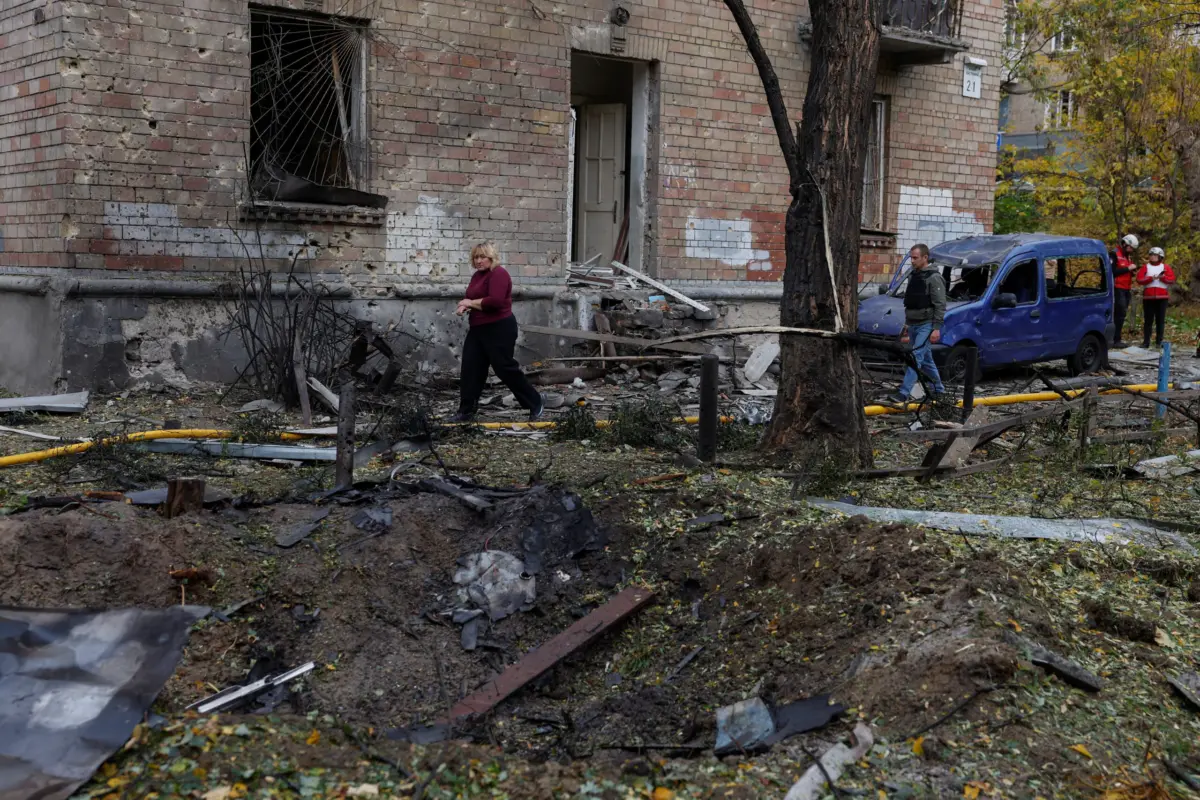
While diplomatic skirmishes and political accusations play out on the international stage, the brutal reality of the conflict continues to inflict a devastating human cost in Ukraine. Just overnight on Monday, a Russian missile attack in the capital, Kyiv, claimed the life of a woman and wounded several others, as confirmed by Mayor Vitali Klitschko via Telegram. The assault also caused significant damage to vital urban infrastructure, including a metro station, a medical facility, an educational institution, and a nonresidential building, according to the State Emergency Service. These attacks are a grim reminder of the daily threats faced by Ukrainian civilians and the urgent need for effective air defense and timely intelligence. The "more than four-year Ukraine war" has seen countless such incidents, underscoring the relentless nature of Russian aggression and the immense suffering it causes.
The implications of these developments are far-reaching. For Ukraine, any perceived or actual instability in US intelligence support or a weakening of the sanctions regime poses an immediate threat to its defense capabilities and economic resilience. The Starshield system, being a cornerstone of its early warning network, cannot afford even a momentary lapse. The prospect of US economic concessions to Russia further complicates Ukraine’s efforts to secure its long-term sovereignty and rebuild its war-torn economy.
For US foreign policy, the current situation highlights a tension between domestic political pressures (like lowering fuel prices ahead of elections) and longstanding commitments to allies and international norms. The administration’s rhetoric, particularly from President Trump, suggesting that Zelenskyy does not want peace, risks alienating a key partner and eroding the unity of the Western coalition that has supported Ukraine. Such statements could be interpreted by Russia as signs of wavering resolve within the US, potentially encouraging Moscow to prolong the conflict or escalate its aggression.
Moreover, the proposed Trump-Putin-Xi summit, while potentially offering a path to de-escalation, also carries significant risks. A summit that does not adequately involve or prioritize Ukraine’s interests could be seen as an imposition of peace terms rather than a genuine resolution, potentially undermining Ukraine’s sovereignty and future security. The delicate balance of international relations, particularly involving major powers like China, Russia, and the US, means that every diplomatic move and policy decision is scrutinized for its broader geopolitical impact. The current confluence of conflicting narratives, policy shifts, and political accusations creates an environment of profound uncertainty for the future of the Ukraine war and the stability of global alliances.
