

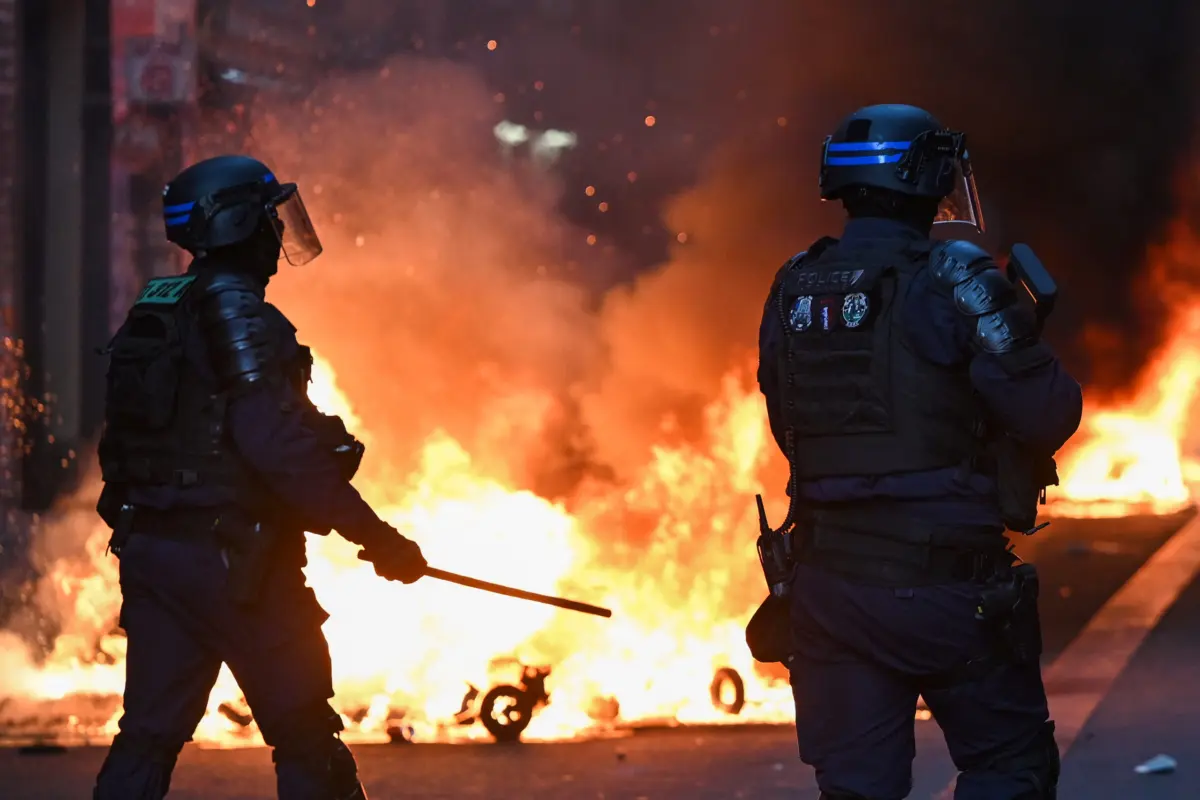
The highly anticipated UEFA Champions League clash between French giants Paris Saint-Germain (PSG) and Spanish powerhouse Barcelona is set to proceed as scheduled, despite the significant civil unrest and violent protests that have swept across France in recent days. French Prime Minister Sebastien Lecornu affirmed on Monday that the match, a marquee fixture in European club football, would neither be postponed nor cancelled, even as authorities moved to implement localised curfews to restore order. Barcelona, undeterred by the unfolding situation, were already making their way across the northern border to Paris on Monday afternoon, with the fixture slated for Tuesday at 19:00 GMT at the iconic Parc des Princes.
Match Proceeding Amidst Heightened Security Concerns
The confirmation from the highest levels of French government underscores a determination to maintain a semblance of normalcy and uphold international commitments, even as the nation grapples with some of its most severe street violence in recent memory. Prime Minister Lecornu’s announcement came after a critical crisis meeting, where he detailed plans to empower regional authorities to impose "partial" and "localised" curfews in various cities. This strategy, he suggested, was a more pragmatic and targeted response than a blanket state of emergency, though he did not rule out the latter "if necessary." Echoing this sentiment, Interior Minister Laurent Nunez further assured reporters at the same press conference that there were "no plans to cancel the match." The decision allows one of the most eagerly awaited group-stage encounters in the Champions League to go ahead, drawing global attention to Paris not just for football, but also for its ongoing societal challenges.
A Nation Grapples with Unrest: The Genesis of the Protests
The backdrop to this high-stakes sporting event is a nation grappling with profound social and political unrest. The "worst street violence in recent years," as described by Lecornu, follows weekend demonstrations that quickly devolved into widespread riots and looting. While the immediate trigger for this particular wave of protests was not explicitly stated in official reports, it is widely understood that France has been a crucible of social tensions, often ignited by incidents perceived as police brutality, socio-economic inequalities, or controversial government policies. Recent history, including the widespread protests following the death of Nahel Merzouk in June 2023, has demonstrated the volatile potential of public anger to quickly escalate into nationwide disturbances, particularly among disenfranchised youth in suburban areas. These events highlight deep-seated frustrations within segments of French society regarding governance, social justice, and economic opportunity.
Underlying Tensions and Recent Triggers
France’s social fabric has been strained by a series of events and policies in recent years, contributing to a volatile environment. Issues such as perceived systemic discrimination, high youth unemployment in certain areas, and contentious pension reforms have fueled a sense of injustice and alienation. When specific incidents occur, particularly those involving law enforcement, they often act as flashpoints, rapidly mobilising public outrage. The protests that began over the weekend, though not definitively linked to a singular, new event in the provided context, represent a continuation of this pattern of intense public reaction to perceived government overreach or social inequity. The speed with which demonstrations transformed into widespread violence underscores the fragility of social cohesion in parts of the country and the readiness of certain groups to engage in direct confrontation.
Escalation and Widespread Disruption
The weekend’s unrest saw a rapid escalation from organised protests to indiscriminate acts of vandalism, arson, and looting. Reports from various cities painted a grim picture: public buildings defaced, private businesses ransacked, and vehicles set ablaze. Security forces were stretched thin, with thousands of officers deployed across the country to contain the violence. Initial estimates suggested hundreds of arrests were made over the weekend, with figures potentially rising as authorities continued their operations. The geographic spread of the disturbances was significant, extending far beyond the capital to major urban centres like Marseille, Lyon, and Lille, as confirmed by the damage sustained by local football clubs. The economic fallout from such widespread destruction is considerable, impacting small businesses already struggling, damaging infrastructure, and diverting critical public resources towards recovery and enhanced security measures. The psychological toll on residents, witnessing their communities descend into chaos, is equally profound, fostering an atmosphere of fear and uncertainty.
Government’s Stance: Balancing Order and Liberty
The French government’s response to the escalating crisis has been a delicate balancing act, aiming to restore public order without further inflaming tensions or imposing measures seen as draconian. Prime Minister Lecornu’s emphasis on "partial" and "localised" curfews reflects a strategy of targeted intervention rather than a sweeping national lockdown, which could have significant economic and social repercussions.
Curfews and Emergency Measures
The call for regional authorities to implement tailored curfews signifies a strategic shift from broad, reactive responses to more granular, preventative measures. Lecornu’s deliberate distinction between this approach and a full "state of emergency" highlights the government’s caution. A state of emergency, while granting extensive powers to authorities, is a politically sensitive move, often associated with severe national crises, and carries significant implications for civil liberties. By opting for localised curfews, the government aims to tackle hotspots of violence directly, allowing unaffected areas to continue operating normally. However, the exact form and duration of these curfews remain to be determined by local prefects, creating an element of uncertainty for residents and businesses in affected zones. The Prime Minister’s firm declaration, "I am absolutely determined to restore order," underscores the urgency and gravity with which the administration views the situation.
Political Imperatives and Public Trust
The government’s handling of the protests carries significant political weight. President Emmanuel Macron’s administration has faced criticism over its perceived inability to address underlying social grievances, and the current unrest puts immense pressure on his government to demonstrate effective leadership and restore stability. The decision to allow the PSG-Barcelona match to proceed, despite the security challenges, can be seen as an attempt to project an image of control and resilience to both domestic and international audiences. However, maintaining public trust will depend not only on quelling the immediate violence but also on addressing the root causes of discontent. The political imperative to restore order is paramount, but doing so without alienating further segments of the population or infringing upon fundamental rights presents a formidable challenge for Lecornu and his cabinet. The events will undoubtedly shape future policy discussions regarding social integration, policing, and urban development in France.
Sporting Resilience: UEFA, Clubs, and the Show Must Go On
Against the backdrop of national turmoil, the world of football maintains its focus on the pitch, with the UEFA Champions League fixture between PSG and Barcelona serving as a powerful symbol of resilience. The decision to proceed with the match, a testament to the robust security planning and the determination of sporting bodies, underscores the significant logistical and financial stakes involved in European club football.

Barcelona’s Journey and PSG’s Preparations
The journey of Barcelona to Paris on Monday afternoon was a clear signal of the clubs’ commitment to the fixture. Despite the surrounding uncertainty, the focus for players and staff remains firmly on the sporting challenge. PSG, as the reigning European and French champions (a slight correction as PSG has not won the Champions League but are consistent contenders and French champions), have been meticulously preparing for this high-profile encounter. Training sessions at the Campus Paris Saint-Germain in Poissy, as captured in images showing players like Marquinhos and William Pacho, reflect the professional dedication required at this level. Both clubs are expected to issue statements emphasizing the sporting nature of the contest and expressing confidence in the security arrangements put in place by French authorities, while perhaps offering a message of solidarity to the affected communities. For these elite athletes, the focus is on delivering a performance worthy of the Champions League, even as the broader social context remains a somber backdrop.
UEFA’s Role and Security Protocols
UEFA, as the governing body for European club competitions, plays a critical role in ensuring the safety and security of all participants and spectators. For a match of this magnitude, stringent security protocols are standard, involving close coordination between UEFA officials, the host club, and local law enforcement agencies. Prior to any high-risk fixture, comprehensive security assessments are conducted, covering everything from stadium access and crowd control to emergency response plans. In situations of civil unrest, these protocols are intensified, with direct lines of communication established between UEFA and government security apparatuses. The confirmation that the match will proceed suggests that French authorities have provided UEFA with sufficient assurances regarding their capacity to secure the Parc des Princes, the surrounding areas, and the safe transit of teams and officials. Any decision to postpone or cancel a Champions League match is a measure of last resort, taken only when fundamental safety cannot be guaranteed, underscoring the confidence placed in the current security framework.
Economic and Reputational Stakes of European Football
The Champions League is not merely a sporting competition; it is a global entertainment spectacle with immense economic and reputational stakes. Broadcasters pay billions for rights, sponsors invest heavily, and clubs rely on matchday revenue, prize money, and global brand exposure. A postponement or cancellation of a fixture involving two of Europe’s biggest clubs, PSG and Barcelona, would trigger a cascade of financial and logistical challenges, affecting broadcast schedules, advertising commitments, travel arrangements for thousands of fans, and potentially disrupting the entire competition calendar. Beyond the immediate financial impact, the ability of a host nation to safely stage such events carries significant reputational weight. For France, especially with the Paris 2024 Olympic Games on the horizon, demonstrating its capability to manage large-scale international events securely, even amidst domestic challenges, is critically important for its global image and future sporting bids.
The Unintended Casualties: French Clubs’ Stores Vandalized
The widespread nature of the protests meant that few sectors were left untouched by the violence, and even institutions as central to French culture as its football clubs became unintended casualties. The targeting of official club stores highlights the indiscriminate nature of some of the looting and the broad societal anger that manifested during the unrest.
Marseille and Lille Bear the Brunt
Two prominent Ligue 1 clubs, Olympique de Marseille and Lille OSC, publicly confirmed that their official retail outlets had suffered significant damage during the weekend’s events. Marseille, a club deeply embedded in the identity of its southern port city, reported "significant damage" to its official store located on La Canebiere, one of Marseille’s most famous and central avenues. The store was subsequently closed temporarily as the club assessed the extent of the destruction and began clean-up efforts. The vandalism of a flagship store in such a prominent location not only represents a financial blow but also a symbolic strike at a cherished local institution. Further north, Lille’s city centre store experienced even more severe consequences, suffering "extensive damage and widespread looting." The club announced that its shop would remain closed until further notice, indicating the severity of the ransacking. The images emerging from these locations showed shattered windows, ransacked interiors, and stolen merchandise, painting a stark picture of the chaos that engulfed parts of these cities.
Broader Impact on Local Economies and Sports Retail
The attacks on these club stores are emblematic of a broader economic toll inflicted on local businesses across France. Beyond the major football clubs, countless smaller retailers, cafes, and service providers in affected city centres faced similar fates, suffering significant financial losses from stolen goods, property damage, and forced closures. Insurance claims will mount, but many smaller enterprises may struggle to recover, impacting local employment and economic vitality. The sports retail sector, in particular, relies heavily on brand image and fan loyalty, both of which can be indirectly affected by such events. The statements from Lille, thanking "everyone who has offered their support over the past few hours – first and foremost, our store employees, but also the many passersby, whether supporters or not, who spontaneously stepped forward to offer their help, practical assistance and comfort," underscore the community spirit that often emerges in the wake of such destruction. These incidents serve as a sobering reminder that widespread social unrest has tangible, damaging consequences for local economies and the everyday lives of citizens, extending far beyond the immediate political grievances.
Broader Implications: France on the Global Stage
The recent wave of civil unrest carries significant implications for France’s standing on the global stage, particularly as it prepares to host the 2024 Olympic Games. The world watches not only the immediate response but also the long-term ramifications for social cohesion and security.
Paris 2024 Olympics Under Scrutiny
With the Paris 2024 Olympic Games less than a year away, these incidents of widespread violence inevitably cast a shadow over France’s ability to ensure the safety and security of such a monumental international event. The images of burning cars and looted shops, broadcast globally, raise legitimate questions among prospective visitors, athletes, and international sporting bodies about the host city’s stability. Organisers of Paris 2024 will face renewed pressure to provide robust assurances regarding their security plans, which already involve unprecedented measures for an open-air opening ceremony on the River Seine. The government will need to demonstrate unequivocally that it can effectively manage large crowds, prevent public disorder, and protect critical infrastructure. The success of events like the Champions League match, proceeding without incident despite the prevailing tensions, becomes a crucial test case and an opportunity to reinforce confidence in France’s security capabilities ahead of the Olympics.
Long-Term Social and Political Ramifications
Beyond the immediate crisis, the protests expose deep fissures within French society that demand long-term attention. The recurrence of such large-scale unrest suggests that underlying issues of social inequality, economic disparity, and public trust in institutions are far from resolved. The government’s challenge extends beyond merely restoring order; it must also engage in meaningful dialogue to address the root causes of discontent, fostering a more inclusive and equitable society. This involves re-evaluating policies related to policing, urban development, education, and employment opportunities, particularly for marginalised communities. Failure to address these systemic issues risks perpetuating a cycle of unrest, undermining social cohesion, and potentially leading to further political instability. The events serve as a powerful reminder that while sporting spectacles can unite a nation, they cannot mask fundamental societal challenges that require sustained political will and comprehensive solutions.
Conclusion: Awaiting Kick-off Amidst Lingering Tensions
As the clock ticks down to kick-off at the Parc des Princes, the dual narrative of sporting spectacle and national turmoil continues to unfold. The decision to proceed with the PSG vs Barcelona match is a testament to the resilience of the sporting world and the French government’s determination to maintain order and fulfil its international obligations. However, the vibrant atmosphere of a Champions League night will be tinged with the sobering reality of the social unrest that has gripped the nation. While football offers a temporary distraction and a symbol of continuity, the underlying tensions and the damage inflicted upon communities and businesses across France remain potent. The match will be played, but the conversations about security, social justice, and national unity will undoubtedly continue long after the final whistle.
