

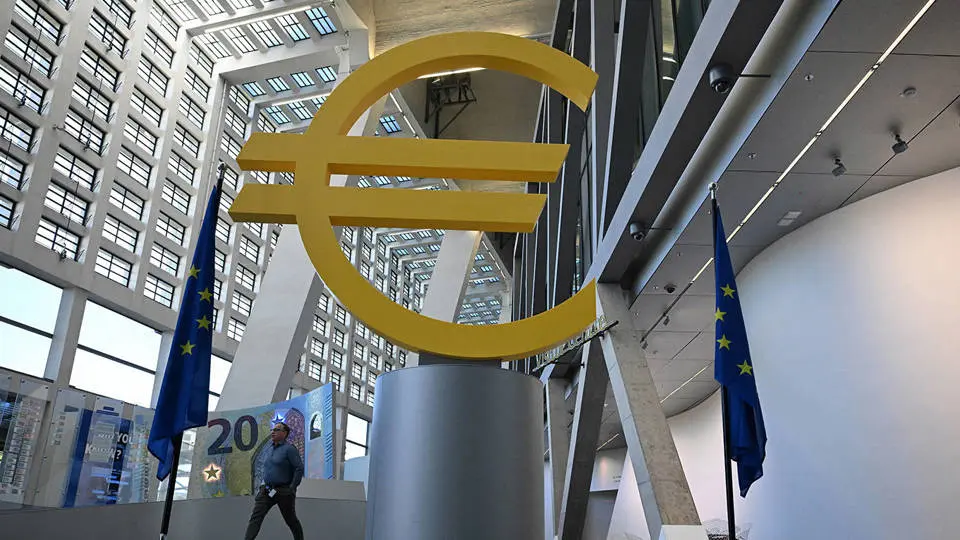
LONDON – In an era marked by the increasing fragmentation of the global monetary order, the European Union stands at a pivotal juncture, presented with a rare opportunity to not only navigate the emerging financial landscape but also to significantly bolster the euro’s international standing. The euro, already the dollar’s most credible rival, possesses the potential to evolve into a genuine counterweight to the ubiquitous greenback. However, this ambitious transformation hinges on the European Union’s ability to solidify its internal financial foundations and strategically expand its economic and monetary reach. A crucial first step in this endeavor involves ensuring that all member states, particularly those still obligated to adopt the euro, fully embrace the single currency.
The global financial system, once dominated by a relatively stable post-World War II order, is undergoing a profound shift. Geopolitical realignments, the rise of new economic powers, and the increasing use of financial tools as instruments of foreign policy are contributing to a more multipolar and, at times, volatile international monetary environment. Within this dynamic context, the euro’s role is becoming increasingly scrutinized. While it currently serves as a significant reserve currency and a vital medium for international trade and investment, its full potential as a global anchor remains constrained by internal structural challenges and incomplete adoption.
The Euro’s Current Standing and the Challenge of Fragmentation
As of late 2026, the euro’s position in the global financial arena is robust yet not dominant. It represents the second-largest currency held in reserve by central banks worldwide, trailing only the US dollar. Data from the International Monetary Fund (IMF) indicates that in recent years, the euro has consistently accounted for approximately 20-22% of global foreign exchange reserves, a figure that, while substantial, underscores the persistent primacy of the dollar. The euro’s share in international debt issuance and foreign direct investment also reflects its significant global footprint, yet it still falls short of challenging the dollar’s comprehensive dominance.
The increasing fragmentation of the global monetary order manifests in several ways. We are witnessing a greater emphasis on bilateral currency swap agreements between nations, a rise in the use of alternative payment systems bypassing traditional SWIFT infrastructure, and a growing interest in digital currencies, both central bank digital currencies (CBDCs) and private cryptocurrencies. This environment, while presenting potential avenues for the euro to gain traction, also poses risks of further atomization, where multiple, less interconnected currency blocs emerge, diminishing the collective influence of any single currency.
The Imperative of "More European" for a Global Euro
The assertion that the euro must "first become more European" before it can become genuinely global is a nuanced one, pointing to inherent structural and political requirements. For decades, the European Union has grappled with the complexities of economic and monetary union without a fully synchronized fiscal union. While the European Central Bank (ECB) manages monetary policy for the eurozone, national governments retain significant autonomy over fiscal matters. This divergence can lead to policy mismatches, differential economic performance across member states, and ultimately, a perception of unevenness that can temper the euro’s global appeal.
The euro’s journey began on January 1, 1999, as an accounting currency, with physical notes and coins entering circulation in 2002. Its initial success was remarkable, quickly establishing itself as a major global currency. However, the sovereign debt crisis of the early 2010s exposed underlying vulnerabilities in the eurozone’s architecture, highlighting the need for greater fiscal coordination and a more robust banking union. While significant progress has been made in these areas, the process has been gradual and often politically contentious.
Unlocking the Euro’s Potential: Deepening Integration
The path to a stronger, more globally influential euro requires a multi-pronged approach, with the full adoption of the currency by all EU member states being a critical foundational element.
Expanding the Eurozone: The Case of Obligated Members
Currently, several European Union member states, by treaty, are obliged to adopt the euro once they meet specific convergence criteria. These criteria, often referred to as the Maastricht criteria, relate to inflation rates, government deficits, government debt, long-term interest rates, and exchange rate stability. While many EU members have successfully joined the eurozone, a few, such as Sweden and Denmark, have maintained opt-outs or have yet to fully meet the convergence benchmarks.
The continued presence of these non-eurozone EU members presents a subtle but significant impediment to the euro’s full Europeanization. Their exclusion from the single currency means that a portion of the European economy operates under different monetary and exchange rate regimes. This creates practical inconveniences for cross-border trade and investment within the EU, and it dilutes the collective strength and uniformity of the eurozone’s economic bloc.
- Sweden: Despite meeting some convergence criteria, Sweden has historically maintained a stance against euro adoption, citing concerns over national economic sovereignty and the potential impact on its independent monetary policy.
- Denmark: Denmark, through its Edinburgh Agreement, secured a formal opt-out from adopting the euro. While it maintains close ties to the eurozone’s exchange rate mechanism (ERM II), it is not legally bound to adopt the single currency.
Encouraging these remaining member states to adopt the euro would signify a significant step towards a truly unified European economic space. This would not only simplify internal EU transactions and enhance economic integration but also project an image of greater monetary solidarity and strength to the global financial community. The economic benefits would include reduced transaction costs for businesses operating across these borders, increased price transparency, and a more stable exchange rate environment within the EU.
Strengthening Financial Foundations: Beyond Monetary Policy
For the euro to rival the dollar, its underlying financial infrastructure needs to be as robust and integrated as that of the United States. This involves several key areas:
- Capital Markets Union (CMU): The development of a fully functioning Capital Markets Union is paramount. The CMU aims to create a single market for capital across the EU, making it easier for businesses to access finance and for investors to deploy their capital efficiently. A deeper and more integrated CMU would lead to more diverse funding sources for European companies, reduce reliance on bank lending (which can be volatile), and foster innovation. This would make euro-denominated assets more attractive and liquid on a global scale. Progress on the CMU has been steady but is a long-term project requiring sustained political will and regulatory harmonization.
- Banking Union: The Banking Union, comprising the Single Supervisory Mechanism (SSM) and the Single Resolution Mechanism (SRM), has made significant strides in ensuring the stability of the eurozone’s banking sector. However, further enhancements, particularly in the establishment of a European Deposit Insurance Scheme (EDIS), are crucial to fully sever the link between sovereign debt and bank risk. A complete Banking Union would bolster confidence in the euro-denominated financial system and reduce the risk of contagion during financial shocks.
- Fiscal Coordination and Stability: While a full fiscal union may be politically distant, enhanced fiscal coordination and robust stability mechanisms are essential. The Stability and Growth Pact, though reformed, continues to be a point of discussion. Ensuring that member states adhere to sound fiscal policies, coupled with a credible and effective European fiscal stabilization tool (such as a common unemployment reinsurance scheme or a limited fiscal capacity for crisis response), would enhance the euro’s resilience and perceived safety. The debate surrounding the issuance of common European debt instruments, while sensitive, could also play a role in deepening financial integration and providing a benchmark for euro-denominated assets.
Expanding the Euro’s Reach: International Role and Usage
Beyond internal integration, actively promoting the euro’s international usage is critical for its global ascent.
- International Trade Invoicing: Encouraging a greater proportion of global trade to be invoiced and settled in euros would significantly boost its international role. This can be achieved through trade agreements that favor euro settlement, incentives for businesses to invoice in euros, and the development of robust euro-denominated payment infrastructure.
- Reserve Currency Diversification: Central banks globally are increasingly seeking to diversify their foreign exchange reserves. The euro can attract a larger share of this diversification if it is perceived as a stable, liquid, and widely accepted store of value. This requires not only sound economic fundamentals but also proactive engagement with international financial institutions and a clear communication strategy from the ECB and EU policymakers.
- Role in International Financial Institutions: The EU, as a collective economic bloc, should advocate for a greater role for the euro within international financial institutions like the IMF. This could involve increasing the euro’s weighting in the Special Drawing Rights (SDR) basket or promoting euro-denominated lending by international development banks.
Timeline and Historical Context
The euro’s journey has been marked by significant milestones and evolving challenges:
- 1992: Maastricht Treaty signed, laying the groundwork for Economic and Monetary Union (EMU).
- 1999: Euro introduced as an accounting currency.
- 2002: Euro notes and coins enter circulation.
- 2004-2007: Expansion of the EU, with new member states progressively adopting the euro.
- 2010-2012: Eurozone sovereign debt crisis exposes structural weaknesses and prompts reforms.
- 2014 onwards: Establishment of the Banking Union (SSM and SRM) and ongoing efforts to deepen the Capital Markets Union.
- Late 2026 (Present): Global monetary order fragmentation intensifies, creating an opportune moment for the euro’s strategic advancement.
The current juncture, characterized by geopolitical uncertainties and a shifting global economic paradigm, presents a unique window of opportunity. The lessons learned from past crises have provided a clearer understanding of the reforms needed.
Potential Responses and Reactions
The push for greater European integration to bolster the euro is likely to elicit a range of responses from various stakeholders:
- ECB and EU Institutions: The European Central Bank would likely welcome moves that enhance the euro’s international role, as it aligns with its mandate to maintain price stability and support the economic policies of the Union. EU institutions, such as the European Commission and the European Parliament, would be expected to champion legislative proposals aimed at deepening integration and promoting euro adoption.
- Member States (Eurozone and Non-Eurozone): Eurozone members would generally support initiatives that strengthen the currency bloc. Non-eurozone members, particularly those obliged to adopt, would face renewed pressure and potentially greater incentives to meet convergence criteria. Their responses would likely depend on their domestic economic conditions and political considerations. For instance, Sweden might engage in more robust discussions about its euro path if the global benefits of a stronger euro become demonstrably clear and its own economic trajectory aligns favorably.
- International Investors and Central Banks: These entities would observe the EU’s progress with keen interest. Greater integration and a stronger financial foundation would likely increase their confidence in the euro as an investment and reserve currency. Conversely, continued fragmentation or political discord within the EU could deter diversification away from the dollar.
- Global Competitors: Nations whose currencies compete with the euro would likely monitor these developments closely. A more influential euro could alter global trade and finance dynamics, potentially prompting strategic adjustments in their own monetary and economic policies.
Broader Impact and Implications
The successful elevation of the euro to a more prominent global role would have profound implications:
- Reduced Reliance on the US Dollar: A stronger euro would offer a viable alternative to the dollar for international transactions, trade invoicing, and reserve holdings. This diversification could reduce the global systemic risk associated with over-reliance on a single currency and provide greater monetary autonomy for a wider range of nations.
- Enhanced European Economic Sovereignty: A more robust euro would translate into greater economic leverage for the European Union on the global stage. It would empower the EU to shape international financial norms and standards more effectively and to act with greater independence in its foreign policy.
- Increased Investment and Growth: A deeper and more liquid capital market within the EU, fueled by the CMU and a unified currency, could attract more foreign investment, stimulate domestic economic growth, and foster innovation across the continent.
- Greater Financial Stability: A more integrated and resilient eurozone, with a stronger Banking Union and coordinated fiscal policies, would be better equipped to withstand future economic shocks, benefiting not only its member states but also contributing to global financial stability.
In conclusion, the European Union stands at a critical juncture. The fragmentation of the global monetary order, while presenting challenges, also offers a strategic opening for the euro to ascend. By prioritizing the full adoption of the euro by all its member states, strengthening its internal financial architecture through initiatives like the Capital Markets Union and a complete Banking Union, and actively promoting the euro’s international usage, the EU can indeed forge a genuine counterweight to the US dollar. This endeavor is not merely about currency dominance; it is about securing Europe’s economic future, enhancing its global influence, and contributing to a more balanced and stable international monetary system. The path ahead requires sustained political commitment, robust economic reforms, and a clear vision for a truly integrated and globally relevant European economy.
