

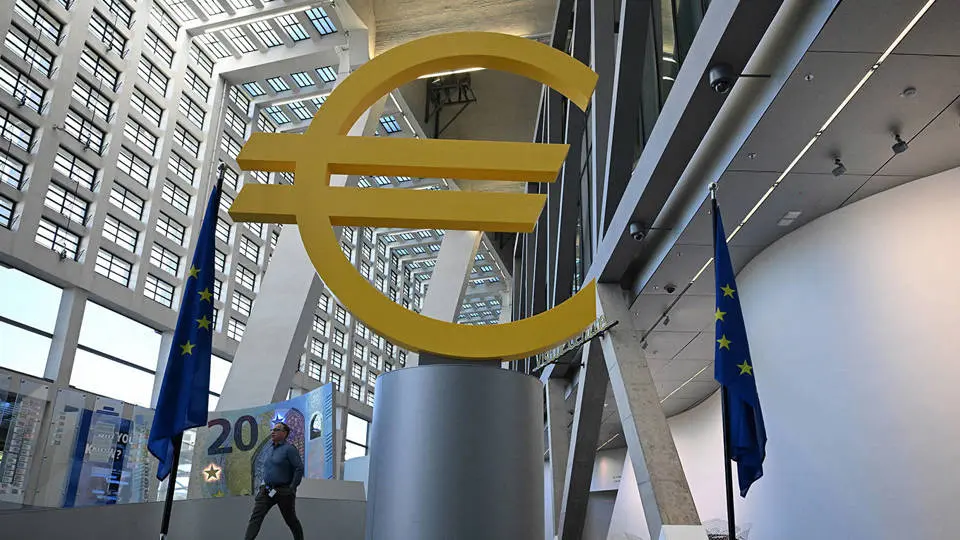
In a world grappling with an increasingly fragmented monetary order, the European Union stands at a pivotal juncture, presented with a rare and compelling opportunity to actively sculpt the emerging global financial architecture and significantly enhance the euro’s international standing. However, for the single currency to truly transcend its current role and emerge as a genuine global counterweight to the ubiquitous U.S. dollar, it is imperative that the European Union first fortifies its internal financial foundations and strategically expands its economic and monetary reach. A crucial initial step in this ambitious endeavor involves compelling those member states that have yet to adopt the euro, despite their treaty obligations, to integrate fully into the eurozone.
This call for greater European monetary integration comes at a time when geopolitical shifts and evolving economic paradigms are fundamentally reshaping the international financial landscape. The dominance of the U.S. dollar, a status it has held for decades, is facing subtle yet persistent challenges. These challenges stem from a confluence of factors, including growing concerns about U.S. fiscal policy, the increasing assertiveness of economic blocs challenging American hegemony, and a broader desire among nations for greater monetary autonomy and diversification away from a single reserve currency. Within this dynamic environment, the euro, already the world’s second-most-traded currency and the primary alternative to the dollar, possesses the inherent potential to amplify its global influence.
The Imperative of Internal Cohesion
The fundamental argument for strengthening the euro’s global position hinges on the principle that a currency’s international clout is inextricably linked to the economic and financial robustness of its issuer. For the euro to be perceived as a stable and reliable alternative to the dollar on the global stage, the European Union must demonstrate a profound commitment to internal economic convergence and a unified approach to financial regulation and policy.
A significant hurdle to achieving this unified front lies in the continued existence of EU member states that have not yet adopted the euro. These nations, while signatories to the Maastricht Treaty and therefore bound by its convergence criteria, have, for various reasons, deferred full membership in the eurozone. This selective adherence to monetary union creates a degree of fragmentation within the EU’s economic policy framework, potentially undermining the euro’s perceived strength and stability.
Historically, the journey towards a unified European currency was a long and complex one, beginning with the establishment of the European Economic Community in 1957. The formal decision to create a single currency, the euro, was made at the 1991 Maastricht Summit, laying out a roadmap for economic convergence that member states were expected to follow. The euro was launched as an accounting currency in 1999 and introduced as physical currency in 2002. While the majority of EU member states have since embraced the euro, a handful, including Denmark, Sweden, Poland, Czech Republic, Hungary, Romania, and Bulgaria, maintain their national currencies.
The economic rationale for these holdout nations to eventually adopt the euro is compelling. Full eurozone membership offers significant benefits, including reduced transaction costs for businesses trading within the bloc, greater price transparency, and access to deeper and more liquid financial markets. For the EU as a whole, universal eurozone adoption would eliminate currency exchange rate volatility among member states, fostering a more integrated and efficient single market. This internal harmonization is not merely a bureaucratic exercise; it is a prerequisite for the euro to project an image of unity and strength outward to the rest of the world.
Expanding the Euro’s Reach: Beyond Borders
Beyond internal consolidation, the euro’s ascent to global prominence necessitates a strategic expansion of its reach and influence in international financial markets. This involves actively promoting the euro as a currency for international trade settlement, a store of value for foreign reserves, and a unit of account in global financial transactions.
One key area for expansion lies in encouraging the use of the euro in trade invoicing, particularly for goods and services originating from or destined for the European Union. Currently, a substantial portion of global trade is invoiced in U.S. dollars, a phenomenon that confers significant economic advantages upon the United States. By facilitating euro-denominated trade, the EU can foster greater demand for its currency and reduce its own exposure to dollar fluctuations. This could involve diplomatic efforts, the establishment of euro-denominated trade finance facilities, and incentives for businesses to adopt euro invoicing.
Furthermore, the euro’s role as a reserve currency for central banks and financial institutions worldwide needs to be actively cultivated. While the euro is already the second-largest reserve currency, its share remains considerably smaller than that of the dollar. To increase its attractiveness as a reserve asset, the EU must continue to ensure the stability and liquidity of its financial markets, maintain prudent fiscal policies, and foster confidence in the long-term strength of the eurozone economy. This also involves addressing the perceived fragmentation in EU capital markets and working towards a truly integrated European Capital Markets Union, which would offer a broader and deeper range of euro-denominated investment opportunities.
The development of a robust and integrated European Capital Markets Union (CMU) is a critical component of this strategy. The CMU aims to create a single, unified market for capital across all EU member states, making it easier for businesses to raise finance and for investors to find attractive investment opportunities. A fully functioning CMU would significantly enhance the depth and breadth of euro-denominated financial instruments, making the euro a more appealing asset for international investors and reserve managers. Progress on the CMU has been incremental, with various initiatives launched over the years, but a more accelerated and harmonized approach is needed to unlock its full potential.
Data and Economic Indicators: A Snapshot of Current Standing
To understand the current standing of the euro relative to the dollar, a look at key economic indicators is essential. As of late 2026, the euro represents approximately 20% of global foreign exchange reserves, a significant figure but still trailing the dollar’s dominance, which hovers around 58%. In terms of international trade invoicing, the euro’s share is estimated to be around 35-40%, again demonstrating its strong but secondary position.
The economic performance of the eurozone itself is a crucial determinant of the euro’s global appeal. While the bloc has experienced periods of robust growth, it has also faced challenges, including differing economic trajectories among member states, demographic shifts, and the lingering effects of past financial crises. For instance, the eurozone’s Gross Domestic Product (GDP) growth in the preceding years has shown resilience, with projections for 2026 indicating a moderate expansion of around 2.5%, compared to an estimated 2.8% for the United States. However, inflation within the eurozone has remained a key concern, with the European Central Bank (ECB) actively managing monetary policy to achieve its price stability mandate. The ECB’s ability to maintain price stability and foster sustainable economic growth will be paramount in bolstering international confidence in the euro.
The European Central Bank (ECB), headquartered in Frankfurt, plays a pivotal role in managing the euro. Its mandate includes maintaining price stability, defined as inflation below, but close to, 2% over the medium term. The ECB’s monetary policy decisions, including interest rate adjustments and asset purchase programs, directly influence the euro’s value and its attractiveness as an investment. Recent policy actions have focused on navigating inflationary pressures while supporting economic recovery, a delicate balancing act that resonates across global financial markets.
Potential Reactions and Implications
The pursuit of a stronger euro and a more integrated European monetary system is likely to elicit varied reactions from global stakeholders. The United States, while benefiting from the dollar’s reserve currency status, may view a more assertive euro with a mix of concern and strategic adjustment. A stronger euro could lead to a more multipolar international monetary system, potentially reducing the effectiveness of U.S. sanctions and diminishing its capacity to wield financial influence unilaterally.
Other major economic powers, such as China, which is actively seeking to internationalize its own currency, the yuan, may view the euro’s rise as an opportunity to further diversify their own reserve holdings and reduce reliance on the dollar. Developing nations, often heavily impacted by dollar fluctuations, could see a stronger euro as offering greater stability and a viable alternative for trade and investment.
The implications of a more globally prominent euro are far-reaching. For businesses operating internationally, it could mean greater flexibility in currency management and reduced exposure to dollar-related risks. For governments, it could lead to a more diversified and resilient international financial system, lessening the systemic risks associated with an over-reliance on a single currency. Moreover, a more unified and powerful eurozone could exert greater influence in global economic governance, advocating for policies that reflect European values and interests.
A Look Ahead: The Path to True Counterweight
The journey for the euro to become a genuine counterweight to the U.S. dollar is not a short or easy one. It requires sustained political will, deep economic integration, and a strategic vision that extends beyond the EU’s borders. The current juncture presents a window of opportunity, but seizing it will demand decisive action.
The immediate priority must be to ensure that all EU member states fulfill their obligations and embrace the euro. This requires addressing any remaining economic or political barriers that prevent full eurozone membership. Simultaneously, the EU must accelerate its efforts to deepen capital markets integration, creating a more attractive and liquid environment for euro-denominated assets.
On the international front, a concerted effort is needed to promote the euro’s use in trade, investment, and as a reserve currency. This could involve enhanced dialogue with international financial institutions, the development of innovative financial instruments, and a clear communication strategy that highlights the euro’s strengths and stability.
The author, Piroska Nagy Mohácsi, writing from London on October 16, 2026, underscores the critical need for internal strengthening before external expansion can be truly effective. Her analysis points to a future where a more cohesive and robust European Union, with a fully embraced euro at its core, can indeed carve out a more significant and influential role in the global monetary order, offering a credible alternative to the long-standing dominance of the U.S. dollar. The next few years will be crucial in determining whether the EU can translate this potential into tangible reality.
