

NEW DELHI – The world has endured a relentless series of seismic shocks over the past two decades, reshaping the geopolitical and economic landscape. From the protracted conflicts in Iraq and Afghanistan to the escalating tensions involving Ukraine and Iran, punctuated by a global financial crisis, a devastating pandemic, and the destabilizing tenure of a disruptive American presidency, the international order has been repeatedly tested. Now, an even more profound, albeit less publicly discussed, potential upheaval looms: China, the global economic powerhouse, appears to be heading towards a confluence of internal political and economic challenges that could culminate in a perfect storm, with profound and far-reaching global repercussions. If current trajectories hold, Beijing may soon face a precarious political succession, a faltering economy, and a diminished capacity to exert its influence both domestically and on the international stage.
The Gathering Clouds: A Triad of Interconnected Challenges
The foundations of China’s remarkable rise have been built on decades of sustained economic growth, a seemingly unshakeable political system, and an increasingly assertive global presence. However, a confluence of emerging trends suggests that these pillars may be showing signs of strain. Analysts and observers, while often cautious in their public pronouncements, are increasingly pointing to three interconnected vulnerabilities that could coalesce into a significant crisis: a potential political succession challenge, a decelerating and structurally challenged economy, and the resultant erosion of resources available for both internal governance and external projection of power.
Political Succession: The Unseen Fault Line
The transfer of power in any major nation is a critical juncture, but for an authoritarian state like China, it carries particular weight. Under President Xi Jinping, the country has seen a consolidation of power not witnessed since the Mao Zedong era. Xi has effectively dismantled the informal term limits and norms of collective leadership that had guided China’s political transitions since the Deng Xiaoping reforms. This centralization, while ostensibly designed to ensure stability and implement ambitious policies, also creates inherent risks.
The absence of clear, publicly established succession mechanisms, coupled with Xi’s unprecedented tenure, raises questions about the future leadership pipeline. While the Communist Party of China (CPC) maintains a tight grip on information, the underlying dynamics of power within the elite remain opaque to the outside world. Should Xi face health issues or unforeseen political challenges, the lack of a designated and widely accepted successor could trigger internal power struggles, destabilizing the party’s unity and its ability to govern effectively. Historically, periods of leadership transition in authoritarian states have often been accompanied by internal instability, policy uncertainty, and a potential weakening of the state’s capacity to respond to crises. The unique context of China, with its immense global economic footprint, amplifies the potential impact of such internal disarray.
Economic Headwinds: From Growth Engine to Drag?
For decades, China’s economic growth has been the bedrock of its global ascent. However, the era of double-digit expansion is a fading memory. The country is now grappling with a complex web of economic headwinds, including a property market crisis, demographic shifts, high youth unemployment, and increasing geopolitical tensions that are impacting trade and investment.
-
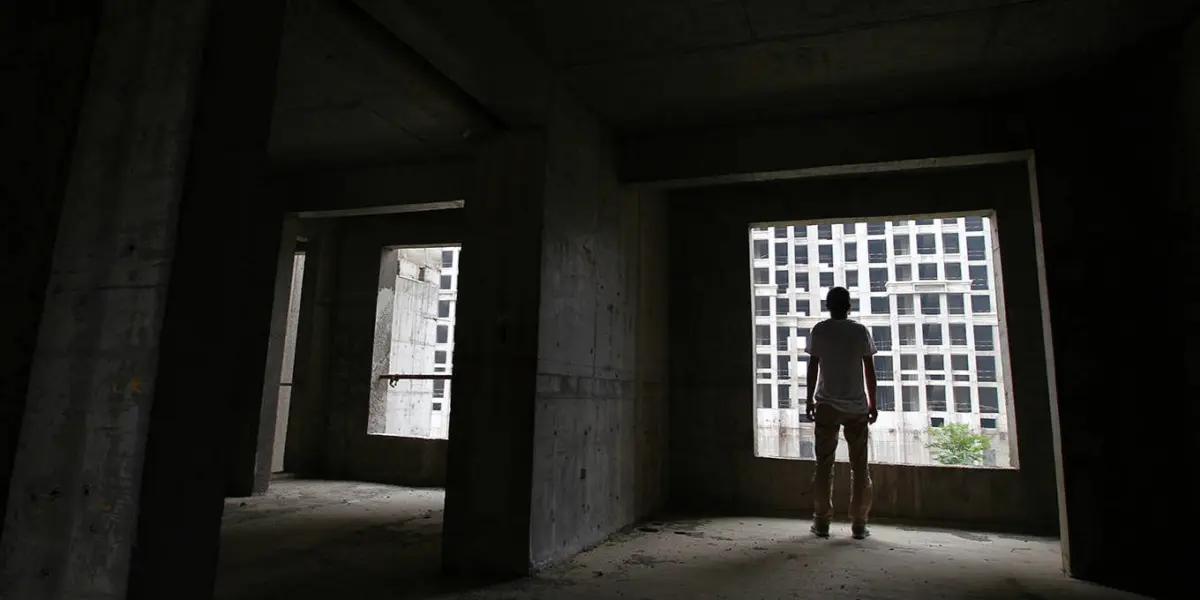
The Property Sector Crisis: The implosion of major property developers like Evergrande and Country Garden has sent shockwaves through the Chinese economy. This sector has been a significant driver of growth, employing millions and underpinning household wealth. Its contraction not only affects construction and related industries but also poses risks to the financial system through potential defaults on loans and bonds. The government’s efforts to manage this crisis have so far yielded limited success, with consumer confidence remaining subdued. As of late 2023 and early 2024, outstanding debts in the property sector are estimated to be in the trillions of dollars, a significant portion of China’s GDP.
-
Demographic Headwinds: China’s aging population and declining birth rates present a formidable long-term challenge. The country’s workforce is shrinking, while the dependency ratio – the number of retirees per working-age individual – is rising. This trend not only strains pension systems and healthcare services but also reduces the pool of available labor, a key factor in China’s manufacturing dominance. By 2050, China is projected to have over 400 million people aged 65 or older, a demographic reality that will profoundly impact its economic vitality and social structures.
-
Youth Unemployment: While overall unemployment figures may appear manageable, China has been grappling with persistently high youth unemployment rates, particularly among university graduates. This reflects a mismatch between the skills produced by the education system and the demands of the job market, as well as a broader economic slowdown affecting job creation. Elevated youth unemployment can lead to social discontent and a loss of human capital, hindering future economic potential. In mid-2023, the surveyed urban youth unemployment rate reached a record high of 21.3%, underscoring the severity of this issue.
-
Geopolitical Tensions and Decoupling: Increasing trade disputes, technological competition, and strategic rivalries, particularly with the United States, are leading to a recalibration of global supply chains. The trend of “de-risking” and “decoupling” by Western economies, aimed at reducing reliance on China for critical goods and technologies, is impacting foreign direct investment and export markets. This has led to a noticeable slowdown in China’s export growth, a critical engine of its past prosperity.
Diminishing Resources for Power Projection
The interplay of political instability and economic slowdown inevitably affects a state’s ability to wield power. A nation preoccupied with internal challenges and facing resource constraints will find it more difficult to invest in its military modernization, fund ambitious foreign policy initiatives, or provide the economic incentives that have underpinned its growing global influence.
China’s “Belt and Road Initiative” (BRI), a massive infrastructure and investment project spanning continents, has been a cornerstone of its external strategy. However, mounting economic pressures at home, coupled with concerns over debt sustainability in partner countries, could lead to a scaling back or reorientation of such grand projects. Similarly, the resources available for maintaining and expanding its naval presence in contested waters, or for providing aid and diplomatic leverage on the global stage, may be curtailed. This erosion of external capacity could embolden rivals, weaken alliances, and fundamentally alter the global balance of power.
Historical Parallels and Emerging Patterns
The current situation in China, while unique in its scale and context, echoes historical patterns of rising powers facing internal contradictions that temper their outward expansion. The late Soviet Union, for instance, experienced a period of economic stagnation and internal political ossification that ultimately contributed to its collapse. While China’s economic model is vastly different, the challenges of managing a complex, centrally controlled economy in the face of demographic shifts and technological disruption are not entirely unprecedented.
The period of the 2000s saw a relatively unipolar world, dominated by the United States, with China still emerging as a significant economic player but not yet a direct challenger to the existing order. The subsequent decades witnessed China’s dramatic ascent, fueled by globalization and its integration into the world economy. However, this era of unbridled expansion now appears to be giving way to a more complex and challenging geopolitical environment. The wars in Iraq (2003-2011) and Afghanistan (2001-2021) drained American resources and attention, creating space for China’s rise. The global financial crisis of 2008 further exposed the vulnerabilities of Western economic systems. More recently, the COVID-19 pandemic (2020-2022) disrupted global supply chains and highlighted interdependencies, while the full-scale invasion of Ukraine by Russia in 2022 has ushered in a new era of geopolitical fragmentation and heightened tensions. This backdrop of global instability, far from being a mere backdrop, actively shapes the challenges and opportunities facing China.
Implications for the Global Order
The potential confluence of a political succession crisis, economic headwinds, and diminishing external influence in China carries profound implications for the entire world:
- Geopolitical Realignment: A weakened China could lead to a reshuffling of global alliances and power dynamics. Existing rivalries might intensify, while new partnerships could emerge. The United States and its allies may find themselves in a more advantageous position, but the resulting instability could also create vacuums that other actors seek to fill.
- Economic Volatility: A significant economic downturn in China would reverberate globally, impacting commodity prices, trade flows, and investment. Countries heavily reliant on Chinese demand or supply chains would be particularly vulnerable. The interconnectedness of the global financial system means that a crisis in China could trigger contagion effects.
- Regional Tensions: A China struggling with internal issues might become more unpredictable or more aggressive in its regional policies as it seeks to project strength or deflect domestic criticism. This could heighten tensions in areas like the South China Sea, the Taiwan Strait, and along the India-China border.
- Impact on Global Governance: China has become an increasingly significant player in international institutions. A period of internal turmoil could lead to its disengagement or a diminished capacity to contribute to global problem-solving, from climate change to pandemic preparedness.
Navigating the Uncharted Waters
While the notion of a “perfect storm” is a potent metaphor, it is crucial to avoid deterministic predictions. The Chinese state has demonstrated remarkable resilience and adaptability in the past. However, the scale and interconnectedness of the current challenges suggest that the coming years will be a critical test of its leadership and its fundamental strengths.
The coming period will likely be characterized by increased uncertainty. The CPC will undoubtedly deploy all its considerable resources – political, economic, and informational – to manage these challenges and maintain stability. However, the underlying pressures are significant. The world will be watching closely as China navigates this complex and potentially transformative juncture, for the ripple effects of any significant shift within the Middle Kingdom will undoubtedly be felt across the globe. The era of shocks may indeed be far from over, with China’s own trajectory now presenting one of its most significant potential disruptions.
