

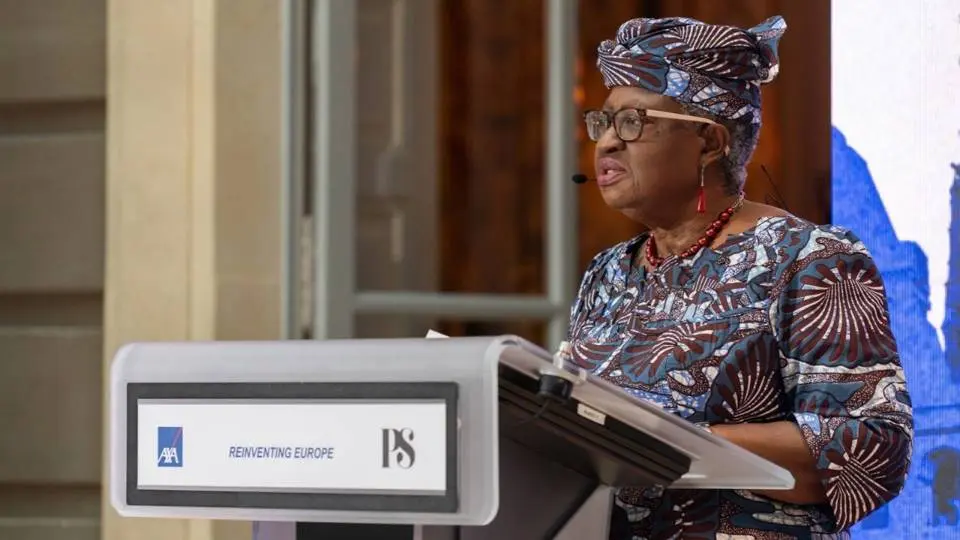
The discourse surrounding "reinvention" frequently overlooks the enduring strengths of existing systems, a sentiment articulated by World Trade Organization (WTO) Director-General Ngozi Okonjo-Iweala during her closing keynote address. This observation holds particular relevance for both the global trading landscape, which has demonstrated a remarkable capacity for resilience in recent years, and the European economy. While Europe may not boast a singular tech behemoth on par with those dominating the United States or China, its economic framework remains a formidable global trade powerhouse, underpinned by a deep-seated leadership in scientific innovation and research.
The event, likely a high-profile conference or summit focused on the future of European economic strategy and its role in global commerce, brought together prominent figures to discuss critical challenges and opportunities. Okonjo-Iweala’s remarks, delivered as a closing address, aimed to frame the ongoing discussions and provide a forward-looking perspective that balances necessary adaptation with the acknowledgment of inherent strengths. The date of the address, October 23, 2026, places it in a contemporary context, reflecting the ongoing debates about economic competitiveness, technological advancement, and geopolitical shifts that have characterized the mid-2020s.
The Resilience of the Global Trading System
Director-General Okonjo-Iweala’s assertion regarding the resilience of the global trading system is supported by several key indicators. Despite escalating geopolitical tensions, trade protectionism in some nations, and the lingering effects of supply chain disruptions from events such as the COVID-19 pandemic, global trade flows have shown a capacity to adapt and, in many areas, recover. According to World Trade Organization data, while growth rates have fluctuated, the overall volume of international trade has continued to expand, albeit at a more moderate pace than in previous decades.
For instance, data from the WTO’s World Trade Statistical Review indicated that merchandise trade volume grew by an estimated 2.8% in 2023, following a sharper contraction in 2022. Services trade has also demonstrated robustness, with digital trade, in particular, experiencing significant growth. This resilience can be attributed to several factors: the diversification of supply chains away from single-country dependencies, the increasing adoption of digital technologies that facilitate cross-border transactions, and the continued commitment of many nations to multilateral trade frameworks, even amidst bilateral frictions.
However, the system is not without its vulnerabilities. The rise of regional trade blocs, the weaponization of trade policy for geopolitical ends, and the challenges of ensuring fair competition in emerging technological sectors pose ongoing tests. Okonjo-Iweala’s emphasis on not overlooking what works suggests a call to reinforce and adapt existing mechanisms rather than embarking on wholesale replacements that could introduce new uncertainties. This includes strengthening dispute settlement mechanisms, promoting greater transparency, and fostering inclusive trade policies that benefit a wider range of economies and populations.
Europe’s Enduring Economic Strength
The Director-General’s assessment of the European economy highlights a nuanced reality. While Europe may not be defined by a handful of dominant technology giants like the United States (with companies such as Apple, Microsoft, and Alphabet) or China (with Baidu, Alibaba, and Tencent), its economic model possesses distinct advantages. Europe’s strength lies in its diversified industrial base, its leadership in advanced manufacturing, its commitment to sustainability and green technologies, and its highly skilled workforce.
Europe is a global leader in sectors such as automotive manufacturing, pharmaceuticals, aerospace, and renewable energy technologies. For example, the European Union’s automotive industry remains one of the world’s largest, producing millions of vehicles annually and employing a significant portion of its workforce. Furthermore, the EU’s commitment to the Green Deal has positioned it as a frontrunner in the development and deployment of renewable energy solutions, from wind turbines to advanced battery technologies. This focus on sustainability is not only an environmental imperative but also a significant economic opportunity, driving innovation and creating new markets.
In terms of scientific research and development, Europe consistently ranks among the top global performers. Numerous European universities and research institutions are at the forefront of breakthroughs in areas like artificial intelligence, biotechnology, quantum computing, and materials science. While the commercialization of these innovations might sometimes lag behind that of the US or China, the foundational research capacity is undeniable. The European Research Area (ERA) initiative, for example, aims to create a unified European research space, fostering collaboration and facilitating the translation of scientific discoveries into economic benefits.
The Context of the "Reinventing Europe" Event
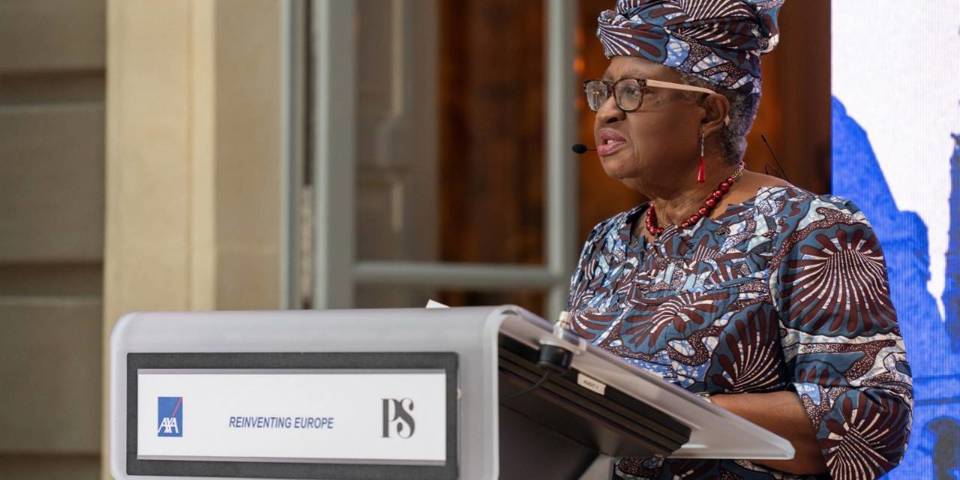
The "PS Events: Reinventing Europe" initiative, as indicated by the article’s metadata, likely represents a series of high-level discussions or a specific conference organized by Project Syndicate, a global nonprofit media organization that publishes and syndicates commentary on a variety of issues. These events typically convene policymakers, academics, business leaders, and journalists to deliberate on pressing global and regional challenges.
The timing of such a discussion in the mid-2020s is significant. Europe has been grappling with a confluence of challenges: the need to accelerate its digital transformation, the imperative to achieve climate neutrality, the ongoing geopolitical instability stemming from the conflict in Ukraine and other global flashpoints, and the need to maintain economic competitiveness in an increasingly multipolar world. The concept of "reinvention" in this context suggests a proactive approach to adapting to these evolving dynamics, rather than merely reacting to them.
Key themes that would have been explored at such an event likely include:
- Digital Sovereignty and Innovation: How can Europe foster its own digital champions while ensuring data privacy and security? What are the pathways to accelerating AI adoption and development within the European framework?
- Green Transition and Economic Growth: How can the EU balance its ambitious climate targets with the need for sustained economic growth and industrial competitiveness? What are the investment strategies required for a successful green transition?
- Global Trade and Geopolitics: How can Europe navigate an increasingly complex global trade environment, characterized by strategic competition and the rise of protectionist sentiments? What role can the EU play in strengthening multilateral trade institutions?
- Human Capital and Skills Development: How can Europe ensure its workforce is equipped with the skills necessary for the jobs of the future, particularly in emerging technological and green sectors?
Chronology of Key Developments (Inferred)
While specific timelines for the "Reinventing Europe" event are not provided in the excerpt, one can infer a broader chronological context based on the stated themes:
- Early 2020s: Intensified focus on digital transformation and the need for European technological autonomy, spurred by events like the pandemic. The European Green Deal, launched in late 2019, gains momentum.
- 2022-2024: Geopolitical shifts, particularly the war in Ukraine, highlight the need for energy security, supply chain resilience, and a re-evaluation of global economic interdependence. Increased discussions about strategic autonomy for Europe.
- Mid-2020s (circa 2025-2027): The period of the event itself. This would be a time for synthesizing lessons learned, assessing progress on digital and green agendas, and formulating concrete policy proposals for the coming decade. Okonjo-Iweala’s speech likely serves as a capstone, offering a global perspective on these European efforts.
- Late 2020s and Beyond: The implementation and evaluation of strategies discussed during this period, with ongoing adaptation to new technological advancements and evolving global economic realities.
Supporting Data and Analysis
To further enrich the context, consider the following data points that would support the arguments made:
- R&D Investment: While specific figures vary by country, the EU as a bloc consistently invests a significant percentage of its GDP in research and development. For instance, in 2022, EU countries collectively spent over €300 billion on R&D, representing about 2.3% of its GDP, with the aim of reaching 3% by 2030. This figure, while lower than in some leading nations like South Korea or the US, signifies a strong commitment to innovation.
- Trade Balance: Europe, particularly the Eurozone, often maintains a trade surplus in goods and services, indicating its competitiveness in global markets. In 2023, the Eurozone recorded a significant trade surplus, showcasing the strength of its export-oriented industries.
- Skills Gap Data: Reports from organizations like the European Commission consistently highlight the growing demand for digital skills and skills related to the green transition, alongside a shortage of qualified workers in these areas. Addressing this skills gap is crucial for Europe’s future economic performance.
- Venture Capital Investment: While Europe has historically lagged behind the US and China in venture capital funding for startups, there has been a notable increase in investment in recent years, particularly in deep tech and climate tech sectors, indicating a growing ecosystem for innovation.
Potential Reactions and Broader Impact
Director-General Okonjo-Iweala’s remarks, delivered by the head of the WTO, would carry significant weight. Her call to balance reinvention with an acknowledgment of existing strengths could resonate with European policymakers who are keen to foster innovation without disrupting established economic pillars.
- European Commission: Officials within the European Commission might echo her sentiments, emphasizing the need for strategic investments in research and development, digital infrastructure, and green technologies, while also advocating for the strengthening of the multilateral trading system to ensure fair competition and market access for European goods and services.
- National Governments: Leaders of EU member states would likely respond by reiterating their national strategies for economic growth, innovation, and sustainability, perhaps highlighting specific initiatives that align with Okonjo-Iweala’s vision.
- Industry Associations: Business leaders and industry groups would likely focus on the practical implications, advocating for policies that support their sectors, facilitate trade, and address skills shortages. There might be calls for greater harmonization of regulations to streamline cross-border business.
- Academic and Research Community: Academics and researchers would likely engage with the nuances of her statement, perhaps publishing analyses that delve deeper into the resilience of the global trading system or the specific innovation pathways for European industries.
The broader impact of Okonjo-Iweala’s message is to provide a balanced perspective amidst potentially overwhelming discussions about rapid technological change and economic disruption. By emphasizing what works, she offers a foundation upon which necessary adaptations can be built, rather than advocating for radical overhauls that could destabilize the global economic order. For Europe, this means leveraging its existing strengths in manufacturing, research, and sustainability as springboards for future growth and competitiveness. The success of this "reinvention" will hinge on Europe’s ability to effectively translate its scientific prowess and industrial capacity into market-leading innovations and to navigate the complexities of global trade with strategic foresight. The ongoing efforts to bolster its digital sovereignty, accelerate its green transition, and foster a skilled workforce are all critical components of this overarching strategy, aiming to ensure Europe remains a vital and influential player on the world stage.
