

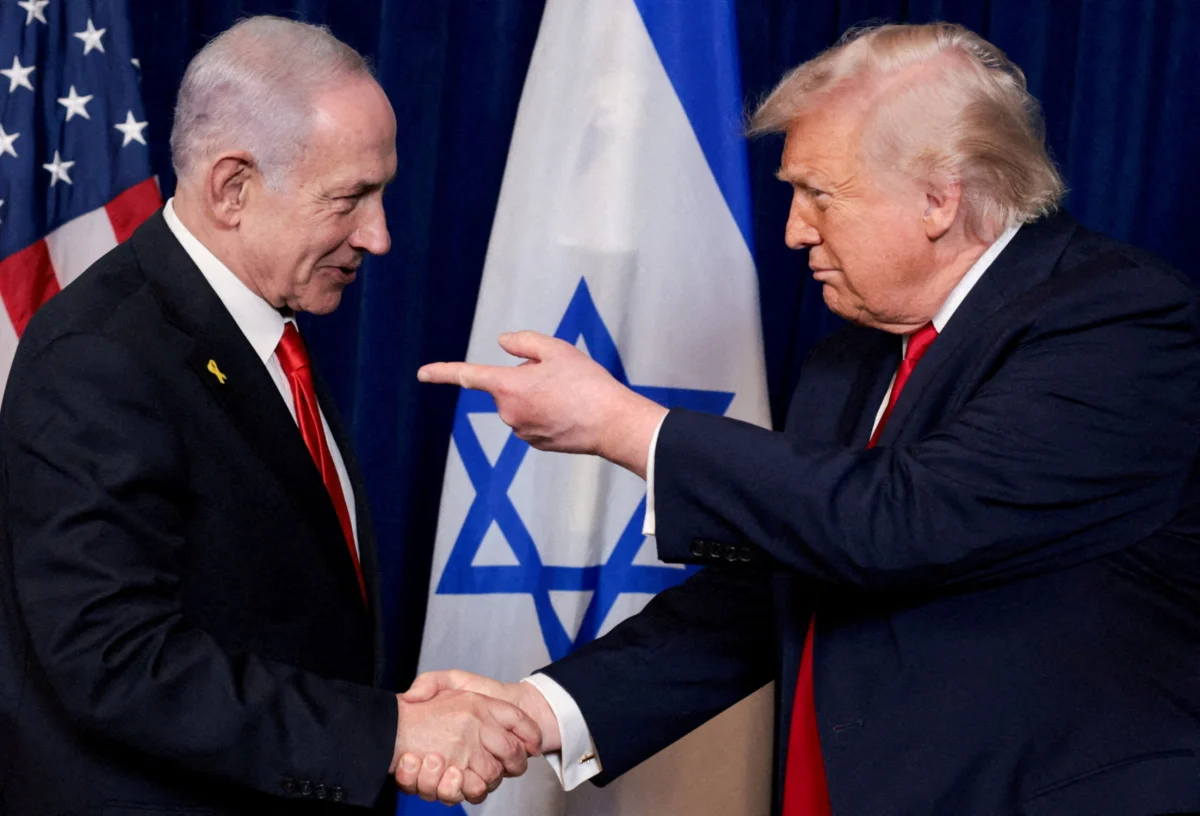
United States President Donald Trump has indicated that Israeli Prime Minister Benjamin Netanyahu may visit the White House as early as next week, marking his first trip to Washington since the initiation of the US-Israeli joint military actions against Iran. President Trump confirmed the prospective meeting to the news outlet Axios on Saturday, stating that Prime Minister Netanyahu had personally requested the high-level engagement. The potential rendezvous is tentatively scheduled to occur after President Trump’s return from the annual NATO summit, which is slated to take place in Ankara, Turkiye, on July 7 and 8.
This upcoming meeting, however, is set against a backdrop of increasingly visible tensions between the two long-standing allies. Public disagreements have emerged regarding strategic approaches in the ongoing regional conflicts, particularly concerning Iran and Lebanon, challenging the traditionally robust diplomatic facade between the two leaders.
A Deepening Diplomatic Rift Amidst Regional Conflict
The relationship between President Trump and Prime Minister Netanyahu, often characterized by strong personal affinity and shared strategic goals, has recently shown signs of strain. A significant point of contention has been Israel’s opposition to efforts by the Trump administration to negotiate a ceasefire with Iran. While the US has sought de-escalation, Israel has maintained a more aggressive posture, viewing any cessation of hostilities as potentially emboldening Tehran.
President Trump has openly criticized Netanyahu for Israel’s continued military operations in Lebanon. These actions, primarily targeting Hezbollah, a powerful Iranian-backed Shiite militant group and political party, are seen by the Trump administration as jeopardizing the delicate process of achieving a negotiated settlement with Iran. The US concern is that Israeli strikes could provoke a wider regional conflagration, unraveling diplomatic progress.
In a brief telephone interview with Axios, President Trump reportedly downplayed any suggestions of a fundamental rupture in his relationship with Netanyahu. However, he simultaneously asserted his perceived authority over the Israeli leader, remarking, "We get along very good. [Netanyahu] knows who the boss is." This statement, while attempting to project control and a working relationship, inadvertently highlighted the underlying power dynamics and potential for friction. Further underscoring this tension, President Trump previously confirmed to the New York Post in early June that he had, during a private phone call, called Netanyahu "f***ing crazy" in reference to Israel’s actions in Lebanon. Trump elaborated on his frustration, telling the Post, "I was a little bit perturbed at his constantly fighting with Lebanon." Despite these strong words, Trump maintained to the newspaper that his personal relationship with "Bibi" remains strong, stating, "We’ve worked very well together. I like Bibi a lot. And I work very well with him."
The War with Iran: A Thorny Backdrop
The proposed meeting takes place amidst a complex and volatile regional landscape, primarily defined by the ongoing US and Israeli military involvement in two distinct conflicts against Iran. The first of these conflicts commenced in June 2025, followed by a more recent and protracted conflict that began on February 28 of the current year.
The latest conflict, in particular, has drawn widespread international condemnation. Critics and several international bodies have denounced it as an "unprovoked act of aggression" and a clear violation of international law. This assessment has been echoed by numerous humanitarian organizations and legal experts, who have called for a cessation of hostilities and adherence to established international norms governing armed conflict.
Domestically, President Trump has faced significant backlash for deploying US troops without explicit congressional approval, sparking debates about executive authority and the constitutional mandate for declaring war. Public opinion in the United States also reflects deep reservations about the conflict. A Quinnipiac University poll conducted on June 24 revealed that a substantial 60 percent of US voters felt the war against Iran was "not worth it," with only 34 percent expressing approval. The survey also indicated a growing sentiment that the US is overly supportive of Israel, with 48 percent of respondents holding this view. These poll numbers coincide with a sagging approval rating for President Trump, a potentially grim indicator for his Republican Party as it campaigns to retain control of Congress in the upcoming November midterm elections. The administration’s foreign policy, particularly its involvement in the Iran conflict, is likely to be a significant issue for voters.
The Trump administration, however, has consistently defended its involvement in the conflict, asserting that its actions were necessary to prevent Iran from acquiring a nuclear weapon. This claim stands in direct opposition to Tehran’s long-standing denials, with Iran maintaining that its uranium enrichment program is exclusively for peaceful civilian energy purposes, subject to international monitoring. The persistent disagreement over Iran’s nuclear ambitions forms the core of the geopolitical tension in the region.
Attempts at De-escalation and Their Fragility
Despite the ongoing military engagements, both the US and Iran have engaged in efforts to de-escalate the conflict. On April 8, the Trump administration announced a two-week ceasefire deal, which was subsequently extended indefinitely, signaling a desire to wind down the hostilities. Further diplomatic progress was seemingly achieved on June 17, when the US and Iran signed a 14-point Memorandum of Understanding (MoU) aimed at suspending hostilities and creating a framework for future engagement.
However, the implementation of this MoU has proven to be "spotty," with various incidents threatening to unravel the fragile peace. Since the memorandum’s approval, both US and Iranian forces have reportedly exchanged fire over the critical passage of commercial traffic through the Strait of Hormuz, a vital chokepoint for global oil supplies. Moreover, Israel’s continued attacks on southern Lebanon, a key point of contention for President Trump, are seen as direct violations of the terms of the MoU. These Israeli actions have, in turn, prompted Iran to renew threats of once again closing the Strait of Hormuz, a move that would have severe repercussions for international trade and energy markets. President Trump has publicly expressed his frustration with Israel’s strikes on Lebanon, recognizing their potential to destabilize the region further and derail any efforts towards a lasting peace.
The Enduring, Yet Challenged, US-Israel Alliance
The United States and Israel share a unique and historically deep alliance, cemented by strategic interests, shared democratic values, and robust diplomatic, economic, and military ties. The US was the first international government to recognize the newly formed Israeli state in 1948, marking the beginning of a relationship that has endured for over seven decades. In the decades since, Israel has become the largest cumulative recipient of US foreign assistance of any country since World War II, a testament to its strategic importance to American foreign policy.
This assistance has been substantial and multifaceted. In 2016, the US issued a memorandum pledging an unprecedented $38 billion in military aid to Israel over the course of a decade, representing the largest such package of its kind in US history. This aid includes advanced weaponry, joint military exercises, and intelligence sharing, all aimed at bolstering Israel’s qualitative military edge in a volatile region. Furthermore, the US has continued to provide Israel with additional military assistance in recent years, including amid its "genocidal war on Gaza," a characterization used by some international bodies and human rights organizations to describe the scale of the conflict’s impact on civilian populations. This consistent flow of aid underscores the enduring commitment of the US to Israel’s security, even as policy disagreements occasionally surface.
Prime Minister Netanyahu’s proposed visit, if it materializes this month, would mark his seventh trip to the US during President Trump’s second term, which began in January 2025. This frequency is remarkable, as no other leader of a foreign country has made as many official visits to the United States since Trump’s return to office. Netanyahu’s last visit occurred in February, just prior to Israel and the US launching their initial volley of strikes on Iran in the current conflict. The repeated visits highlight Netanyahu’s unique access and perceived influence within the Trump administration, despite the recent public spats. These meetings typically serve to coordinate strategic policy, address pressing regional security concerns, and reaffirm the fundamental strength of the alliance, even when tactical differences emerge.
International Legal Ramifications and Diplomatic Standoffs
Adding another layer of complexity to the diplomatic landscape, Prime Minister Netanyahu and his former defense minister, Yoav Gallant, remain subjects of arrest warrants issued by the International Criminal Court (ICC). These warrants, which typically pertain to alleged war crimes or crimes against humanity, place a significant cloud over the international travel and diplomatic activities of the named individuals.
However, both the United States and Israel do not recognize the ICC’s jurisdiction or authority. The Trump administration has explicitly renewed pressure on the International Criminal Court, challenging its legitimacy and the scope of its mandate. This non-recognition means that while the warrants exist, they do not impede travel to countries like the US, which similarly do not acknowledge the court’s power over their citizens or allies in such matters. The stance of both nations regarding the ICC reflects a broader geopolitical debate about international legal frameworks and national sovereignty.
Domestic Political Ramifications and Future Outlook
The domestic political implications of the ongoing conflicts and the dynamic US-Israel relationship are significant for President Trump. His sagging approval ratings, particularly in light of public skepticism about the Iran war, could pose a serious challenge for the Republican Party in the November midterm elections. The perception that the US is overly entangled in foreign conflicts, or too supportive of specific allies, could alienate key voter demographics and impact the party’s ability to retain control of Congress. The "America First" foreign policy doctrine, which promised to prioritize domestic interests and reduce foreign entanglements, is being tested by the current regional crises.
Should Prime Minister Netanyahu arrive in Washington, DC, the meeting will be closely scrutinized by domestic and international observers alike. The primary objectives of such a visit would likely include an attempt to publicly reaffirm the strength of the US-Israel alliance, coordinate future strategic responses to Iran’s actions, and manage the public perception of the recent diplomatic friction. It will also be an opportunity for President Trump to assert his foreign policy leadership and for Prime Minister Netanyahu to seek continued robust American support. However, given the deep divisions over the Iran conflict and Israel’s actions in Lebanon, the visit also carries the risk of further exposing the underlying tensions, potentially complicating efforts to achieve regional stability and undermining the credibility of US diplomatic initiatives. The outcome of this high-stakes meeting will undoubtedly shape the trajectory of US foreign policy in the Middle East and the future of one of America’s most critical alliances.
