

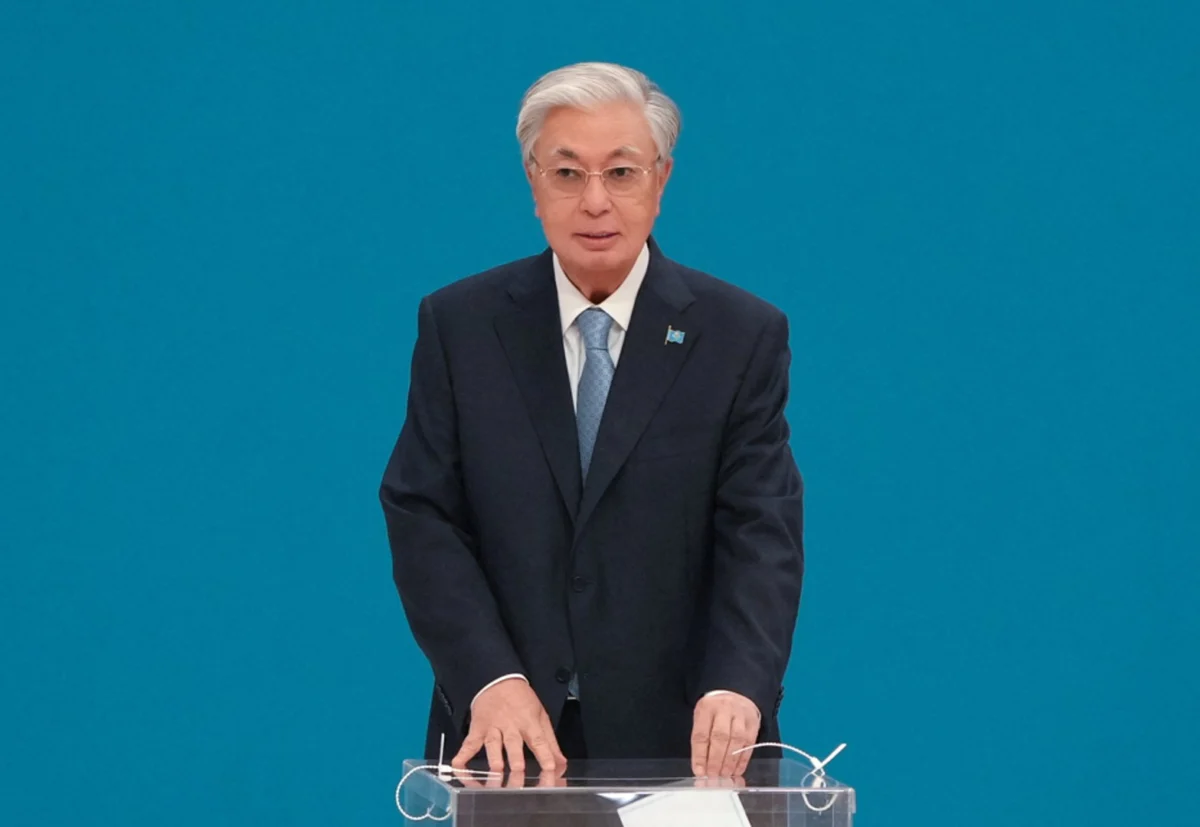
Exit polls released on August 24, 2026, indicate a commanding victory for Kazakhstan’s pro-Tokayev Adilet party in the country’s parliamentary elections, securing approximately 70 percent of the vote. This outcome significantly solidifies President Kassym-Jomart Tokayev’s hold on power within the strategically vital Central Asian nation, a major global exporter of oil, uranium, and various minerals, maintaining intricate and critical ties with both Russia and China. The result is widely seen as a public endorsement of Tokayev’s "New Kazakhstan" reform agenda, initiated in the aftermath of widespread unrest in early 2022, and sets a clear trajectory for the country’s political and economic future.
Detailed Election Results and the Composition of the Mazhilis
The parliamentary elections, held for the Mazhilis, the lower house of Kazakhstan’s bicameral legislature, saw millions of eligible voters cast their ballots across the vast country. While the final official results from the Central Election Commission (CEC) are pending, the consistency of multiple exit polls points to an overwhelming mandate for the Adilet party. This performance is expected to grant Adilet a supermajority in the 98-seat Mazhilis, providing President Tokayev with substantial legislative backing to continue implementing his announced reforms and policy initiatives without significant parliamentary hurdles.
Beyond Adilet’s dominant showing, preliminary data suggests that a handful of other parties managed to cross the 5% electoral threshold required for representation. These typically include parties that have historically maintained a presence in the Mazhilis, often characterized by their support for the general governmental direction, albeit with minor policy distinctions. Based on past electoral trends and the current political landscape, parties like the traditionally pro-government Ak Zhol Democratic Party and the People’s Party of Kazakhstan (formerly the Communist People’s Party of Kazakhstan) are likely to have secured some seats. The more recently established Amanat party, which has also been supportive of Tokayev’s agenda, is also expected to have a presence. The participation and performance of smaller, potentially more critical parties, will be a key indicator of the extent of political pluralism under the reformed electoral system. Voter turnout, crucial for legitimacy, was reported by the CEC to be moderate to high, a common feature in Kazakh elections.
The Road to "New Kazakhstan": A Timeline of Reforms
The 2026 parliamentary election is a significant milestone in a series of political transformations that began even before President Tokayev’s current term. His ascendancy to the presidency in March 2019 followed the unexpected resignation of Kazakhstan’s long-serving first president, Nursultan Nazarbayev, who had led the nation since its independence from the Soviet Union. Tokayev initially inherited a system where Nazarbayev retained considerable influence as "Elbasy" (Leader of the Nation) and head of the Security Council.
However, the political landscape dramatically shifted in January 2022. What began as peaceful protests against fuel price hikes in the western Mangystau region quickly escalated into nationwide demonstrations, marked by widespread unrest, looting, and violent clashes, particularly in the financial capital, Almaty. These events, dubbed "Qandy Qantar" or "Bloody January," exposed deep-seated socio-economic grievances and a struggle for power within the elite. President Tokayev swiftly responded by declaring a state of emergency, requesting assistance from the Collective Security Treaty Organization (CSTO) – a Russian-led military alliance – and ultimately consolidating his authority by removing key Nazarbayev-era figures and dismantling the former president’s remaining influence.
In the wake of the January unrest, Tokayev unveiled an ambitious program of political reforms aimed at building a "New Kazakhstan." This vision sought to move away from the super-presidential system and enhance democratic institutions. Key reforms included:
- June 2022: A national referendum approved over 50 amendments to the constitution. These changes significantly curtailed presidential powers, strengthened the role of parliament, established a Constitutional Court, and restricted the president to a single seven-year term without the possibility of re-election.
- September 2022: Tokayev called for snap presidential elections, which he won overwhelmingly in November 2022, securing his mandate under the new constitutional framework.
- March 2023: Early parliamentary elections were held under a new mixed-member proportional representation system, introducing a degree of party-list representation alongside single-mandate constituencies, aiming to foster greater political competition. This election was the first test of the reformed system, leading to the formation of the Mazhilis that has now completed its term, culminating in the August 2026 vote.
- Pre-election Period (2025-2026): The run-up to the 2026 elections involved further fine-tuning of electoral laws, registration of new political parties, and extensive campaigning by various political forces, all operating within the framework of Tokayev’s "New Kazakhstan" principles. The Adilet party, having been central to supporting Tokayev’s legislative agenda in the preceding Mazhilis, positioned itself as the direct vehicle for the President’s reformist vision.
Tokayev’s Vision: The "New Kazakhstan" Agenda
The "New Kazakhstan" agenda is multifaceted, aiming for comprehensive transformation across political, economic, and social spheres. Politically, the reforms seek to enhance the role of representative bodies, including the Mazhilis and local councils (maslikhats), and empower citizens. The re-establishment of the Constitutional Court, which had been abolished in 1995, was a significant step intended to provide stronger judicial oversight and protection of citizens’ rights. The reduction of presidential powers, at least on paper, aimed to create a more balanced system of checks and balances.
Economically, the agenda prioritizes diversification away from the country’s heavy reliance on raw material exports. While acknowledging the importance of oil, gas, and minerals, Tokayev’s administration has emphasized the development of manufacturing, agriculture, and the digital economy. Initiatives to attract foreign investment, improve the business climate, and tackle corruption have been central to this economic strategy. Socially, the "New Kazakhstan" seeks to address issues such as income inequality, access to quality education and healthcare, and strengthening civil society. The emphasis on meritocracy and reducing cronyism has been a recurring theme in Tokayev’s public addresses. The decisive victory of the Adilet party is thus presented as a public mandate to accelerate and deepen these reforms, positioning the party as the vanguard of this transformative project.
Economic Backbone: Oil, Uranium, and Geostrategic Significance
Kazakhstan’s economic prowess and geopolitical significance are inextricably linked to its vast natural resources. The country holds the second-largest proven oil reserves in the Caspian Sea region and is a top global oil producer, with major fields like Tengiz, Kashagan, and Karachaganak driving its hydrocarbon economy. Its strategic location as a landlocked nation requires robust energy export infrastructure, primarily pipelines, connecting it to global markets through Russia, China, and the Caspian Sea.
Beyond oil, Kazakhstan is the world’s largest producer of uranium, accounting for over 40% of global output, making it a critical player in the international nuclear energy supply chain. It also possesses significant reserves of chromium, lead, zinc, copper, gold, and other valuable minerals. This rich resource endowment has fueled significant economic growth since independence, with a GDP per capita that is among the highest in Central Asia.
However, this resource wealth also presents challenges, including vulnerability to commodity price fluctuations and the "resource curse" phenomenon, which can hinder diversification efforts. The Tokayev administration’s focus on diversifying the economy, developing value-added industries, and improving the investment climate is crucial for long-term sustainable growth. The stability projected by the election results is expected to reassure international investors and partners about the continuity of economic policies and the security of supply chains emanating from Kazakhstan.
Kazakhstan’s Multi-Vector Foreign Policy
Kazakhstan’s foreign policy is characterized by its "multi-vector" approach, carefully balancing relationships with major global powers while pursuing its national interests. Its unique geopolitical position, bordering Russia and China, and its proximity to Afghanistan and the Middle East, necessitates a pragmatic and diversified diplomatic strategy.
- Russia: A key strategic partner through the Eurasian Economic Union (EAEU) and the Collective Security Treaty Organization (CSTO). Economic integration, military cooperation, and a long shared border define this relationship. However, Kazakhstan has also subtly asserted its sovereignty and avoided explicit endorsement of all Russian foreign policy actions, particularly in light of regional conflicts.
- China: An increasingly vital economic partner, especially through the Belt and Road Initiative (BRI). China is a major investor in Kazakhstan’s infrastructure, energy, and transit sectors. The two countries share a long border and significant trade volumes.
- European Union and United States: Important partners for trade, investment, and technology transfer. The EU is a major destination for Kazakh oil, and both the EU and the US support Kazakhstan’s economic diversification efforts and its stated commitment to democratic reforms.
- Central Asia: Kazakhstan plays a leadership role in regional cooperation initiatives, promoting stability and economic integration among its Central Asian neighbors.
The election results, by reaffirming Tokayev’s leadership, are expected to signal continuity in this multi-vector foreign policy, providing predictability for international partners and investors.
Reactions and International Scrutiny
Following the exit poll announcements, officials from Kazakhstan’s Central Election Commission commended the electoral process, highlighting what they described as improved transparency and fairness under the new legislative framework. Adilet party leaders expressed profound gratitude to the voters, reiterating their commitment to President Tokayev’s reform agenda and promising to deliver on their campaign pledges, which largely focused on economic development, social welfare improvements, and strengthening national unity. President Tokayev himself is expected to issue a statement emphasizing the democratic nature of the elections and the public’s clear mandate for his vision of a "New Kazakhstan."
International observer missions, including those from the Organization for Security and Co-operation in Europe (OSCE) Office for Democratic Institutions and Human Rights (ODIHR), the Commonwealth of Independent States (CIS), and the Shanghai Cooperation Organization (SCO), were present to monitor the elections. While preliminary reports from these bodies typically acknowledge improvements in the electoral framework and administration, they often also identify areas for further enhancement, such as ensuring genuine political competition, protecting freedoms of assembly and expression, and strengthening the independence of the media. The tone of these reports will be crucial in shaping international perceptions of the election’s legitimacy and the progress of Kazakhstan’s democratic reforms.
Statements from key international capitals are likely to follow a pattern of acknowledging the results and expressing a desire for continued stable and productive relations with Kazakhstan. Russia and China are expected to welcome the stability and continuity in leadership, given their significant economic and strategic interests in the country. Western nations, while emphasizing the importance of ongoing democratic development and human rights, will likely prioritize maintaining a pragmatic relationship with a crucial energy supplier and strategic partner in Central Asia.
Analysis: Implications for Governance and Development
The resounding victory of the Adilet party underpins several significant implications for Kazakhstan’s future. Domestically, it unequivocally strengthens President Tokayev’s political authority. With a strong majority in the Mazhilis, his administration gains considerable leverage to pass legislation, implement policies, and potentially further refine the "New Kazakhstan" reforms. This enhanced stability could provide a conducive environment for long-term economic planning and the attraction of foreign investment. However, analysts will scrutinize whether this consolidation of power translates into a genuine broadening of political participation or merely reinforces a controlled political landscape. The challenge will be to ensure that the strengthened parliament genuinely represents diverse voices and acts as an effective check on executive power, rather than simply rubber-stamping presidential initiatives.
The reform trajectory, particularly concerning democratic governance and political pluralism, will be a key area of focus. While constitutional amendments have been enacted, the practical implementation of these changes and the cultivation of a vibrant multi-party system and civil society remain ongoing challenges. The election results suggest that while there is public support for Tokayev’s vision of stability and reform, the space for independent political opposition may still be limited.
Economically, the stability provided by a clear electoral outcome is likely to reassure investors. The government is expected to continue its efforts to diversify the economy, reduce its reliance on volatile commodity markets, and develop new sectors. This includes ongoing investments in infrastructure, technology, and human capital. Kazakhstan’s role as a reliable energy and mineral supplier to global markets will remain paramount, and the election results signal a continuation of policies aimed at ensuring stable production and export routes.
Regionally, Kazakhstan’s enhanced stability under Tokayev’s confirmed leadership reinforces its position as a key player in Central Asia. Its multi-vector foreign policy will likely persist, navigating the complex geopolitical landscape between major powers. This stability is vital for regional security and cooperation initiatives, particularly concerning trade, transit, and addressing cross-border challenges.
In conclusion, the decisive victory of the Adilet party in Kazakhstan’s 2026 parliamentary elections marks a critical moment in the country’s post-January 2022 reform journey. It signifies a public affirmation of President Tokayev’s leadership and his "New Kazakhstan" agenda, providing him with a robust mandate to steer the nation through its next phase of political and economic development. While the path ahead promises continued stability and reform efforts, the ultimate success of these transformations will depend on the practical implementation of democratic principles, the fostering of genuine political pluralism, and the effective addressing of socio-economic disparities that underpinned past unrest. The world will be watching to see how Kazakhstan leverages this reinforced mandate to navigate its complex domestic and international challenges.
