

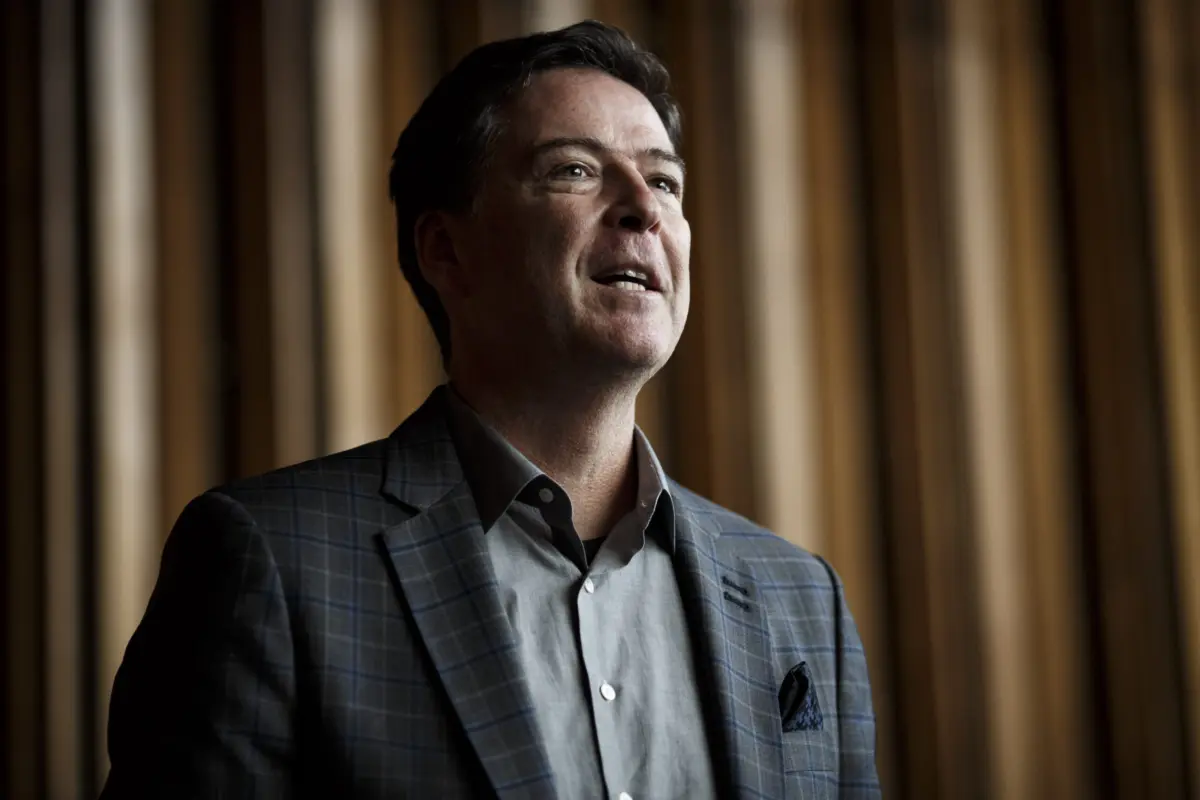
James Comey, the former Director of the Federal Bureau of Investigation (FBI), is confronting a third set of criminal charges initiated under the administration of United States President Donald Trump, marking a significant escalation in the ongoing legal and political animosity between the two high-profile figures. The latest development emerged on Monday with the unsealing of documents, revealing that the Trump administration has accused Comey of two counts related to the unlawful dissemination of "information related to national defense." This legal maneuver is the third attempt by the current administration to levy criminal charges against the former FBI director since President Trump’s return to office in January 2025, painting a clear picture of persistent and politically charged prosecution efforts.
Despite these accusations, Comey, a vocal critic of President Trump, has not yet been formally indicted in this specific case, and he vehemently denies any wrongdoing. His legal team has characterized these renewed charges as a baseless campaign of political retribution, questioning the motivations and procedural integrity behind them.
Details of the Latest Allegations
The recent charges stem from a court filing in October, which prosecutors allege Comey directed his FBI colleagues to leak sensitive information to the news media. Specifically, the filing states: "The defendant [Comey] through one or more co-conspirators directed Individual #1 to disclose national defence information to a reporter for a national news publication." This accusation points to the disclosure of classified or highly sensitive government intelligence, falling under statutes typically associated with the Espionage Act, which prohibits the unauthorized disclosure of information relating to national defense.
The core of these new allegations pertains to an article published in The New York Times on October 5, 2016. The report, penned by Pulitzer Prize-winning journalist Charlie Savage, detailed how the internet service provider Yahoo had been compelled by a secret court order to scan its users’ incoming email traffic for a specific computer signature. This signature was allegedly linked to a "terrorist" organization, highlighting the government’s expansive surveillance capabilities. Prosecutors are now accusing Comey of orchestrating the disclosure of this highly sensitive information to Savage, thereby compromising national security.
Comey’s Vehement Denial and Claims of Retribution
Responding to the latest legal assault, James Comey released a video statement on the online platform Substack, where he once again denounced the Trump administration’s efforts as a "campaign of political retribution." His remarks conveyed a mix of defiance and deep concern for the integrity of the American justice system. "Well, now they’re back again. it would almost be funny if it wasn’t such an appalling abuse of the Department of Justice, one that we cannot become numb to," Comey stated, emphasizing the gravity of what he perceives as a weaponization of federal law enforcement.
He reiterated his innocence and unwavering resolve, asserting, "Nothing’s changed with me. I’m still innocent, and I’m still not afraid of these people, and I still believe in the independent federal judiciary." Comey also alluded to the protracted nature of this legal struggle, noting that Trump is only midway through his second term and hinting that he anticipates further attempts to prosecute him. "The next couple years are going to be hard for all of us," he added, urging resilience and faith in American institutions. "It’s really important that we stand straight and keep the faith in America."
The Controversial "Criminal Information" Process
A critical aspect of Comey’s defense centers on the procedural pathway chosen by prosecutors. His defense lawyer, Pat Fitzgerald, a former U.S. Attorney known for his work as a special counsel, sharply criticized the charges, pointing out that government prosecutors have not sought a grand jury indictment. Typically, a grand jury convenes to review evidence presented by prosecutors and determines whether there is sufficient probable cause to bring criminal charges, thus serving as a safeguard against arbitrary prosecution.
Instead, the Trump administration is pursuing charges against Comey through a process known as a "criminal information." This legal mechanism allows prosecutors to bypass a grand jury entirely, proceeding directly to trial if the defendant waives their right to an indictment. While permissible under federal rules, its use in high-profile, politically sensitive cases without the scrutiny of a grand jury is unusual and has drawn significant criticism from legal experts.
Fitzgerald’s statement underscored this concern: "Both times the Government determined that no charges should be brought against anyone." He highlighted the fact that "Ten years after the article was published, the Government filed an ‘Information’ against Mr. Comey that was not approved by a judge nor issued by a grand jury. It purports to charge Mr. Comey with crimes that he did not commit." This suggests that the government had previously investigated the matter twice, concluding no charges were warranted, only to revive them now through a less scrutinized process. The presiding judge in this case is Federal Judge Trevor McFadden, a Trump appointee to the U.S. District Court in Washington, DC, a detail that further fuels discussions about judicial impartiality in these politically charged proceedings.
A Chronology of Charges: The Trump-Comey Antagonism
The latest charges are not an isolated event but rather the third iteration in a series of legal attempts by the Trump administration to prosecute James Comey. This pattern underscores a deep-seated antagonism that originated during Trump’s first presidency.
- 2013-2017: Comey’s FBI Tenure and the Clinton Email Probe: Appointed by President Barack Obama in 2013, James Comey served as FBI Director through the contentious 2016 presidential election. His decisions during this period, particularly regarding the investigation into Hillary Clinton’s use of a private email server, drew bipartisan criticism. While his public statements about the Clinton investigation were controversial, they were largely seen as an attempt to maintain transparency and the FBI’s independence.
- 2017: The Firing and the Russia Investigation: Trump fired Comey in May 2017, just months into his first term. The stated reasons for the dismissal varied, but it came amidst the FBI’s investigation into potential collusion between Russia and Trump’s 2016 presidential campaign. Trump consistently denounced this probe as a "hoax," and Comey’s firing intensified suspicions of obstruction of justice, leading to the appointment of Special Counsel Robert Mueller. This event marked a profound rupture in their relationship, with Comey becoming a prominent critic of the president.
- January 2025: Trump’s Second Inauguration and Renewed Focus: Following Trump’s return to the presidency in January 2025, his administration immediately signaled a renewed focus on prosecuting perceived political adversaries, with Comey at the top of the list.
- September 2025: Trump’s Social Media Directive: In a highly unusual move, President Trump publicly pressured his then-Attorney General, Pam Bondi, to pursue legal action against his critics. In a September 2025 social media post on Truth Social, Trump wrote: "Nothing is being done. What about Comey, Adam ‘Shifty’ Schiff, Leticia??? They’re all guilty as hell, but nothing is going to be done." He concluded by instructing Bondi not to "delay any longer" and demanded, "JUSTICE MUST BE SERVED, NOW." This post was widely interpreted as a direct order to the Justice Department to target political opponents, raising serious concerns about the independence of federal law enforcement.
- September 25, 2025: First Indictment (Dismissed): Just five days after Trump’s public directive, Comey faced his first set of charges under the second Trump administration. He was indicted on charges of lying to Congress and obstructing a legislative proceeding. However, this case was ultimately dismissed on the grounds that the prosecutor in charge, Lindsey Halligan, had been unlawfully appointed, highlighting potential procedural irregularities in the administration’s legal efforts.
- April 28 (Unspecified Year): Second Indictment (Ongoing): A second indictment followed on April 28, where the Trump administration accused Comey of threatening the president. This unusual charge stemmed from a social media post by Comey featuring seashells arranged to form the message "86 47." While "47" is understood to refer to Trump as the 47th president, "86" is a slang term, often used in the service industry to mean "nix" or "get rid of" a dish or customer. The Trump administration, however, argued that "86" implied violence, leading to charges that remain ongoing and widely seen as legally tenuous.
- This Monday: Third Set of Charges: The latest charges regarding the alleged unlawful dissemination of national defense information represent the third and most recent attempt to prosecute Comey.
Broader Implications for Justice and Governance
The repeated attempts to prosecute James Comey carry profound implications for the independence of the Department of Justice, the norms of American governance, and the future of political discourse. Legal scholars and civil liberties advocates have expressed alarm over what they perceive as the overt politicization of federal law enforcement.
- DOJ Independence: The visible hand of the President in directing specific prosecutions against political opponents erodes the crucial firewall between the executive branch and the Department of Justice. A truly independent DOJ is fundamental to the rule of law, ensuring that justice is applied fairly and without political bias. The use of "criminal information" rather than a grand jury indictment further fuels concerns about bypassing established legal safeguards in politically sensitive cases.
- Precedent for Political Retribution: Should these prosecutions succeed, they could set a dangerous precedent, normalizing the use of legal mechanisms to silence or punish former officials and political critics. This could have a chilling effect on whistleblowers and government employees who might otherwise feel compelled to speak out against perceived abuses of power.
- Impact on National Security Reporting: The charges related to the Yahoo article and "national defense information" also touch upon the delicate balance between national security and press freedom. While unauthorized leaks of classified information are serious, the prosecution of sources or those who facilitate such leaks, particularly when the information is deemed to be in the public interest, can be contentious.
- Erosion of Public Trust: The cumulative effect of these politically charged legal battles risks further eroding public trust in both governmental institutions and the judicial system. When the line between legitimate law enforcement and political vendetta blurs, the foundational principles of justice come under severe strain.
Related Developments: Maurene Comey’s Case
Adding another layer to the narrative of alleged retribution, a federal judge ruled earlier on Monday, before the third set of charges against James Comey were revealed, that Comey’s daughter, Maurene Comey, a former assistant U.S. attorney, had been unlawfully fired last year during Trump’s second term. Maurene Comey has consistently maintained that her termination was direct retaliation against her father. The court’s ruling, which found she was entitled to "retroactive reinstatement" and backpay, lends credence to the claims of a broader pattern of retaliation against the Comey family.
James Comey’s legal team has already moved to have the latest set of charges dismissed, citing the government’s previous investigations that yielded no charges and the alleged procedural impropriety of bypassing a grand jury. As this complex and highly politicized legal drama unfolds, it will undoubtedly remain a focal point of public debate, raising fundamental questions about the balance of power, the integrity of the justice system, and the future of political accountability in the United States. The outcomes of these cases will not only determine James Comey’s fate but also shape critical precedents for the conduct of high-level government officials and the independence of legal processes in an increasingly polarized political landscape.
