

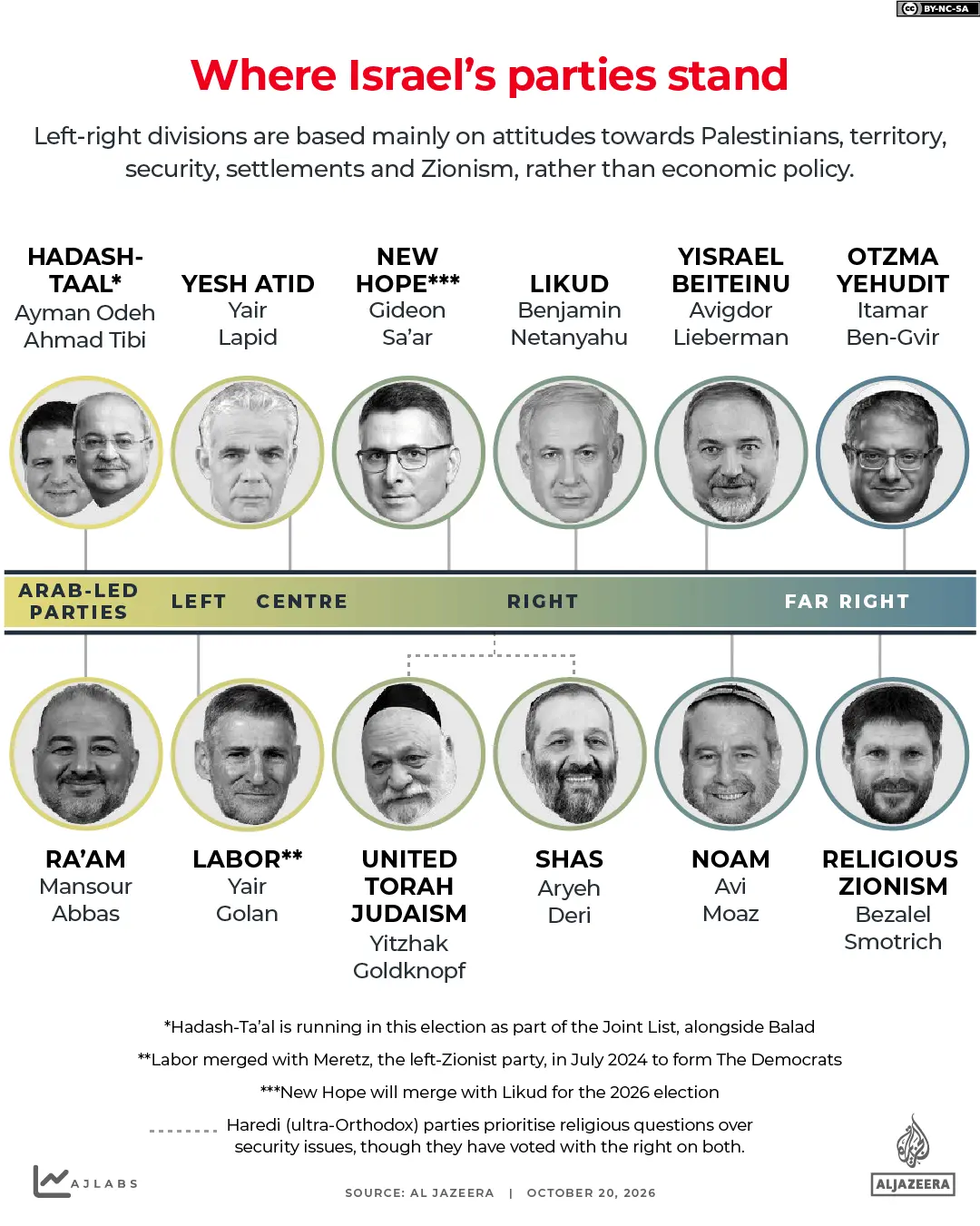
For an election widely perceived as the most consequential in Israel’s history, the upcoming ballot on Tuesday, October 29, 2026, presents a political landscape dominated by internal struggles, even as the nation grapples with profound external security challenges. While international observers might anticipate deep ideological rifts on issues of war and peace, the leading contenders exhibit a striking degree of consensus on military strategy and the overarching approach to regional conflicts. Instead, the campaign has largely coalesced around fundamental questions regarding Israel’s domestic character, the balance of power within its institutions, and the delicate equilibrium of its diverse society.
The core divisions animating this electoral cycle revolve almost exclusively around the future of Israel’s internal governance and societal structure. Voters are presented with a stark choice: either a continuation of the hard-right government led by incumbent Prime Minister Benjamin Netanyahu, pushing for a judiciary largely unconstrained by traditional oversight, or a disparate coalition of his opponents. This opposition bloc, while broadly agreeing on many policy outcomes, promises to operate within established legal frameworks and to temper the more extreme elements that have characterized the current governing alliance.
A Campaign Defined by Internal Fault Lines Amidst External Crises
The political discourse leading up to this pivotal election has been uniquely shaped by events that have both unified and fractured the Israeli populace. The devastating Hamas-led attack of October 7, 2023, and the subsequent intense military campaign in Gaza, along with broader regional tensions including reported engagements with Iran, have underscored a national security imperative that appears to transcend traditional party lines among the frontrunners. Few, if any, of the leading candidates have publicly questioned the fundamental strategic decisions or the scale of the ongoing operations following the October 7 attacks. This consensus, however, stands in stark contrast to the deep disagreements on domestic policy.
The key battlegrounds for this election are multifaceted, touching upon the very fabric of Israeli society and its democratic institutions. From the long-standing debate over the conscription of the ultra-Orthodox (Haredi) population into the military, a uniquely Israeli issue exacerbated by recent conflicts, to the contentious judicial overhaul initiated by the current government, and the thorny question of accountability for the security failures preceding October 7, these issues define the electoral stakes. Absent from the forefront of the debate, surprisingly, is a clear and actionable vision for a two-state solution or an equitable settlement with the Palestinians, a concept largely sidelined in the current political climate.
The Unresolved Question of Palestinian Self-Determination

Despite historical commitments, notably through the 1990s Oslo Accords, to work towards a two-state solution, few contenders in the upcoming election appear genuinely prepared to honor this framework. The Oslo Accords, signed by Israeli and Palestinian leaders, laid the groundwork for mutual recognition and a phased path towards Palestinian self-governance, inspiring hope for a lasting peace. However, decades of stalled negotiations, continued settlement expansion, and recurring violence have steadily eroded its viability.
The current government, and indeed many of its challengers, stand widely accused of actively undermining the prospects for an independent Palestinian state. Reports of escalating settler violence—often described as pogroms—across the West Bank have become increasingly frequent, coinciding with ongoing support for new construction in occupied territories in defiance of international law. A prime example is the controversial E1 settlement plan, a strategic land corridor intended to connect Jerusalem to Ma’ale Adumim, which critics and even some government ministers openly acknowledge would effectively bisect the West Bank, making a contiguous and viable Palestinian state impossible. This stance has significant implications for Israel’s international standing, often putting it at odds with key allies who continue to advocate for a two-state solution as the only viable path to long-term stability. The absence of a clear path forward from the leading candidates suggests a continued trajectory of occupation and conflict management rather than resolution.
The Haredi Conscription Debate: A Growing Burden
The conscription of Israel’s rapidly expanding ultra-Orthodox, or Haredi, population into the Israel Defense Forces (IDF) has emerged as a central and increasingly volatile issue. For decades, Haredi men have largely received exemptions from compulsory military service, allowing them to pursue religious studies in yeshivas. This policy, rooted in a historical agreement to preserve traditional Jewish learning, has become a significant point of contention, particularly as the Haredi population grows and the human and economic costs of ongoing military engagements mount.
The Supreme Court, recognizing the increasing inequality and burden on secular and national-religious citizens, has repeatedly challenged the legal basis for these exemptions. A landmark ruling on June 25, 2024, struck down the existing legal framework, mandating that the government legislate a new, equitable conscription law. This ruling ignited a fierce political battle. Prime Minister Netanyahu’s coalition relies heavily on the support of the two main Haredi parties, Shas and United Torah Judaism (UTJ). These parties have unequivocally insisted that Netanyahu pass legislation to overturn the Supreme Court’s decision, providing an enduring legislative shield for ultra-Orthodox youth against conscription.
The debate is not merely about military service; it reflects deep societal fissures. Proponents of Haredi conscription argue for shared national burden, emphasizing the strain on the IDF’s manpower and the economic cost of supporting a large, non-contributing segment of the population. Opponents, primarily Haredi leaders, argue that religious study is vital for the spiritual continuity of the Jewish people and that forced conscription would threaten their unique way of life. The outcome of this election will likely determine the future of this contentious policy, with significant ramifications for social cohesion, military readiness, and the principles of equality before the law. The financial implications are also substantial; with a rapidly growing Haredi population, the economic burden of exemptions and state subsidies for religious institutions becomes increasingly unsustainable, particularly amidst heightened defense spending.
Judicial Overhaul: Reshaping the Democratic Landscape

Days after taking office in late 2022, Prime Minister Netanyahu’s government unveiled an ambitious and deeply divisive plan to curb the powers of Israel’s courts, particularly the Supreme Court. This proposed judicial overhaul, described by its proponents as necessary to restore balance between the branches of government and by its opponents as an assault on democracy, triggered months of unprecedented mass protests throughout 2023, bringing hundreds of thousands of Israelis to the streets before the war on Gaza temporarily paused the legislative push.
The coalition has already implemented several key measures. These include reshaping the committee responsible for appointing judges, giving the government more direct control over judicial selections. Furthermore, in July 2025, a controversial law was passed that significantly stripped Attorney General Gali Baharav-Miara of many of her powers, allowing the government to disregard her legal advice and appoint its own legal representation in court proceedings. Both of these measures are slated to take full effect after the upcoming election, raising immediate concerns about the separation of powers. Most of the opposition parties have explicitly promised to reverse these legislative changes, arguing they fundamentally undermine the independence of the judiciary and the rule of law.
The government has also engaged in what critics describe as a deliberate campaign to delegitimize the judiciary, including boycotting Chief Justice Isaac Amit. Critics vehemently contend that these actions represent a calculated assault on Israel’s democratic foundations, particularly by a prime minister embroiled in a long-running corruption trial of his own. Benjamin Netanyahu’s legal challenges, which began in December 2024, have led many to suggest that the judicial overhaul is, at least in part, an attempt to insulate himself from legal accountability. Justice Minister Yariv Levin, a key architect of the overhaul, frames the election as a historic opportunity to complete the "restoration" of judicial power to the elected representatives, arguing for a more powerful executive and legislature. The implications of this overhaul are profound, potentially transforming Israel’s democratic character and its checks and balances system.
Accountability for October 7: A Political Minefield
While the devastating human toll in Gaza, with over 74,000 reported fatalities by the time of this election, has been conspicuously absent from the main alliances’ campaign rhetoric, questions surrounding political accountability for the security failures that preceded and occurred during the Hamas-led attack of October 7, 2023, have dominated this election cycle. The shocking breach of Israel’s defenses and the subsequent atrocities triggered a national reckoning, leading to widespread calls for investigation and accountability.
Internal inquiries into the failings by the security services in the lead-up to and during the attack resulted in high-profile resignations. Chief of Staff Herzi Halevi, Israel’s top general, announced his resignation in January 2025, acknowledging significant responsibility for the catastrophic events. This was followed by a protracted and bitter struggle with the prime minister that ultimately led to the departure of Shin Bet head Ronen Bar in June 2025. These resignations, coming from the highest echelons of the military and internal security apparatus, underscored the gravity of the failures.
However, despite mounting evidence and persistent public outcry, no similar inquiry into Prime Minister Netanyahu’s own alleged failings before October 7 has materialized. Recent news reports, including credible leaks and official statements, have suggested that Netanyahu received warnings from both the United Arab Emirates and Egypt regarding potential escalations from Gaza prior to the attack. Furthermore, his long-standing policy of supporting Hamas in Gaza as a counterweight to the Palestinian Authority has drawn sharp criticism, with many arguing it inadvertently strengthened the very entity that launched the attack. The absence of a formal investigation into the political leadership’s role in the security lapse remains a deeply contentious issue, fueling public distrust and providing a powerful rallying cry for opposition parties who seek to hold the government accountable. This issue touches on the very core of democratic governance: the expectation that political leaders, like their security counterparts, must face scrutiny for profound failures.

The Broader Context: Gaza, Regional Wars, and Unanimity on Military Strategy
The striking consensus among Israel’s leading political factions regarding the military campaign in Gaza and the broader regional conflicts underscores a shared national security perspective that transcends internal political divisions. This unanimity, which sees little debate on the necessity or justification of the ongoing military operations following the October 7 attacks, reflects a deep-seated national trauma and a perceived existential threat.
The initial shock and subsequent determination to dismantle Hamas’s capabilities, ensure the return of hostages, and prevent future attacks have forged a powerful, albeit often unarticulated, agreement among contenders. This extends to the broader regional posture, including Israel’s responses to reported attacks from Iran and its proxies. While international bodies and human rights organizations have raised serious concerns about the scale of civilian casualties and humanitarian crisis in Gaza, few Israeli politicians at the national level have publicly challenged the fundamental strategic decisions made by the military and political leadership. This consensus, while offering a unified front on national security, also implies a lack of diverse perspectives on paths to de-escalation or alternative long-term solutions for the Palestinian territories, which could have significant implications for future peace efforts and regional stability.
Conclusion: A Nation at a Crossroads
As Israelis head to the polls, the election of October 29, 2026, represents a profound moment of introspection and decision. The nation stands at a crossroads, where the internal character of its democracy, the equitable distribution of societal burdens, and the accountability of its leaders are being fiercely contested. While the external threats remain ever-present, shaping the backdrop against which this election unfolds, the campaign has predominantly focused on the foundational principles of governance and the future identity of the state.
The outcome will not only determine who leads Israel through a period of intense regional instability but also, crucially, will define the nature of its institutions, the balance of power within its society, and its commitment to the rule of law. Whether the next government will continue the trajectory of radical judicial reform, perpetuate existing social inequities, or seek to mend the deep internal fissures will shape Israel’s future for years to come, impacting its domestic stability, its international standing, and its ability to navigate the complex challenges of the Middle East.
