

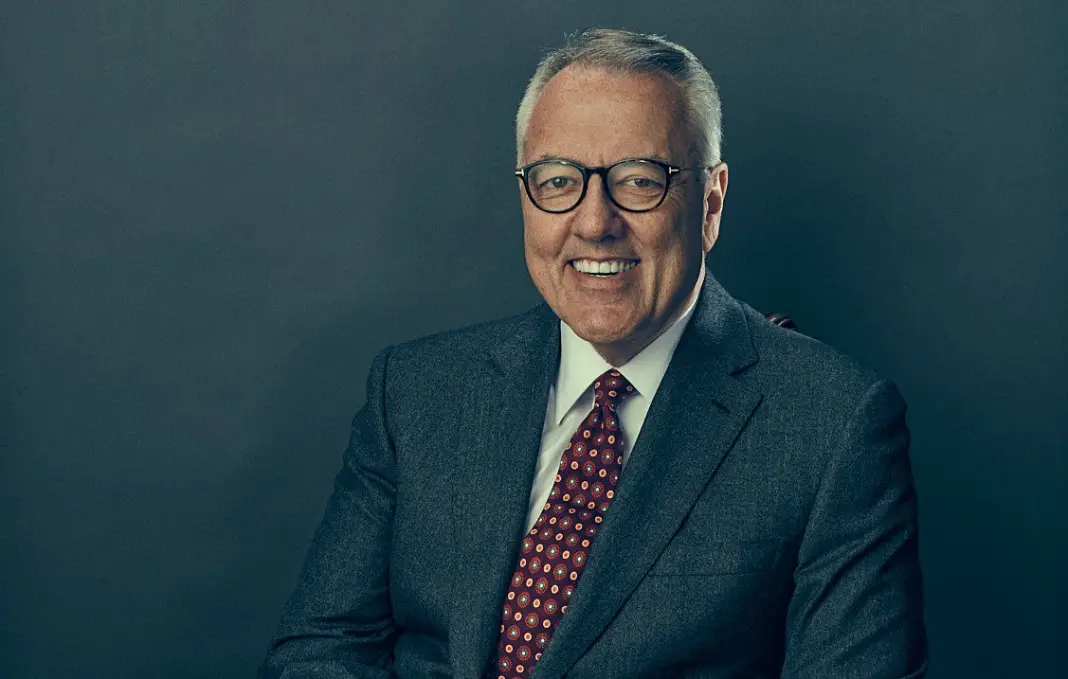
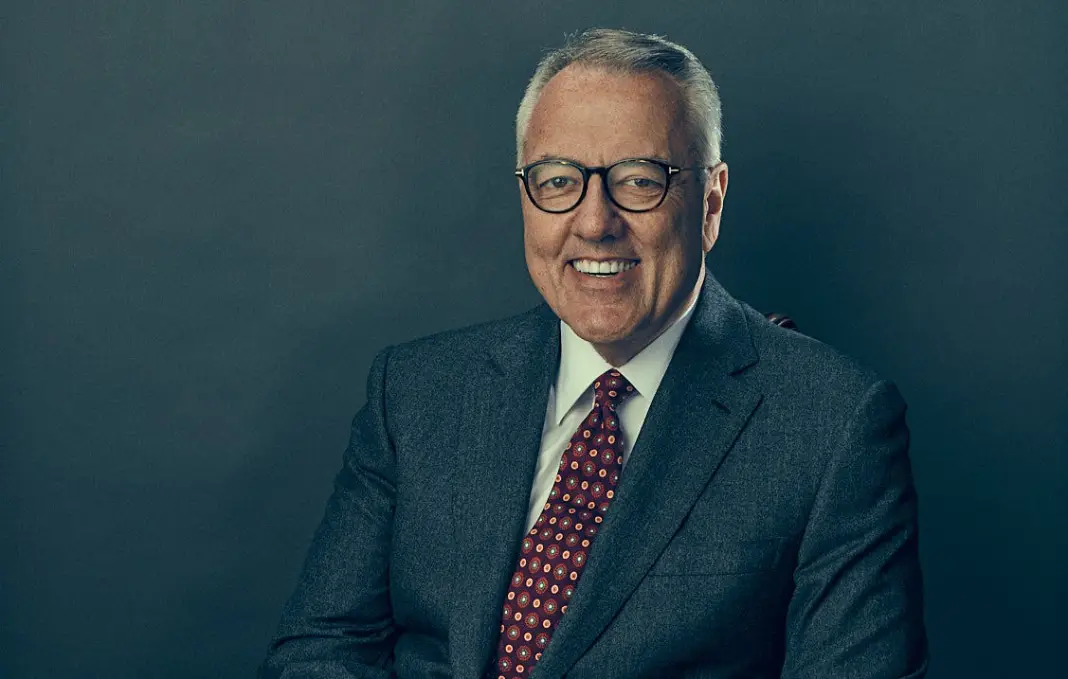
In a remarkable feat of corporate leadership, Greg Brown, CEO of Motorola Solutions, has been named Chief Executive’s 2026 CEO of the Year. His tenure, marked by a painful yet ultimately triumphant dismantling of the once-mighty $40 billion-plus Motorola empire, has yielded returns exceeding even the most optimistic projections. Nineteen years after taking the helm, Brown’s strategic vision and unwavering execution have reshaped the company, positioning it as a cornerstone of global public safety and enterprise security.
The journey was far from easy. In the early hours of a sleepless night around 2008, Brown found himself pacing his home, wrestling with the immense pressure of leading a company teetering on the brink. The iconic handset division, the very engine that had propelled Motorola to household name status with innovations like the first commercially available cell phone and the ubiquitous Razr, was hemorrhaging over $1 billion annually. The company’s market capitalization had dwindled significantly from its peak, and activist investor Carl Icahn loomed, his large stake amplifying the board’s restlessness. Brown confided in his wife, Anna, "You have no idea how bad this is." Her steadfast response, "You’re right… And I don’t care. But while you’re walking around the house with your shoulders slumped, consumed in self-doubt and self-pity, there are 75,000 people working for you waiting for you to lead. So, Greg, you gotta get your shit together. Eat the elephant one bite at a time and get going," served as a critical turning point, injecting a dose of much-needed pragmatism and resolve.
Brown’s approach was not one of overnight miracles, but of rigorous, unflinching leadership. He openly acknowledged the dire reality, made critical decisions without hesitation, and often secured board buy-in after the fact. A pivotal move was the strategic decision to bring in Sanjay Jha, a Qualcomm executive, as co-CEO to manage the struggling handset business. Simultaneously, Brown navigated a contentious settlement with Carl Icahn, a move that, while initially met with board opposition, ultimately accelerated crucial decision-making processes. The most audacious move, however, was the decision to spin off the consumer mobile business—the once-coveted crown jewel that had become a crippling millstone—and pivot Motorola’s future towards its then-understated mission-critical communications sector. This division, serving first responders, the military, and governments worldwide, was poised to become the company’s new identity.
The Strategic Pivot: From Handsets to Homeland Security
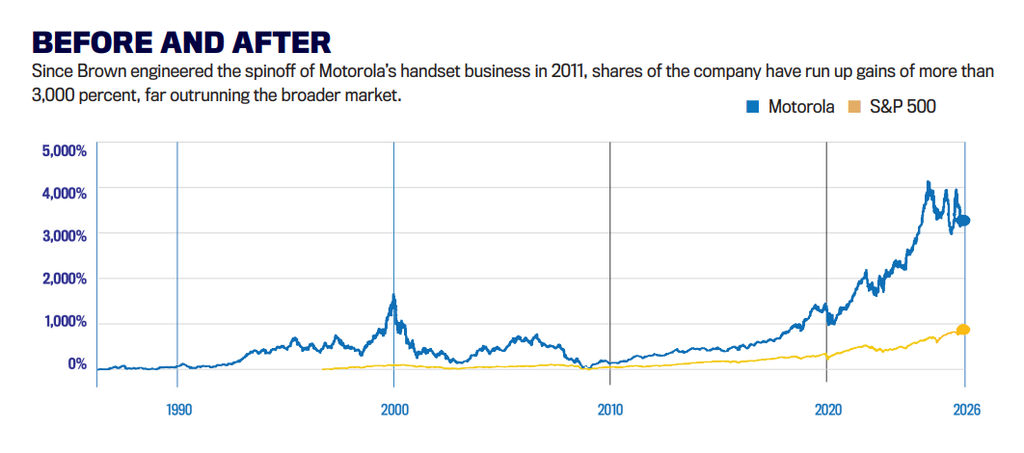
The year 2011 marked a watershed moment. In January, Motorola Mobility was spun off, and a mere eight months later, it was acquired by Google for $12.5 billion. The remaining entity, under Greg Brown’s continued leadership, was rebranded as Motorola Solutions (MSI), trading on the NYSE. This marked the genesis of what has become one of the most extraordinary, albeit understated, success stories in modern American business.
Motorola Solutions has since honed its focus with near-monastic discipline on the public safety and enterprise security sectors. Today, the company boasts $11.7 billion in annual revenue, providing the essential communication networks for 911 call centers, outfitting police officers with body cameras, and equipping first responders with critical communication systems used in every major city across the United States and in over 100 countries globally. Under Brown’s strategic stewardship, Motorola Solutions has completed more than 60 acquisitions, each meticulously aligned with its core mission. This disciplined approach has translated into a staggering total shareholder return of over 1,500 percent since the spin-off, vastly outperforming the S&P 500’s approximately 400 percent return over the same period. With a market capitalization of $66.5 billion, MSI stands as a testament to sustained, exceptional compounding growth, a fact often overlooked by those still associating the Motorola name solely with mobile phones.
The selection committee’s decision to name Greg Brown CEO of the Year underscores the profound depth of his leadership thinking and the tangible impact of his strategic foresight.
Voices of Recognition
The accolades for Greg Brown’s transformative leadership are widespread. Marillyn Hewson, former Chair and CEO of Lockheed Martin and a member of the selection committee, lauded Brown’s ability to navigate a complex landscape: "Greg’s an exceptional leader who has navigated a challenging and complex environment to transform Motorola into a highly valued technology partner for public safety entities around the world."
Tamara Lundgren, former Chair and CEO of Radius Recycling and a long-standing committee member, emphasized the courage behind Brown’s strategic repositioning: "His courageous transformation of an iconic company toward mission-critical communications, software growth and rigorous operational excellence has redefined its trajectory and built a powerful launchpad for Motorola’s next century."
Dave Ricks, Chair and CEO of Eli Lilly and a committee member, highlighted Brown’s blend of bold strategy and relentless execution: "Greg Brown has led his company from challenged to winning with his willingness to make a bold strategic bet and a relentless focus on execution. The fact that Motorola now sits at the core of public safety communications—protecting communities across the U.S. and around the world—is a testament to his vision and discipline. As a long-serving CEO, Greg has earned the respect of investors, his customers and fellow CEOs alike. He is an outstanding choice for CEO of the Year."
A Humble Beginning, A Bold Trajectory
Born in 1960, Greg Brown’s upbringing in Highland Park, New Jersey, as the youngest of five children, did not foreshadow a destiny as a titan of the technology industry. His academic path at Rutgers University, culminating in a bachelor’s degree in economics in 1982, offered no clear indication of the intricate corporate transformations he would later orchestrate.
His early career saw him join AT&T in Detroit, a decision influenced by his older brother, Dick, who himself would go on to become a prominent CEO. By the age of 29, Brown had risen to lead Ameritech’s equipment business. His acumen caught the attention of Ameritech CEO Dick Notebaert, propelling him to lead Ameritech New Media, where he was instrumental in building a cable TV operation from the ground up. This venture was eventually divested for approximately $1 billion.
In 1999, seeking a more dynamic environment, Brown transitioned to Micromuse, a publicly traded software company. As its Chair and CEO, he orchestrated a significant growth trajectory, increasing annual revenue from $28 million to over $200 million, before Motorola came calling in 2003. He initially joined the conglomerate to lead its Commercial, Government and Industrial Solutions Sector (CGISS)—a division that, despite its unglamorous designation, Brown recognized as the company’s most valuable asset.
Brown attributes his success not to innate privilege, but to the foundational principles instilled by his parents. His father, Harris Brown, emphasized personal responsibility and self-reliance, famously advising, "When you’re in a tough spot, don’t be an excuse guy. Look in the mirror, and mow your own lawn." This philosophy of accountability, coupled with his mother Winifred’s unwavering optimism, shaped Brown into a leader who embraced challenges and believed in his capacity to overcome them. The competitive drive was further fueled by his brother Dick’s success, establishing a clear, yet achievable, benchmark. His early declaration to his father upon embarking on his first job in Detroit—"By the way, Dad, I really appreciate you driving me out, and I just want to tell you one thing—you ain’t seen nothin’ yet. I’m gonna surprise you."—was not born of arrogance, but of a profound self-belief.
The Blessing of the Obvious: Unearthing Hidden Value
The Motorola Brown inherited in January 2008 was a company steeped in a rich legacy of innovation, dating back to its car radio origins and encompassing groundbreaking inventions like the portable TV, the pager, and the cellular telephone. Its peak revenue in 2006 had reached an impressive $42.9 billion. However, this innovative spirit was often coupled with a recurring inability to sustain market leadership once competition emerged. Motorola had a history of inventing, leading for a time, and then ceding ground to faster-scaling manufacturers, particularly from Asia, who could leverage lower unit costs and greater pricing flexibility.
The mobile phone sector, despite Motorola’s pioneering role, became a stark illustration of this pattern. The Razr’s popularity waned, and the arrival of the iPhone in 2007 signaled a seismic shift. The handset unit was hemorrhaging capital, losing approximately $300 million per quarter and having missed the crucial 3G transition. The company was in a precarious state. "If we didn’t get out of the cell phone business, there would be no interview today," Brown stated plainly, emphasizing the existential threat posed by the failing division.
Brown’s critical insight, requiring immense conviction to act upon given the handset division’s historical prominence, was that Motorola’s most valuable asset lay not in its consumer-facing glamour, but in its CGISS division. This sector, representing a mere 10 percent of revenue during the Razr era, was built upon mission-critical networks, meticulously engineered and customized for specific clients. Each agency, from the NYPD to the Pentagon, operated on unique configurations, creating extremely high switching costs and formidable barriers to entry. Brown recognized these "deep competitive moats" as defensible advantages. He identified CGISS as "the one really, really good business in the building," an element that had been largely overlooked within the larger conglomerate.
The initial phase of Brown’s leadership was tumultuous. Within his first quarter as CEO, he advocated for a statement acknowledging the evaluation of strategic alternatives. By the second board meeting, the discussion had escalated to spinning out the handset business. His decisive settlement with Carl Icahn, achieved within four months and against the board’s explicit objections, was a pragmatic maneuver. Brown’s rationale was simple: "I’m a practical guy from New Jersey. I want him inside the tent pissing out, not outside pissing in." This controversial move, coupled with the hiring of Sanjay Jha to manage the handset portfolio and the necessary cost-cutting measures, including pension freezes, were all designed to stabilize the business for a potential divestiture. Brown admitted, "I thought the strategy was right. I just wasn’t sure we could pull it off. I wasn’t sure there was enough tarmac in the runway to get the plane in the air."
The Power of Focus: Less Is More
The period following the spin-off was not without its challenges. Growth faltered in 2013 and 2014, and internal skepticism regarding Brown’s strategy and leadership persisted. A pivotal leadership meeting in 2014 brought these sentiments to the forefront, with Brown confronting criticisms like "Greg Brown only knows how to cut costs" and "Greg Brown breaks things up, he doesn’t know how to grow it." He countered by presenting the company’s historical total shareholder return against its peers, arguing, "You sucked. You’re terrible. I don’t even think you should be here. So, I’m sure I’m part of the problem, but I ain’t the biggest one. You are."
Brown then presented a stark choice: commit to the new direction or depart, offering an unprecedented severance package to those who wished to leave. Approximately 15 percent opted out, clearing the path for a more unified team. This decisive action solidified "total shareholder return" as the company’s "North Star," a concept that was relatively novel to an organization historically prioritizing innovation and full employment over shareholder accountability. Brown discovered an unwritten cultural norm at Motorola where long-tenured employees could only be terminated by the chairman, a practice he swiftly began to address.
Since that transformative meeting, Motorola Solutions has experienced sustained growth, fueled by a strategic series of acquisitions. These ranged from tuck-in acquisitions to more transformative deals, such as the integration of Avigilon (AI-driven video security), Airwave (UK national emergency network managed services), and Silvus Technologies (mission-critical mobile ad-hoc networks), and the pending acquisition of D-Fend (counter-drone systems). Each acquisition has served to fortify the company’s competitive moats, extending its capabilities in directions aligned with customer needs. Brown’s philosophy of "less is more" guides this strategic approach: "I’d much rather be a $15 billion firm that’s the leader in the markets it serves than a $50 billion firm, even if the $50 billion firm is growing faster." This focus on market leadership, margin expansion, operating cash flow generation, and reinvestment in the business defines Motorola Solutions’ strategy as an elite compounder.
The Road Ahead: Innovation in Public Safety
The opportunities confronting Motorola Solutions are not merely incremental but exponential. The company is at the forefront of developing technologies that promise to revolutionize public safety. This includes the deployment of unmanned drones as first responders, capable of reaching scenes before human personnel, and sophisticated counter-drone systems designed to protect high-profile events and critical infrastructure. Artificial intelligence is being integrated to enable real-time translation of 911 calls, flagging critical keywords like "weapon" and automatically bridging supervisors onto the line. Brown emphasizes that these advancements are not theoretical; they are actively saving lives by reducing response times. He notes, "Shave 60 seconds off every 911 response, and you save 10,000 lives a year in the U.S."
Brown expresses unreserved optimism for the company’s future: "I have never been more excited about the future of the company than now. And it’s not CEO speak or hyperbole."
The Power of "Event Drivers"
Greg Brown subscribes to the principle of "never letting a crisis go to waste," but he extends this philosophy to proactively leverage every interaction as an opportunity to reinforce strategic priorities. Board meetings, earnings calls, operational reviews, one-on-one discussions, town halls, and supplier summits are all viewed as "event drivers"—catalysts for galvanizing alignment, clarity, and a clear call to action. This systematic approach ensures that key messages and priorities are consistently reinforced, fostering a shared understanding of the company’s objectives.
Brown also values external perspectives, actively inviting investors and analysts to share their assessments with his management team. This practice fosters transparency and provides invaluable insights into market perceptions, ensuring that the company remains attuned to external feedback and adapts accordingly.
A Leader in Motion
At 66 years old and nearly two decades into his tenure as CEO—a period longer than any Motorola CEO except the founder and his son, and significantly exceeding the average tenure of an F500 CEO—Greg Brown retains an infectious enthusiasm for his role. He maintains personal connections with approximately 1,000 employees, readily available via text and phone. His leadership style is characterized by a genuine curiosity and a willingness to learn, exemplified by his approach to understanding artificial intelligence from the ground up, asking questions without embarrassment until he grasped its implications. This blend of intense focus and palpable joy in his work is a hallmark of his leadership. "I love the mission. I love our team. I love what we focus on," he asserts, adding, "I never work because it isn’t work for me. If you said, ‘Would you rather go to the Amalfi Coast or work at Motorola?’—Motorola every time."
The Genesis of a Transformation: Early Assessments and Strategic Decisions
When Greg Brown assumed the CEO role in January 2008, Motorola was a conglomerate with a storied history of innovation but a checkered track record of sustained commercial success. "I joined Motorola in ’03," Brown recalls. "I was a sector president for four years before becoming COO for nine months. But coming into the firm in ’03, it was a disparate group. It was a conglomerate like a Danaher, GE, Honeywell. It had a variety of disparate businesses."
He identified the public safety division as the company’s most promising asset. "The reason I joined Motorola in the division that I joined, which is the essence and the nucleus of Motorola Solutions, is I thought the public safety business was the most successful. It served business customers and government customers, and it had an end-to-end system orientation. These networks were built, curated and customized around each customer. NYPD had a unique configuration. LAPD, unique. The Secret Service, unique." The fundamental difference, as Brown articulates, is stark: "Easy to switch cell phone carriers, tough to switch your 911 network."
This sector, then a mere 4.5 percent of Motorola’s $40 billion revenue in 2006, was an "afterthought." Brown recognized its inherent strengths: "Very high switching costs. Significant barriers to entry or competitive moats in a good way." He communicated his conviction to the board early on, stating, "There’s one really, really good business in Motorola. And it’s called CGISS, the commercial government industrial solutions sector."
Lessons in Focus and Resilience
Brown’s tenure offers a broader lesson for CEOs regarding the allure of "bright shiny objects." He champions a "less is more" philosophy: "I’d much rather be a $15 billion firm that’s the leader in the markets it serves than a $50 billion firm, even if the $50 billion firm is growing faster." He points to Motorola’s history of inventing and then exiting businesses like portable TVs and car radios as evidence of the need for sustained focus.
The company’s near-miss with obsolescence, akin to Eastman Kodak or Polaroid, was a tangible threat. "Motorola missed 3G. And then when I became COO in 2007, Apple introduced the iPhone. There was no Android. The cell phone business became the smartphone business. What Motorola is really good at is custom complex communications. That’s still the essence of what we do here. We don’t compute. We’re not a software company." Brown’s blunt assessment underscores the critical nature of his decisions: "If we didn’t get out of the cell phone business, there would be no interview today. We wouldn’t be here."
By the time he assumed leadership, the handset division was losing approximately $300 million per quarter, burdened by nearly $3 billion in inventory and having missed critical market shifts. "The house was on fire," he described. His immediate actions were decisive: evaluating strategic alternatives, proposing the spin-off of the cell phone business, and crucially, settling with Carl Icahn. The board’s initial reluctance to engage with Icahn was overcome by Brown’s pragmatic assessment of the situation, acknowledging the potential for a protracted proxy fight to further destabilize the company. "One, I thought he would win the second proxy fight. Two, I thought he had credible arguments."
Navigating the Icahn Factor: A Catalyst for Change
The settlement with Carl Icahn, though controversial, proved to be a strategic masterstroke. Brown recognized that Icahn’s active involvement could accelerate necessary changes. "What I learned quickly is that having Carl’s representatives inside the boardroom allowed me to move faster on decisions. The Icahn brand was a catalyst for change and acceleration in a way I didn’t fully anticipate, and it made board governance better." He maintained a consistent and transparent dialogue with Icahn, engaging in over 300 conversations, underscoring his commitment to open communication, even with a formidable activist investor.
The immense pressure of this period took a physical toll, with Brown admitting to losing 40 pounds. He referred to it humorously as "the Icahn diet." He recognized his limitations in turning around the handset business, stating, "I knew what I didn’t know is more useful than being brilliant. I knew I couldn’t turn that cell phone business around. I had no background in the business. I’m not an engineer." This self-awareness led him to recruit Sanjay Jha, who was instrumental in stabilizing the portfolio and implementing Android. Brown considers the spin-off of the company, the settlement with Icahn, and the hiring of Jha as his "best decisions."
The Art of Acquisition and Talent Development
Motorola Solutions’ impressive acquisition record, exceeding 60 deals during Brown’s tenure, is a testament to a well-honed strategy. Michael Annes, who has been with Brown since the company’s bifurcation, is credited with the expertise in navigating the complexities of M&A. "He’s exquisite, exquisite. I have been the beneficiary of his expertise for 20 years," Brown states.
Furthermore, acquisitions are "customer-led and field-led," driven by feedback from the ground rather than solely by corporate strategy. Raj Naik, SVP of Strategy, plays a crucial role in this process, immersing himself in all aspects of the company’s operations. This dual approach, combining Annes’s deal-making acumen with field insights, ensures that acquisitions are strategically sound and culturally aligned.
Brown also emphasizes the critical importance of human capital. He acknowledges past missteps in moving too slowly on personnel changes, recognizing that "people who had skills for what the firm was are not necessarily the people you need for what it will be." He has since assembled a formidable leadership team, a blend of homegrown talent and external hires, including Jack Molloy (EVP and COO), Jason Winkler (EVP and CFO), Raj Naik, and Mahesh Saptharishi (EVP and CTO). This team is characterized by accountability, a proactive problem-solving approach, and a shared commitment to the company’s mission.
The AI Frontier: Enhancing Public Safety and Security
The integration of Artificial Intelligence is a central theme in Motorola Solutions’ future strategy. Brown views AI not as a job displacer, but as an enhancer, stating, "We will not be cutting jobs because of AI. Not going to do that. AI will be an additive. You will be reduced in Motorola if you don’t learn AI. So, your concern as an employee—you’re not going to be replaced by AI, but you may be replaced by someone using AI if you’re not. So, get in the game and use it."
The applications of AI are diverse and impactful. Internally, it is being used to streamline engineering development, enhance customer service, and improve legal processes. Externally, AI is revolutionizing product capabilities, enabling real-time translation and transcription in body cameras and 911 call systems, thereby reducing response times and saving lives. In video security, AI drives anomaly detection, allowing human operators to focus on critical alerts.
Brown emphasizes Motorola Solutions’ commitment to responsible AI development, highlighting the company’s MTAC (Motorola Technical Advisory Council) and the implementation of AI "nutrition labels" on its products to ensure transparency regarding data usage and functionality. The company’s business model, which does not involve owning customer data, further mitigates privacy concerns.
An Unwavering Vision for the Future
Looking ahead, Greg Brown sees "unlimited" potential for Motorola Solutions, spanning from advanced drone technology for first responders to sophisticated counter-drone systems for national security. He is confident in the company’s talent, assets, and financial strength to continue its trajectory of organic and inorganic growth. "The future of this company is as bright as it’s ever been," he declares. His leadership is characterized by a deep belief in the company’s mission, a commitment to learning and adaptation, and a profound understanding of the importance of people and capital allocation. His journey from a challenging inheritance to leading a highly successful and impactful enterprise serves as a powerful case study in strategic resilience and visionary leadership.
