

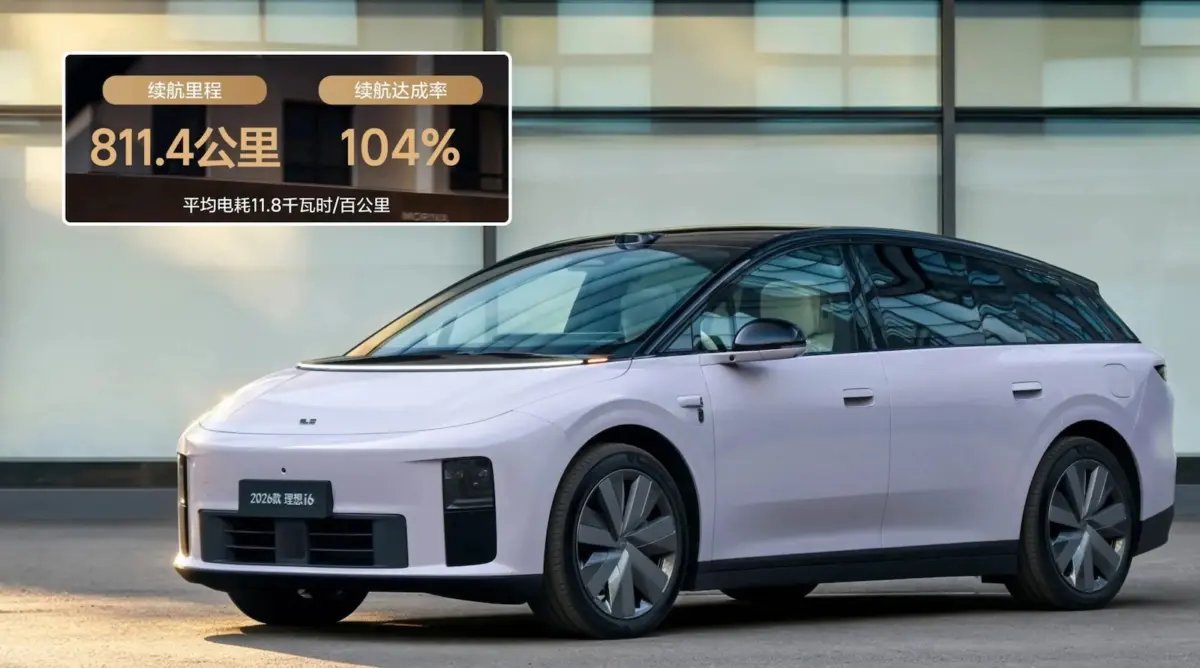
Li Auto, a prominent player in the Chinese New Energy Vehicle (NEV) sector, has officially introduced its latest battery electric vehicle (BEV), the i6. This new model represents a significant evolution in the company’s design philosophy and technical capabilities, signaling a strategic push to dominate the premium electric sedan and multi-purpose vehicle (MPV) segments. The i6 distinguishes itself not only through its unconventional aesthetic, which draws comparisons to futuristic science fiction concepts, but also through its remarkable efficiency and battery performance. In a recent high-profile endurance test, the vehicle surpassed its official range ratings, achieving over 800 kilometers on a single charge under realistic driving conditions. This development marks a pivotal moment for Li Auto as it transitions from its successful lineage of Extended-Range Electric Vehicles (EREVs) toward a more comprehensive pure-electric lineup.
Design Philosophy and Aesthetic Innovations
The Li Auto i6 adopts a "one-box" silhouette that challenges traditional automotive proportions. This design language, characterized by a seamless, aerodynamic arc from the front bumper to the rear, is increasingly popular in the Chinese market but remains a rarity in Western automotive design. The i6’s aesthetic is heavily influenced by the need for ultra-low aerodynamic drag, a critical factor in maximizing the range of a heavy electric vehicle.
The exterior features a minimalist front fascia with a distinctive "Star Ring" LED light bar, a signature of the Li Auto brand. The flush door handles, hidden wipers, and smooth underbody panels contribute to a drag coefficient that is expected to be among the lowest in its class. Inside, the i6 continues the brand’s focus on the "mobile home" concept, offering a spacious cabin designed for family comfort. While many manufacturers prioritize sportiness, Li Auto has doubled down on the multi-purpose vehicle (MPV) ethos, ensuring that the i6 provides ample legroom and utility for up to five occupants and their luggage.
Real-World Range and the Lake Tai Endurance Test
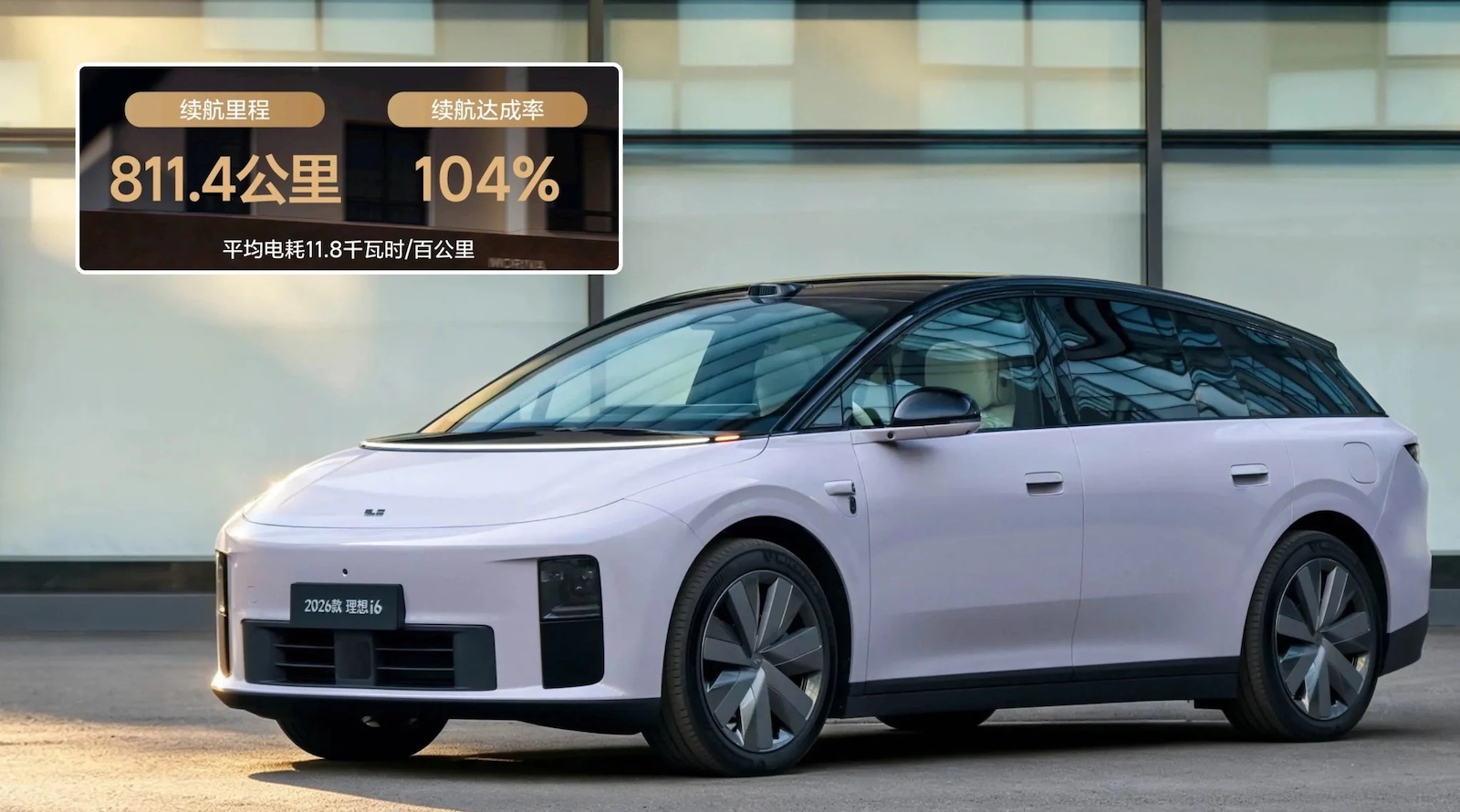
One of the most significant hurdles for widespread EV adoption remains "range anxiety," particularly during long-distance travel. To address this, Li Auto conducted a live-streamed endurance test of the i6 around Lake Tai (Taihu) in the Yangtze Delta region. The results provided a compelling look at the vehicle’s real-world efficiency versus its official laboratory ratings.
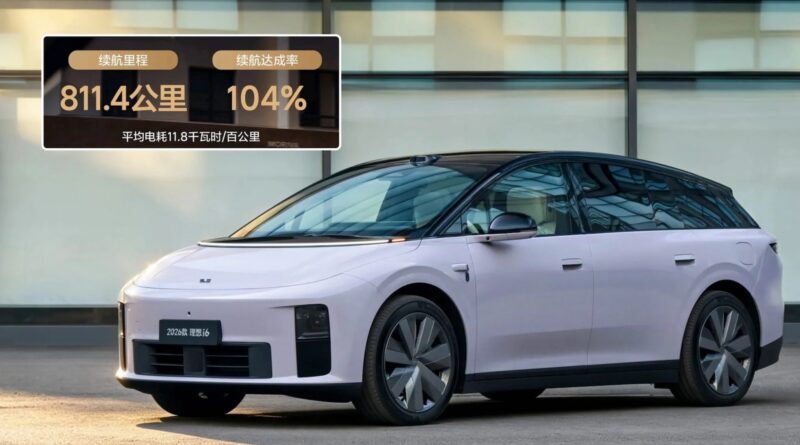
The i6 is equipped with a 96 kWh battery pack and carries an official China Light-Duty Vehicle Test Cycle (CLTC) range of 780 kilometers (approximately 485 miles). During the 18-hour test drive, the vehicle covered a total distance of 811 kilometers (504 miles) before the battery display reached 0%. Notably, the test was not conducted under "hypermiling" conditions—where drivers use extreme techniques to save energy—but rather under realistic usage scenarios.
The test parameters included:
- Payload: Four adult occupants plus 50 kg of luggage and additional gear.
- Climate Control: The air conditioning system remained active throughout the duration of the 18-hour drive.
- Environment: Temperatures ranged between 13°C and 20°C (55°F to 68°F), which is considered optimal for lithium-ion battery performance.
- Speed Profile: The route consisted of city driving and suburban roads with speed limits varying between 40 km/h and 80 km/h.
The vehicle achieved an average energy consumption of 11.8 kWh per 100 km. While the relatively low speeds favored the electric motor’s efficiency, the total distance exceeded the CLTC estimate by nearly 4%, a rare feat in an industry where real-world performance often falls 15% to 20% short of advertised laboratory figures.
Strategic Shift in Battery Technology and Supply Chain
The i6 marks a departure from Li Auto’s long-standing reliance on CATL, the world’s largest battery manufacturer. Instead, the i6 utilizes the "Lian Shan" battery pack, an in-house design developed in collaboration with manufacturers CALB (China Aviation Lithium Battery) and Sunwoda. This shift toward vertical integration allows Li Auto to exercise greater control over the physical architecture and thermal management of the battery system.
According to industry reports from Dian Dong Che Zhu Ren, the new design allows the i6 to accommodate an additional 3 kWh of cells within the same physical footprint compared to previous iterations. Furthermore, the vehicle incorporates Li Auto’s latest Silicon Carbide (SiC) power modules. These modules feature revised current paths that significantly reduce operational losses during energy conversion. This hardware upgrade is particularly beneficial in cold climates; the company claims the SiC technology adds approximately 30 kilometers of range during winter driving by reducing heat loss and improving the efficiency of the heat pump system.
5C Ultra-Fast Charging and Safety Guarantees
Beyond total range, the i6 focuses on the speed of energy replenishment. The Lian Shan battery is "5C-capable," a technical designation meaning the battery can theoretically be charged at a rate five times its capacity. In practical terms, this allows the vehicle to add hundreds of kilometers of range in as little as 10 to 12 minutes when connected to Li Auto’s proprietary 5C supercharging network.
Safety remains a cornerstone of the i6 marketing strategy. Li Auto has made a bold public pledge regarding the Lian Shan battery packs, stating they are engineered to never self-ignite or combust, even in the event of high-impact collisions. To reinforce consumer confidence, the automaker has mirrored a policy recently popularized by Xiaomi’s automotive division: if a Lian Shan battery pack catches fire due to a defect or collision, the company will provide the owner with a brand-new replacement vehicle free of charge. This "zero-combustion" guarantee is aimed at neutralizing one of the primary safety concerns cited by potential EV buyers.

Chronology of Li Auto’s BEV Expansion
The launch of the i6 is part of a broader timeline of rapid expansion for the Beijing-based automaker:
- 2019–2022: Li Auto establishes itself as a leader in the EREV market with the One, L9, L8, and L7 models, using small gasoline engines as onboard generators to eliminate range anxiety.
- Early 2024: The company launches the Li Mega, its first high-voltage BEV. Despite its advanced tech, the Mega faced mixed reviews due to its polarizing "bullet train" styling.
- Late 2024: Development of the i6 is fast-tracked to capture the premium sedan/MPV crossover market, utilizing lessons learned from the Mega’s thermal management and aerodynamic research.
- Present: The i6 enters the final stages of market rollout, supported by a massive expansion of the company’s 5C charging infrastructure across China’s major highway arterial routes.
Market Context and Competitive Landscape
The i6 enters an incredibly crowded and competitive Chinese automotive market. Its primary rivals include the Tesla Model 3 and Model Y, the Xiaomi SU7, and various offerings from BYD’s premium sub-brands. While Tesla maintains a lead in brand recognition and software, Li Auto’s strategy revolves around "spatial luxury" and superior charging speeds.
The Yangtze Delta, where the i6 was tested, is one of the most EV-dense regions in the world. By demonstrating that the i6 can navigate this region’s heavy traffic and varying speed zones with over 800 km of range, Li Auto is positioning the vehicle as a viable primary car for families who might otherwise have chosen a traditional internal combustion engine (ICE) vehicle for long-distance reliability.
Broader Implications for the Global EV Industry
The technical achievements of the Li Auto i6 highlight a growing performance gap between Chinese EV manufacturers and their international counterparts. The combination of high-density battery packaging, SiC power electronics, and 5C charging speeds suggests that the "next generation" of electric vehicles is already arriving in the Chinese market.

Industry analysts suggest that the i6’s performance could force other global automakers to accelerate their adoption of 800V architectures and SiC components. Furthermore, the move to in-house battery design (supported by secondary manufacturers like CALB) suggests that the era of "off-the-shelf" battery solutions may be ending for top-tier EV brands. To achieve the efficiency levels seen in the i6, deep integration between the vehicle’s software, its aerodynamic profile, and its chemical energy storage is required.
As Li Auto prepares for the full commercial release of the i6, the automotive world will be watching closely to see if the vehicle’s laboratory-defying range and futuristic design translate into sustained sales success. If the i6 performs in the hands of consumers as it did during the Lake Tai endurance test, it could set a new benchmark for what is expected from a modern electric family vehicle.
