

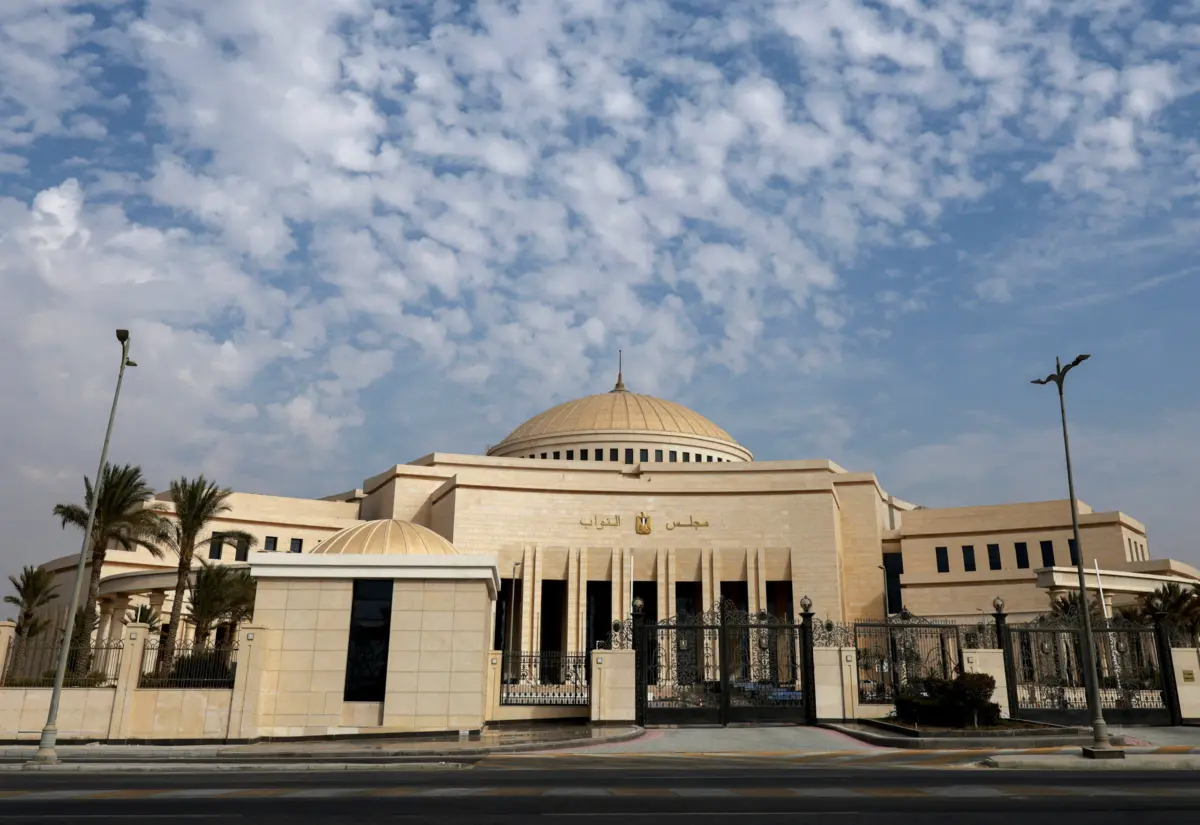
Egypt’s House of Representatives has officially authorized President Abdel Fattah el-Sisi to provide military support to the Kingdom of Saudi Arabia, marking a significant shift in Cairo’s involvement in the long-standing regional conflict. The mandate, approved during a high-stakes parliamentary session on Monday, comes as Yemen’s Iran-aligned Houthi movement intensifies its drone and missile campaign against Saudi infrastructure, including international airports and vital oil facilities. While the authorization provides a legal framework for the deployment of Egyptian forces, President el-Sisi and senior diplomats have been quick to clarify that any military action would be strictly defensive, aimed at protecting Saudi borders rather than launching offensive strikes within Yemeni territory.
The parliamentary vote, presided over by Speaker Hisham Badawi, grants the presidency the power to “undertake necessary measures” to support Riyadh in its self-defense efforts should a formal request for assistance be made. This legislative move follows weeks of heightened tension in the Gulf and the Red Sea, where maritime security and energy stability have been increasingly threatened by the spillover of the Yemeni civil war.
The Legislative Mandate and Constitutional Framework
Under Article 152 of the Egyptian Constitution, the President is the Supreme Commander of the Armed Forces but cannot declare war or send troops on combat missions outside state borders without the prior approval of a two-thirds majority in the House of Representatives. The Monday vote met this stringent requirement, reflecting a unified political stance within Cairo regarding the security of its Gulf allies.
The decision was reached following a series of closed-door discussions where lawmakers weighed the risks of regional escalation against the necessity of supporting Saudi Arabia, which remains one of Egypt’s most critical economic and strategic partners. While the mandate is broad, the language used by parliamentary members suggests a focus on air defense, naval patrols, and logistical support rather than a large-scale ground invasion. The authorization serves as a formal signal of solidarity, essentially reassuring Riyadh that Egypt remains a guarantor of Gulf security despite its historical hesitance to engage in foreign ground wars.
A Chronology of Recent Escalation
The impetus for this legislative action can be traced to a sharp uptick in Houthi military operations targeting the Saudi heartland. Over the past month, the Houthi movement, which controls the Yemeni capital of Sanaa and much of the country’s north, has launched a series of sophisticated attacks:
- Strikes on Riyadh International Airport: Long-range drones and ballistic missiles targeted the capital’s primary aviation hub, leading to temporary flight disruptions and raising concerns over civilian safety.
- Attacks on Aramco Facilities: Saudi Arabia’s state-owned oil giant, Aramco, reported strikes on several processing plants and storage sites. These attacks have not only threatened global energy supplies but have also caused fluctuations in international oil prices.
- Red Sea Maritime Harassment: Houthi forces have increased their activities near the Bab al-Mandeb strait, utilizing anti-ship missiles and waterborne improvised explosive devices (WBIEDs) to target commercial vessels.
In response to these provocations, the Saudi-led coalition has intensified its aerial bombardment of Houthi positions in Yemen. However, the persistence of the Houthi drone program has exposed vulnerabilities in regional air defenses, prompting Riyadh to seek reinforced support from its traditional allies, including Egypt and the United States.
Background: Egypt’s Historical and Strategic Stakes in Yemen
Egypt’s relationship with Yemen is colored by a complex history. In the 1960s, Egypt engaged in a protracted and costly military intervention in North Yemen, which many historians refer to as "Egypt’s Vietnam." The heavy losses sustained during that conflict have left a lasting mark on Cairo’s military doctrine, fostering a deep-seated reluctance to commit ground troops to the Yemeni theater.
However, the current geopolitical landscape has forced a reassessment. Since the 2015 intervention by the Saudi-led coalition—of which Egypt was a founding member—Cairo has largely limited its role to naval operations. Egyptian frigates have played a crucial role in patrolling the Red Sea, ensuring that the Bab al-Mandeb strait remains open for international shipping.
The security of the Red Sea is not merely a matter of regional solidarity for Egypt; it is a vital national interest. The Suez Canal, which generates billions of dollars in annual revenue for the Egyptian treasury, is directly dependent on the stability of the southern Red Sea. Houthi attacks on shipping have forced several major logistics companies to reroute vessels around the Cape of Good Hope, leading to a measurable decline in Suez Canal traffic and revenue. At a time when Egypt is grappling with significant economic challenges and high inflation, any threat to its primary source of foreign currency is viewed as an existential concern.
Economic Interdependence and Regional Alliances
The decision to authorize military support is also deeply intertwined with the economic ties between Cairo and Riyadh. Saudi Arabia has provided tens of billions of dollars in aid, central bank deposits, and investment projects to Egypt over the last decade. This financial support has been instrumental in stabilizing the Egyptian economy during periods of political transition and global economic shocks.
In Riyadh, the Egyptian Foreign Minister Badr Abdelatty emphasized that while military readiness is essential, Cairo continues to prioritize a diplomatic settlement. "Our support for the Kingdom is unwavering, yet our ultimate goal remains a comprehensive political solution that restores stability to Yemen and ensures the security of all neighboring states," Abdelatty stated following meetings with his Saudi counterparts.
This dual-track approach—combining military deterrence with diplomatic outreach—reflects Cairo’s desire to maintain its role as a regional mediator while fulfilling its obligations to its primary benefactor.
Humanitarian Concerns and International Reactions
The intensification of fighting comes at a devastating cost to the Yemeni population. According to recent data from the United Nations High Commissioner for Refugees (UNHCR), more than 250,000 people have been displaced in the last few months alone as the conflict reaches new levels of volatility. Yemen remains the site of one of the world’s most severe humanitarian crises, with millions facing famine and a total collapse of public infrastructure.
In Cairo, United Nations Secretary-General Antonio Guterres met with President el-Sisi to discuss the deteriorating situation. Guterres praised Egypt’s efforts to prevent a wider regional conflagration and urged "maximum restraint" from all parties involved. In a statement released following the meeting, the Secretary-General warned that further military escalation could spiral out of control, potentially drawing in other regional powers and ending any hopes for a negotiated peace.
The international community remains divided on the path forward. While Western powers have largely condemned Houthi attacks on civilian infrastructure and shipping, there is also significant pressure on the Saudi-led coalition to minimize civilian casualties and allow for the unimpeded flow of humanitarian aid into Yemeni ports.
Geopolitical Implications and Fact-Based Analysis
The authorization for Egyptian military support carries several long-term implications for the Middle East:
1. Shift in Regional Power Dynamics: By formalizing its military commitment to Saudi Arabia, Egypt is reasserting itself as a heavyweight in regional security. This move signals to Iran and its proxies that the "Arab security umbrella" remains functional despite internal economic pressures within its member states.
2. Red Sea Militarization: The increased presence of Egyptian and Saudi naval assets, likely supported by Western intelligence, suggests a long-term militarization of the Red Sea. This is intended to deter Houthi "asymmetric warfare" tactics but also risks accidental clashes in one of the world’s busiest shipping lanes.
3. The "Defensive" Constraint: President el-Sisi’s insistence that Egyptian forces will not strike targets inside Yemen is a strategic calculation. It allows Cairo to fulfill its treaty and moral obligations to Riyadh without becoming mired in a guerrilla war that has proven impossible to win through conventional military means alone.
4. Pressure on Iran: The move is also a message to Tehran. By bolstering Saudi defenses, Egypt and its allies hope to increase the "cost" of Iranian support for the Houthis, potentially forcing a shift in Iran’s regional strategy toward the negotiating table.
Conclusion: The Path Ahead
The Egyptian Parliament’s vote marks a turning point in Cairo’s foreign policy, balancing the historical ghosts of past interventions with the urgent realities of modern regional security. As the Houthis continue to demonstrate advanced drone and missile capabilities, the need for integrated regional defense has never been more apparent.
However, the success of this mandate will be measured not by the deployment of troops, but by the ability of the regional players to leverage this show of force into a lasting diplomatic breakthrough. For Egypt, the stakes could not be higher: the stability of its most important ally, the security of its most vital trade route, and the prevention of a wider war that could destabilize the entire Middle East. As the situation evolves, the international community will be watching closely to see if this authorization leads to a more secure Gulf or a deeper entanglement in the Yemeni quagmire.
