

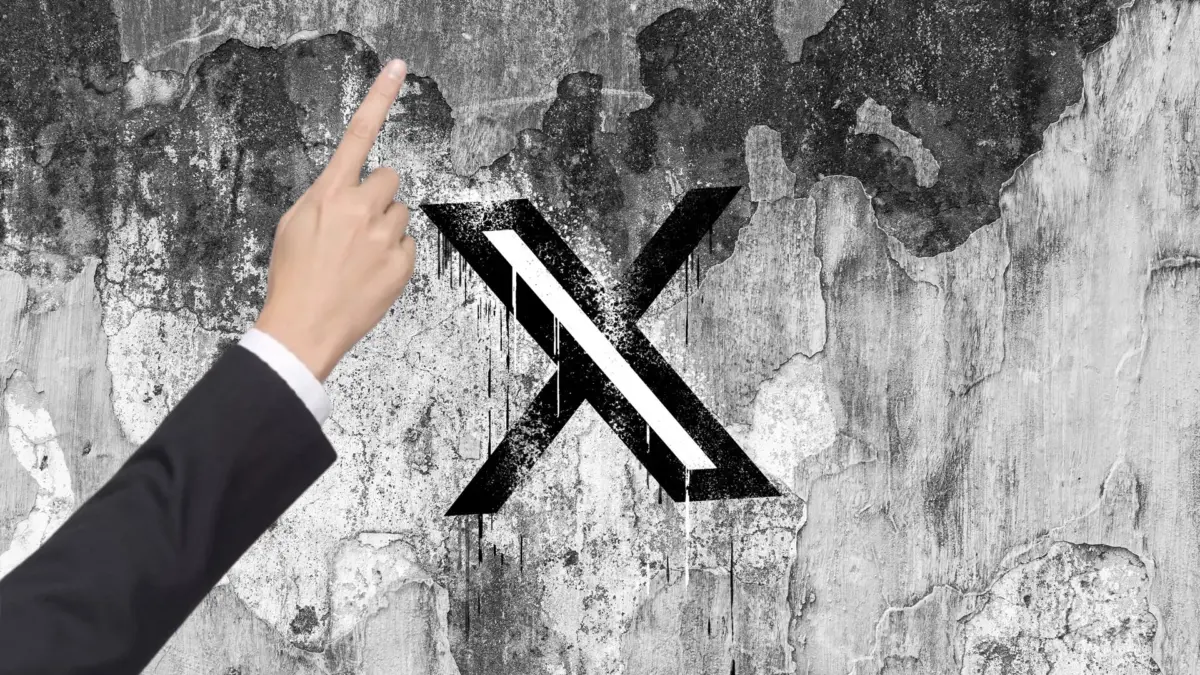
In a move that has sparked widespread criticism across the social media landscape, X, the platform formerly known as Twitter, has implemented a highly aggressive user interface (UI) element designed to drive post promotions. Over the past 24 hours, users globally have reported the sudden appearance of a large, stylized graffiti-style hand that animates onto the screen, pointing directly at the "Promote" button while a user is in the process of drafting or reviewing a post. This development comes at a critical juncture for the company as it navigates a significant transition in its product leadership and continues to seek new avenues for revenue generation amidst a volatile advertising market.
The animated nudge, which many users have described as a "jump scare," appears without warning. For some, the hand emerges when specific keywords—such as "engagement" or "reach"—are typed into the post composer, suggesting a real-time algorithmic trigger designed to capitalize on a user’s desire for visibility. While interface "nudges" are a common staple in modern application design—ranging from subtle color changes on buttons to small pop-up tooltips—the scale and intrusive nature of X’s new hand animation represent a departure from standard industry practices. It marks a shift toward more confrontational "dark patterns," a term used in UI/UX design to describe interfaces that deliberately trick or coerce users into taking actions they might not otherwise perform.
A Chronology of Product Leadership and Strategy
The timing of this UI update is particularly notable, coinciding with a formal change in X’s product leadership. On October 26, 2026, Peter Sellis, a veteran of the social media industry with previous leadership roles at Snap and Discord, announced that he had joined X to lead its product team. Sellis takes over the mantle following the departure of Nikita Bier, who left the platform in August 2026 after serving as the head of product for nearly a year.
Nikita Bier, a founder known for his expertise in viral growth and aggressive engagement tactics, had a significant influence on X’s product trajectory during his tenure. Bier’s reputation was built on apps like Gas and TBH, which utilized high-intensity psychological triggers to drive user growth. Dylan Abruscato, president of the TBPN podcast, remarked on X that the new hand animation was the "most Nikita-coded thing" he had ever seen, referring to the former product head’s penchant for obstructive yet effective growth hacks.
Sellis, the incoming product chief, signaled a continuation of X’s idiosyncratic culture in his announcement, stating his goal was to "make shitposting multiplanetary." While Sellis’s track record at Snap and Discord suggests a focus on community building and innovative monetization, the immediate rollout of the "promote hand" has led some observers to wonder if the platform is doubling down on high-pressure sales tactics to shore up its bottom line.
The Financial Imperative: Why X is Pushing Self-Serve Ads
The introduction of the "promote hand" is not merely an aesthetic choice; it is a response to the ongoing financial pressures facing X. Since the acquisition of the platform by Elon Musk in 2022, the company has seen a significant shift in its revenue model. Historically, Twitter relied heavily on large-scale brand advertising. However, brand safety concerns and changes in platform policy led to a pullback from several major advertisers.
To compensate, X has pivoted toward a "self-serve" advertising model, encouraging individual creators and small business owners to spend small amounts of money—often as little as $10 or $50—to "Promote" their individual posts. This strategy mirrors the "Boost Post" functionality found on Meta’s Facebook and Instagram platforms. By lowering the barrier to entry for advertising, X aims to create a more resilient, diversified revenue stream that is less dependent on the whims of Fortune 500 marketing departments.
According to industry data from late 2025 and early 2026, X’s ad revenue has remained under pressure, with some estimates suggesting a year-over-year decline in traditional ad spend. The push for "X Premium" subscriptions and "Promote" clicks is part of a broader effort to reach a "breakeven" point. The graffiti hand, therefore, serves as a high-visibility funnel designed to convert casual users into paying customers at the very moment they are most invested in their content’s performance.
User Reactions and the "Jump Scare" Phenomenon
The reaction from the X user base has been overwhelmingly negative. Creators, who already feel the pressure of the platform’s shifting algorithms, have expressed frustration that the UI is becoming increasingly cluttered and hostile. Ershad Kaleebullah, a tech commentator, noted that the hand appeared "out of nowhere" and coincided with the mention of "engagement farming" in his draft. "If I wanted jump scares, I would’ve watched a horror movie," he posted, echoing a sentiment shared by thousands of others who found the animation distracting and unprofessional.
Psychologically, the use of a "jump scare" in a productivity or social tool can have counterproductive effects. While it successfully draws the eye to the "Promote" button, it also triggers a startle response that can lead to "banner blindness" or, worse, a negative brand association. Users who feel manipulated by an interface are less likely to trust the platform with their credit card information, which is required to complete a promotion.
UX Analysis: Dark Patterns and Platform Integrity
From a design perspective, the "promote hand" falls into the category of "visual interference." Standard UX principles suggest that a platform should assist the user in completing their primary task—in this case, writing and sharing a post. By overlaying a large, unprompted animation over the composer, X is prioritizing its own financial goals over the user’s experience.
This approach is often criticized by digital rights advocates and design ethicists. Dark patterns are increasingly coming under the scrutiny of regulators, such as the Federal Trade Commission (FTC) in the United States and the European Union’s Digital Services Act (DSA). These bodies argue that deceptive or overly aggressive UI elements can harm consumers by inducing accidental purchases or making it difficult for users to navigate a service without being bombarded by solicitations.
Furthermore, the "graffiti" aesthetic of the hand aligns with Elon Musk’s broader rebranding of the platform. Since the transition from Twitter to X, the platform has abandoned the "Blue Bird" minimalism in favor of a more "edgy," "underground" aesthetic. While this appeals to a certain segment of the user base, it risks alienating professional users and corporate entities who require a stable and predictable environment for communication.
Comparative Landscape: How Other Platforms Nudge
X is not the only platform struggling to balance monetization with user experience. Meta’s Instagram frequently uses "nudge" notifications to tell users that their post is "performing better than 90% of other posts" and suggests a boost. However, Meta typically keeps these nudges within the notification tab or as a small, static line of text beneath a post.
TikTok utilizes a "Promote" feature that is often integrated into the "Creator Tools" dashboard. While TikTok is known for its aggressive algorithm, its monetization prompts are generally integrated into the natural flow of the app rather than appearing as an overlay during the content creation process.
The "X Hand" is unique in its level of obstruction. By placing the prompt directly in the line of sight during the creative process, X is taking a risk that other platforms have historically avoided. The strategy appears to be: if the user cannot ignore the button, they are more likely to eventually click it.
The Broader Impact on the "Everything App" Vision
Elon Musk has frequently spoken about his vision for X to become the "Everything App," similar to WeChat in China, encompassing social media, payments, video, and more. For such a vision to succeed, the platform must maintain a high level of user retention and trust. Aggressive UI changes that frustrate the core user base could undermine this long-term goal.
If users begin to associate the X interface with annoyance and manipulation, they may migrate to emerging competitors like Threads or BlueSky, which currently offer a more traditional, "clean" social media experience. For X, the challenge is to find a way to monetize its 500 million plus users without driving them away with the very tools meant to capture their value.
Conclusion and Future Outlook
As of the time of publication, X has not issued an official statement regarding whether the graffiti hand is a permanent feature or a temporary experiment tied to the Halloween season. Given the platform’s history under current ownership, it is likely that the company is performing "A/B testing" to see if the intrusive animation leads to a statistically significant increase in "Promote" revenue.
The arrival of Peter Sellis marks a new chapter for X’s product development. Whether Sellis will refine these aggressive tactics or pivot toward more sustainable, user-friendly monetization remains to be seen. For now, users of X will have to contend with a digital environment that is increasingly vocal—and visual—about its desire for their money. The "mysterious hand" is a vivid reminder that in the current era of social media, the line between a service and a sales pitch is thinner than ever.
