

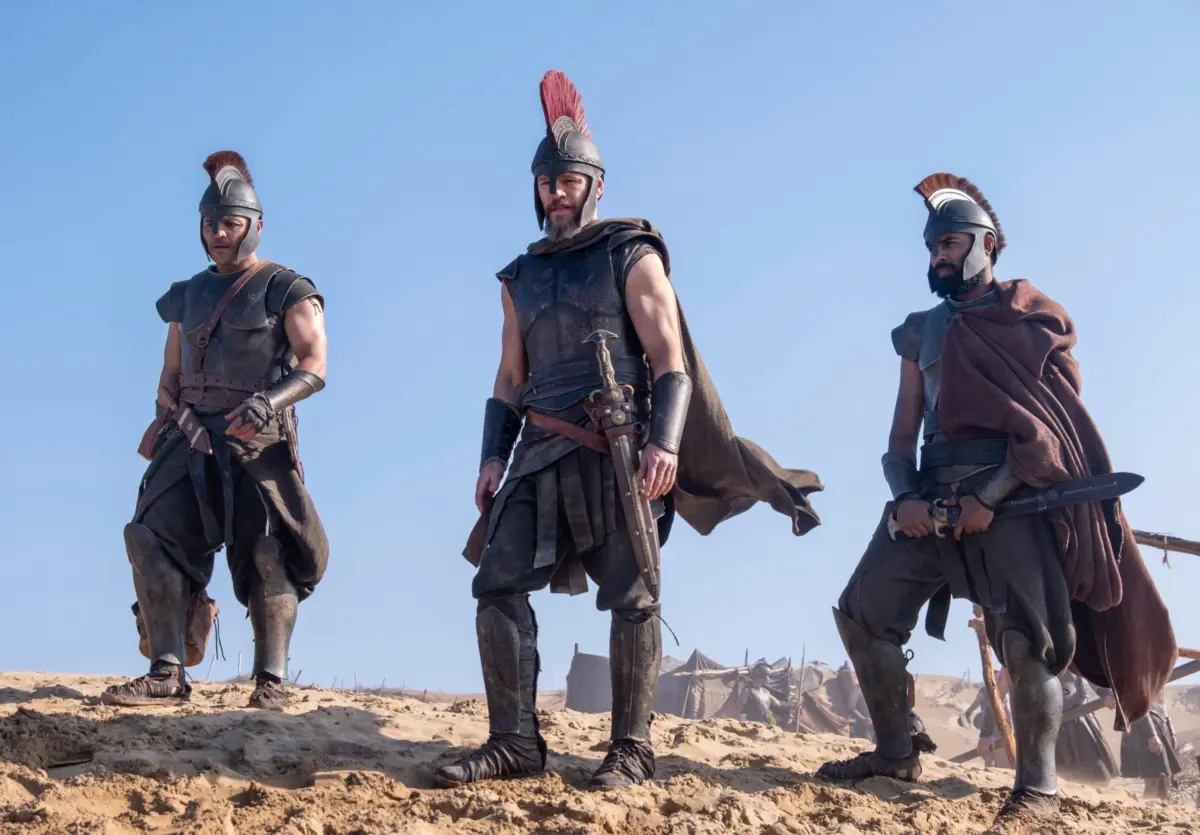
The cinematic landscape of 2024 has been defined by an unexpected collision between ancient epic poetry, high-budget Hollywood filmmaking, and the burgeoning field of generative artificial intelligence. At the center of this friction lies Christopher Nolan’s adaptation of Homer’s The Odyssey, a film that achieved monumental commercial success while simultaneously becoming a lightning rod for cultural and political debate. The subsequent attempt by Elon Musk to "correct" the narrative through his xAI platform, Grok Imagine, has provided a unique case study in the current limitations of AI-generated entertainment and the complexities of historical fidelity in art.
The Success of Nolan’s Odyssey and the Roots of Backlash
Christopher Nolan’s adaptation of The Odyssey, released in July, defied industry expectations by grossing nearly $1.8 billion at the global box office. This performance placed it among the highest-grossing films of the decade, rivaling the success of Nolan’s previous works such as Oppenheimer and The Dark Knight. However, the film’s financial triumph did not shield it from a concentrated wave of criticism originating from conservative commentators and self-described defenders of Western tradition.
The primary points of contention involved Nolan’s casting choices and stylistic deviations. The inclusion of diverse actors, including Black and transgender performers in key roles, prompted accusations of "forced diversity" and a betrayal of the source material’s Greek origins. Critics also took issue with the dialogue—which utilized modern Americanized English—and the production design, which blended Bronze Age aesthetics with avant-garde cinematic elements. These detractors argued that the film sacrificed historical and cultural accuracy in favor of contemporary social signaling.
The Musk Intervention: A Promise of Historical Fidelity
Among the most prominent critics of the film was Elon Musk, the CEO of Tesla and owner of the social media platform X. Musk utilized his platform to voice a scathing review of Nolan’s work, characterizing it as a desecration of one of the foundational texts of Western literature. On July 15, four days after the film’s premiere, Musk issued a public vow to produce a superior version of the epic.
Musk stated on X that "Before this year ends, Grok Imagine will make a full-length movie of The Odyssey that is historically accurate and true to the art of Homer." This announcement was framed as a direct challenge to the Hollywood establishment, suggesting that AI technology could bypass traditional studio "gatekeepers" and deliver content that adhered more strictly to the values and historical contexts prized by his audience. The project was positioned as a flagship demonstration of xAI’s capabilities in the realm of long-form video generation.
The Debut of the Grodyssey: Technical and Narrative Outcomes
In late October, approximately three months after the initial announcement, the first results of Musk’s initiative were made public. Rather than the "full-length movie" originally promised, the release consisted of a seven-minute "episode" titled "Odyssey with Grok Imagine." Produced in collaboration with Wonder Studios X, an AI-focused entertainment firm, the segment focused on the early stages of the narrative: Odysseus’s reluctance to join the Trojan War and his eventual departure from Ithaca.
The reception of the clip was markedly different from the fervor surrounding Nolan’s film. While Musk’s political and technological posts often garner hundreds of thousands of interactions, the announcement of the Grok episode received a relatively modest 18,000 likes. The technical execution of the video was a primary point of criticism, even among Musk’s supporters.
Observers noted several hallmarks of early-stage generative AI, often referred to colloquially as "AI slop." These included:
- Uncanny Valley Effects: The facial movements of the characters frequently failed to align with the spoken dialogue.
- Audio Disconnect: The voice acting was described as stilted and monotone, lacking the emotional resonance typically associated with epic drama.
- Pacing Issues: The narrative structure was disjointed; for instance, the Ithacan army appeared to arrive at Troy almost instantaneously after their departure, omitting the logistical scale of the journey.
- Character Development: Aside from Odysseus, major figures remained unnamed and indistinguishable, hindering audience engagement.
On X, even users with "blue check" premium subscriptions expressed disappointment. One notable comment questioned the decision to publish the footage in its current state, suggesting it lacked the polish required for a professional production.
The Paradox of Historical Accuracy
The central irony of the Grok project lies in its failure to meet the very standard Musk used to criticize Nolan: historical accuracy. When the Grok chatbot itself was queried regarding the historical fidelity of the episode, its self-evaluation was surprisingly candid. The AI admitted that the production was an "adaptation" rather than a "historically accurate reconstruction."
Grok’s internal analysis highlighted several areas where the production lapsed:
- Linguistic Anachronisms: The characters in the AI version speak modern English with British accents, rather than Homeric Greek or a reconstructed Bronze Age dialect.
- Archaeological Inconsistencies: The AI model noted that the visual designs were based on "modern cinematic tropes" and "AI training data" rather than primary archaeological evidence. It specifically cited the inclusion of cavalry in battle scenes as an error, as chariots were the primary mobile units of the period.
- The Nature of the Source Material: Grok pointed out that The Odyssey itself is a work of myth and invention, blending elements of the Bronze Age with Iron Age social structures that existed during Homer’s lifetime. Therefore, any claim to "strict historical accuracy" regarding a mythological text is fundamentally paradoxical.
Timeline of the Odyssey Controversy
The development of this cultural clash can be mapped through a series of key events:
- July 11, 2024: Christopher Nolan’s The Odyssey premieres globally to critical acclaim and massive box office returns.
- July 12–14, 2024: Social media backlash intensifies, with critics targeting the film’s casting and "woke" themes.
- July 15, 2024: Elon Musk vows to create a "historically accurate" version via Grok Imagine before the end of the year.
- August–September 2024: Nolan’s film crosses the $1.5 billion mark, becoming a cultural phenomenon. Musk remains silent on the progress of the AI film during this period.
- October 25, 2024: Musk shares a seven-minute clip of the Grok-generated Odyssey produced by Wonder Studios X.
- October 26, 2024: Critics and AI researchers analyze the clip, noting significant technical flaws and the AI’s own admission of historical inaccuracy.
Broader Implications for AI and the Film Industry
The "Grodyssey" experiment serves as a significant marker for the current state of AI in the creative arts. While AI tools like Sora, Kling, and xAI’s models have shown remarkable progress in generating short, visually striking clips, the leap to cohesive, long-form storytelling remains a formidable challenge. The difficulties faced by the Grok project suggest that the "democratization" of filmmaking through AI still requires a level of human oversight and artistic direction that current models cannot replicate autonomously.
Furthermore, the episode underscores the use of technology as a tool in broader cultural conflicts. Musk’s attempt to use AI as a "corrective" to Hollywood’s cultural output reflects a growing trend of tech leaders leveraging their platforms to challenge traditional media narratives. However, the technical shortcomings of the Grok episode suggest that, for the time being, high-budget human-led productions like Nolan’s remain the dominant force in shaping cultural mythology.
Conclusion: The Gap Between Vision and Reality
The saga of the two Odysseys illustrates a recurring pattern in the intersection of technology and public discourse. Christopher Nolan’s film, despite its deviations from historical fact, succeeded by capturing the "truth" of the epic’s emotional and narrative power, as evidenced by its $1.8 billion success. In contrast, Elon Musk’s AI-driven project, while aiming for a rigid "accuracy," struggled with the basic requirements of cinematic immersion and narrative logic.
As AI continues to evolve, the distinction between "historically accurate" and "narratively compelling" will likely remain a central point of debate. For now, the Grok Odyssey stands as a reminder that technology is a tool of interpretation, not a direct window into the past. The "art of Homer," which Musk sought to protect, relies on a human touch that AI—despite its vast processing power—has yet to master.
