

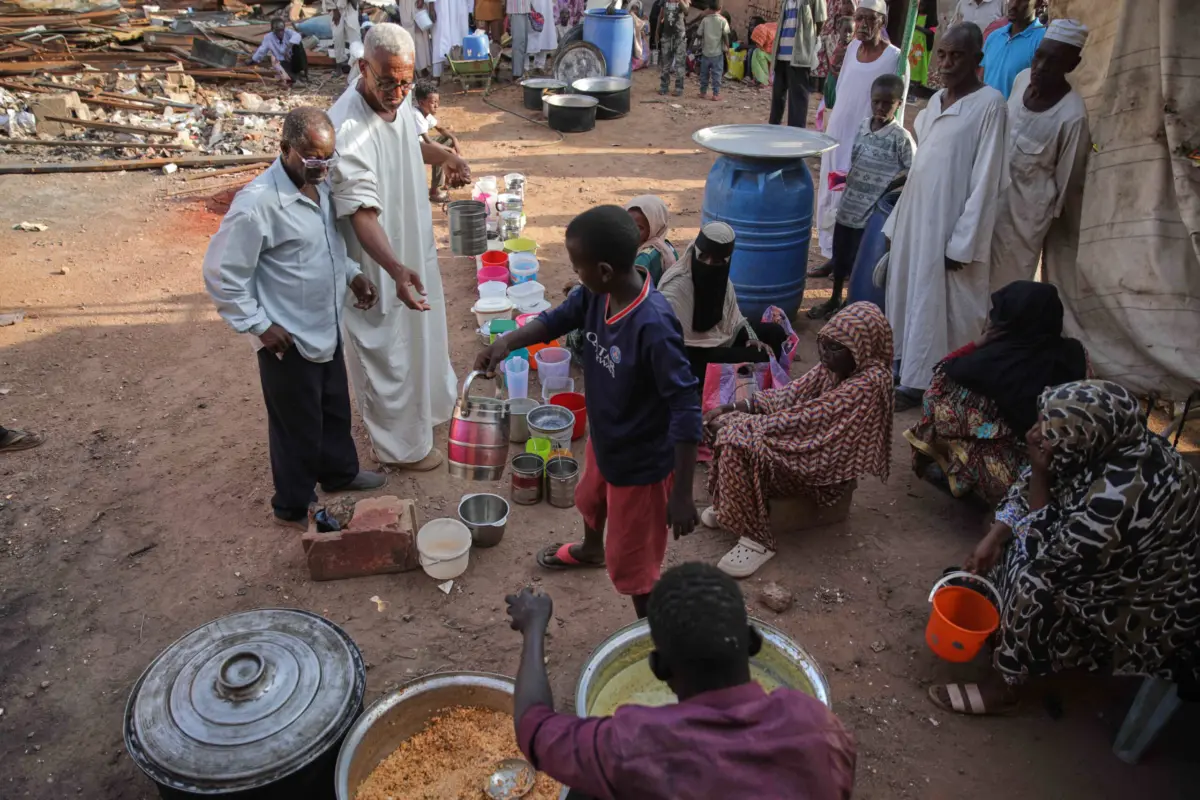
A formidable alliance comprising the United States, the European Union, and thirty other nations has issued a stark warning regarding an "alarming deterioration" in Sudan’s food security, urgently calling for immediate action to avert a catastrophic famine in the conflict-ridden African nation. In a joint statement released by the US State Department on Monday, the signatory countries emphatically implored Sudan’s warring factions – the Sudanese Armed Forces (SAF) and the paramilitary Rapid Support Forces (RSF) – to "lift all impediments on humanitarian assistance" to allow life-saving aid to reach millions teetering on the brink of starvation.
The collective statement, underscoring the gravity of the crisis, highlighted the looming threat of famine in the coming months, a grim prognosis also echoed by the Integrated Food Security Phase Classification (IPC), a United Nations-backed hunger monitor. "Sudan is experiencing an alarming deterioration in its food security. The risk of famine in the coming months, as warned by the Integrated Food Security Phase Classification, needs urgent action," the statement asserted. It further placed unequivocal responsibility on the belligerents, declaring, "The parties to the conflict bear primary responsibility for alleviating the suffering of the Sudanese people." Among the diverse group of signatories were prominent global actors including Australia, Canada, the United Kingdom, France, Germany, and the European Commissioner for Equality, Preparedness, and Crisis Management, reflecting a broad international consensus on the crisis’s urgency. Beyond these, 28 other European countries also lent their names to the crucial declaration.
The Genesis of a Catastrophe: A Nation Plunged into Conflict
The current humanitarian catastrophe is a direct consequence of the brutal civil war that erupted in Sudan on April 15, 2023. The conflict pitted the Sudanese Armed Forces, led by General Abdel Fattah al-Burhan, against the Rapid Support Forces, commanded by General Mohamed Hamdan Dagalo, widely known as Hemedti. The dispute originated from a power struggle over the integration of the RSF into the regular army, a key component of a transition plan towards civilian rule following the 2019 overthrow of long-time dictator Omar al-Bashir and a subsequent military coup in 2021. What began as clashes in the capital, Khartoum, rapidly metastasized into a nationwide conflagration, shattering hopes for a democratic future and plunging the country into unprecedented chaos.
Since its inception, the war has exacted an unfathomable toll on the Sudanese populace. Tens of thousands of people have been killed, though the exact figures remain elusive due to the widespread nature of the conflict and challenges in reporting. More than 13 million individuals have been forcibly displaced from their homes, creating the world’s largest internal displacement crisis and forcing millions more to seek refuge in neighboring countries. This mass displacement, coupled with the systemic breakdown of governance and essential services, has directly fueled what the international community now identifies as the world’s largest hunger and displacement crises. The US State Department, in a significant pronouncement last month, underscored the severity of the political vacuum, stating that neither the Sudanese army nor the RSF "represent legitimate, constitutional governance for Sudan," further complicating prospects for a stable resolution and effective humanitarian response.
A Deepening Crisis: The Alarming State of Food Insecurity
The "alarming deterioration" in food security is not merely a hypothetical projection but a grim reality on the ground, supported by extensive data and expert assessments. In June of the preceding year, the Integrated Food Security Phase Classification (IPC), the widely recognized authority for classifying hunger crises, reported that a staggering 5.1 million people in Sudan were already facing severe hunger – categorized as IPC Phase 4 (Emergency). This classification signifies extreme food consumption gaps resulting in very high acute malnutrition and excess mortality, or households facing extreme livelihood losses that will lead to food consumption gaps.
The IPC’s warnings of famine in the coming months are predicated on a confluence of devastating factors. The ongoing conflict has crippled Sudan’s agricultural sector, historically the backbone of its economy and food supply. Farmers, caught in the crossfire or displaced from their lands, have struggled immensely to cultivate and harvest crops since the war began. Essential agricultural inputs like seeds, fertilizers, and fuel are either unavailable or prohibitively expensive. Supply chains have been shattered by blockades, checkpoints, and direct attacks on transportation routes, preventing food from reaching markets and communities. Market prices for staple foods have skyrocketed, rendering basic sustenance unaffordable for millions whose livelihoods have been decimated by the conflict.
Compounding the man-made disaster is an environmental one. The IPC has highlighted that a severe drought, exacerbated by the El Niño phenomenon, has further driven up food prices and drastically reduced local supplies this year. This combination of conflict-induced disruption and climate-related shocks has created a perfect storm for widespread starvation. The joint statement specifically warned that without immediate and robust intervention, "the number of children suffering from severe acute malnutrition could exceed the projected 825,000." This figure represents an already catastrophic level of childhood suffering, with severe acute malnutrition leading to stunted growth, cognitive impairment, increased susceptibility to disease, and ultimately, death if left untreated.
Chronology of Escalation and International Calls for Action
The trajectory of Sudan’s crisis, from a political standoff to a full-blown humanitarian catastrophe, can be traced through key milestones:
- April 15, 2023: Full-scale conflict erupts in Khartoum between the SAF and RSF, quickly spreading to other regions, particularly Darfur.
- May – June 2023: Initial waves of displacement begin, with millions fleeing Khartoum and Darfur. Humanitarian agencies issue early warnings about food shortages and strain on resources.
- June 2023: The IPC releases its report indicating 5.1 million people in Sudan face severe hunger (IPC Phase 4).
- Late 2023: Fighting intensifies in regions like Darfur and Kordofan, leading to further displacement and systematic destruction of infrastructure and livelihoods. Reports of widespread atrocities emerge. Humanitarian access becomes increasingly challenging due to active front lines, bureaucratic impediments, and security risks.
- Early 2024: The impact of drought, linked to El Niño, begins to significantly worsen food security, driving up prices and reducing agricultural yields.
- February 2024: The US State Department issues a statement asserting that neither the SAF nor the RSF represent legitimate governance for Sudan, highlighting the political vacuum.
- March 2024: Multiple international organizations and UN agencies intensify warnings about impending famine, citing critical funding shortfalls and access restrictions.
- April 8, 2024 (Monday): The United States, the European Union, and 30 other countries issue their joint statement, calling for urgent action to prevent famine and demanding unimpeded humanitarian access.
Urgent Demands for Humanitarian Access and Protection
At the core of the international community’s urgent appeal are concrete demands aimed at facilitating the delivery of life-saving aid. The signatories unequivocally urged the warring parties to:
- Lift All Impediments on Humanitarian Assistance: This includes removing bureaucratic hurdles, easing customs procedures, and ceasing arbitrary denials of aid shipments.
- Allow Humanitarian Operations Through All Routes: This critical demand encompasses access across active front lines, through all viable border crossings, and crucially, air access to the beleaguered region of Darfur, where needs are particularly acute and ground access is severely constrained. Darfur, already scarred by decades of conflict, is once again a focal point of extreme violence and humanitarian deprivation.
- Sustain Presence and Protection of Humanitarian Personnel: Aid workers, often operating in extremely dangerous conditions, must be protected from attack, harassment, and obstruction. Their presence is vital for assessment, distribution, and monitoring of aid.
- Refrain from Hitting Civilian Infrastructure: Attacks on hospitals, schools, water treatment plants, markets, and residential areas are not only violations of international humanitarian law but also directly exacerbate the humanitarian crisis by destroying essential services and displacing populations.
Beyond these demands on the warring parties, the joint statement also served as a rallying cry for the broader international community. "In the face of a potential famine, we call on all members of the international community to urgently scale up funding in response to increased needs and support efforts to ensure assistance reaches those most in need," the statement concluded. The UN’s humanitarian response plan for Sudan remains severely underfunded, hindering the ability of agencies to procure and deliver aid at the scale required.
Broader Impact and Regional Implications
The devastating conflict and resultant humanitarian crisis in Sudan extend far beyond its borders, creating a complex web of regional and international implications:
- Internal Displacement and Strain on Host Communities: With over 13 million people displaced internally, Sudan faces an unparalleled challenge. These displaced populations often seek refuge in areas already struggling with poverty and limited resources, placing immense strain on host communities and exacerbating existing vulnerabilities. Makeshift camps and overcrowded urban centers lack adequate sanitation, shelter, and healthcare, leading to outbreaks of disease and further suffering.
- Regional Refugee Crisis: Millions of Sudanese have fled to neighboring countries, transforming the conflict into a regional refugee crisis. Chad, South Sudan, Egypt, Ethiopia, and the Central African Republic are grappling with an influx of refugees, many arriving traumatized and in dire need of assistance. This influx places immense pressure on the already fragile economies and social services of these host nations, which themselves face their own development challenges and internal instabilities. The protracted nature of the crisis threatens to destabilize an already volatile region.
- Economic Collapse: Sudan’s economy has been decimated. Key sectors like agriculture, trade, and industry have been paralyzed. Infrastructure damage is extensive, and foreign investment has evaporated. The collapse of the formal economy has led to widespread unemployment, hyperinflation, and a proliferation of illicit economic activities, further entrenching the cycle of violence and poverty. The long-term recovery will require monumental international support and a cessation of hostilities.
- Political Vacuum and Governance Fragility: The US State Department’s assessment that neither warring party represents legitimate governance underscores the profound political vacuum. This absence of a credible, inclusive, and stable authority complicates any efforts towards peace, reconciliation, and reconstruction. It also makes effective, coordinated humanitarian action incredibly difficult, as aid agencies often lack a reliable partner on the ground.
- Risk of Regional Spillover: The prolonged conflict and the flow of weapons, fighters, and displaced populations across porous borders pose a significant risk of destabilizing the entire Horn of Africa and Sahel regions. The involvement of various regional actors and external powers, directly or indirectly, further complicates the dynamics and makes a lasting peace harder to achieve.
- Protection Concerns and Atrocities: Beyond hunger, the conflict has been marked by widespread human rights abuses, including sexual violence, ethnic cleansing, recruitment of child soldiers, and indiscriminate attacks on civilians. These atrocities not only constitute grave violations of international law but also sow deep divisions and trauma that will require generations to heal, even after the fighting ceases.
Challenges to Effective Aid Delivery
Despite the urgent calls and immense needs, humanitarian organizations face a daunting array of challenges in delivering aid to Sudan:
- Security Risks: Active combat, unexploded ordnance, and the presence of armed groups make many areas inaccessible or extremely dangerous for aid workers. There have been numerous reports of aid convoys being attacked, looted, or blocked.
- Bureaucratic Obstacles: Both warring parties have been accused of imposing arbitrary restrictions, denying visas for international staff, delaying customs clearances for essential supplies, and demanding onerous permits for movement within the country.
- Deliberate Obstruction: There are credible reports of warring parties deliberately obstructing aid delivery as a tactic of war, particularly in areas controlled by the opposing side, effectively weaponizing hunger.
- Infrastructure Damage: Roads, bridges, airports, and communication networks have been damaged or destroyed, making logistics incredibly difficult and expensive.
- Funding Shortfalls: Despite the severity of the crisis, international funding for Sudan’s humanitarian response remains significantly inadequate, forcing agencies to prioritize and scale back crucial programs.
In conclusion, the joint warning from the United States, the European Union, and 30 other nations serves as a resounding alarm bell, signaling that Sudan stands on the precipice of a devastating famine. The confluence of a brutal civil war, widespread displacement, economic collapse, and environmental shocks has created an unparalleled humanitarian crisis. The international community’s unified call for unimpeded humanitarian access, protection of civilians and aid workers, and a dramatic increase in funding underscores the urgency of the situation. Ultimately, while humanitarian aid can alleviate immediate suffering, a lasting solution to Sudan’s multifaceted crisis hinges on an end to hostilities and the establishment of a legitimate, inclusive political process that prioritizes the welfare and future of its beleaguered population. The primary responsibility for alleviating this suffering, as the statement rightfully asserts, rests squarely with the parties to the conflict, whose actions will determine the fate of millions of Sudanese lives.
