

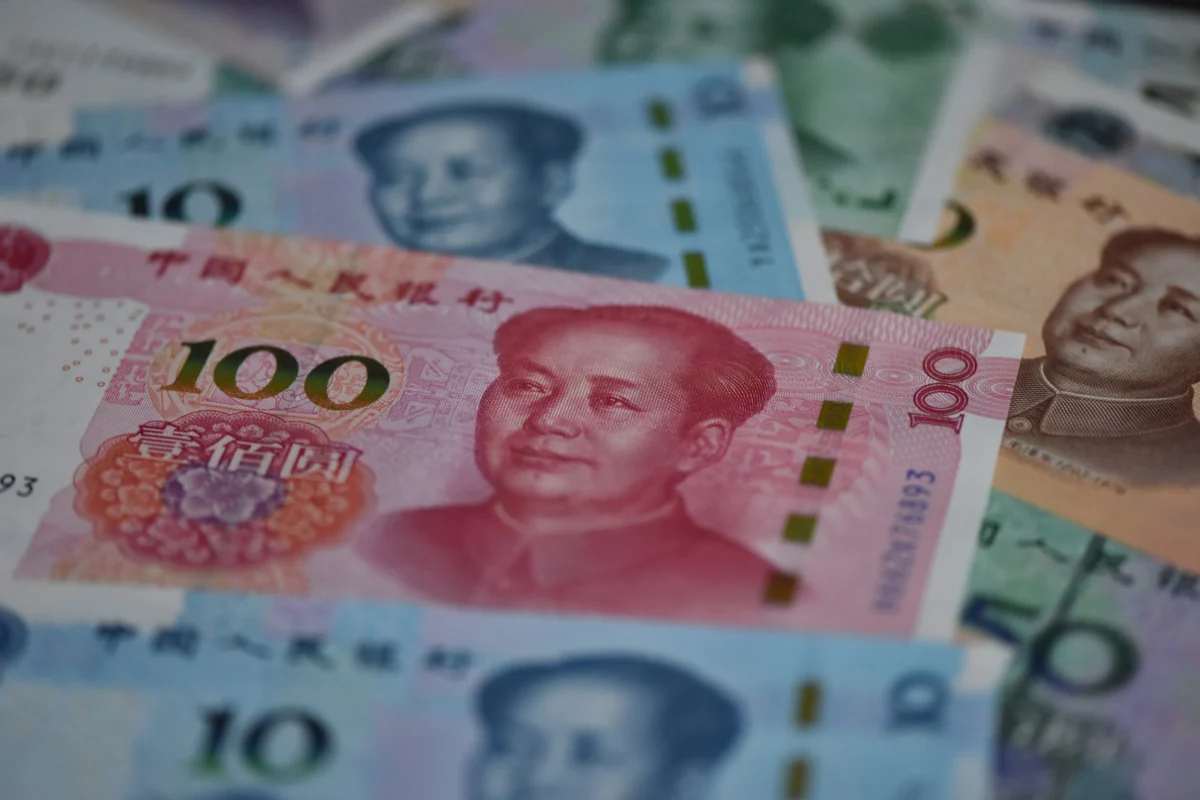
BEIJING – Chinese government bonds (CGBs) are increasingly recognized by global strategists as a vital component for portfolio diversification, primarily due to their sustained ability to behave distinctly from the sovereign debt of other major economies. This unique characteristic is rooted in China’s singular economic trajectory, marked by a deflationary environment and significant domestic challenges, which contrasts sharply with the inflationary pressures and hawkish monetary policies observed across much of the developed world.
The Great Divergence: China’s Economic Anomaly
The past several months have underscored a profound divergence in global economic narratives. While benchmark government bond yields in the United States, Japan, and the United Kingdom have surged to multi-decade highs, propelled by persistent inflation and aggressive interest rate hikes from their respective central banks, Chinese yields have exhibited an inverse trend, edging downwards. This counter-cyclical behavior is not merely a statistical anomaly but a reflection of China’s distinctive economic landscape.
At the core of this divergence is China’s battle with a severe property market downturn and persistent deflationary pressures. Unlike Western economies grappling with robust consumer demand and supply-side shocks driving up prices, China faces subdued domestic consumption, overcapacity in certain sectors, and a struggling real estate sector that has traditionally been a significant driver of economic growth. This environment has compelled the People’s Bank of China (PBOC) to maintain an accommodative monetary policy stance, actively seeking to stimulate economic activity and counteract deflation, a stark contrast to the tightening cycles elsewhere.
Norbert Ling, head of fixed income portfolio management for Asia Pacific at Invesco, articulated this perspective, stating, "We see room for China bonds to outperform developed-market peers on a risk-adjusted basis, with supportive macro policies and strong export growth to help support demand for central government bonds. CGBs are still providing positive real yields, with defensive characteristics that have a role to play in global bond portfolios." This highlights a key appeal: in an era where many sovereign bonds offer negative real yields (nominal yield minus inflation), CGBs present an attractive alternative.
A Chronology of Economic Challenges and Policy Responses
The current positioning of CGBs as a diversification asset has evolved over a period marked by specific economic developments and policy interventions within China.
- Early 2023: Following the abrupt abandonment of its stringent "zero-COVID" policy in late 2022, China initially experienced a surge of optimism for a robust economic rebound. However, this recovery proved short-lived and uneven. While services consumption showed some initial strength, manufacturing and investment lagged.
- Q2 2023: Concerns began to mount as key economic indicators consistently underperformed market expectations. Export growth, a traditional pillar of China’s economy, started to slow significantly amidst weakening global demand. More critically, the property sector, already burdened by developer defaults and declining sales, showed little sign of recovery, with major players like Evergrande and Country Garden facing renewed liquidity crises. This intensified concerns about potential contagion to the broader financial system and local government finances.
- June 2023: In response to faltering economic momentum and emerging deflationary signals, the People’s Bank of China initiated a series of modest but significant interest rate cuts. For instance, the PBOC cut its seven-day reverse repurchase rate and the one-year medium-term lending facility (MLF) rate, signaling its commitment to easing monetary conditions.
- July 2023: The official data released for July further solidified the narrative of a struggling economy. Retail sales growth disappointed, industrial production growth slowed, and, critically, the Consumer Price Index (CPI) slipped into deflation, registering a negative year-on-year growth rate. This marked the first time China had entered deflation since early 2021, amplifying calls for more substantial stimulus measures.
- August 2023: Following the weak July data, the PBOC again cut key policy rates, including the MLF rate, further broadening the gap between its accommodative stance and the tightening policies of other major central banks. This move underscored the PBOC’s resolve to support domestic demand and stabilize the economy, reinforcing the expectation that Chinese bonds would continue their divergent path.
Concurrently, during this same period, central banks in the U.S., Europe, and the UK continued their battle against persistent inflation. The U.S. Federal Reserve, the European Central Bank, and the Bank of England all enacted multiple interest rate hikes, pushing their benchmark rates to multi-year highs. The Bank of Japan, while maintaining its ultra-loose policy for longer, also faced increasing pressure and market speculation about potential shifts, contributing to higher JGB yields. This global tightening cycle, juxtaposed against China’s easing, created an unprecedented opportunity for CGBs to act as a ballast in diversified portfolios.
Supporting Data and Expert Consensus
The macroeconomic data provides compelling evidence for the strategists’ recommendations. In mid-2023, while the U.S. 10-year Treasury yield climbed towards and surpassed 4%, and comparable German Bunds and UK Gilts followed suit, China’s 10-year government bond yield hovered significantly lower, often in the range of 2.5% to 2.7%. This substantial yield differential, combined with China’s deflationary environment, meant that CGBs were offering positive real yields, a scarce commodity in developed markets where inflation often outstripped nominal bond returns. For instance, with China’s CPI at -0.3% year-on-year in July 2023, a 10-year CGB yield of 2.6% translated into a real yield of nearly 3%, a powerful incentive for investors seeking inflation-adjusted returns.
UBS GWM Chief Investment Office’s head of Asia asset allocation, Chun Lai Wu, echoed this sentiment, emphasizing the "valuable diversification benefits within a strategic multi-asset portfolio" that Chinese government bonds offer for both global and Asian investors. Wu further noted, "The latest July macroeconomic activity data from China came in weaker than market expectations, suggesting that domestic demand may take longer to recover. We expect the PBoC to remain supportive through liquidity operations and targeted credit measures." This suggests that the PBOC’s accommodative stance is likely to persist, maintaining the distinct behavior of CGBs.
Charu Chanana, chief investment strategist at Saxo, reiterated this view, specifically highlighting the divergence in interest rate cycles. "For global portfolios, CGBs can still play a diversification role because China’s rate cycle is increasingly distinct from the U.S., Europe and Japan," she commented. This distinction is crucial, as the primary driver of bond market performance is typically a central bank’s monetary policy. When central banks move in opposite directions, the correlation between their respective bond markets tends to decrease, enhancing diversification benefits.
Official Responses and Policy Outlook
The People’s Bank of China has been explicit in its commitment to supporting economic growth and ensuring financial stability. Its actions, including multiple cuts to key policy rates and targeted liquidity injections, demonstrate a clear focus on bolstering domestic demand and mitigating risks stemming from the property sector and local government debt. The PBOC’s toolkit also includes adjustments to the reserve requirement ratio (RRR) for banks, which frees up capital for lending, and various structural monetary policy tools aimed at specific sectors or regions.
While Chinese officials do not directly market CGBs as a diversification tool for foreign investors, their policy objectives indirectly create this scenario. By prioritizing stability and growth through accommodative monetary policy in a deflationary environment, the PBOC ensures that CGBs remain attractive for investors seeking assets that behave differently from those in inflationary economies. The Chinese government, through various ministries, has also been rolling out measures to stabilize the property market, address local government debt, and stimulate consumption, though the effectiveness and speed of these initiatives remain subjects of ongoing scrutiny. The overall policy direction signals a continued emphasis on internal economic rebalancing, which underpins the unique risk-return profile of CGBs.
Broader Impact and Implications for Global Investors
The strategic implications for global investors are significant. In an increasingly interconnected yet volatile global financial landscape, diversification remains a cornerstone of robust portfolio management. CGBs offer a powerful means to achieve this, primarily through:
- Low Correlation with Developed Market Bonds: The primary appeal of CGBs lies in their historically low correlation with traditional developed market sovereign bonds, such as U.S. Treasuries or German Bunds. This means that when developed market bonds face headwinds (e.g., rising inflation, hawkish central banks), CGBs may perform differently, potentially offsetting losses in other parts of a portfolio. This decorrelation arises from China’s distinct economic cycle, monetary policy independence, and relatively less integrated capital account compared to fully open markets.
- Attractive Real Yields: As highlighted by Invesco’s Ling, the provision of positive real yields is a significant draw. In an environment where global inflation has eroded the real returns of many traditional safe-haven assets, CGBs offer a rare opportunity to preserve and grow purchasing power.
- Defensive Characteristics: In times of global market stress, investors typically flock to safe-haven assets. While U.S. Treasuries traditionally fill this role, CGBs, with their large and liquid market, government backing, and distinct risk drivers, can also offer defensive characteristics, particularly when the underlying shocks are external to China’s domestic economy.
- Increasing Market Accessibility and Index Inclusion: Over the past decade, China has made considerable strides in opening its bond market to foreign investors, simplifying access channels like Bond Connect. This has led to the gradual inclusion of CGBs in major global bond indices, such as the Bloomberg Global Aggregate Index, FTSE World Government Bond Index, and JPMorgan Government Bond Index-Emerging Markets. This inclusion has driven passive investment flows and increased CGBs’ visibility and liquidity for international investors.
However, investing in CGBs is not without its considerations. While China has eased capital controls, some restrictions and administrative processes remain. Geopolitical tensions, while not directly impacting bond fundamentals, can influence investor sentiment. Furthermore, while the yuan has strengthened against the U.S. dollar this year, offering a tailwind for foreign investors, currency fluctuations are an inherent risk in international investments. Transparency in certain economic data and corporate governance standards are also areas that some international investors continuously monitor.
Despite these considerations, the consensus among leading strategists points towards an undeniable opportunity. As global economic cycles diverge and monetary policy paths widen, Chinese government bonds present a unique value proposition. Their capacity to offer positive real yields, coupled with their low correlation to other major debt markets, positions them as an increasingly indispensable component of a well-diversified global investment portfolio, offering both enhanced returns and crucial risk mitigation in an uncertain world.
