

Renewed Hostilities Threaten Global Shipping Lane
The morning of September 13, 2026, saw a series of Houthi missile and drone attacks reportedly targeting Saudi naval assets and commercial shipping interests near the Bab al-Mandeb strait. Saudi Arabian defense forces swiftly responded with retaliatory airstrikes against Houthi military positions in Yemen, including reported launch sites and command centers, according to official statements from Riyadh. While specific details of casualties and damage remain contested, the exchange underscores a dangerous resurgence of military activity in a region already ravaged by years of conflict. The Houthi advance into key coastal areas has long been perceived as a direct threat to the free flow of navigation through Bab al-Mandeb, a chokepoint through which an estimated 6.2 million barrels of crude oil, refined petroleum products, and natural gas liquids flowed per day in 2023, representing a significant portion of global seaborne oil trade. Any prolonged disruption could send shockwaves through international energy markets and supply chains.
The Strategic Importance of Bab al-Mandeb
Bab al-Mandeb, meaning "Gate of Tears" in Arabic, is one of the world’s most critical maritime chokepoints. Located between Yemen on the Arabian Peninsula, and Djibouti and Eritrea on the Horn of Africa, it connects the Red Sea to the Gulf of Aden and the Indian Ocean. Its narrowest point is approximately 18 miles (30 kilometers) wide, making it highly vulnerable to interdiction. Vessels transiting the Suez Canal to and from Asia, Europe, and North America must pass through this strait. Beyond oil and gas, vast quantities of containerized cargo, bulk goods, and other commodities traverse these waters daily. The risk posed by Houthi forces, who control significant stretches of Yemen’s Red Sea coastline and possess anti-ship missile capabilities, is therefore not merely regional but global, impacting economies far beyond the Middle East. Previous Houthi attempts to target shipping in the vicinity have prompted warnings from the international community and occasional rerouting by some shipping companies, highlighting the fragility of security in the area.
Roots of the Conflict: Yemen’s Protracted War
The escalation over Bab al-Mandeb is deeply rooted in the ongoing Yemeni civil war, a conflict that began in late 2014 when the Iran-aligned Houthi movement seized control of the capital, Sanaa, and subsequently much of northern Yemen. In March 2015, a Saudi Arabia-led coalition, comprising several Arab states and backed by Western powers including the United States, intervened with the stated aim of restoring the internationally recognized government of President Abdrabbuh Mansur Hadi and countering what it perceives as Iranian expansionism in the region.
The conflict has since devolved into a multifaceted proxy war, with devastating humanitarian consequences. The Saudi-led coalition has imposed a blockade on Yemen, citing concerns over arms smuggling to the Houthis, which has severely exacerbated the humanitarian crisis. The Houthis, for their part, have consistently launched cross-border missile and drone attacks into Saudi Arabia, targeting critical infrastructure, oil facilities, and civilian areas, often claiming these actions as retaliation for coalition airstrikes and the ongoing blockade. Both sides accuse the other of violating international law and perpetuating the suffering of the Yemeni people. This latest exchange of strikes near Bab al-Mandeb is a stark reminder of the conflict’s enduring capacity to destabilize a crucial global artery.
A Fragile Humanitarian Context Amidst Renewed Hostilities
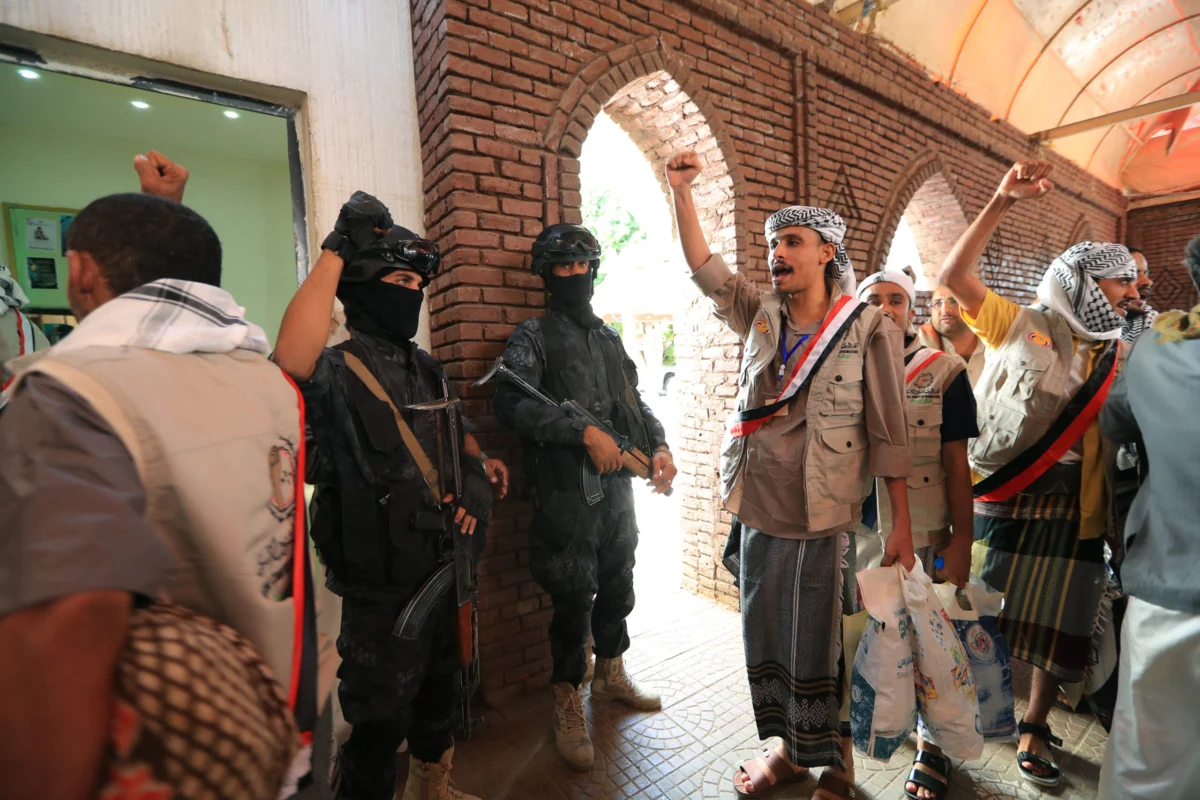
The renewed military confrontation near Bab al-Mandeb comes barely a day after a glimmer of hope for de-escalation appeared on the horizon. On September 12, 2026, a significant prisoner exchange took place on Yemen’s west coast, involving Yemeni prisoners loyal to Houthi authorities being released by Saudi-backed government forces and subsequently arriving in Sanaa. This exchange, often a critical confidence-building measure in protracted conflicts, had been hailed by international observers as a positive step towards potential peace negotiations. However, the immediate resurgence of large-scale hostilities on September 13 casts a pall over such efforts, highlighting the deep-seated mistrust and the difficulty of maintaining any semblance of de-escalation in the absence of a comprehensive political settlement.
The humanitarian situation in Yemen remains catastrophic, recognized by the United Nations as one of the world’s worst humanitarian crises. Years of conflict, economic collapse, and blockades have left over 21 million people, or two-thirds of the population, in need of humanitarian assistance and protection. Millions face acute food insecurity and risk of famine, while essential services like healthcare and water sanitation have largely collapsed. Any disruption to maritime traffic, including aid deliveries, through Bab al-Mandeb would further exacerbate this dire situation, potentially cutting off vital supplies of food, medicine, and fuel to a population already on the brink. The international community has repeatedly called for an end to the conflict and unrestricted humanitarian access, but these calls frequently go unheeded amidst the ongoing fighting.
International Reactions and Calls for De-escalation
The international community has reacted with alarm to the renewed escalation around Bab al-Mandeb. The United Nations Secretary-General’s office issued a statement expressing grave concern over the "dangerous increase in military activity" and reiterated calls for all parties to exercise maximum restraint and adhere to international law, particularly regarding the safety of civilian populations and freedom of navigation. The UN Special Envoy for Yemen is reportedly engaging with all sides to de-escalate the situation and push for a return to the negotiating table.
Major global powers, including the United States, United Kingdom, and France, condemned the attacks on international shipping lanes and called for an immediate cessation of hostilities. A spokesperson for the U.S. State Department emphasized the importance of ensuring the free flow of commerce through critical maritime passages and urged the Houthis to cease their "provocative actions" while also calling on the Saudi-led coalition to ensure proportionality in its responses. The International Maritime Organization (IMO) and various shipping associations also issued advisories, recommending heightened vigilance for vessels transiting the area and evaluating potential alternative routes, though such rerouting would entail significant additional costs and transit times. Regional actors like Egypt and Jordan expressed concern over the stability of Red Sea security and called for diplomatic solutions.
Economic Repercussions and Maritime Security Concerns
The economic implications of sustained hostilities near Bab al-Mandeb are substantial. A prolonged threat could lead to a significant increase in shipping insurance premiums, making transit through the strait prohibitively expensive for some carriers. This, in turn, could force vessels to reroute around the Cape of Good Hope, adding weeks to journey times and massively increasing fuel costs. Such disruptions would inevitably translate into higher consumer prices for goods globally, from electronics to textiles, and particularly for energy commodities. The volatility in oil markets, already sensitive to geopolitical tensions, could see sharp price spikes, impacting global economic recovery efforts.
Maritime security analysts indicate that the current Houthi capabilities, including advanced anti-ship missiles and explosive-laden drones, pose a credible threat to both naval and commercial vessels. Securing the strait would require enhanced international naval presence and coordinated patrols, a costly and complex undertaking. There are growing calls for a multilateral approach to maritime security in the Red Sea, potentially involving greater cooperation among naval forces from various nations to deter attacks and ensure safe passage. However, the political complexities of the region make such cooperation challenging.
Geopolitical Ramifications and the Path Forward
The escalation at Bab al-Mandeb carries significant geopolitical ramifications, further entrenching the proxy conflict narrative in the Middle East. Saudi Arabia views Houthi actions as direct manifestations of Iranian destabilizing influence, given Tehran’s alleged provision of arms and expertise to the Yemeni rebels. This perspective fuels the broader regional rivalry between Saudi Arabia and Iran, making a resolution to the Yemen conflict increasingly difficult. Any perceived Iranian success in threatening global shipping could embolden its regional allies and further complicate international efforts to curb its nuclear program and regional activities.
For Yemen itself, the renewed fighting dims prospects for peace. Despite intermittent peace initiatives and ceasefire attempts, a comprehensive political solution remains elusive. The Houthi leadership, emboldened by their territorial control and military capabilities, has shown little willingness to concede significant ground without substantial political guarantees. The Saudi-led coalition, meanwhile, remains committed to its objectives of securing its borders and preventing a Houthi-dominated Yemen. The involvement of multiple international and regional actors, each with their own interests and agendas, adds layers of complexity to an already intractable conflict.
The immediate priority, as emphasized by the United Nations and other international bodies, is to de-escalate the military confrontation, protect civilian lives, and ensure the unimpeded flow of humanitarian aid. Simultaneously, renewed and robust diplomatic efforts are essential to shepherd all parties towards a comprehensive ceasefire and a political dialogue that addresses the root causes of the conflict. Without such concerted efforts, the "Gate of Tears" risks becoming a permanent flashpoint, with far-reaching consequences for regional stability and global commerce. The international community, led by the diligent reporting of journalists like Kristen Talman, Faisal Aziz Khan, and Enes Abuomer, remains watchful, understanding that the future of this critical maritime passage and the lives of millions in Yemen hang precariously in the balance.
