

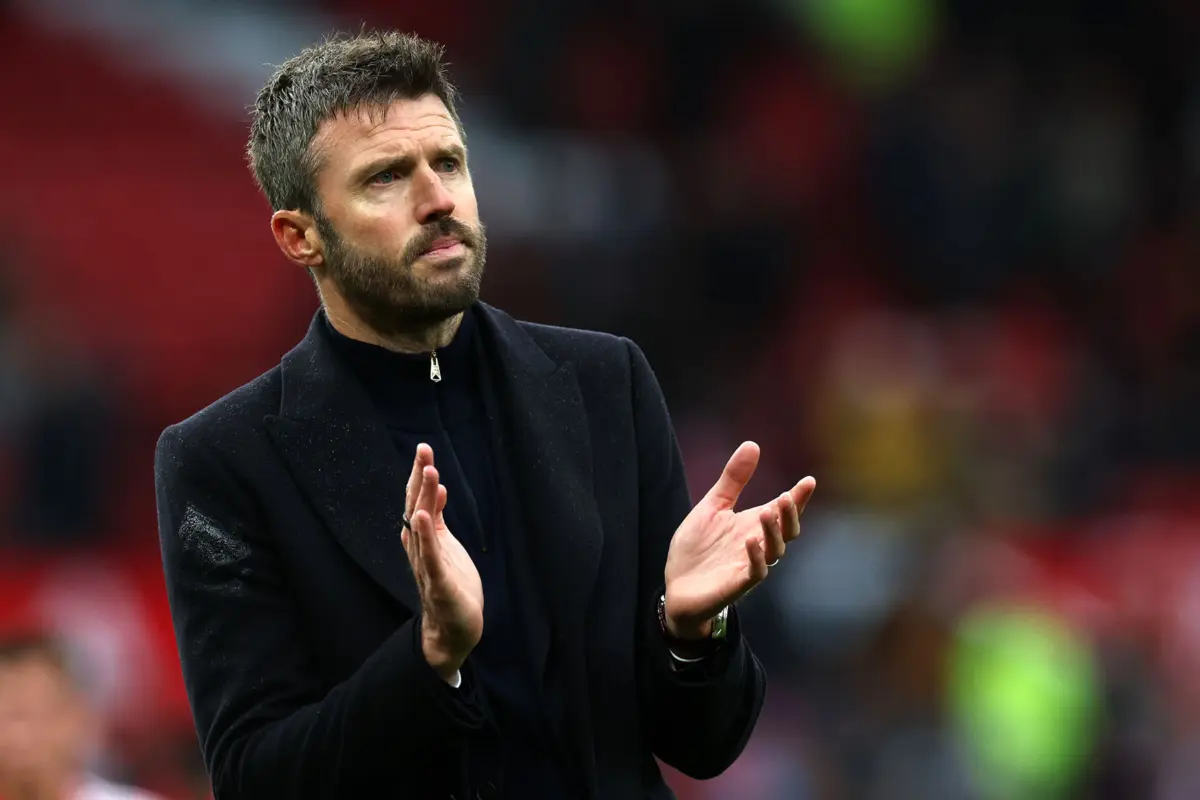
Michael Carrick, the embattled manager of Manchester United, is set to lead the team for their crucial Premier League fixture against Chelsea on October 31, as confirmed by reports from British media outlets. This announcement comes after a period of intense speculation regarding his future, following a disastrous run of results that has seen the club plummet to 16th place in the Premier League, hovering precariously just one point above the relegation zone. Carrick’s presence at the helm for the high-stakes encounter at Stamford Bridge underscores a period of profound uncertainty and immense pressure for one of English football’s most storied institutions.
Carrick has continued to oversee training sessions at the club’s Carrington complex throughout the week, a testament to his professional resolve amidst a swirling vortex of doubt. His steadfast approach offers his under-fire squad another opportunity to reverse a season that has alarmingly veered off course, threatening to devolve into one of the club’s most challenging campaigns in recent memory. The decision to retain Carrick, at least for the immediate future, suggests a cautious approach from the club’s senior hierarchy, who appear to be prioritising stability, however fragile, in the lead-up to a pivotal game.
The Alarming Trajectory: A Season Adrift
The current crisis reached a fever pitch after Sunday’s humiliating 3-0 home defeat to AFC Bournemouth at Old Trafford. This result extended Manchester United’s winless streak across all competitions to a staggering eight matches, a sequence that has seen them collect only two points from a possible 24 in the league during this period. The team’s goal difference has deteriorated sharply, now standing at -12, a stark indicator of their struggles at both ends of the pitch. This dismal form marks the club’s worst start to a Premier League season in over three decades, drawing unwelcome comparisons to periods of significant underperformance from the early 1990s. The once-unthinkable prospect of relegation, while still distant, has entered the periphery of conversations among fans and pundits alike, highlighting the severity of the club’s current predicament.
The statistical breakdown of United’s recent form paints a grim picture. Over the past eight matches, the team has managed to score only four goals while conceding fourteen, revealing a critical imbalance. Their expected goals (xG) metric has also seen a sharp decline, indicating a lack of genuine attacking threat, while their defensive frailties have been consistently exposed by a variety of opponents, from top-tier contenders to teams battling at the bottom of the table. The club’s recent struggles are not merely a blip but represent a systemic failure that has permeated various aspects of their play, from tactical execution to individual performance and collective cohesion.
Chronology of a Crisis: From Hope to Despair
The season began with a sense of cautious optimism, fuelled by a relatively strong pre-season and a few key summer signings. However, early warning signs emerged quickly.
- August: The season commenced with a series of inconsistent performances, punctuated by narrow victories and concerning defeats, particularly away from home. Questions began to surface regarding the team’s tactical identity and mental fortitude.
- September: A significant downturn in form began, with a string of disappointing results. Key fixtures saw the team struggle to create chances and defend effectively, leading to increasing pressure on Carrick.
- Early October: The winless streak solidified, marked by a particularly dispiriting 2-0 defeat to Newcastle United, followed by a frustrating 1-1 draw against Burnley, where United conceded a late equaliser. Calls for change grew louder among segments of the fanbase and media.
- October 25 (Sunday): The nadir arrived with the comprehensive 3-0 thrashing by Bournemouth at Old Trafford. The performance was widely described as lacklustre and devoid of passion, culminating in a furious reaction from the home crowd at the final whistle. This result pushed United to 16th place, igniting widespread speculation about Carrick’s imminent dismissal.
- October 26 (Monday): Senior club officials convened urgent talks at the club’s headquarters. These discussions, reportedly lasting several hours, focused on the manager’s position and the team’s alarming trajectory. Media reports swiftly linked several prominent managerial figures, both available and currently employed, to the Manchester United job, underscoring the perceived inevitability of a change.
- October 27 (Tuesday): Despite the intense speculation, no official announcement regarding Carrick’s future was made. The former United midfielder, maintaining a professional demeanour, reported for work as usual at Carrington, where he led the team’s training session. This act of continuity, or perhaps temporary reprieve, set the stage for the official confirmation that he would indeed manage the team against Chelsea.
- October 28 (Wednesday): British media reports confirmed that Carrick would be in charge for the Chelsea game. The club’s messaging, albeit unofficial, indicated a focus on preparing for the upcoming match and demanding a strong response on the pitch from the players.
Carrick’s Resilience and Fan Sentiment
Amidst the swirling uncertainty, Michael Carrick has consistently presented a dignified and responsible front. Following Sunday’s crushing defeat, he reiterated his deep affection for the club and his commitment to its best interests. “I totally understand the situation,” he stated, reflecting on the precarious nature of his role. “I’m not expecting anything in particular, to be honest. I’m carrying on as normal, and I love this place. I always do what I feel is going to be the best for the football club, whatever decision is made on anything, really.” His words underscored a professional integrity that has earned him considerable goodwill, even as results have failed to materialise.
The sentiment among the Manchester United faithful at Old Trafford on Sunday was telling. As Carrick made his way towards the tunnel after the final whistle, thousands of fans rose to their feet, singing his name and applauding his efforts. This outpouring of support for the manager contrasted sharply with the mood seconds later, when cheers turned to angry boos as the players trudged off the pitch. This stark differentiation reflects the enduring affection and respect the 45-year-old Carrick still commands among a fanbase that remembers his decorated 12-year playing career at United, a period during which he won numerous major honours, including five Premier League titles and the UEFA Champions League.
His measured public persona and willingness to accept responsibility for the team’s struggles, often shielding his players from intense scrutiny, have further endeared him to supporters. This dynamic creates a complex scenario where the manager retains a degree of personal popularity despite the team’s abysmal performance, placing even greater pressure on the players to deliver. The fans’ anger appears directed more at the perceived lack of effort, tactical discipline, and mental resilience from the squad, rather than a fundamental questioning of Carrick’s character or dedication.
Broader Implications and The Road Ahead
The decision to keep Carrick in charge for the Chelsea game, even if temporary, carries significant implications for all stakeholders. For Carrick himself, this match represents a critical juncture. A positive result, particularly a victory against a rival of Chelsea’s stature, could provide a much-needed reprieve, potentially buying him more time to implement his vision and turn the season around. Conversely, another heavy defeat could solidify the perception that a change is inevitable, making his position untenable. The pressure on him to extract a performance from his dispirited squad is immense, requiring him to galvanise players who appear to be struggling with confidence and motivation.
For the players, the spotlight is now intensely focused on their response. The boos directed at them on Sunday served as a visceral reminder of the fans’ discontent. The narrative that the manager is popular but the players are underperforming places an enormous burden on the squad to demonstrate commitment, fight, and quality. Their professional reputations and futures at the club are very much on the line. Questions surrounding leadership within the squad, tactical understanding, and individual accountability will intensify if performances do not improve. The trip to Stamford Bridge, a notoriously difficult away fixture, will be a true test of their character.
For Manchester United as an institution, the current crisis poses fundamental questions about its long-term strategy, recruitment policies, and managerial appointments in the post-Sir Alex Ferguson era. The club has experienced a revolving door of managers since Ferguson’s retirement in 2013, with a series of appointments failing to replicate the sustained success of the past. This instability has impacted the club’s identity, its ability to attract top-tier talent, and its commercial standing, albeit from a position of immense global strength. The ongoing search for a sporting director and a clearer footballing philosophy has been a recurring theme, with many pundits arguing that the club lacks a coherent, long-term plan.
The financial implications of prolonged underperformance are also considerable. While United remains one of the wealthiest clubs in the world, a continued absence from the UEFA Champions League, or worse, a genuine relegation battle, would significantly impact revenue streams from broadcasting rights, sponsorships, and merchandise sales. The brand value, while resilient, could also suffer cumulative damage from persistent negative headlines and a perception of disarray.
Furthermore, the managerial rumour mill continues to churn relentlessly. Even with Carrick confirmed for Chelsea, reports persist about potential successors. Names such as Graham Potter, Zinedine Zidane, and even Julian Nagelsmann have been recurrently linked in various media reports, highlighting the club’s ongoing challenge to identify and secure a manager who can restore its former glories. The timing of any potential change would also be critical, with the upcoming international break potentially offering a window for a new appointment if the club decides a change is necessary after the Chelsea match.
The journey to Stamford Bridge on October 31 is more than just another league fixture for Manchester United; it is a profound test of character, leadership, and the very fabric of the club. Michael Carrick, a club legend, stands at the epicentre of this storm, tasked with navigating his team through what many are calling one of the most challenging periods in the club’s modern history. The outcome of this encounter will undoubtedly play a significant role in shaping the immediate future of Manchester United and could well dictate the trajectory of their season.
