

Israeli Prime Minister Benjamin Netanyahu and his far-right Finance Minister Bezalel Smotrich have offered the clearest signal yet that they are actively considering the establishment of new Jewish settlements on what remains of the Gaza Strip, following almost three years of their country’s devastating war against Palestinians in the enclave. This potential move, which would mark a dramatic reversal of Israel’s 2005 disengagement from Gaza, has ignited widespread international condemnation and deepened fears of long-term displacement, annexation, and the further erosion of a viable two-state solution.
The recent statements from two of Israel’s most influential political figures underscore a hardening stance within the Israeli government regarding the future of Gaza. Last Monday, Smotrich, a vocal proponent of expanding Israeli control over Palestinian territories, revealed that his ministry had prepared concrete plans for three new settlements in northern Gaza. Addressing reporters, he stated that the only remaining hurdle was a green light from Prime Minister Netanyahu, indicating a high level of preparedness and political will behind the proposal. Smotrich’s continued participation in the ruling coalition has previously been made conditional on his being granted increased control over Israel’s settlement enterprise in the West Bank, a clear indication of his unwavering commitment to this agenda of territorial expansion.
The following day, Prime Minister Netanyahu, speaking on Israel’s staunchly right-wing Channel 14, came remarkably close to endorsing Smotrich’s vision. When pressed on the prospect of settlements in Gaza, Netanyahu replied cryptically, "The question is whether you prefer to do or to talk. And yes, I prefer not to address it." While not an explicit affirmation, his refusal to rule out the possibility was widely interpreted as a tacit acknowledgment and a significant shift in official discourse, fueling speculation that such plans are indeed under serious consideration at the highest levels of government. These statements have sent ripples through diplomatic circles and humanitarian organizations worldwide, prompting urgent calls for clarification and adherence to international law.
A History of Contention: Settlements and International Law
The discussion around new settlements in Gaza takes place against a backdrop of decades of international legal consensus regarding Israeli settlements. Israel’s existing settlements in the occupied West Bank and occupied East Jerusalem are universally considered illegal under international law. This illegality is rooted primarily in the Fourth Geneva Convention of 1949, which prohibits an occupying power from transferring parts of its own civilian population into the territory it occupies. Article 49 states: "The Occupying Power shall not deport or transfer parts of its own civilian population into the territory it occupies."
Numerous United Nations Security Council resolutions, including Resolution 2334 (2016), have reaffirmed that Israeli settlement activities constitute a flagrant violation of international law and have no legal validity. The International Court of Justice (ICJ) has also consistently upheld this interpretation in various advisory opinions. For instance, in its 2004 advisory opinion on the Legal Consequences of the Construction of a Wall in the Occupied Palestinian Territory, the ICJ reiterated the illegality of settlements. The international community, with few exceptions, considers these settlements a major obstacle to peace and the viability of a future Palestinian state.
The potential establishment of settlements in Gaza would represent an even more egregious violation, given the territory’s unique history and the current devastating conflict. Israel unilaterally dismantled its 21 illegal settlements in Gaza in 2005, withdrawing all approximately 9,000 settlers and military forces in what was termed the "disengagement." This move was presented by Israel as a step towards resolving the conflict, although critics argued it paved the way for increased control over Gaza’s borders and future military operations without the direct burden of civilian administration. The current proposals directly contradict the spirit, if not the letter, of that disengagement, threatening to re-establish a permanent Israeli civilian presence in a territory from which it formally withdrew, potentially under a new military occupation framework.
The Gaza Context: War, Destruction, and Humanitarian Crisis
The current debate over settlements unfolds as Gaza endures an unprecedented humanitarian catastrophe. For almost three years, Israel has waged a war in the enclave, a conflict that international jurists, UN experts, and human rights organizations have increasingly characterized as genocidal. In clearing the way for any future settlements in Gaza—and for what Netanyahu euphemistically referred to on Channel 14 as the "voluntary migration" of its remaining population, a process widely characterized by international jurists as ethnic cleansing—Israel has killed more than 73,000 of its occupants. This staggering figure represents a significant portion of Gaza’s pre-conflict population of 2.3 million, highlighting the immense human cost of the ongoing hostilities.
Beyond the direct casualties, the scale of destruction in Gaza is immense. Areas like the north of Gaza City, targeted early in the conflict, have been largely razed by Israeli military operations. Deliberate campaigns to demolish Palestinian homes, infrastructure, and institutions have left vast swaths of the territory uninhabitable. Satellite imagery and drone footage reveal entire neighborhoods reduced to rubble, with estimates suggesting over 70% of Gaza’s homes and much of its civilian infrastructure have been damaged or destroyed. Over 3 million Palestinians have been displaced, with millions crammed into overcrowded shelters and makeshift camps, facing severe shortages of food, water, medicine, and sanitation.

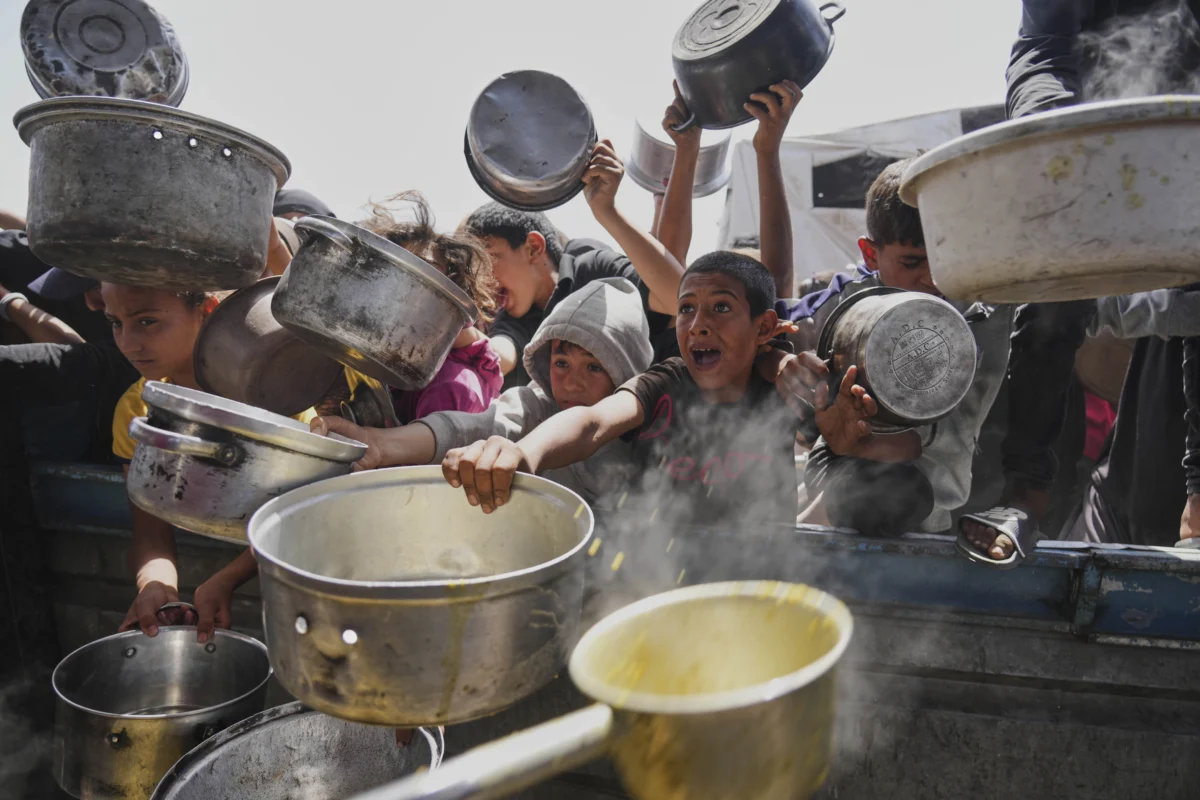
United Nations-backed experts have accused Israel of deliberately imposing a famine on survivors in Gaza, with widespread reports of severe food insecurity, malnutrition, and starvation affecting hundreds of thousands. The Integrated Food Security Phase Classification (IPC) has confirmed famine conditions in parts of northern Gaza. Most recently, a UN inquiry further implicated Israel in furthering its genocide in Gaza through the deliberate targeting of children, citing devastating statistics on child fatalities and injuries, and the systematic destruction of essential services. The deliberate creation of "empty land" through extensive destruction appears to align chillingly with the aspirations of settlement proponents, who see the devastated landscape as a "perfect opportunity to cement a buffer between Israel and Gaza" and potentially establish new communities.
Political Maneuvering and Domestic Appeals
The timing of these statements is not coincidental, occurring amidst a complex political landscape in Israel. With elections due before the end of October, it is strategically beneficial for politicians such as Smotrich and Netanyahu to float such proposals. Smotrich, in particular, is facing a challenging political future. Despite what critics describe as his unparalleled success in expanding settlements in the West Bank since the 1990s, his Religious Zionist party struggles in the polls and may not secure enough votes in the next election to meet the minimum threshold to enter parliament. Inflating the prospects of settlements in Gaza is a clear attempt to galvanize his right-wing base and attract more support from a segment of the electorate that prioritizes territorial control and ideological expansion.
Prime Minister Netanyahu’s motivations are also deeply intertwined with his domestic challenges. Currently on trial for multiple corruption charges, he faces a potential jail sentence if found guilty. Furthermore, public anger runs high over his apparent determination not to hold an independent inquiry into his government’s failings leading up to the October 7 attack. In this context, strong rhetoric about expanding Israeli control and expelling Palestinians from Gaza can serve as a powerful distraction and a means to shore up support among hardline segments of the electorate, portraying him as a strong leader committed to national security and ideological goals.
Neve Gordon, an Israeli professor at Queen Mary University of London, observed the domestic climate: "The Israeli public has been subjected to almost endless incitements to genocide since October 7. People who watch legacy media in Israel have no understanding of the level of destruction in Gaza, or the kind of suffering that has gone on there." He noted the disturbing phenomenon of "tourist spots, where some people in Israel go to watch the bombing," indicating the constituency to which statements like Smotrich’s appeal. Gordon stressed that while such statements are designed to garner political support, "this isn’t just rhetoric. There is a definite and consistent push from across much of Israel’s politics to resettle the Gaza Strip." This suggests a broader ideological current in Israeli politics supporting these aims, beyond mere electioneering.
The Resurgence of the Resettlement Movement
Calls for the resettlement of Gaza have gained significant traction among hardline religious Israelis since the 2005 disengagement. Analysts and historians have described concerted efforts by settlement supporters to capture the institutions of Israeli public life, gaining dominant voices in the education system, the media, and other areas of government. These groups, often driven by religious-nationalist ideologies, view the land of Gaza as part of biblical Israel and believe in the right of Jews to settle throughout these territories.
Organizations such as the far-right settler group Nachala have openly championed the resettlement of the enclave. Months into Israel’s current war, Nachala held a high-profile conference explicitly promoting Israel’s return to Gaza, titled "Settlement Brings Security and Victory." The event was attended by numerous government ministers, including Smotrich and National Security Minister Itamar Ben-Gvir, signaling significant political backing for this extremist agenda. These movements view the current destruction in Gaza as an opportune moment to realize long-held ideological goals of permanent Israeli presence, capitalizing on the perceived security vacuum and demographic changes. They often frame settlement as a security imperative, arguing that a Jewish presence creates a buffer and prevents future attacks.
A Broadening Indifference and Lack of Domestic Opposition
The proposals for Gaza settlements face little organized opposition within mainstream Israeli politics. Political analyst Ori Goldberg noted the prevailing sentiment: "Look, if you want to distinguish yourself from the rest of the field ahead of the election, your time is now. This is your moment, and, if you want to propose imposing further hardship onto Palestinians, there is absolutely no Jewish member of [parliament] – apart from the [left-wing member of parliament] Ofer Cassif – who is going to oppose you." This sentiment reflects a significant shift to the right in Israeli politics and a perceived indifference among large segments of the Israeli public to the suffering in Gaza. "People don’t care anymore," Goldberg said. "There’s just nothing [on the suffering in Gaza]. People have grown indifferent. There’s just a big black hole." This domestic political environment grants the government considerable leeway to pursue policies that would otherwise face significant internal challenges, effectively silencing dissenting voices and normalizing radical proposals.
International Complicity and Potential Consequences

While the Israeli government may have few domestic qualms about building settlements in Gaza, it does have to contend with the potential international backlash. The question remains whether this project would move beyond the planning stage or if Israel would face real, lasting consequences. Many observers point to the unwavering diplomatic and military support from the United States, as well as the substantial financial support from Europe, which despite its occasional criticism, remains Israel’s foremost trading partner, as key enablers of Israel’s freedom of action. The U.S. provides billions in annual military aid, and European nations engage in extensive trade and cultural exchange, often without imposing significant penalties for actions deemed illegal under international law.
Hugh Lovatt, an author and fellow at the European Council on Foreign Relations, commented on the prospect of Gaza settlements: "From 2023 onwards we’ve seen the greatest expansion of settlements since the [1990s] Oslo Accords, as well as plans to render the two-state solution obsolete. And, while there’s been some criticism, there’s been very little action." He questions whether a similar outcome would occur if settlements were established in Gaza, acknowledging that Gaza has been the focus of a great deal of international, and specifically US, attention since the recent ceasefire that the West Bank has not. The sheer scale of destruction and the confirmed famine in Gaza have drawn unprecedented global scrutiny, potentially making new settlements a more visible and contentious issue.
However, whether this increased international attention would translate into concrete action to check Israel’s settlement ambitions remains unclear. Lovatt pondered the implications for US policy: "Would Israel risk such a blatant move to block Trump’s Gaza plan? I’m not sure." The US president’s plan for Gaza, while heavily criticized for allowing Israel to maintain its presence in the Palestinian territory, notably makes no mention of Israeli settlements. This omission could be interpreted as either a strategic silence or a potential point of conflict if Israel moves forward with new settlements, forcing the US to take a clearer stance.
Despite Europe’s "very poor track record so far" in imposing meaningful consequences, Lovatt suggested that "an expansion of Israeli settlements to Gaza could push European states to act." This implies that while the international community has largely tolerated settlement expansion in the West Bank, a move into Gaza might be perceived as crossing a new red line, potentially triggering a stronger response. Such a response could range from increased diplomatic pressure and targeted sanctions on individuals and entities involved in settlement construction to a reevaluation of trade agreements and security cooperation, and even a formal recognition of a Palestinian state.
Broader Implications: Humanitarian, Legal, and Geopolitical
The establishment of new Israeli settlements in Gaza would have profound and far-reaching implications across multiple dimensions.
From a humanitarian perspective, it would deepen the ongoing crisis exponentially. The remaining Palestinian population, already decimated, displaced, and on the brink of famine, would face further dispossession, restricted movement, and potential forced transfer. It would cement the current destruction as a permanent reality, denying displaced Palestinians the right of return to their homes and lands, and ensuring long-term dependence on international aid. The concept of "voluntary migration" in such a context is a thinly veiled euphemism for ethnic cleansing, and new settlements would be a physical manifestation of this policy, making the strip permanently unlivable for a significant portion of its indigenous population.
Legally, such a move would constitute a blatant and undeniable violation of international law, further eroding the credibility of international institutions and the rules-based global order. It would severely complicate any future peace efforts, making a viable two-state solution virtually impossible by creating new facts on the ground in a territory designated for a future Palestinian state. The International Criminal Court (ICC) and the International Court of Justice (ICJ) would face increased pressure to investigate and prosecute those responsible for war crimes and crimes against humanity, potentially leading to arrest warrants for Israeli officials.
Geopolitically, new settlements in Gaza would likely trigger widespread condemnation from Arab nations, potentially destabilizing fragile normalization agreements and fueling regional tensions. It would further isolate Israel on the international stage, even among its allies, and could lead to a significant downgrade of diplomatic relations with various countries. For the United States, it would present a major foreign policy challenge, forcing a difficult choice between its unwavering support for Israel and its stated commitment to international law and a two-state solution. The long-term stability of the Middle East would be severely undermined, perpetuating a cycle of conflict, radicalization, and resentment, pushing any prospect of lasting peace further out of reach.
The signals from Netanyahu and Smotrich, therefore, are not merely political rhetoric aimed at a domestic audience. They represent a tangible threat to the future of Gaza, the viability of peace, and the integrity of international law, demanding a robust and unified response from the global community. The world watches to see if these signals will translate into irreversible facts on the ground, further entrenching an already intractable conflict and shaping the geopolitical landscape of the Middle East for decades to come.
