

Dallas, Texas – In a landmark moment for Egyptian football, the national team, coached by Hossam Hassan, clinched their first-ever FIFA World Cup knockout victory on Friday, defeating Australia 4-2 in a penalty shootout following a 1-1 draw after extra time. The historic triumph, achieved in a tense Round of 32 clash at Dallas Stadium, was immediately dedicated by Coach Hassan to the people of Palestine, a gesture that resonated deeply across the Arab world, particularly among fans in the besieged Gaza Strip who found a rare moment of joy amidst ongoing conflict.
A Historic Win on the Global Stage
The match, which took place on July 3, 2026, marked a significant milestone for the Pharaohs, who had previously struggled to make an impact beyond the group stages in their World Cup appearances. Egypt’s journey to the Round of 32 in the expanded 2026 tournament represented a culmination of years of development and the strategic leadership of Hossam Hassan, a legendary figure in Egyptian football. The team’s performance against Australia was characterized by resilience and tactical discipline, culminating in a dramatic penalty shootout that captivated audiences worldwide.
The game commenced with a promising start for Egypt, as Emam Ashour found the back of the net with a header in the 13th minute, injecting early confidence into the squad and their fervent supporters. However, Australia, known for their tenacious spirit and physical play, equalized 10 minutes into the second half through an unfortunate own goal by Mohamed Hany. The score remained locked at 1-1 through the remainder of regulation and a grueling extra time period, setting the stage for the high-stakes penalty shootout.
Under immense pressure, Egypt’s players demonstrated remarkable composure. Hossam Abdelmaguid, stepping up for the decisive kick, calmly converted, securing the 4-2 victory after Australian players Harry Souttar and Lucas Herrington failed to convert their spot-kicks. The victory propels Egypt into the Last 16, where they are set to face either Argentina or Cape Verde, a testament to their newfound prowess on the international stage.
Coach Hassan’s Emotional Dedication and Symbolism
In the immediate aftermath of the triumph, an emotional Hossam Hassan, a revered figure who has transitioned from a prolific striker to a respected coach, made a profound statement that transcended the boundaries of sports. Addressing reporters, Hassan declared, "May Allah grant them [the Palestinians] victory, may Allah have mercy on their martyrs. I’m saying to them: I’m dedicating this victory to the Egyptian people and Palestinian people, those kind and honourable people."

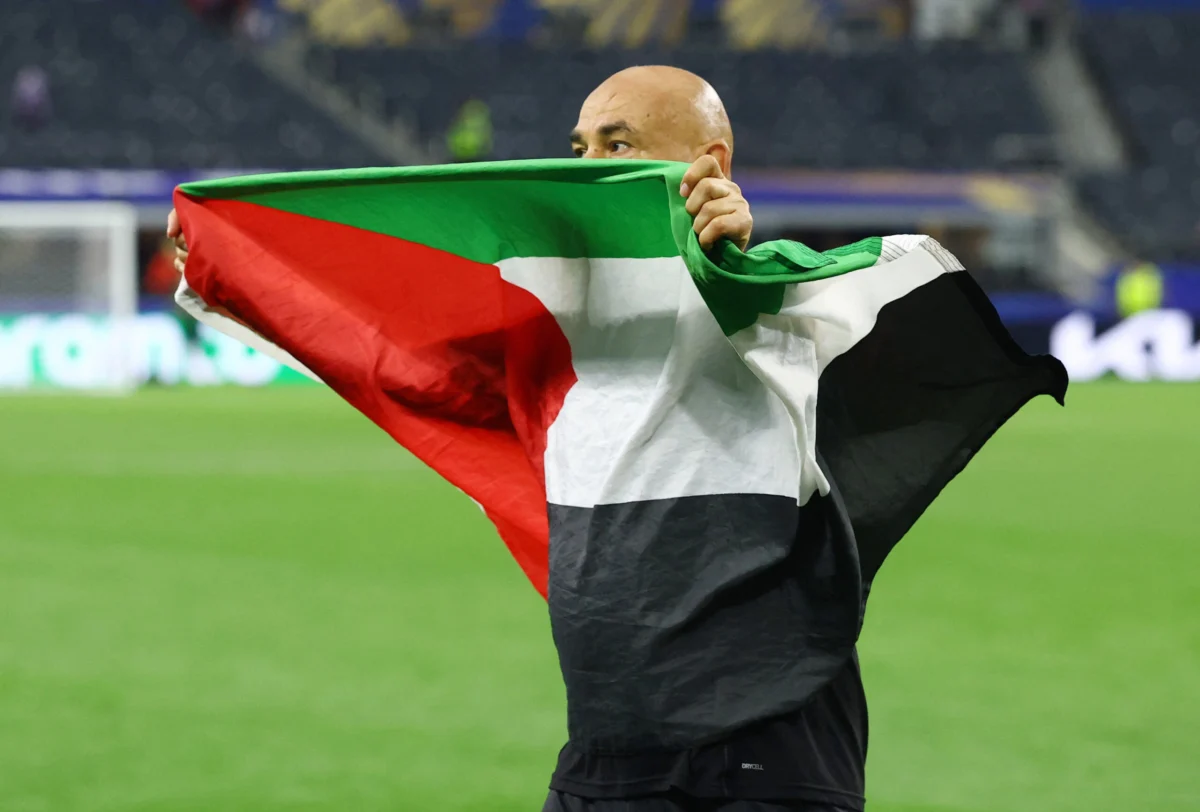
His words were not merely rhetorical. Following the final whistle, Hassan was seen walking onto the pitch, prominently carrying both the Egyptian and Palestinian flags, a powerful visual declaration of solidarity. The team, in a moment of collective spirituality and gratitude, then bent down on the ground in sujood, an Islamic prostration of thanksgiving, further emphasizing the depth of their sentiment and the cultural context of their celebration. This public display of support for Palestine, a recurring theme in Arab sporting and cultural events, underscored the deep-seated connection many in the region feel towards the Palestinian cause. Such gestures, while potentially subject to scrutiny under FIFA’s strict rules against political statements, are often seen as expressions of humanitarian solidarity within the Arab and Islamic world.
Gaza Finds Solace in Shared Celebration
The reverberations of Egypt’s victory and Hassan’s dedication were felt most acutely in the Gaza Strip, a territory grappling with immense humanitarian challenges and ongoing conflict. Amidst the devastation of bombed buildings and the precarious existence in makeshift tents, communities gathered for rare moments of collective joy, watching the match screenings with intense anticipation. Social media footage emerging from Gaza depicted scenes of resilience and shared elation, with people, including children, adorned with painted Egyptian flags on their faces, cheering and smiling as their Arab brethren celebrated a sporting triumph.
Tahem Nahed, a Gaza-based observer, articulated the profound impact of the event on X (formerly Twitter): "For the first time, I’m following the World Cup with this much excitement. I was so happy to see Egypt win a little while ago, but the most beautiful sight was here… thousands of people came out of their tents and from among their destroyed homes to watch the match. Faces lit up with smiles, cheers filled the air, and it felt as if everyone had decided to give themselves a moment of life despite everything surrounding them." This poignant testimony highlights how sports, particularly a victory by a neighboring Arab nation, can offer a temporary but vital respite from the harsh realities of conflict, fostering a sense of shared identity and hope. The collective celebration underscored the power of unity and the human spirit’s capacity to find light even in the darkest circumstances.
Background and Historical Context of Egyptian Football
Egypt’s journey to this historic knockout win has been long and often arduous. Despite being pioneers in African football, the Pharaohs have historically struggled to translate their regional dominance into consistent success on the global stage. Their first World Cup appearance dates back to 1934, making them the first African and Arab team to participate in the tournament. However, subsequent qualifications were sporadic, with lengthy gaps until their appearances in 1990 and 2018. In all their previous outings, Egypt failed to advance past the group stage, making this victory a monumental breakthrough.
Hossam Hassan, as a player, was a prolific goal scorer and a symbol of Egyptian football for decades. His transition to coaching brought a new dynamism to the national team, focusing on a blend of experienced veterans and emerging talents. His leadership has been credited with instilling a renewed sense of belief and tactical discipline within the squad, attributes that were clearly on display in the high-stakes encounter against Australia. For a nation that reveres football, this victory is not merely a sporting achievement but a source of immense national pride and a morale booster.
Australia, on the other hand, has become a more regular fixture at the World Cup since joining the Asian Football Confederation (AFC). The Socceroos have a reputation for being tough, organized, and difficult to break down, often punching above their weight. Their presence in the Round of 32 was expected, and their performance against Egypt, while ultimately unsuccessful, demonstrated their continued competitiveness on the global stage.

Pre-Match Incident and Resolution
The build-up to the historic match was not without its own share of drama. Hours before their triumphant performance, members of the Egyptian team were involved in an altercation with local police officers in Dallas, an incident that quickly gained traction on social media. The Egypt national team officially stated that a Dallas police officer had pushed their team director, Ibrahim Hassan (Hossam Hassan’s brother), and player Trezeguet, as they were reportedly attempting to take a photograph with a fan at the team hotel.
The Dallas Police Department (DPD) subsequently issued a statement clarifying that the situation had been resolved on the scene. While details of the full exchange remained somewhat vague, the incident sparked concern among fans and officials, raising questions about team security and interactions with local law enforcement during major international events. Fortunately, the incident did not appear to derail the team’s focus, as they delivered a composed performance just hours later. The swift resolution by the DPD likely helped to de-escalate the situation, allowing the team to concentrate on the crucial match ahead.
Broader Implications and Regional Resonance
The Egyptian victory carries significant weight beyond the football pitch. For Egypt, it signals a new era of competitiveness in international football, potentially inspiring a new generation of players and fans. The progress to the Last 16 against formidable opponents like Argentina or Cape Verde will test their resolve and further cement their status.
More broadly, Hossam Hassan’s dedication to the Palestinian people highlights the intricate relationship between sports, politics, and identity in the Middle East. While FIFA generally discourages overt political statements during matches and tournaments, gestures of solidarity with Palestine are deeply ingrained in the cultural and political consciousness of the Arab world. Such dedications often serve as powerful symbols of unity and shared struggle, resonating with millions who feel a deep connection to the Palestinian cause. For the people in Gaza, enduring unimaginable hardship, this act of recognition and shared joy provides a crucial psychological lift, reminding them that they are not forgotten.
The emotional outpouring on social media from various Arab nations following the match underscored this collective sentiment. Commentators and fans alike lauded Hassan’s courage and the team’s spirit, intertwining the sporting success with a broader narrative of regional solidarity. This fusion of athletic achievement with socio-political messaging amplifies the event’s significance, transforming a football match into a moment of collective expression and emotional resonance for millions across the globe.
As Egypt prepares for its next challenge, the legacy of this historic win will undoubtedly extend far beyond the tournament itself, leaving an indelible mark on Egyptian football and serving as a poignant reminder of the enduring power of sports to unite and inspire, even in the most challenging of times.
