

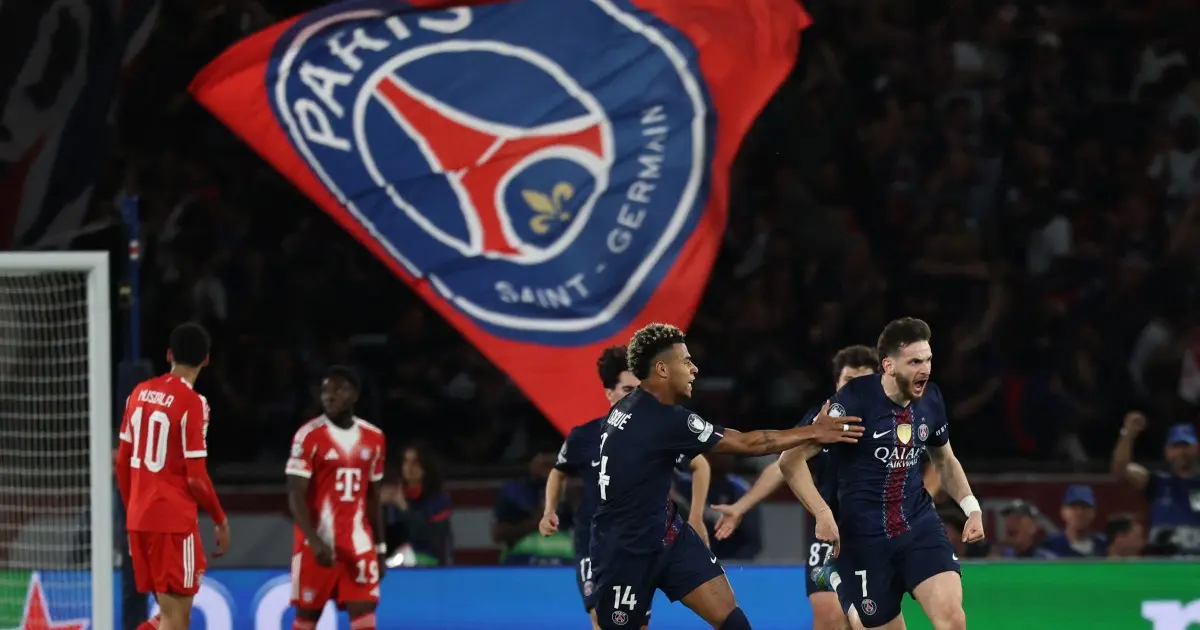
The highly anticipated Ligue 1 fixture between perennial champions Paris Saint-Germain (PSG) and rivals Olympique Lyonnais, originally slated for Sunday, has been officially postponed until Monday evening. The decision, announced by the French professional football league (LFP) on Friday, comes as a direct consequence of an urgent request from French police authorities grappling with a severe wave of violent protests that have gripped the nation, particularly the capital, Paris. This rescheduling carries significant implications, most notably forcing reigning Ballon d’Or recipient Ousmane Dembele to miss the prestigious awards ceremony in London, for which he and a contingent of his star-studded PSG teammates are prominent nominees.
The 29-year-old French international forward, a pivotal figure for both club and country, had once again emerged as a leading contender for the coveted individual accolade. His impressive season included a crucial role in guiding the French national team to the FIFA World Cup 2026 semifinals and spearheading PSG’s formidable defense of their UEFA Champions League crown, demonstrating consistent brilliance on the biggest stages of world football.
Unrest Forces Sporting Interruption
The LFP’s statement confirmed the postponement, noting, "The LFP takes note of the police decree prohibiting the staging of the game between Paris Saint-Germain and Olympique Lyonnais on Sunday at 8:45 pm [19:45 GMT] … and has decided to reschedule the match for Monday at 8:30 pm." This move underscores the gravity of the civil unrest that has escalated across France, prompting authorities to prioritize public safety and the allocation of security resources. The initial wave of protests, which erupted a week prior on October 17, witnessed some of the most intense urban violence France has experienced in years, characterized by widespread property damage, clashes with law enforcement, and significant disruption to daily life.
President Emmanuel Macron had previously attributed the unrest to "seditious ultra-left" elements, indicating a specific political dimension to the demonstrations. This official narrative points to a deep-seated ideological conflict underlying the visible street violence. The government’s response has been swift and firm, including a ban on certain protests and a commitment to deploy substantial security forces to maintain order.
A Nation on Edge: The Context of the Protests
The current wave of protests is not an isolated incident but rather the latest manifestation of France’s long and often tumultuous history of social and political demonstrations. While the immediate trigger for the October 17 unrest remains subject to ongoing analysis, the broader context often involves deeply contentious government reforms, social inequality, or perceived infringements on civil liberties. French society, known for its robust tradition of public dissent, frequently sees large-scale protests as a primary mechanism for expressing popular discontent.
Reports from various media outlets and local authorities in the days leading up to the postponement painted a grim picture. Cities like Paris, Marseille, Lyon, and Toulouse experienced significant disruptions. Early estimates from security agencies suggested thousands participated in the initial demonstrations, with hundreds of arrests made. Damages included burnt vehicles, vandalized public infrastructure, and looted businesses, particularly in commercial districts. The sheer scale of the incidents on October 17 forced a reevaluation of security postures for all major public gatherings. This societal backdrop forms the critical context for the police decision to request the postponement of a high-profile football match that typically draws tens of thousands of spectators and a significant security presence.
Chronology of Escalation and Official Responses
The timeline leading to the PSG-Lyon postponement illustrates a rapid escalation of the security situation:
- October 17 (One Week Prior): Widespread urban violence erupts across France, particularly in Paris, following initial demonstrations. Authorities record numerous clashes, arrests, and significant property damage.
- Tuesday (Preceding the Match): Prime Minister Sebastien Lecornu announces a "massive" security operation in preparation for planned protests on the upcoming Saturday. He confirms that troops will be deployed to reinforce police units, signaling the exceptional nature of the government’s response to quell the unrest. This decision reflects the government’s concern over the potential for continued violence and its determination to restore public order.
- Wednesday: The LFP confirms the rescheduling of another Ligue 1 fixture, Toulouse’s home match against Troyes, moving it from Saturday to Sunday. This decision, made at the request of local authorities in Toulouse, served as an early indicator of the escalating security concerns affecting sporting events nationwide.
- Friday: The LFP formally announces the postponement and rescheduling of the PSG-Lyon match, directly citing the police decree and the ongoing security situation. This follows intense consultations between the league, clubs, and police prefectures, underscoring the finality of the decision to prioritize public safety.
- Saturday: France braces for another day of planned protests, with the "massive" security operation deployed across key urban centers. Law enforcement and military personnel are visibly present, aiming to deter violence and maintain control.
- Sunday (Original Match Day): While the PSG-Lyon game was originally scheduled, the focus shifts to other major events. The Pittsburgh Steelers are still due to face the New Orleans Saints in an NFL regular-season game at the iconic Stade de France, an event that itself requires a substantial police deployment. The rescheduled Toulouse-Troyes match also takes place, albeit under heightened security.
- Monday (Rescheduled Match Day): The PSG-Lyon clash is now set to take place. Simultaneously, the Ballon d’Or awards ceremony will be held in London, creating an unavoidable conflict for PSG’s nominated players.
Official statements from the LFP consistently emphasized compliance with police directives, highlighting the league’s commitment to ensuring the safety of players, staff, and fans. Police prefectures, through their decrees, underscored the strain on public security resources and the imperative to prevent further civil unrest. While no direct statements from PSG or Lyon were immediately available regarding the postponement, it is highly probable that both clubs, while undoubtedly disappointed by the disruption, would express understanding and full cooperation with authorities given the severe circumstances. The safety of their personnel and supporters would be paramount.
The Ballon d’Or Dilemma: A Clash of Schedules
The rescheduling of the PSG-Lyon match to Monday directly conflicts with the Ballon d’Or awards ceremony in London, creating an unprecedented dilemma for several key players. Ousmane Dembele, as the reigning holder of the prestigious award and a leading candidate once again, is particularly affected. His absence from the ceremony, where he was expected to potentially defend his title or at least be a central figure, represents a significant symbolic loss for the event. The Ballon d’Or, presented by France Football, is globally recognized as the most esteemed individual award in football, celebrating the world’s best player. Attendance by nominees, especially past winners and top contenders, is a long-standing tradition, offering a unique platform for recognition and celebration.
Beyond Dembele, a remarkable contingent of PSG players features on the men’s shortlist for the Ballon d’Or. This illustrious list includes: Achraf Hakimi (Morocco), Khvicha Kvaratskhelia (Georgia), Marquinhos (Brazil), Nuno Mendes (Portugal), Joao Neves (Portugal), Vitinha (Portugal), Willian Pacho (Ecuador), Fabian Ruiz (Spain), and Ferran Torres (Spain). The collective absence of such a significant number of nominees from a single club due to a rescheduled domestic fixture is highly unusual. It deprives these players of the opportunity to experience the ceremony firsthand, network with football’s elite, and potentially accept an award in person. For young talents, in particular, it could be a once-in-a-lifetime experience missed. While the players’ primary duty is to their club, the emotional and symbolic impact of missing such a pinnacle event cannot be understated. This situation highlights the complex interplay between club commitments, individual accolades, and external societal factors.
Broader Sporting and Economic Implications
The postponement of the PSG-Lyon fixture and the rescheduling of others carries a cascade of broader implications:
- Sporting Integrity and Schedule Congestion: For Ligue 1, the postponement adds to an already packed domestic and international fixture list. Rescheduling games, especially high-stakes ones like PSG-Lyon, can create fixture congestion for the involved teams, potentially leading to increased player fatigue and higher injury risks. This could also raise questions of fairness, as playing on a different day might offer a team an unexpected advantage or disadvantage compared to rivals who played as scheduled. PSG and Lyon were notably level on 14 points at the top of Ligue 1 heading into this weekend’s eighth round of games, making their direct encounter pivotal for the early title race.
- Economic Impact: The disruption of a major sporting event has direct financial consequences. While the game will eventually be played, the sudden change in schedule can lead to losses in immediate matchday revenue from concessions, hospitality, and potentially ticket refunds or exchanges for fans unable to attend the new date. Furthermore, the broader unrest affects tourism and local businesses in Paris, indirectly impacting the economic ecosystem surrounding major events. Security costs also soar, placing an additional burden on public finances.
- Precedent for Future Events: France is a frequent host of major international sporting events. This incident, occurring amidst significant civil unrest, raises concerns about the nation’s capacity to host large-scale gatherings safely in the face of ongoing social tensions. While the specific context of 2026 is distinct, such events serve as litmus tests for a country’s security infrastructure and ability to manage crises. The careful handling of the NFL game at Stade de France will be another crucial test of these capabilities.
- Player Welfare and Morale: Beyond the Ballon d’Or conflict, the general climate of instability and the disruption to established routines can take a toll on players’ mental and physical well-being. Travel plans, training schedules, and pre-match preparations are all thrown into disarray, potentially affecting on-field performance.
A Nation’s Resilience Tested
The decision to postpone a marquee football match underscores the severity of the civil unrest currently challenging France. It highlights the complex equilibrium authorities must maintain between ensuring public safety, upholding freedom of assembly, and minimizing disruption to daily life, including major cultural and sporting events. The intersection of sports, politics, and social dynamics is never more evident than when societal turmoil directly impacts the sporting calendar. As France navigates this period of heightened tension, the world watches, not only at the outcomes on the football pitch but also at the nation’s resilience in addressing its profound domestic challenges. The rescheduled PSG-Lyon match, though delayed, will serve as a stark reminder of the extraordinary circumstances that compelled its alteration, even as the global football community celebrates its brightest stars in London, albeit without some of its most prominent nominees present.
