

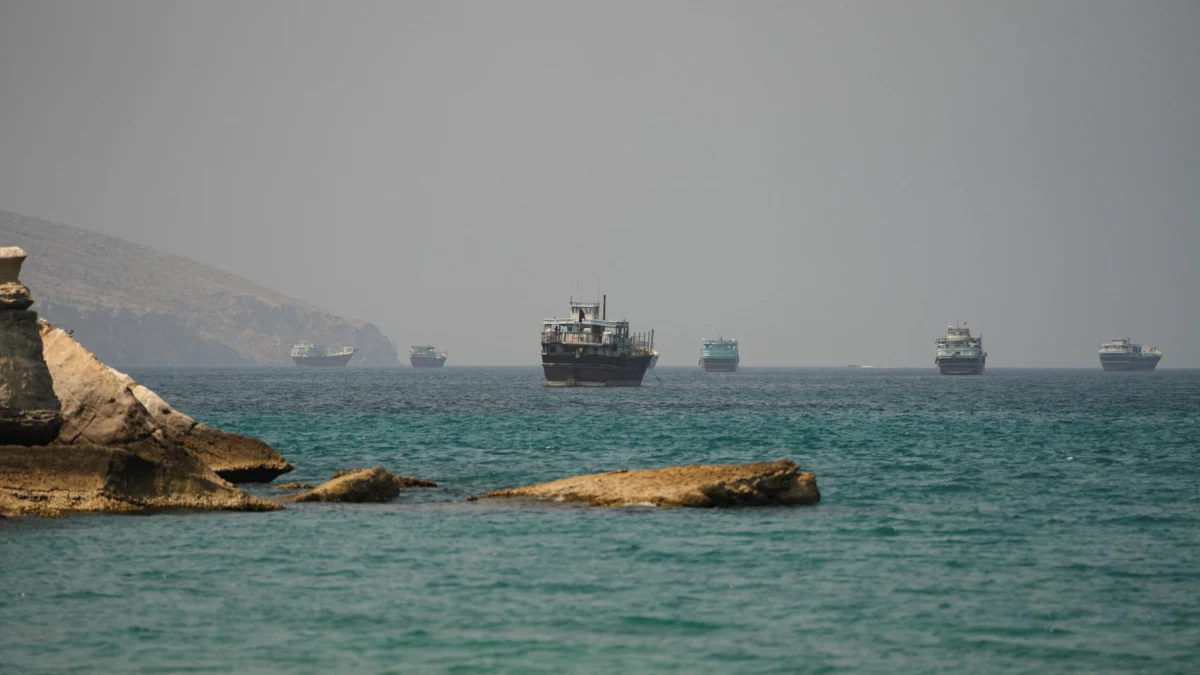
The United States military has released compelling video footage purporting to show an Iranian oil tanker sinking in the Gulf of Oman, an incident that immediately follows a stark warning from Iran’s chief negotiator regarding "heavier responses" to any further American strikes on its maritime assets. This development marks a significant escalation in the already fraught relationship between Washington and Tehran, raising serious concerns about regional stability and the security of global energy supplies. The release of the 16-second video, captured from an unspecified US surveillance asset, depicts a large vessel listing heavily before succumbing to the waves, its final moments shrouded in a plume of dark smoke, allegedly confirming the destruction of an Iranian-flagged oil carrier.
Escalating Tensions in the Gulf of Oman
The video, disseminated by the US Central Command (CENTCOM), is presented as irrefutable evidence of a successful US operation against what American officials describe as vessels engaged in illicit activities supporting Iranian regional proxies or military operations. While specific details about the nature of the alleged "US strikes" mentioned by the Iranian negotiator remain officially under wraps, the context strongly suggests a series of targeted actions against Iranian maritime interests, likely in retaliation for perceived Iranian provocations or attacks on international shipping in the crucial waterways of the Persian Gulf and the Arabian Sea.
Iran’s top negotiator, whose identity was widely understood to be a senior official responsible for security and foreign policy, delivered a fiery address following the alleged US strikes. He warned that Tehran would not tolerate such aggression, vowing "heavier responses" should the United States persist in its attacks. This rhetoric underscores a dangerous cycle of tit-for-tat actions that threatens to spiral into a broader confrontation. The term "heavier responses" could encompass a range of retaliatory measures, from direct military action against US assets or allied targets in the region, to intensified support for proxy groups, cyberattacks, or even disruptions to the vital shipping lanes of the Strait of Hormuz, a chokepoint through which a significant portion of the world’s oil transits daily.
The sinking of an Iranian oil tanker carries substantial symbolic and economic weight for Tehran. Iran’s oil exports, already heavily constrained by international sanctions, are a lifeline for its economy. Any disruption to these exports, whether through direct military action or intensified interdiction efforts, exacerbates the country’s economic woes and fuels domestic discontent, potentially pushing the regime to adopt more aggressive postures abroad.
The Strategic Importance of the Strait of Hormuz
The Strait of Hormuz, a narrow waterway separating Iran and Oman, is arguably the most critical oil chokepoint in the world. Approximately 20% of global petroleum consumption and 30% of all seaborne traded oil passes through this strait annually. This equates to roughly 21 million barrels per day, transported by oil tankers from Saudi Arabia, Iran, UAE, Kuwait, and Iraq. The strait’s strategic significance extends beyond oil, as it is also a key route for liquefied natural gas (LNG) exports. Any disruption to traffic through Hormuz, whether intentional or accidental, can send shockwaves through global energy markets, leading to sharp spikes in oil prices, increased shipping insurance premiums, and potential supply chain crises.
The Gulf of Oman, where the latest incident occurred, lies just outside the Strait of Hormuz. While technically less confined than the strait itself, it remains a critical maritime corridor linking the Persian Gulf to the open ocean, making it a frequent flashpoint for maritime incidents and naval confrontations. The presence of both US and Iranian naval forces, often operating in close proximity, creates an environment ripe for miscalculation and accidental escalation.
A History of Confrontation: US-Iran Relations
The current heightened tensions are deeply rooted in a long and complex history of antagonism between the United States and Iran, which intensified significantly following the US withdrawal from the Joint Comprehensive Plan of Action (JCPOA), commonly known as the Iran nuclear deal, in 2018. The Trump administration subsequently reimposed crippling sanctions on Iran, initiating a "maximum pressure" campaign aimed at curtailing Iran’s nuclear program, ballistic missile development, and its regional influence.
This policy has led to a series of escalatory actions:
- 2019 Tanker Attacks: A series of mysterious attacks on oil tankers in the Gulf of Oman and near the Strait of Hormuz were attributed by the US to Iran, which Tehran denied. These incidents highlighted the vulnerability of commercial shipping in the region.
- Drone Shootdowns: Iran shot down a US surveillance drone in June 2019, claiming it violated Iranian airspace, a claim the US denied.
- Attacks on Saudi Oil Facilities: In September 2019, drone and missile attacks on Saudi Aramco oil facilities, though claimed by Yemen’s Houthi rebels, were widely attributed to Iran by the US and its allies.
- Assassination of Soleimani: The US assassination of Iranian Major General Qassem Soleimani in January 2020 in Baghdad led to direct Iranian ballistic missile strikes on US bases in Iraq, injuring dozens of American troops.
- Houthi Attacks in Red Sea: More recently, Iranian-backed Houthi rebels in Yemen have intensified attacks on commercial shipping in the Red Sea, ostensibly in solidarity with Palestinians, prompting retaliatory strikes from a US-led international coalition. These actions underscore Iran’s capacity to project power and disrupt shipping through its proxies.
The 2026 timeframe implied by the original snippet suggests a continuation, and indeed an intensification, of these dynamics. It posits a scenario where US patience has worn thin with alleged Iranian maritime aggression or support for proxy actions, leading to direct military intervention against Iranian assets.
Chronology of Recent Events Leading to Escalation (Hypothetical for 2026)
To understand the context of the tanker sinking and Iran’s warning, it’s crucial to consider a plausible sequence of events leading up to this flashpoint in mid-2026:
- Early 2025: Diplomatic efforts to revive the JCPOA remain stalled, with both sides blaming the other for intransigence. Iran continues to expand its uranium enrichment activities beyond limits set by the original deal.
- Late 2025: Reports surface of increased Iranian harassment of commercial vessels, particularly those associated with Western or allied nations, near the Strait of Hormuz. Several minor incidents of vessels being temporarily detained or approached by IRGC speedboats are reported.
- January 2026: A major cyberattack, attributed by Western intelligence to Iran, targets critical infrastructure in a Gulf Arab state, causing widespread disruption and heightening regional tensions.
- February 2026: A US Navy vessel is reportedly targeted by a drone, allegedly launched by an Iranian-backed militia, while transiting the Gulf of Oman. No significant damage or casualties, but Washington issues a strong condemnation and warning.
- March 2026: Iran announces the deployment of new, advanced missile systems along its southern coast, capable of targeting vessels throughout the Persian Gulf and parts of the Arabian Sea.
- April 2026: In a perceived retaliatory move for the drone incident and ongoing harassment, the US conducts its first confirmed "defensive strike" against an Iranian Revolutionary Guard Corps (IRGC) naval outpost on a remote island in the Persian Gulf, citing threats to freedom of navigation. Iran condemns the strike but does not immediately retaliate militarily.
- May 2026: A series of intelligence reports indicate Iran is using "ghost tankers" – vessels that turn off their transponders to avoid detection – to circumvent sanctions and transport larger quantities of oil, often to destinations in Asia. Some of these tankers are suspected of carrying refined petroleum products that could be used by regional proxy groups.
- Early June 2026: The US issues a final warning, reiterating its commitment to freedom of navigation and maritime security, and stating that it would take "all necessary measures" to counter threats to international shipping and stability.
- Mid-June 2026: US intelligence identifies multiple Iranian-flagged oil tankers, operating without transponders and suspected of carrying illicit cargo, in the Gulf of Oman. Following what the US describes as a failure to comply with warnings, American forces execute targeted strikes against these vessels.
- June 6, 2026: One of the targeted Iranian tankers, identified in the recently released video, sinks in the Gulf of Oman. Concurrently, Iran’s chief negotiator issues his warning of "heavier responses."
This hypothetical timeline illustrates a plausible progression of events that could lead to the dramatic confrontation seen in the news snippet.
International Reactions and Diplomatic Fallout
The escalating situation has drawn widespread international concern, with various actors issuing statements and engaging in frantic diplomatic efforts to avert a full-blown regional conflict.
- United States: Official statements from the Pentagon and the State Department have emphasized the US commitment to freedom of navigation, regional security, and the protection of its forces and allies. They assert that any actions taken are defensive and aimed at deterring Iranian aggression and illicit activities. They are likely to present the video as proof of Iran’s non-compliance with international norms and as justification for their actions.
- Iran: The Iranian Foreign Ministry has vehemently condemned the US actions as acts of state terrorism and a blatant violation of international law and Iranian sovereignty. They accuse the US of destabilizing the region and have likely lodged formal complaints with the United Nations. The IRGC has reiterated its readiness to defend Iran’s interests and has warned that the entire region is within range of its missile capabilities.
- United Nations: The UN Secretary-General has likely called for immediate de-escalation, urging both parties to exercise maximum restraint and resolve their differences through dialogue. The UN Security Council might convene emergency sessions, though consensus on a unified response would be challenging given the geopolitical divides.
- European Union: The EU, a proponent of the JCPOA, would express deep concern over the unraveling of diplomatic efforts and the potential for a wider conflict. They would likely call for a return to the negotiating table and protection of the nuclear deal, while also urging respect for international maritime law.
- Regional Allies (Saudi Arabia, UAE, Oman): While generally supportive of US efforts to counter Iranian influence, these nations would express profound apprehension about the proximity of conflict to their borders. They would likely call for calm and emphasize the need to secure vital shipping lanes, potentially increasing their own defense readiness and intelligence sharing with the US. Oman, given its strategic location and historical role as a mediator, would likely intensify its diplomatic efforts to de-escalate.
- China and Russia: These nations, both permanent members of the UN Security Council and often critical of US unilateralism, would likely condemn the US strikes as provocative and a violation of international law. They would call for restraint from all parties and emphasize the importance of multilateral diplomacy, while likely reiterating their support for Iran’s right to develop its peaceful nuclear program (within international agreements).
Economic Repercussions on Global Energy Markets
The immediate aftermath of such an incident typically sees a significant reaction in global energy markets. Oil prices would likely surge, driven by fears of supply disruptions from the Strait of Hormuz. Analysts would project potential increases of 10-20% or more, depending on the perceived risk of further escalation.
- Shipping Costs: Insurance premiums for vessels operating in the Persian Gulf and Gulf of Oman would skyrocket, making shipping more expensive and potentially deterring some carriers from entering the region. This could lead to rerouting of vessels, increasing transit times and overall logistical costs for global trade.
- Global Economy: Higher energy costs would ripple through the global economy, impacting inflation, transportation, manufacturing, and consumer spending. This comes at a time when many economies are already grappling with post-pandemic recovery challenges and persistent inflationary pressures.
- Sanctions Impact: The incident would further complicate Iran’s efforts to export oil, even through clandestine means, potentially tightening the economic noose around Tehran and exacerbating its domestic economic challenges. This could, paradoxically, make the regime more desperate and prone to risk-taking.
- Strategic Reserves: Major oil-consuming nations might consider releasing oil from their strategic petroleum reserves to stabilize prices, but this is a temporary measure and doesn’t address the underlying geopolitical risk.
The Path Forward: Risks and Diplomatic Challenges
The current trajectory points to a dangerous escalation that carries profound risks for regional stability and the global economy. The US, having demonstrated its willingness to use force to protect its interests and uphold freedom of navigation, now faces the challenge of deterring further Iranian retaliation without triggering an all-out war. Iran, feeling the pressure of sanctions and direct military action, must weigh its options for retaliation carefully, balancing its desire to project strength against the potentially catastrophic consequences of a direct confrontation with the United States.
Diplomatic channels, though strained, remain critical. International mediators, possibly Oman or European nations, will likely intensify their efforts to facilitate back-channel communications and de-escalation agreements. The long-term challenge remains finding a sustainable solution to the US-Iran nuclear and regional security issues, which have festered for decades. Without a comprehensive framework for dialogue and mutual security guarantees, the region will remain a tinderbox, susceptible to flare-ups with global implications. The sinking of an Iranian tanker in the Gulf of Oman is not merely an isolated incident; it is a stark indicator of a dangerously volatile geopolitical landscape, demanding urgent and concerted international action to prevent further descent into conflict.
