

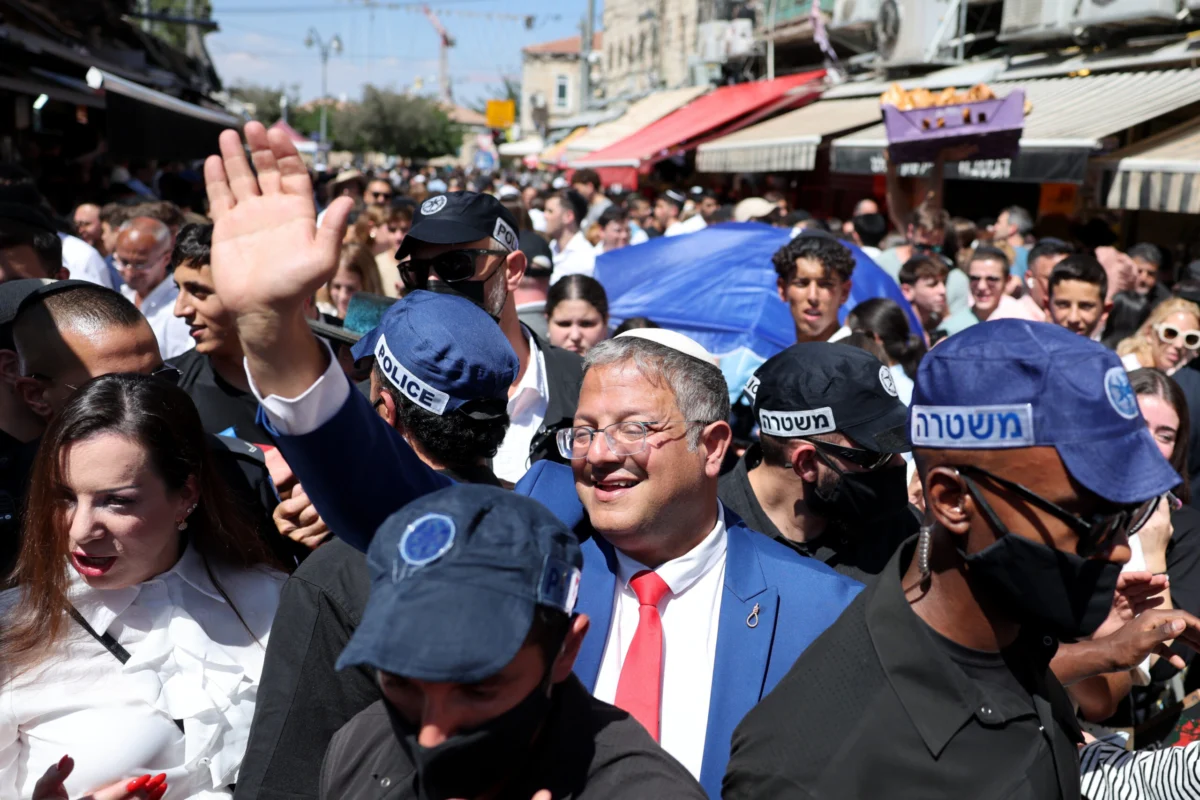
Last week witnessed a significant escalation in rhetoric from far-right Israeli ministers, who more forcefully advocated for the wholesale removal of Palestinians from the Gaza Strip. These proposals, detailing potential timelines and government mechanisms for what international law considers illegal forced expulsions, emerged against a backdrop of continued displacement, demolitions, and killings across both Gaza and the occupied West Bank, further exacerbating an already dire humanitarian situation.
Calls for Mass Displacement and International Rejection
Israeli Defence Minister Israel Katz publicly declared at a conference on Wednesday that removing Palestinians from Gaza constitutes "the only solution." He asserted Israel’s preparedness to execute such a plan "by sea, by air and by every way possible," further claiming that former US President Donald Trump had merely "frozen" – not cancelled – his support for the contentious idea. This statement immediately drew international scrutiny, given the profound legal and ethical implications of mass population transfers.
Following Katz’s remarks, National Security Minister Itamar Ben-Gvir unveiled a seven-year plan, provocatively branded "Disengagement 710," aimed at removing Gaza’s approximately two million residents. Ben-Gvir framed this as "voluntary emigration," a term widely criticized by human rights organizations as a euphemism for forced displacement, particularly given the coercive conditions under which Palestinians in Gaza currently live. He further indicated his intention, if re-elected, to establish a dedicated "Migration Ministry" to facilitate the expulsion of Palestinians, signaling a clear governmental intent behind the proposals.
The international community was swift to react to these alarming pronouncements. The US State Department, while stopping short of directly condemning Katz or Ben-Gvir by name, issued a clear statement affirming that it "does not support any plan or proposal for the forced displacement, expulsion, or mandatory transfer of the population of Gaza." This nuanced diplomatic response highlights the delicate balance the US attempts to strike between its alliance with Israel and its adherence to international legal norms, which prohibit forced displacement as a war crime. Human rights organizations and numerous international bodies, including the United Nations, have consistently condemned any rhetoric or actions suggesting the mass expulsion of populations, citing the Fourth Geneva Convention and other foundational principles of international humanitarian law. Such actions, if implemented, would constitute grave breaches of international law and could amount to ethnic cleansing.
Gaza: A Rising Death Toll and Deepening Humanitarian Catastrophe
The rhetoric of displacement unfolded concurrently with a relentless continuation of violence and a deepening humanitarian crisis within the Gaza Strip. Near-daily strikes have kept Gaza’s death toll climbing, painting a grim picture of persistent conflict.
On Tuesday, an Israeli special forces raid near Gaza City’s American hospital resulted in the deaths of at least four Palestinians, including two children and a woman. The raid culminated in the capture of Moin al-Arabeed, whom Israel identified as the head of Hamas’s internal security. The following day, a drone strike tragically killed a child in the densely populated Jabalia refugee camp, while a separate attack on a tent in Khan Younis claimed another life. These incidents underscore the pervasive danger faced by civilians, even in areas often considered shelters or residential zones.
Thursday saw two more Palestinians, including a 13-year-old, shot dead near Beit Lahia after Israel reported they had "crossed into an Israeli-controlled area." Separately, a drone strike killed a man near a church compound in Gaza City’s Remal neighbourhood. The violence continued unabated through the week’s end. On Sunday alone, an Israeli attack near a school in Gaza City wounded several individuals, and a drone strike on a car near Gaza City’s Hamid intersection killed Youssef Akila and his young daughter, Wafaa, further illustrating the indiscriminate nature of some attacks.
The early hours of Monday brought more tragedy, with at least five additional Palestinians killed in Gaza. Among the victims was three-year-old Saadi Ghalia, who died when an artillery shell struck a school in Deir el-Balah, which was sheltering displaced people. This particular incident highlights the extreme vulnerability of those seeking refuge from the conflict, as even designated safe havens become targets.
By Monday, the Palestinian Ministry of Health reported a staggering 73,658 people killed and 174,622 wounded since October 2023. This updated figure included 160 additional deaths certified and added to the casualty count. Alarmingly, more than 1,340 of these deaths have occurred since the October 2025 Israeli-Hamas "ceasefire," indicating that the cessation of major hostilities did not translate into an end to violence. These figures represent a catastrophic loss of life, with a significant proportion of casualties being women and children, as consistently reported by UN agencies and humanitarian organizations.
Amidst the ongoing violence, the slow and arduous process of recovering bodies from under the rubble has continued. On Sunday, families in northern Gaza held funerals for approximately 100 people, including 60 children, whose remains were painstakingly pulled from the wreckage of Gaza City’s Zeitoun neighbourhood. Many of the deceased were members of the extended Malaka family, underscoring the profound impact of the conflict on entire lineages and communities. Raed al-Dahshan, Gaza’s civil defence chief, informed Al Jazeera that his teams estimate around 8,000 more bodies remain under the rubble. He warned that with adequate heavy equipment, these could be recovered within 90 days, but without it, "this work will continue for years." Current estimates suggest between 10,000 and 14,000 people remain missing under Gaza’s rubble, a testament to the scale of destruction and the lingering trauma.
The humanitarian situation in the Gaza Strip continues its precipitous decline, primarily due to insufficient aid access and the systematic destruction of infrastructure. The World Health Organization (WHO) issued a stark warning that water contamination in Gaza has nearly tripled since January, posing an immense public health risk. The Palestinian Water Authority reported the complete shutdown of all five of Gaza’s wastewater treatment plants, leading to the daily discharge of roughly 55,000 cubic metres of untreated sewage into the environment. This environmental catastrophe contaminates groundwater, spreads waterborne diseases, and further endangers a population already on the brink of famine and facing a collapsed healthcare system. Access to clean water, sanitation, and hygiene (WASH) services is critical for preventing epidemics, yet these essential services remain severely compromised or non-existent for the vast majority of Gaza’s residents. The blockade and restrictions on essential materials exacerbate these challenges, making reconstruction and rehabilitation nearly impossible.

West Bank: Demolitions, Settler Violence, and Villages Under Siege
While Gaza endured relentless bombardment and calls for displacement, the occupied West Bank also experienced a surge in Israeli military operations, demolitions, and settler violence. These actions collectively contribute to a systematic pattern of displacement and control over Palestinian land and resources.
This week, Israeli forces carried out devastating demolitions in the West Bank. In the community of Khirbet al-Tabban in Masafer Yatta, these demolitions were described as "absolute," razing all 12 remaining homes and rendering 70 people, including 30 children, homeless. Nidal Younis, the council head, lamented, "It’s wiping the village off the face of the earth." Despite the complete destruction, residents have vowed to rebuild, a common act of defiance and resilience in the face of ongoing displacement policies. Masafer Yatta, a cluster of Palestinian hamlets, has long been a flashpoint for such demolitions, as Israeli authorities seek to clear the area for military training zones and settlement expansion, a policy deemed illegal under international law.
Further impacting Palestinian livelihoods, Israeli forces also destroyed four water wells and several greenhouses in nearby Beit Ummar in Hebron, causing an estimated $60,000 in losses for local farmers. Additionally, a home was demolished in Nahalin in Bethlehem governorate. Around Jenin, the systematic bulldozing of hundreds of farmers’ trees continued along the Arraba-Yabad and Jenin-Nablus roads. This destruction is part of six military orders issued in August to clear vegetation from across four Jenin-area villages, according to the Palestinian Wafa news agency. Such actions, often justified by Israel as security measures, are viewed by Palestinians as a deliberate strategy to confiscate land, disrupt agricultural economies, and facilitate the expansion of settlements and bypass roads.
In occupied East Jerusalem’s al-Bustan neighbourhood, community representative Fakhri Abu Diab reported that municipal bulldozers demolished a four-apartment building, marking the 60th demolition in that area since October 2023. On Monday morning, another home was demolished in the East Jerusalem neighbourhood of Beit Hanina. In a further illustration of coercive policies, authorities forced a Palestinian man in the city’s Jabal al-Mukaber area to demolish his own home, a common tactic to avoid exorbitant demolition fees imposed by Israeli municipalities. These demolitions in East Jerusalem are often carried out under the pretext of lacking Israeli-issued building permits, which Palestinians argue are nearly impossible to obtain, reflecting a discriminatory planning policy aimed at limiting Palestinian growth in the city.
Beyond property destruction, last week’s most sustained violence centred on al-Mughayyir, northeast of Ramallah. Settlers and soldiers jointly raided the village on Wednesday evening, alleging that residents had stolen livestock. Snipers took rooftop positions, opening fire as residents attempted to prevent settlers from stealing sheep, resulting in the deaths of Khalil Abu Alia, 16, and Mohammad Nassan, 19. The Israeli military claimed troops were "securing the retrieval of livestock belonging to Israeli civilians" when a "violent riot" erupted, and soldiers "fired at key instigators." However, eyewitnesses reported Nassan was shot in the back, challenging the military’s narrative. In the days following the incident, mourners were reportedly beaten and pepper-sprayed, their vehicle stolen, and an ambulance attacked, highlighting a pattern of impunity for settler violence and military aggression.
The wave of settler violence continued elsewhere. Wafa reported late on Sunday that Israeli settlers killed Omar Tubasi, 20, and injured three others when they raided and opened fire on the village of Hajja, east of Qalqilya governorate. In Umm al-Khair in the South Hebron Hills, settlers stormed the community on Friday, injuring a child. When soldiers arrived, they declared the area a "closed military zone," but this order was enforced only for Palestinians, while the settlers remained, demonstrating a clear bias in enforcement. In Turmus Ayya, north of Ramallah, a settler wearing a T-shirt bearing the logo of the outlawed Kach movement (a far-right, racist Israeli political party) was filmed atop a Palestinian home declaring "this land is Jewish." This provocative act occurred shortly after US Ambassador Mike Huckabee visited the town and publicly condemned settler violence as "a form of terrorism," underscoring the ongoing challenge of addressing extremist elements.
Further south, a month-long siege of three homes continued in Qusra, south of Nablus, with the army initially blocking roughly 100 peace activists from delivering food and medicine to the besieged residents. In the Jordan Valley, settlers stole water tanks and livestock, and sabotaged water lines serving a Bedouin encampment near Tayasir in the northern West Bank, according to reports and photos from local Palestinian activists. These actions are part of a broader strategy to dispossess Bedouin communities and seize control of water resources in the Jordan Valley, a vital agricultural region.
The week’s violence also reached East Jerusalem’s Old City, where Israeli police shot and killed Ibrahim al-Hendi, 33, from Beit Hanina, near Damascus Gate on Friday. Police claimed he had attempted to stab an officer, an account often disputed by Palestinian eyewitnesses in similar incidents. These extrajudicial killings in Jerusalem frequently ignite further tensions in the already volatile city.
Broader Implications and International Response
The escalating calls for mass displacement from Gaza, coupled with the persistent violence and humanitarian catastrophe in Gaza and the West Bank, have profound implications for regional stability and the prospects for a just and lasting peace. The explicit proposals for "transfer" by senior Israeli ministers are seen by many as a dangerous normalization of a concept widely condemned under international law. Such rhetoric fuels fears among Palestinians of a second Nakba, referencing the 1948 displacement of hundreds of thousands during the establishment of Israel.
The US response, while rejecting forced displacement, has been criticized for not explicitly condemning the ministers, thereby potentially creating a perception of tacit approval or insufficient pressure. International human rights organizations, including Amnesty International and Human Rights Watch, have repeatedly called for stronger international action to protect Palestinian civilians, investigate alleged war crimes, and hold perpetrators accountable. The ongoing humanitarian crisis in Gaza, exacerbated by the proposals for mass expulsion, demands an urgent and robust international response to ensure aid delivery, protect civilians, and uphold international law.
The continuation of demolitions and settler violence in the West Bank further entrenches the occupation, fragments Palestinian communities, and undermines the viability of a future Palestinian state. The close coordination between settlers and the Israeli military in incidents like al-Mughayyir raises serious concerns about accountability and the rule of law in the occupied territories.
Ultimately, the events of the past week underscore a deeply entrenched and worsening conflict, characterized by increasing extremism in political discourse, a devastating human toll, and a systematic erosion of international legal norms. The international community faces a critical challenge to uphold its commitments to human rights and international law, to prevent further displacement and violence, and to work towards a political resolution that respects the rights and dignity of all people in the region.
