

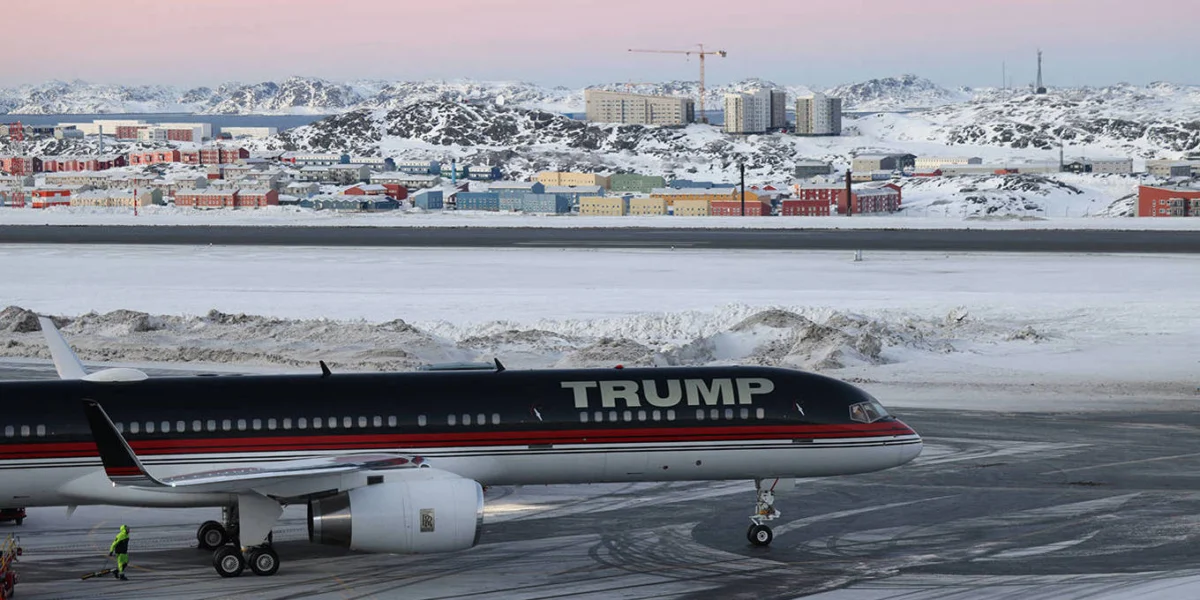
The audacious sharing of a map by then-US President Donald Trump, depicting the American flag encompassing not only the United States but also vast swathes of Canada, Cuba, Greenland, and Mexico, has sent shockwaves through the international community, signaling a disturbing resurgence of territorial revisionism. This act, amplified by his consistent rhetoric challenging established international borders and norms, has already emboldened nations like Argentina and Morocco to re-examine their own territorial claims, while seemingly granting Israel a de facto license for unilateral action. This provocative display by a global superpower, coupled with its potential to normalize justifications for territorial expansion based on nebulous national-security concerns, suggests that the post-World War II international order, built on principles of sovereignty and territorial integrity, is facing an unprecedented existential challenge.
The Genesis of a New Territorial Ambition
The incident in question, which occurred on September 10, 2026, according to archival records, involved a post shared by Donald Trump on the social media platform Truth Social. The accompanying visual, a stylized map, superimposed the Stars and Stripes over numerous sovereign nations, sparking immediate widespread condemnation and concern. While the precise intent behind the map’s dissemination remains subject to interpretation, its alignment with Trump’s long-standing "America First" foreign policy and his documented skepticism towards multilateral institutions and international agreements provides a crucial context.
This was not an isolated incident. Throughout his presidency and in his post-presidency pronouncements, Trump has consistently questioned the legitimacy of existing borders, advocated for a more transactional approach to international relations, and expressed a willingness to disregard established diplomatic protocols when he deemed them not to serve American interests. His administration’s approach to issues such as the US-Mexico border wall, its withdrawal from international agreements like the Paris Climate Accord and the Iran nuclear deal, and its questioning of long-standing alliances all contributed to an environment where the sanctity of international borders was perceived as increasingly negotiable.
Argentina and Morocco: Echoes of Past Grievances
The most immediate and tangible consequences of this perceived shift in global norms have manifested in the revival of long-dormant territorial disputes. Argentina, for instance, has intensified its long-standing claim to the Falkland Islands, known as the Islas Malvinas in Argentina. Historically, Argentina has asserted sovereignty over the islands, which are currently administered by the United Kingdom. Following Trump’s map revelation and his administration’s perceived endorsement of unilateral territorial assertions, Buenos Aires has reportedly increased diplomatic pressure on London and has begun to re-examine legal avenues to bolster its claim. This resurgence is not entirely new, but Trump’s rhetoric appears to have provided a perceived opening and a justification for more assertive action.
Similarly, Morocco has reportedly renewed its focus on its territorial claims over Western Sahara. The United Nations has long recognized Western Sahara as a non-self-governing territory, with a dispute over its sovereignty between Morocco and the Polisario Front, which seeks independence for the region. Morocco annexed much of Western Sahara in 1975, a move not recognized by the UN. The perception that a powerful nation like the US might be signaling a willingness to countenance territorial adjustments, especially under the guise of strategic advantage or national security, could embolden Morocco to pursue a more aggressive stance in its long-standing territorial dispute.
Israel’s Strategic Latitude
The article also suggests that Trump’s approach has effectively granted Israel "carte blanche to operate where it sees fit." This statement likely alludes to the US administration’s policies regarding Israeli settlements in the occupied Palestinian territories and its stance on Jerusalem. Historically, the US has often aligned with Israel on these contentious issues, but Trump’s administration took these alignments to new levels, including moving the US embassy to Jerusalem and refraining from condemning settlement expansion as a violation of international law. The implication is that by signaling a disregard for established international norms and borders elsewhere, Trump has inadvertently, or perhaps intentionally, created an environment where Israel feels less constrained by international scrutiny and legal frameworks when pursuing its own strategic objectives in the region, particularly concerning its territorial control and expansionist policies.
The Slippery Slope of National Security Claims
The most profound implication of Trump’s actions, as highlighted in the original content, lies in the precedent it sets for the broader international order. The argument that a nation can claim land and resources based on "vague national-security claims" is a dangerous one. This justification has historically been used by authoritarian regimes to rationalize aggression and expansionism. If the United States, a beacon of democracy and a proponent of the existing international system, begins to legitimize such claims, it risks eroding the very foundations of international law and cooperation.
Supporting Data and Historical Context
The concept of territorial revisionism is not new. The 20th century was replete with examples, from the expansionist policies of Nazi Germany to the Soviet Union’s annexation of territories during and after World War II. The post-World War II era, marked by the establishment of the United Nations and a commitment to the principle of territorial integrity, was largely an attempt to prevent such destructive tendencies.
However, the current geopolitical landscape, characterized by rising nationalism, the weakening of multilateral institutions, and the increasing assertiveness of major powers, has created fertile ground for a resurgence of these older patterns. The Global Peace Index, for instance, has shown a gradual decline in global peacefulness in recent years, with factors such as increased political instability, ongoing conflicts, and rising military spending contributing to this trend.
Reactions and Analysis
The immediate aftermath of Trump’s map sharing saw a flurry of diplomatic activity and public statements. Many US allies expressed grave concern, with leaders from Canada, Mexico, and European nations calling for clarification and reaffirming their commitment to international law and territorial sovereignty. UN officials issued strong statements condemning any attempts to redraw borders through unilateral action and emphasizing the importance of diplomatic solutions.
Conversely, some nations that have their own unresolved territorial claims may have viewed Trump’s actions with a degree of cautious optimism, seeing it as a potential signal of a changing global dynamic. However, the overwhelming consensus among international legal scholars and foreign policy experts has been one of alarm. They argue that such actions, if unchecked, could lead to a chaotic and unstable world order, where might truly does make right, and where the rights of smaller nations are further imperiled.
Broader Implications and Future Outlook
The long-term implications of this shift are significant. If the international community fails to robustly counter this trend, we could witness a cascade of territorial disputes erupting across the globe. This could lead to increased regional instability, humanitarian crises, and a diversion of resources away from critical global challenges such as climate change, poverty, and public health.
The precedent set by a superpower adopting such a stance is particularly worrying for nations that are already vulnerable to external pressure or internal conflict. It undermines the very concept of a rules-based international order and opens the door to a return to an era of unbridled power politics. The challenge for the international community, therefore, is to reaffirm the principles of territorial integrity and sovereignty, to strengthen international law, and to hold nations accountable for any attempts to undermine the existing global order through aggressive territorial claims. The events of September 10, 2026, serve as a stark reminder of how fragile these foundational principles can be, and how quickly they can be challenged by a willingness to embrace a new era of territorial ambition.
