

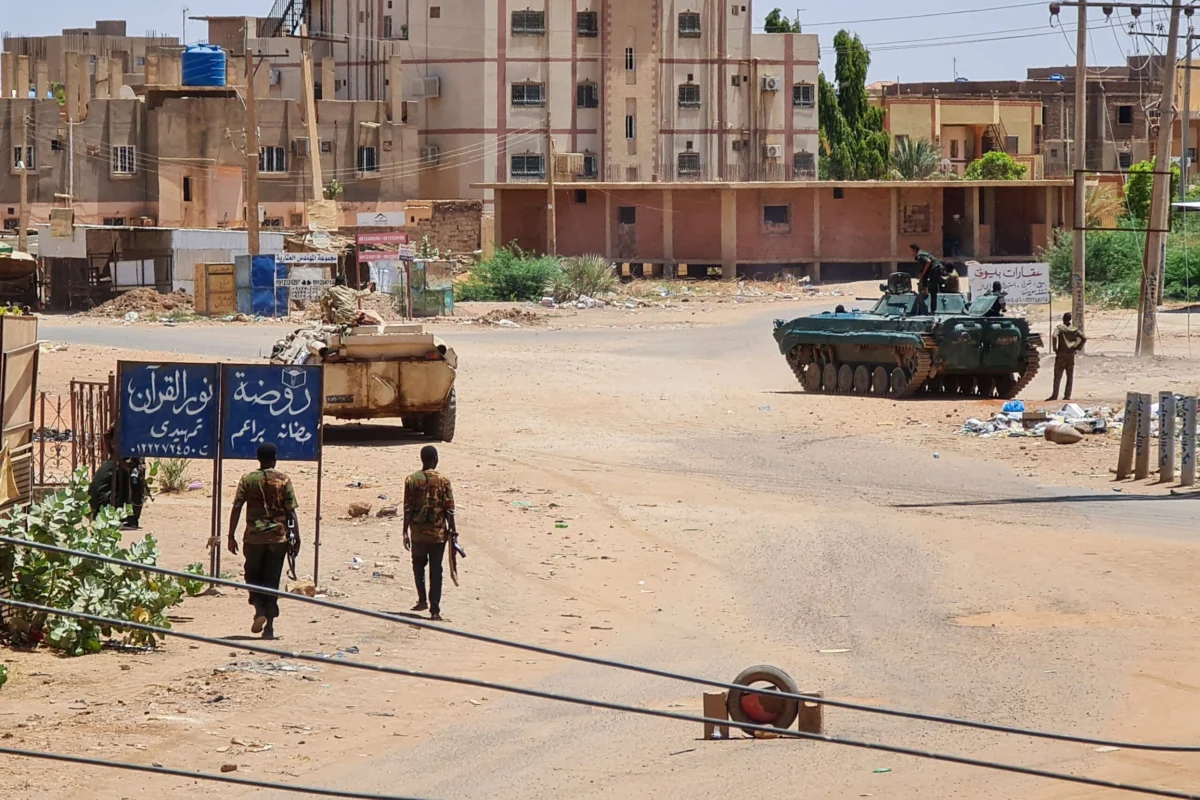
One month after the eruption of violent hostilities between Sudan’s primary military factions, the nation remains gripped by a devastating conflict that has paralyzed the capital, Khartoum, and ignited fresh instability in the long-suffering Darfur region. Despite high-stakes international mediation and the initiation of peace talks in Jeddah, Saudi Arabia, a viable resolution remains elusive. The power struggle between General Abdel Fattah al-Burhan, head of the Sudanese Armed Forces (SAF), and General Mohamed Hamdan Dagalo, known as Hemedti, leader of the paramilitary Rapid Support Forces (RSF), has transformed urban centers into battlefields, leaving millions of civilians caught in the crossfire of a war for total state control.
The humanitarian toll, as reported by the International Rescue Committee (IRC) and other global monitors, has reached staggering proportions. As of mid-May 2023, official records indicate that more than 600 individuals have been killed and over 5,000 injured. However, medical professionals on the ground and international observers warn that the true casualty count is likely significantly higher, as many deaths go unrecorded due to the collapse of the healthcare system and the inability of emergency services to reach active combat zones. Nearly one million people have been displaced, with hundreds of thousands seeking refuge in neighboring countries such as Egypt, Chad, and Ethiopia, while others remain internally displaced, facing acute shortages of food, water, and electricity.
The Roots of the Confrontation: From Transition to Turmoil
The current conflict is the culmination of a fractured political transition that began with the 2019 popular uprising that ousted long-time dictator Omar al-Bashir. Following Bashir’s removal, a fragile power-sharing agreement was established between civilian leaders and the military. However, this arrangement was abruptly terminated in October 2021, when Burhan and Hemedti orchestrated a joint military coup, dissolving the civilian-led government of Prime Minister Abdalla Hamdok.
While the two generals initially presented a united front to seize power, their alliance was one of convenience rather than shared vision. Tensions began to simmer over the proposed integration of the RSF into the regular Sudanese army—a key requirement for a return to civilian rule under a framework agreement signed in late 2022. Disputes over the timeline for this integration and the future chain of command became the primary flashpoint. Burhan sought a swift two-year integration process to bring the RSF under SAF control, while Hemedti pushed for a ten-year window that would allow him to maintain his independent power base and significant economic interests, largely tied to the country’s gold mines.
By early April 2023, the mobilization of RSF forces near military airbases signaled a breakdown in negotiations. On April 15, the first shots were fired in Khartoum, marking the transition from political deadlock to full-scale civil war.
A Chronology of the First Month of Fighting
The progression of the conflict has been marked by rapid escalation and the failure of multiple "humanitarian pauses."
- April 15, 2023: Heavy gunfire and explosions are reported in Khartoum. Both sides claim control of the Presidential Palace and Khartoum International Airport.
- April 18–20, 2023: Initial attempts at a 24-hour ceasefire fail within hours. The fighting spreads to Omdurman and Bahri, completing the siege of the capital region.
- April 25, 2023: A 72-hour ceasefire brokered by the United States and Saudi Arabia allows for the evacuation of foreign diplomats and some civilians, though skirmishes continue.
- May 5, 2023: Violence intensifies in West Darfur, particularly in the city of El Geneina, raising fears of a return to the genocidal violence witnessed in the early 2000s.
- May 11, 2023: Representatives from the SAF and RSF sign the "Jeddah Declaration of Commitment to Protect the Civilians of Sudan." While the document pledges to allow humanitarian aid, it does not include a formal ceasefire.
- May 15, 2023: One month since the outbreak, airstrikes continue to target RSF positions in residential areas of southern Khartoum, while the RSF maintains its presence in civilian neighborhoods, using them as defensive shields.
The Humanitarian Imperative and Economic Collapse
The International Rescue Committee has voiced grave concerns regarding the "secondary humanitarian crisis" unfolding alongside the kinetic warfare. Kurt Tjossem, IRC Vice President for East Africa, emphasized that the immediate needs are "immense and will be for a long time." The disruption of supply chains has led to a vertical spike in the price of basic commodities. In many parts of Khartoum, the price of fuel has increased by over 200%, and bread prices have doubled, rendering essentials unaffordable for the average citizen.
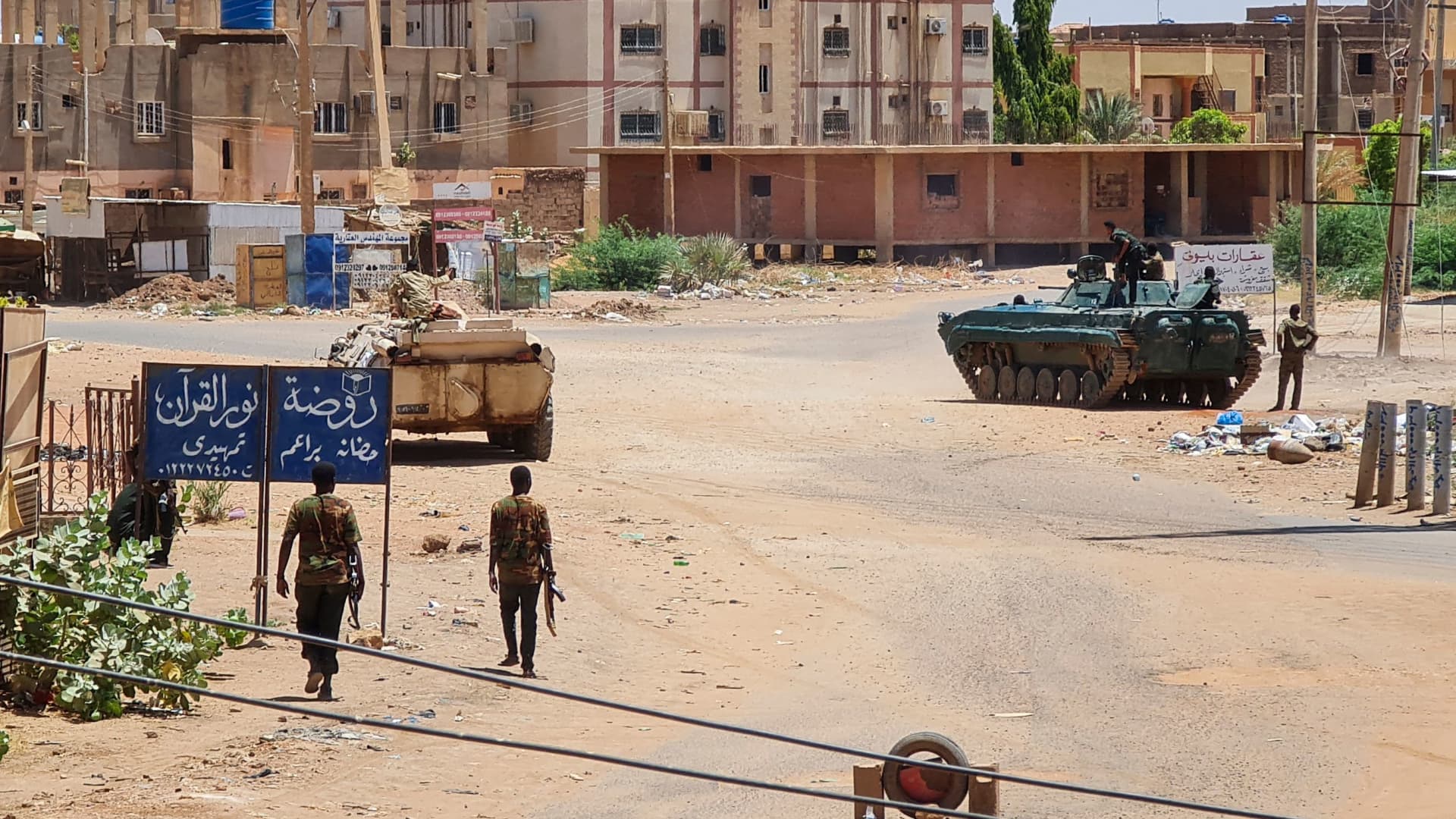
The infrastructure of the state is in a condition of near-total collapse. According to the World Health Organization (WHO), approximately 70% of hospitals in conflict-affected areas are non-functional. Many facilities have been shelled, while others have run out of oxygen, blood supplies, and essential medicines. Furthermore, the systematic looting of warehouses—including those belonging to the World Food Programme (WFP)—has hindered the delivery of aid to the 15 million people who were already facing food insecurity before the war began.
International Mediation and the Jeddah Talks
The diplomatic response has been led by a "Quad" consisting of the United States, Saudi Arabia, the United Arab Emirates, and the United Kingdom, alongside the United Nations and the African Union. The talks in Jeddah represent the most formal effort to date to bring the warring parties to the table. However, critics argue that the talks are fundamentally flawed because they exclude civilian voices and the "Resistance Committees" that have been the backbone of Sudan’s pro-democracy movement.
Andrew Mitchell, the U.K. Minister for International Development and Africa, recently urged the international community to break the "cycle of impunity" in Sudan. There is a growing consensus among international observers that without the threat of targeted sanctions against the generals’ financial assets, there is little incentive for either side to stop fighting. Both Burhan and Hemedti possess vast personal wealth and control over state resources, which allows them to sustain a protracted conflict.
Analysis: The Risk of State Failure and Regional Contagion
The implications of the Sudan conflict extend far beyond its borders. Sudan occupies a strategic position at the crossroads of the Sahel, the Horn of Africa, and the Red Sea. A total collapse of the Sudanese state would create a security vacuum that could be exploited by extremist groups and human traffickers, further destabilizing neighbors like Chad, the Central African Republic, and South Sudan.
Furthermore, the conflict is complicated by the involvement of external actors with vested interests. Egypt has traditionally supported the SAF, viewing a stable, traditional military as the best guarantor of its interests regarding the Nile waters. Conversely, the RSF has historically maintained ties with the UAE and has been linked to the Russian Wagner Group through its gold mining operations. These external entanglements make a negotiated settlement more difficult, as both sides believe they can achieve a military victory with the help of their foreign patrons.
The Civilian Voice: A Call for Accountability
Amidst the shelling, Sudanese civil society continues to demand a seat at the table. Activists like Yassmin Abdel-Magied have argued that the international community’s tendency to treat the two generals as the only legitimate stakeholders in Sudan’s future is a mistake that "rewards belligerence."
The "Resistance Committees"—informal, neighborhood-based networks—have stepped in where the state has failed. These groups are currently managing local clinics, distributing food, and organizing evacuations. Abdel-Magied and other civil society leaders argue that any lasting peace must be led by these grassroots organizations rather than external states seeking a "quick fix." They contend that the cycle of military coups will only end when there is genuine accountability for past atrocities and a clear path to a civilian-led government.
As the conflict enters its second month, the fear among many Sudanese is that the nation is sliding toward a state of permanent dysfunction. While total state failure is not yet inevitable, the window for a coordinated international intervention that prioritizes civilian protection and structural reform is rapidly closing. The "worst-case scenario"—a fragmented Sudan characterized by perpetual warlordism—remains a distinct possibility if the current trajectory of the conflict is not arrested through "intentional, diligent, and thought-through action."
