

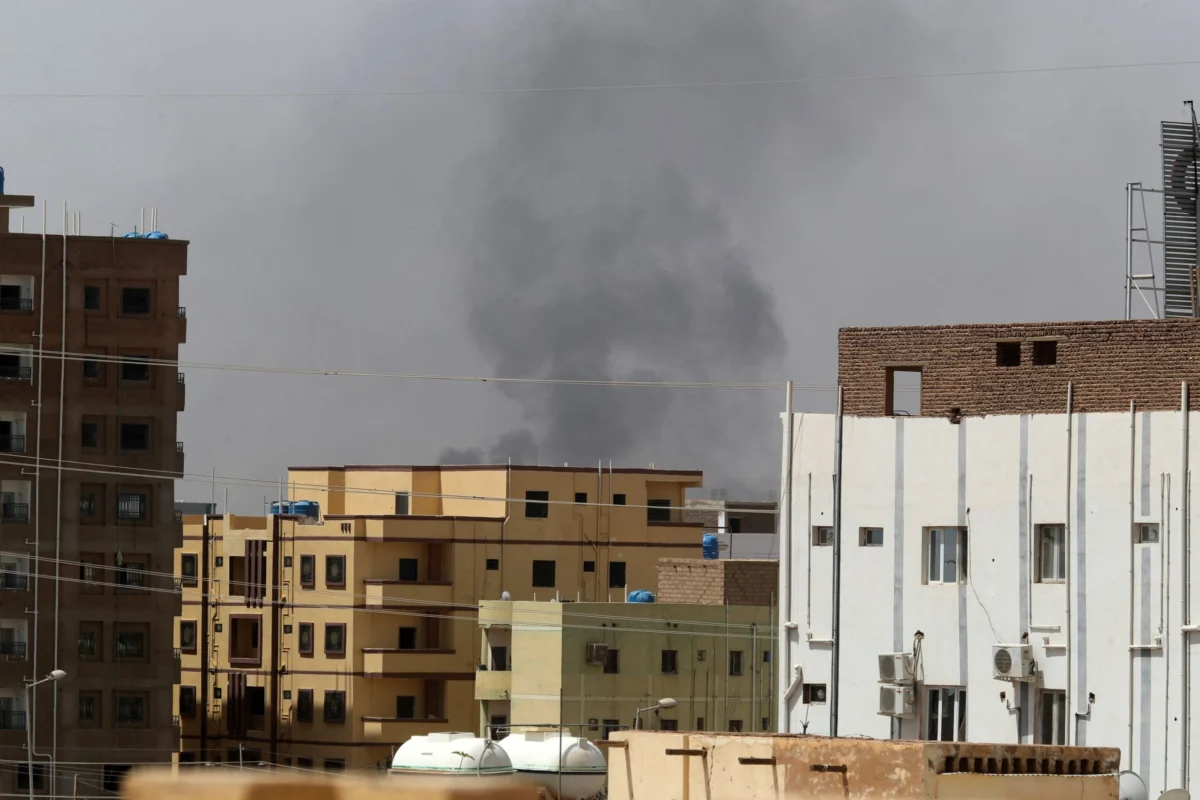
The signing of a week-long ceasefire agreement between the Sudanese Armed Forces and the paramilitary Rapid Support Forces has offered a glimmer of hope for a reprieve in a conflict that has devastated the nation for over a month, though sporadic fighting continues to echo through the streets of the capital. Brokered by the United States and Saudi Arabia following intensive negotiations in Jeddah, the deal is scheduled to take effect on Monday evening and includes a first-of-its-kind monitoring mechanism supported by international observers. Despite the formal commitment, residents of Khartoum reported the sounds of artillery and heavy machinery on Sunday, a sobering reminder of the challenges ahead in enforcing a truce where many previous verbal agreements have failed.
The conflict, which erupted on April 15, 2023, has fundamentally reshaped the landscape of Sudan, transforming the densely populated capital into a war zone and forcing over 1.1 million people to flee their homes. The Jeddah agreement marks a significant diplomatic milestone, as it represents the first written and signed truce between General Abdel Fattah al-Burhan’s army and General Mohamed Hamdan Dagalo’s RSF since the hostilities began. However, with neither leader present at the signing and both having previously vowed to achieve a total military victory, analysts remain cautious about the sustainability of the cessation of hostilities.
The Architecture of the Jeddah Agreement
The seven-day ceasefire is specifically designed to facilitate the delivery of urgent humanitarian assistance and the restoration of essential services, such as water, electricity, and telecommunications, which have been severely disrupted. Unlike previous unilateral or short-lived truces, this agreement includes a "Ceasefire Monitoring and Coordination Committee." This body is expected to be composed of representatives from the United States, Saudi Arabia, and the warring factions themselves, providing a formal channel to report and address violations in real-time.
The deal’s primary focus is the creation of safe corridors for the movement of civilians and the passage of aid convoys. For weeks, international aid organizations, including the World Food Programme and Médecins Sans Frontières, have struggled to reach those in need due to the insecurity of the roads and the frequent looting of warehouses. The success of the Jeddah deal hinges on whether the commanders on the ground—many of whom are operating in decentralized units across Khartoum’s sprawling neighborhoods—will adhere to the orders issued by their respective leadership.
A Timeline of Escalation: From Transition to Total War
The roots of the current violence are deeply embedded in the fractured political transition that followed the 2019 ousting of long-time autocrat Omar al-Bashir. For decades, the Sudanese military and various paramilitary groups maintained a precarious balance of power, which shifted dramatically after the 2021 coup led by Burhan and Dagalo (Hemedti).
- October 2021: The military and the RSF joined forces to dissolve the civilian-led transitional government, stalling the country’s path toward democratic elections.
- December 2022: Under international pressure, a framework agreement was signed to return to civilian rule, but tensions began to simmer over the timeline for integrating the RSF into the regular army.
- Early April 2023: The RSF began mobilizing forces in various parts of the country, including the northern city of Merowe, signaling a breakdown in negotiations between the two generals.
- April 15, 2023: Full-scale fighting broke out in Khartoum, with the RSF attempting to seize the presidential palace and the international airport, while the army responded with heavy airstrikes.
- May 11, 2023: The "Jeddah Declaration of Commitment to Protect the Civilians of Sudan" was signed, though it lacked a specific ceasefire mechanism until the current agreement was reached on May 20.
The central point of contention remains the command structure of the unified military. Hemedti sought a ten-year window for integration, while the army insisted on a two-year timeline, fearing that a prolonged period would allow the RSF to maintain an independent power base that could challenge the state’s authority.
The Humanitarian Crisis and Ground Realities
The human cost of the five-week conflict has been staggering. According to the World Health Organization (WHO), at least 705 people have been confirmed killed and over 5,200 injured. However, medical professionals and local activists in Khartoum suggest the actual death toll is significantly higher, as many bodies remain uncollected in the streets or are buried in makeshift graves within residential yards.
In Khartoum, Omdurman, and Bahri—the three cities making up the greater capital area—the infrastructure of daily life has largely collapsed. Residents report that nearly 70% of hospitals in conflict-affected areas are out of service. Those that remain open are operating with a critical shortage of fuel for generators, oxygen, and life-saving medications. Mass looting of banks, businesses, and private homes has left the population without access to cash or basic supplies.
"We are tired of this war," said Safaa Ibrahim, a 35-year-old resident who has seen her family scattered across borders. "We want to return to normal life and safety. Al-Burhan and Hemedti have to respect people’s desire for life." Her sentiment is echoed by millions who have spent weeks sheltering in the inner rooms of their homes to avoid stray bullets and shrapnel from aerial bombardments.
Displacement and Regional Destabilization
The conflict’s ripple effects are being felt far beyond Khartoum. The United Nations High Commissioner for Refugees (UNHCR) reports that the number of internally displaced persons has surpassed 840,000, while more than 250,000 people have crossed borders into neighboring Egypt, Chad, South Sudan, Ethiopia, and the Central African Republic.
The situation in Darfur, particularly in West Darfur’s capital, El Geneina, is especially dire. Reports of ethnically motivated violence have emerged, drawing comparisons to the genocide that occurred in the region two decades ago. In Darfur, the conflict between the army and the RSF has reignited long-standing tribal tensions, leading to the burning of markets and the destruction of displacement camps. The influx of refugees into Chad, a country already struggling with its own internal security and economic challenges, threatens to destabilize one of the world’s most fragile regions.
Official Responses and Tactical Shifts
As the ceasefire deadline approaches, senior military officials have defended their tactics while acknowledging the strain on the civilian population. General Yassir al-Atta, a senior army commander, stated on national television that the military’s operations are focused on dislodging RSF fighters who have embedded themselves in civilian infrastructure, including hospitals and schools.
"Let them arm themselves to protect themselves; that is a natural right," Atta said, responding to reports of tribal leaders calling for civilian mobilization. This rhetoric has raised concerns among international observers that the conflict could devolve into a full-scale civil war with ethnic overtones, complicating future peace efforts.
The RSF, for its part, has accused the army of using indiscriminate airstrikes that hit residential blocks. The paramilitary group has utilized its high mobility and knowledge of the urban terrain to maintain positions in central Khartoum, using the city’s dense architecture as a shield against the army’s superior air power.
Fact-Based Analysis of Implications
The success of the Jeddah agreement will serve as a litmus test for the influence of international mediators and the internal discipline of the warring factions. If the ceasefire holds, it could pave the way for more substantive political negotiations. If it fails, it may signal that the conflict has entered a phase of attrition where neither side believes it can lose, and neither is willing to compromise.
Several factors complicate the path to peace:
- Command and Control: There is significant uncertainty regarding whether the top leadership in Jeddah can effectively control frontline fighters who may be motivated by local grievances or the spoils of looting.
- Economic Collapse: Sudan’s economy, already reeling from years of inflation and sanctions, is in a state of freefall. The destruction of the industrial base in Khartoum means that even if the fighting stops, the path to recovery will take decades.
- The Role of Civilian Stakeholders: While the Jeddah talks have focused on the two military factions, Sudanese civilian pro-democracy groups insist that any permanent peace deal must include a return to the civilian-led transition. They argue that a deal between the two generals that excludes the public will only lead to a temporary pause before the next cycle of violence.
The international community remains focused on the immediate humanitarian objective. The United States and Saudi Arabia have emphasized that this short-term ceasefire is not an end in itself but a necessary step to prevent a total humanitarian catastrophe. As the clock ticks toward the Monday evening deadline, the people of Sudan wait with a mixture of hope and skepticism, knowing that in the past, the silence of the guns has often been nothing more than a prelude to a louder, more violent storm.
