

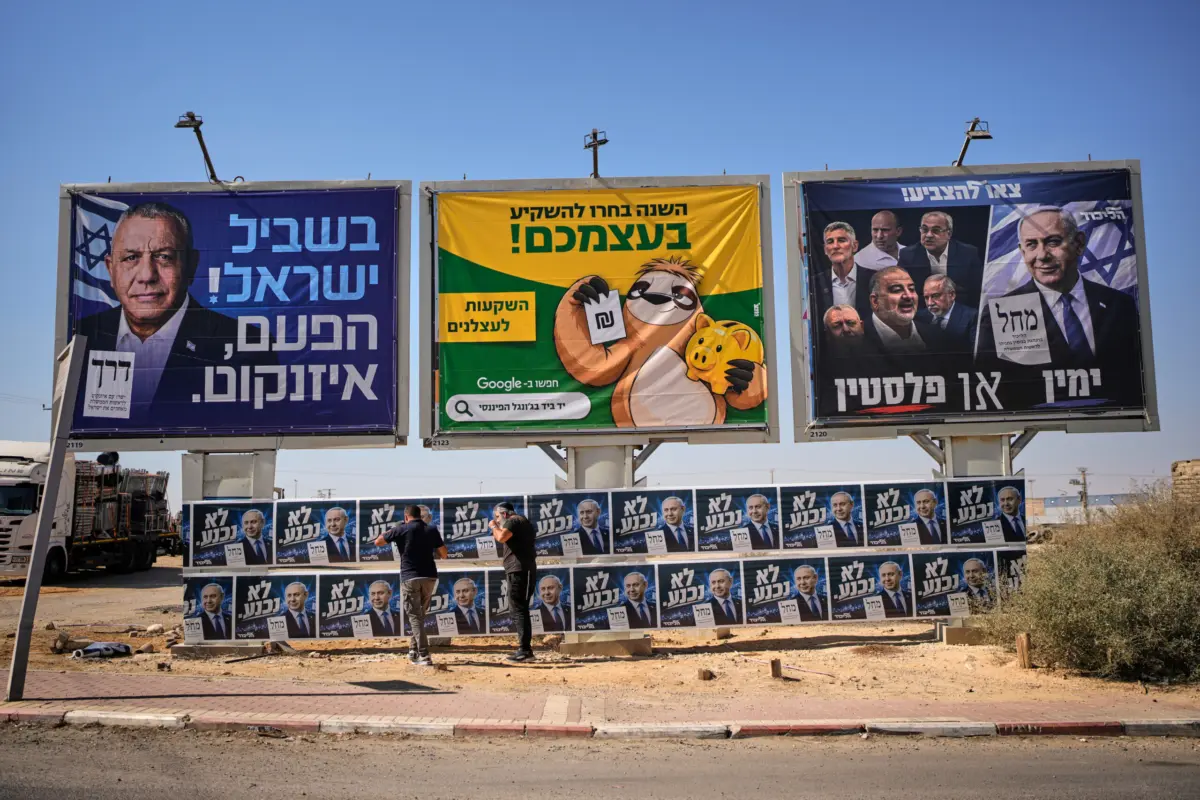
The lead-up to this election has been characterized by a fragile political landscape. Since the Hamas-led attacks three years ago, Israel has been embroiled in a multi-front conflict that has reshaped its security doctrine and strained its international alliances. Domestically, the government has faced intense scrutiny over its handling of the war, the failure to secure the return of all hostages, and a controversial judicial reform agenda that brought hundreds of thousands of citizens into the streets in 2023. As the polls open, the central question remains whether Netanyahu’s right-wing, religious-nationalist bloc can withstand the challenge posed by a newly unified opposition.
A Chronology of Crisis: The Path to the 2026 Vote
The road to the 2026 election began in the aftermath of the November 2022 elections, which saw Netanyahu return to power at the head of the most right-wing coalition in Israel’s history. However, the stability of this government was immediately tested by mass protests against proposed judicial overhauls. This internal discord was abruptly eclipsed on October 7, 2023, by the deadliest attack in Israel’s history, which triggered a massive military response in Gaza and subsequent operations in the West Bank, Lebanon, and beyond.
By 2024, the "emergency unity" atmosphere that briefly consolidated the political class began to fray. Disagreements over the "day after" plan for Gaza and the management of the northern border led to the departure of centrist figures like Benny Gantz from the war cabinet. The most significant blow to the coalition’s stability occurred in 2025, when the long-standing debate over Ultra-Orthodox (Haredi) conscription reached a boiling point. For decades, Haredi men had been largely exempt from military service, but a Supreme Court ruling and public pressure from secular and nationalist sectors forced the issue. When the government failed to pass a compromise bill that satisfied his Ultra-Orthodox partners, Shas and United Torah Judaism briefly withdrew their support, signaling the beginning of the end for the 37th government.
In September 2026, realizing the opportunity to unseat the Prime Minister, four major opposition parties signed a historic non-aggression pact. This alliance, comprising the Yashar party, the Democrats, Yisrael Beytenu, and the Together alliance, vowed to coordinate their campaigns and avoid the infighting that had plagued previous attempts to challenge Netanyahu.
The Parliamentary Arithmetic: A Divided Knesset
Israel’s electoral system is based on nationwide proportional representation. Voters cast ballots for a party list rather than individual candidates, and seats are distributed according to the percentage of the total vote each party receives, provided they cross the 3.25 percent threshold. This system ensures a diverse range of voices in the Knesset but also guarantees that no single party can achieve the 61-seat majority required to govern alone.
Current polling data suggests a razor-thin margin between the two primary blocs. The opposition alliance is projected to capture approximately 52 seats, while Netanyahu’s religious-nationalist bloc is expected to secure 50. This leaves a crucial 18 seats distributed among smaller, unaligned parties, most notably the Palestinian-led factions. The Joint List and Ra’am (the United Arab List) are projected to hold 13 seats between them, effectively positioning them as the "kingmakers" of the 2026 election. This dynamic is particularly significant given that Palestinian citizens of Israel make up roughly 20 percent of the population and are increasingly demanding a seat at the table to address domestic issues such as organized crime and housing discrimination.
Eight Potential Scenarios for the Next Government
Given the complexity of the polling data and the historical volatility of Israeli coalitions, several outcomes are possible following the October 27 vote.
1. Netanyahu’s Resurgent Coalition
Despite trailing in the polls, Benjamin Netanyahu has a storied history of outmaneuvering his rivals during post-election negotiations. If his Likud party can maintain its position as the largest single faction, Netanyahu will likely receive the first mandate from President Isaac Herzog to form a government. To reach 61 seats, he would need to reconcile with his former Ultra-Orthodox partners and maintain the support of the far-right elements led by Itamar Ben-Gvir and Bezalel Smotrich.
2. An Opposition-Led Majority
The opposition bloc, spearheaded by former army chief Gadi Eisenkot and former Prime Ministers Naftali Bennett and Yair Lapid, aims to form a government centered on "national healing." Their platform focuses on drafting a formal constitution, resolving the conscription crisis, and restoring diplomatic ties that have been strained during the war. However, the challenge for this bloc is agreeing on a single leader, with Eisenkot currently viewed as the most palatable candidate for a broad spectrum of voters.

3. The Ra’am Factor
Mansour Abbas, leader of the Ra’am party, has expressed a willingness to join a coalition if it guarantees significant investment in Palestinian-Israeli communities. Having previously served in the Bennett-Lapid government in 2021, Abbas has proven that an Arab-led party can participate in the executive branch. While many in the right-wing bloc reject such a partnership, the opposition may find it a mathematical necessity, provided they can overcome internal resistance to the idea.
4. A Minority Government with External Support
If neither bloc can reach 61 seats, a minority government could be formed. In this scenario, a coalition of perhaps 55 or 56 seats would govern while relying on "outside support" from parties like the Joint List. These parties would not hold ministerial positions but would agree to vote with the government on key budget and confidence motions in exchange for specific policy concessions.
5. A National Unity Government
In times of extreme national emergency, Israel has turned to "National Unity" governments. This would involve Likud and the main opposition parties putting aside their differences to govern together. While Netanyahu and Gantz attempted this in 2020, the partnership ended in acrimony. However, if the regional security situation worsens or the economy faces a total collapse, the public may demand such an arrangement to ensure stability.
6. The Rotating Premiership
Power-sharing agreements involving a rotating prime ministership have become a feature of Israeli politics. Under such a deal, two leaders—for example, Gadi Eisenkot and Naftali Bennett—would each serve two years as Prime Minister. This mechanism is designed to build trust between disparate parties but often leads to "parity governments" where each side holds a veto over the other, frequently resulting in legislative gridlock.
7. Leadership Change Within the Blocs
There is a possibility that negotiations will stall because certain parties refuse to sit in a government led by Netanyahu. If the Likud party believes it is being kept out of power solely because of its leader, internal pressure could mount for Netanyahu to step aside in favor of a different Likud member who could more easily form a coalition with the centrist parties.
8. Political Deadlock and New Elections
The most disruptive outcome would be a failure by any leader to form a coalition, leading to a repeat of the 2019–2022 cycle where Israel held five elections in quick succession. In this event, Netanyahu would remain as caretaker Prime Minister, a role that limits the government’s ability to pass major legislation or budgets, further exacerbating the country’s economic and social challenges.
Economic and Regional Implications
The stakes of the 2026 election extend far beyond the halls of the Knesset. The Israeli economy, once lauded for its high-tech resilience, has faced significant headwinds. The cost of the multi-year war has led to increased taxes, a ballooning deficit, and credit rating downgrades by major global agencies. Investors are watching the election closely, seeking a government that can provide a stable fiscal path and address the labor shortages caused by prolonged reserve duty.
Regionally, the outcome will dictate Israel’s approach to the "Abraham Accords" and potential normalization with Saudi Arabia. A right-wing government may prioritize territorial interests in the West Bank, potentially stalling diplomatic breakthroughs, whereas an opposition-led government might be more inclined to engage with international initiatives for a two-state solution or at least a revamped Palestinian Authority.
Conclusion: A Nation at a Crossroads
As Israelis prepare to cast their ballots, the atmosphere is one of exhaustion mixed with a profound sense of urgency. The 2026 election is not just about political preference; it is about the fundamental management of the state’s security, its social contract regarding military service, and its standing in the international community. Whether Benjamin Netanyahu can once again secure his position or if a new generation of leaders will take the helm remains to be seen. What is certain is that the results of October 27 will resonate for decades, defining the character of the State of Israel in the post-October 7 era.
