

In fiscal year 2025, a notable trend emerged within the United States’ largest banks: a substantial increase in Chief Executive Officer (CEO) compensation, primarily fueled by significant one-time awards (OTAs). These awards, granted for a variety of reasons including retention, leadership continuity, and in some cases, transaction-related considerations, have dramatically altered the compensation landscape for top executives. An analysis of 19 S&P 500 banks reveals that while average CEO compensation experienced a significant uptick, median compensation remained relatively stable, underscoring the concentrated impact of these exceptional grants. This report delves into the escalating use and valuation of OTAs in the banking sector, their profound effect on reported CEO remuneration, and the intricate dynamics they introduce into peer benchmarking practices.
One-Time Awards Emerge as a Sector-Wide Phenomenon
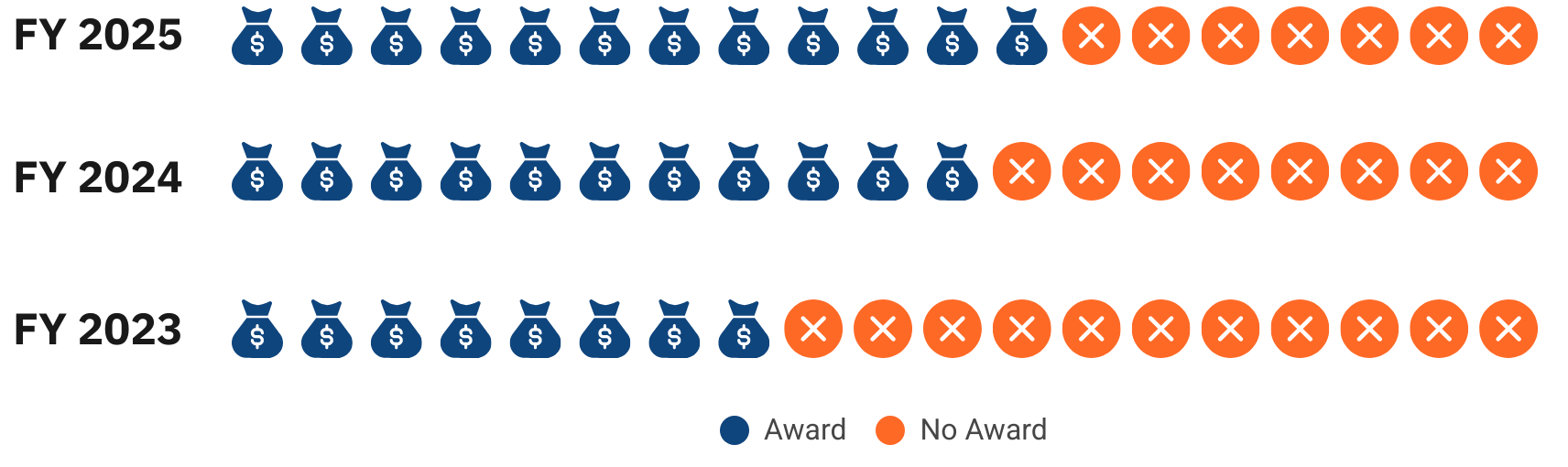
The adoption of one-time awards within the banking industry has witnessed a marked expansion over the recent review period. In fiscal year 2023, eight of the surveyed S&P 500 banks reported granting at least one OTA. This figure escalated to twelve banks in fiscal year 2025, signaling a growing reliance on these incentives.
Figure 2: Evolution of One-Time Award Granting by S&P 500 Banks (FY 2023-FY 2025)

(Visual representation of the increase in the number of banks granting OTAs)
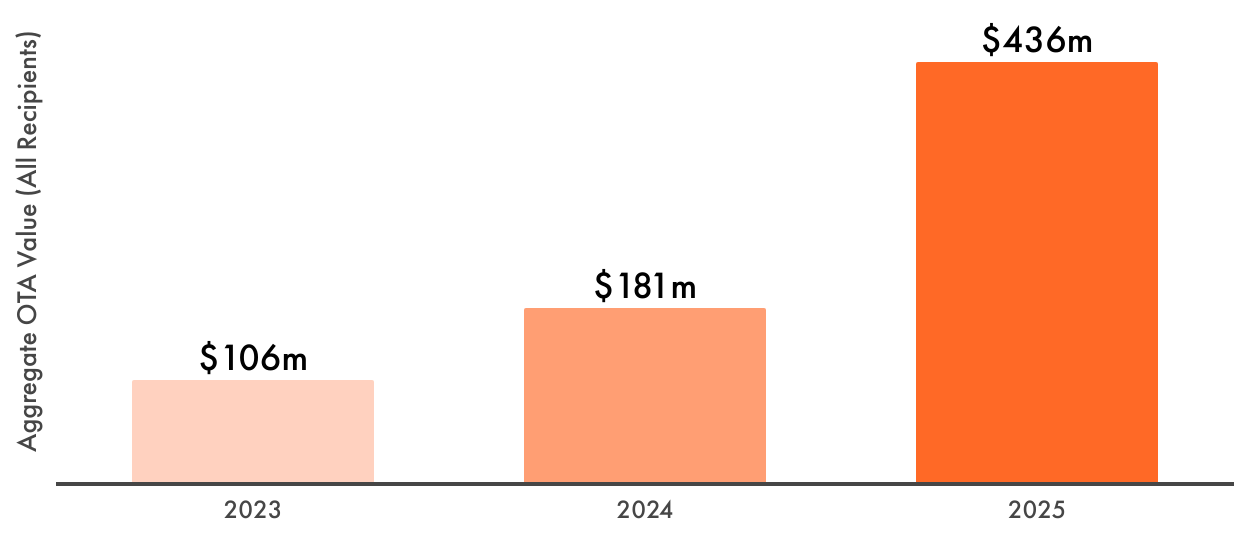
The implications of this trend extend far beyond the sheer number of awards. The aggregate value of these one-time awards across all recorded recipients surged from just over $100 million in FY 2023 to an impressive sum exceeding $430 million in FY 2025. This represents a staggering increase of approximately 311%, highlighting the substantial financial commitment banks are making through these exceptional grants.
Figure 3: Dramatic Growth in Aggregate CEO One-Time Award Value in S&P 500 Banks (FY 2023-FY 2025)
(Visual representation of the significant rise in total OTA value)
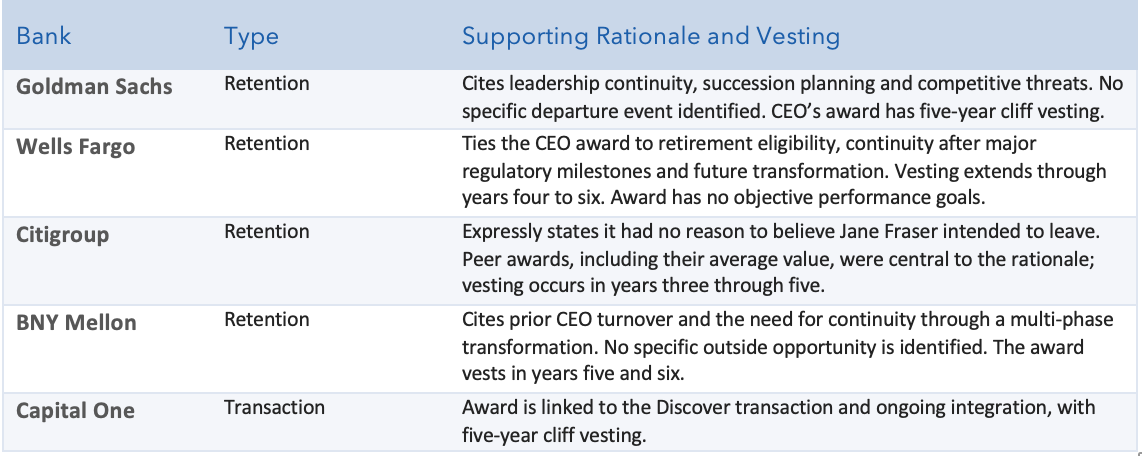
A closer examination of the FY 2025 data reveals a considerable concentration of these awards. Five prominent institutions – Goldman Sachs, Wells Fargo, Citigroup, BNY Mellon, and Capital One – accounted for nearly 87% of the recorded FY 2025 OTA value, totaling approximately $379 million. It is important to note the nuances within these figures. While Capital One’s total incorporates various award types, including sign-on and transactional bonuses, the awards at the other four institutions were predominantly focused on retention. This distinction is critical, as it suggests that while the data points to a broader trend of exceptional awards influencing compensation, the underlying governance concerns and motivations behind each award may differ.
Table 1: Rationale and Vesting Structures for FY 2025 One-Time Awards at Major S&P 500 Banks
(Detailed breakdown of award types, reasons, and vesting schedules for the top five banks)
Goldman Sachs provides a compelling example of how these awards can extend beyond the CEO. In January 2025, the firm granted restricted stock units (RSUs) valued at $80 million each to both CEO David Solomon and president and COO John Waldron. These awards were structured with a five-year cliff vesting period and were publicly framed by the board as measures to ensure leadership continuity and support succession planning. While the aggregate grant value for these two executives reached $160 million, only Mr. Solomon’s award is directly factored into the CEO-specific compensation comparisons discussed later.
The surge in one-time awards within the banking sector mirrors a wider trend across the broader S&P 500. Research covering the 2026 proxy season indicated that S&P 500 companies collectively granted approximately $2.7 billion in one-time awards, a 40.8% increase compared to the previous year. The average value of these individual awards also rose by 22.7% to roughly $3.7 million. While the average value of sign-on awards saw a slight decrease, most other categories of one-time awards experienced growth, largely influenced by the impact of exceptionally high-value awards at the upper echelon of executive compensation.
One-Time Awards Are the Primary Driver of CEO Pay Increases
At the heart of the significant year-over-year compensation increases for CEOs at the five highlighted banking institutions lies the substantial impact of these one-time awards. In each of these cases, the CEO-specific OTA constituted approximately 83% to 93% of the total year-over-year increase in reported compensation. While this comparison does not represent a precise breakdown of figures as reported in the Summary Compensation Table, it vividly illustrates the profound influence these exceptional grants had on shaping the overall FY 2025 pay packages.
Figure 4: CEO Compensation Trends and CEO-Specific One-Time Awards at Major S&P 500 Banks (FY 2024-FY 2025)
(Visual comparison of total CEO pay increases and the proportion attributed to OTAs)
This pattern serves a crucial function: it helps to delineate the underlying, regular executive compensation program from the headline figures that are heavily influenced by extraordinary awards. Without the inclusion of these special grants, the FY 2025 compensation figures would have remained considerably closer to the compensation levels observed in the preceding year, painting a much more modest picture of executive pay growth.
Furthermore, the disclosures within these company filings reveal a concerning pattern of circular benchmarking. Citigroup, for instance, explicitly cited the prevalence and average value of recent special CEO awards granted by its principal peers as a justification for its own executive compensation decisions. Similarly, Wells Fargo and BNY Mellon referenced broader compensation developments within their peer groups, while Goldman Sachs pointed to competitive market pressures. This creates a self-perpetuating cycle where an exceptional award, once recognized in peer data, can serve as a precedent or justification for the next exceptional award, potentially inflating benchmarks even when the underlying need for retention or incentivization is not demonstrably urgent.
Citigroup’s FY 2025 award provides a particularly transparent illustration of this cyclical dynamic. The company disclosed that approximately 80% of its principal peers had granted special CEO awards within the preceding four years, with an average award value around $60.65 million. Following this disclosure, Citigroup approved an award with a target value of $60 million. While this may not indicate a purely mechanical decision, the near parity between the peer average and Citigroup’s approved award is difficult to overlook. A practice initially presented as an exceptional measure can gradually become normalized once a sufficient number of peers adopt similar practices.
Investor Perspective and Broader Implications: Voting Results Offer Insight
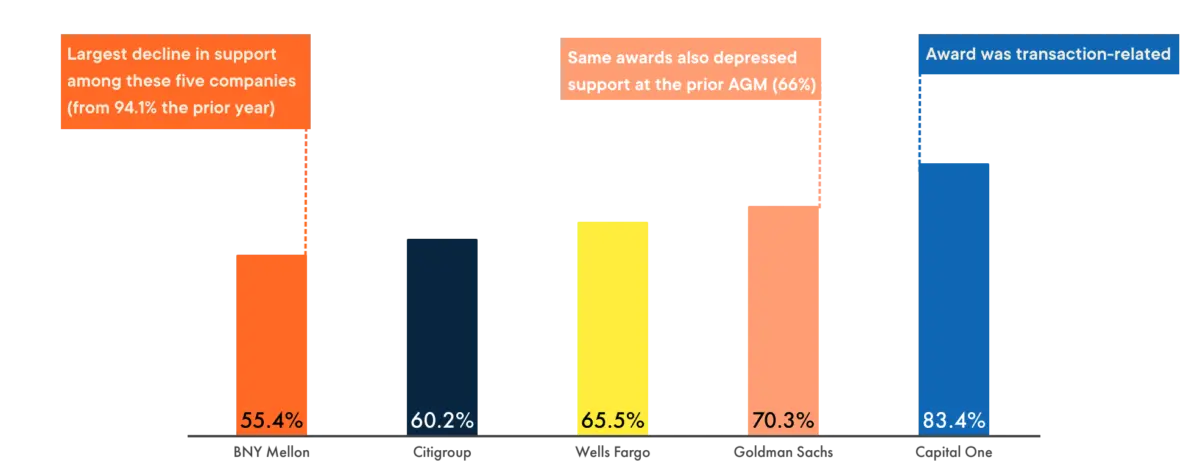
While "say-on-pay" proposals typically encompass the entirety of an executive compensation program rather than focusing on a single award, the voting results from 2026 provide a clear indication of investor sentiment regarding these bank-specific one-time awards. Support for these proposals ranged significantly, from approximately 55% at BNY Mellon to a more robust 83% at Capital One. These figures stand in contrast to the median S&P 500 support of approximately 93.5% for the period between January and June 2026, underscoring a heightened level of investor scrutiny directed at the banking sector’s executive pay practices.
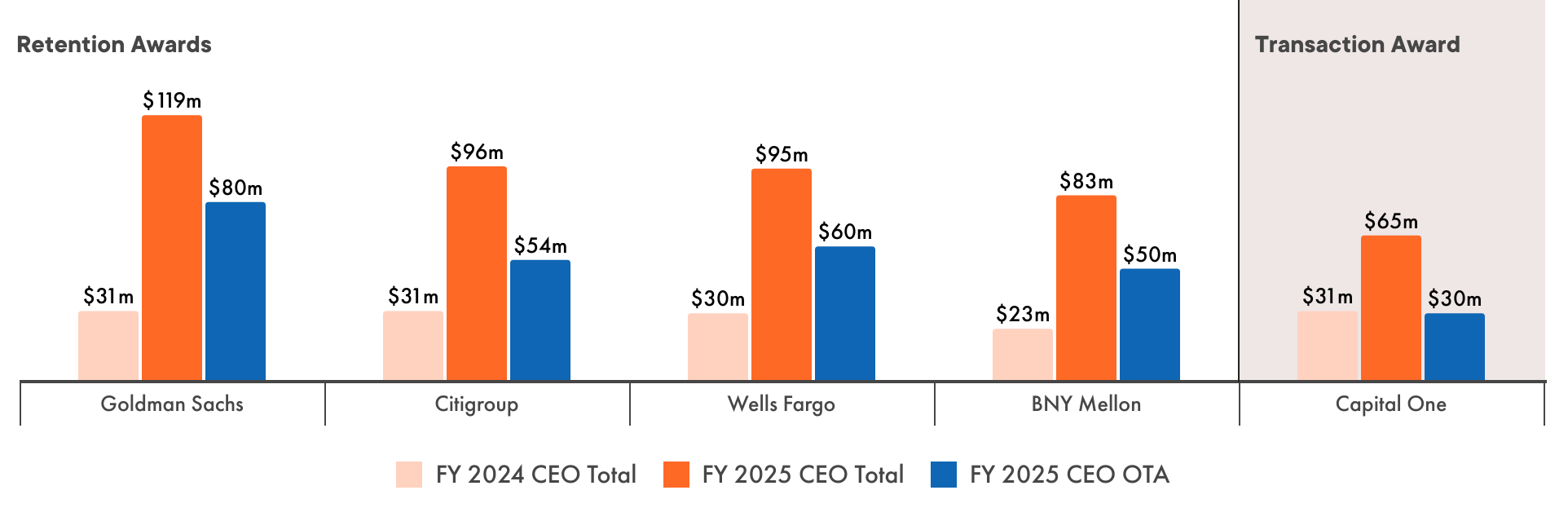
Figure 5: Say-on-Pay Support Levels for S&P 500 Banks with Significant FY 2025 One-Time Awards
(Visual representation of say-on-pay voting results for the surveyed banks)
Citigroup, Wells Fargo, and BNY Mellon each registered support levels below 66%, while Goldman Sachs received approximately 70% approval. Capital One, which garnered the strongest support among the five institutions, still fell below the broader S&P 500 median at roughly 83%. This suggests that investors may have differentiated between an award directly tied to a clearly defined transaction and integration period, as was the case with Capital One, and those awards based primarily on more generalized retention concerns. The four retention-focused awards, in contrast, each received shareholder support of approximately 70% or less.
These results do not necessarily indicate a blanket opposition to one-time awards among investors. Across the S&P 500, the increase in one-time awards has not, on its own, led to a corresponding decline in overall say-on-pay support. Rather, the voting outcomes within the banking sector suggest that investor scrutiny intensifies when award values are exceptionally large, when the evidence of an immediate retention threat is limited, or when the awards lack clearly defined and objective performance conditions. This points towards a more nuanced investor perspective, where the justification, transparency, and performance linkage of substantial one-time awards are critical factors in their approval. The implications for the banking sector are clear: while OTAs may serve as a tool for executive compensation, their design and communication must be carefully considered to align with investor expectations and maintain strong corporate governance.
