

Across the road from the Toronto Zoo, in a low, nondescript industrial building that remains invisible to the thousands of families visiting the wildlife park each year, a quiet revolution in energy production is taking place. Here, elephant dung and expired grocery store produce are no longer viewed as waste; instead, they are the primary fuel for a sophisticated biogas facility that converts organic matter into clean, renewable electricity. This facility, operated by the ZooShare Biogas Co-operative, represents a shift in the Canadian energy paradigm—a move away from centralized, utility-owned infrastructure toward localized, community-financed systems that prioritize environmental stewardship and democratic ownership over pure profit extraction.
The ZooShare project was born out of a dual necessity: the Toronto Zoo’s desire to divert animal and food waste from landfills and the community’s drive to participate in the green energy transition. When the co-operative was formed in 2011, its founders faced a common hurdle for small-scale green projects—a lack of capital. Traditional financial institutions often view small, innovative energy projects as too risky or too small to warrant the administrative costs of a loan. In response, ZooShare turned to its neighbors, pioneering the use of community bonds to fund the construction of its anaerobic digesters. This model has since become a lighthouse for similar initiatives across the country, proving that when the financial system fails to support local energy, the community can step in to fill the void.
The Genesis of ZooShare and the Rise of Community Bonds
The financial journey of ZooShare began in earnest in 2013 when the co-operative launched its first round of community bond sales. A community bond is a debt instrument that functions similarly to a traditional bond but is issued by a non-profit or co-operative. It allows residents to lend money directly to a project within their own community, with the promise of being repaid with interest over a fixed term. For ZooShare, the first raise was a resounding success, with approximately 300 individuals contributing a total of $2.2 million.
By the time the third round of financing concluded, total bond financing had exceeded $4 million. According to Rob Grand, ZooShare’s general manager, the motivation for these investors is rarely purely financial. While the bonds offer competitive interest rates, the primary driver is the alignment of capital with personal values. The co-operative now boasts approximately 800 members, each holding a vote in the organization’s governance for a nominal membership fee of $10. This model ensures that the facility remains accountable to the people who live near it and benefit from it.
The plant finally came online in April 2021 after two years of construction. Today, it processes 15,000 tonnes of organic waste annually. Through the process of anaerobic digestion—where microorganisms break down biodegradable material in the absence of oxygen—the facility produces biogas. This gas is then burned to generate electricity, providing enough power to sustain roughly 250 average Toronto households. Furthermore, the solid byproduct of this process is a high-quality fertilizer, certified by the Canadian Food Inspection Agency, which is distributed to farmers in the nearby Rouge Valley, completing a circular economy loop.
Addressing the Methane Crisis and Federal Targets
The proliferation of projects like ZooShare is not merely a matter of local pride; it is a critical component of Canada’s broader climate strategy. Under the Paris Agreement and subsequent domestic legislation, Canada has committed to reducing its greenhouse gas emissions by 40% to 45% below 2005 levels by the year 2030. A significant portion of this challenge lies in the management of organic waste.
Municipal landfills are currently responsible for roughly 23% of Canada’s methane emissions. Methane is a potent greenhouse gas, possessing a global warming potential approximately 86 times greater than carbon dioxide over a 20-year period. While many large landfills employ gas-capture systems, the federal government has acknowledged that these measures alone are insufficient to meet the target of a 50% reduction in landfill methane by 2030. Small-scale anaerobic digesters, which intercept organic waste before it ever reaches a landfill, are increasingly seen as the missing piece of the puzzle. By converting methane-producing waste into a usable energy source, these facilities turn a significant environmental liability into a localized asset.
Indigenous Leadership and the Decentralization of Power
While ZooShare serves as a urban model for community financing, the most significant growth in localized energy systems is occurring in Indigenous communities across Canada. In many remote regions, communities have historically been disconnected from the provincial electricity grids, forcing them to rely on expensive, polluting diesel generators for heat and power.
In northwestern Ontario, the Kiashke Zaaging Anishinaabek (Gull Bay First Nation) has set a precedent for energy sovereignty. In 2019, in partnership with Ontario Power Generation, the community inaugurated a solar-and-battery microgrid. Unlike many previous arrangements where external developers owned the assets, the Kiashke Zaaging Anishinaabek own this microgrid outright. The system is designed to offset approximately 130,000 liters of diesel fuel annually, reducing both carbon emissions and the logistical risks associated with transporting fuel to remote locations.
Similarly, the Sayisi Dene First Nation at Tadoule Lake, Manitoba, is currently transitioning toward a renewable future. In June 2026, the federal government committed $21.6 million to help the community build Manitoba’s first integrated renewable microgrid. Expected to be operational by the fall of 2026, the project is projected to reduce carbon dioxide emissions by 500 tonnes every year.
These projects highlight a crucial distinction in the world of community energy. Julie MacArthur, Canada Research Chair in Reimagining Capitalism at Royal Roads University, points out that there is a significant difference between a project located in a community and one that is owned and led by a community. While some projects are backed by private developers who offer "benefits agreements" to locals, the true shift in power—both literal and figurative—occurs when communities hold the majority equity and governing authority.
The Technology of Resilience: Microgrids and "Islanding"
The technical backbone of these community systems is the microgrid—a local energy grid with control capability, which allows it to disconnect from the traditional grid and operate autonomously. This ability, known as "islanding," provides unparalleled energy security.
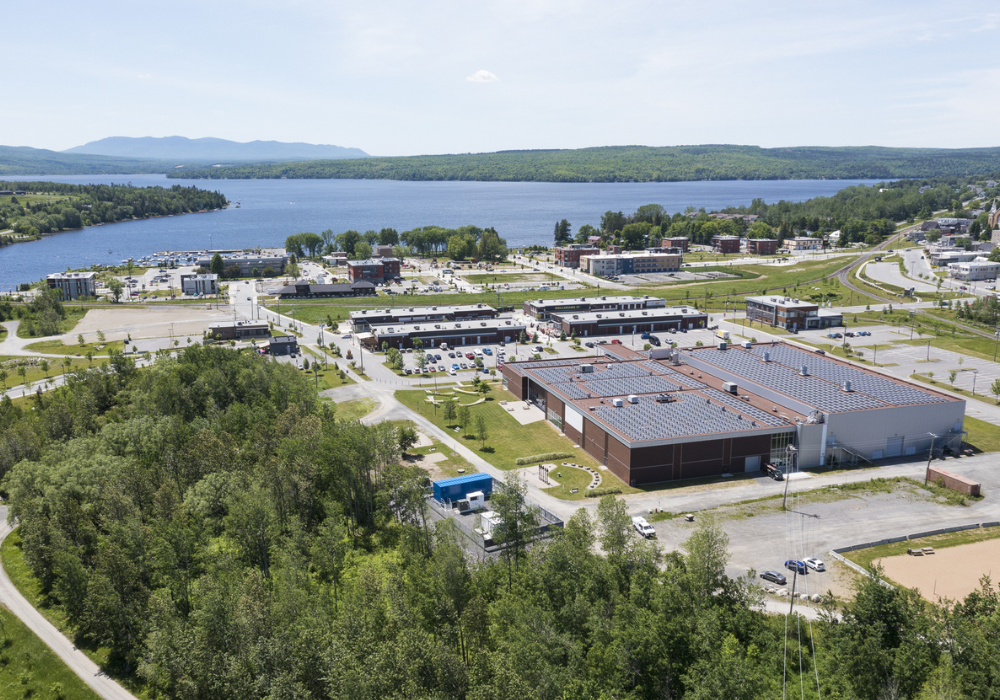
A prime example of this technology in action can be found in Lac-Mégantic, Quebec. Following the tragic 2013 oil train explosion that destroyed much of the town’s downtown core, the community rebuilt with an eye toward the future. Working with Hydro-Québec, the town implemented a microgrid capable of powering 30 buildings using a combination of solar panels and battery storage. During a wider grid failure, the Lac-Mégantic microgrid can "island" itself, ensuring that essential services and residences remain powered. Hydro-Québec is currently utilizing the Lac-Mégantic project as a living laboratory to determine if similar models can be deployed to replace diesel dependency in other remote Quebecois communities.
Overcoming the Information Gap and Scaling Blended Finance
Despite the success of ZooShare and various Indigenous-led microgrids, the adoption of localized energy systems in Canada remains slower than in many European counterparts. Research conducted by Basma Majerbi, an associate professor of finance at the University of Victoria and lead of the Accelerating Community Energy Transformation initiative, suggests that the primary barrier is not a lack of available money, but rather a profound information gap.
Majerbi’s research indicates that many community groups are unaware of the diverse range of financing options available to them. Often, these groups rely solely on government grants. When a grant is unavailable or insufficient, the project frequently stalls. To address this, Majerbi launched the Community Energy Finance Navigator in May 2026. This pilot database tracks the financing, ownership, and structural details of nearly 90 community energy projects across Canada, providing a roadmap for new organizations.
The data reveals a consistent trend: successful projects almost never rely on a single source of funding. Instead, they utilize a "capital stack"—a strategic layering of grants, low-interest loans, community bonds, co-op equity, and private partnerships. Majerbi argues that the next stage of Canada’s energy transition must involve "blended finance," where public and philanthropic funds are used to de-risk projects, thereby unlocking significantly larger amounts of private and community capital.
The Implications of Energy Democracy
The shift toward community-funded and community-owned energy represents more than just a change in how we generate kilowatt-hours. It is an exercise in energy democracy. By moving away from the traditional model of large-scale, centralized utilities—which are often focused on maximizing shareholder wealth—communities are reclaiming control over a fundamental necessity of modern life.
As Rob Grand of ZooShare notes, the model is about making energy "equitable and democratic." When residents are investors, they become emotionally and civically engaged in the success of the infrastructure. They attend annual meetings, they demand transparency, and they see the direct correlation between their investments and the health of their local environment.
The path forward for Canada involves moving beyond the "pilot project" phase. As the Community Energy Finance Navigator scales into a national initiative, and as more communities look toward ZooShare and Gull Bay as proof of concept, the potential for a decentralized energy grid grows. The transition to a net-zero economy will require massive investment, but as the residents of Toronto and the members of the Sayisi Dene First Nation have shown, that investment doesn’t always have to come from a skyscraper in a financial district. Sometimes, it starts with a $10 membership and a shared vision of turning waste into light.
