


A New Paradigm in Fusion Technology
The $6.2 million capital injection, led by Azolla Ventures, marks a significant milestone for CHI as it transitions from theoretical research to physical hardware implementation. The company was founded by a team of prominent scientists and entrepreneurs, including CEO Dr. Yun Kai, Raffi Freeman, Professor Keith Nelson, and Dr. Steve Kooi. Their collective vision centers on a fundamental shift in how fusion reactions are triggered and managed.
Unlike the massive facilities currently dominating the fusion landscape—such as the International Thermonuclear Experimental Reactor (ITER) in France or the National Ignition Facility (NIF) in California—CHI’s technology is designed to be modular and compact. While traditional laser-based fusion systems often require buildings the size of three football fields and billions of dollars in investment, CHI’s prototype is approximately the size of two dinner tables.
The core of CHI’s innovation lies in its proprietary advances in shockwave science. The company claims its technology achieves a compression efficiency 400 times higher than previous laser-based fusion approaches. This efficiency allows the system to reach extreme physical states using only tens of millijoules of energy. Specifically, the company’s prototype has already demonstrated the ability to achieve pressures of 350 gigapascals—conditions equivalent to the pressure at the center of the Earth—within a benchtop environment.
The Strategic Importance of Tritium Production
While the ultimate goal of any fusion company is the generation of net-zero electricity, Cambridge Heavy Industries has identified a critical, high-value intermediate market: the production of tritium. Tritium is a rare radioactive isotope of hydrogen that serves as a primary fuel source for most fusion reactor designs currently under development.
The global supply of tritium is currently under severe strain. It is primarily produced as a byproduct in heavy-water nuclear reactors (such as the CANDU reactors in Canada), many of which are scheduled for decommissioning in the coming decade. This looming "tritium window" has created a supply-demand imbalance that has driven the price of the isotope to approximately $33 million per kilogram.
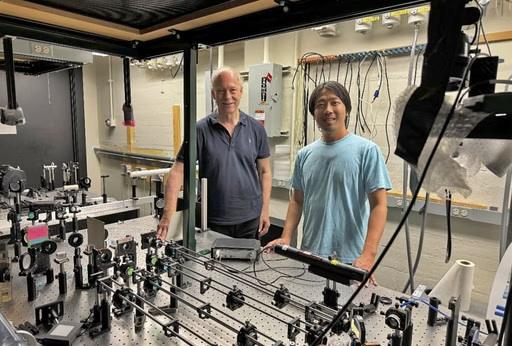
By focusing its initial commercial systems on tritium production, CHI addresses a major bottleneck in the fusion industry. "Fusion power leaders have a tritium supply problem that could significantly slow down the sector’s growth," noted Dr. Yun Kai, co-founder and CEO of Cambridge Heavy Industries. "Our technology is in the unique position to solve this challenge."
Beyond tritium, the company’s compact reactors can serve as high-intensity neutron sources. These have immediate applications in material science, specifically in material defect engineering and high-resolution neutron imaging, which are used to inspect the internal structures of complex components in the aerospace and defense industries.
Chronology of Development and Future Milestones
The journey of Cambridge Heavy Industries began within the laboratories of MIT, a prolific breeding ground for fusion startups, including the well-funded Commonwealth Fusion Systems (CFS). While CFS focuses on magnetic confinement fusion using high-temperature superconductors, the founders of CHI saw an opportunity to rethink inertial confinement fusion (ICF).
Following its official launch in 2025, the company spent its first year in "stealth mode," refining its shockwave compression algorithms and testing its benchtop prototypes. The emergence from stealth in late 2026 coincides with the successful completion of the seed round, which provides the necessary runway to scale operations.
The newly raised capital is earmarked for several key objectives:
- Facility Expansion: The company will build its first fully integrated compact fusion reactor at its facility in Massachusetts.
- Equipment Procurement: A significant portion of the funds will go toward the purchase of high-specification, ultrafast lasers and specialized optical components.
- Diagnostic Systems: The team will implement advanced neutron diagnostics to accurately measure the yields of their fusion reactions.
- Human Capital: CHI plans to expand its engineering and physics teams to accelerate the transition from prototype to commercial pilot.
Investor Confidence and Market Context
The seed round saw participation from a diverse group of investors, including Azolla Ventures, Overlay, the Mass Clean Energy Center, the Neta Foundation, the Rothrock family, and P3A. The involvement of the Mass Clean Energy Center highlights the regional commitment to maintaining Massachusetts’ status as a global hub for fusion innovation.

Matthew Nordan, co-founder and General Partner of Azolla Ventures, emphasized the importance of CHI’s agile development model. "Cambridge Heavy Industries’ technology can be demonstrated on a benchtop and assembled in days using standard optical components," Nordan said. "The same rapid test/fail/fix model is what brought us modern space and defense technologies; we see it as a promising approach to make fusion viable."
This "agile" approach is a departure from the "Big Science" model that has governed fusion research for 70 years. By enabling weekly testing cycles rather than yearly ones, CHI can iterate its designs at a pace more common in software development than in nuclear physics. This speed is viewed by investors as a crucial factor in de-risking the technology and attracting further Series A and B funding.
Broader Implications for the Global Energy Transition
The success of Cambridge Heavy Industries reflects a broader trend in the energy transition: the miniaturization and decentralization of power sources. As the world seeks to decarbonize the global economy by 2050, the limitations of wind and solar—specifically their intermittency and land-use requirements—have led to a resurgence of interest in nuclear and fusion technologies.
Fusion energy offers the promise of near-limitless, carbon-free baseload power with no risk of meltdowns and minimal long-lived radioactive waste. However, the high cost of entry has historically limited fusion to government-backed projects. If CHI can prove that fusion can be achieved at the "benchtop" scale, it could democratize access to the technology, allowing for localized power generation and industrial-scale isotope production.
Furthermore, the ability to manufacture tritium locally could decouple the fusion industry from the aging fleet of conventional nuclear reactors. This would create a self-sustaining ecosystem where fusion reactors produce the very fuel needed to start up subsequent generations of plants.
Challenges and Technical Hurdles
Despite the optimism surrounding the seed round, Cambridge Heavy Industries faces significant technical and regulatory challenges. Achieving 350 gigapascals of pressure is a monumental feat, but sustaining that pressure long enough to achieve "ignition"—where the energy produced by the fusion reaction exceeds the energy used to trigger it—remains the ultimate hurdle.

Moreover, the transition from producing isotopes like tritium to generating grid-scale electricity requires a significant increase in energy gain and the development of robust heat-exchange systems. The company must also navigate a complex regulatory landscape for nuclear-related technologies, even though fusion does not involve the fissile materials used in traditional nuclear plants.
However, by positioning itself as a supplier to the broader fusion industry through tritium production, CHI creates a revenue stream that can sustain the company through the long-term R&D required for energy generation. This "dual-track" business model—selling high-value isotopes while developing power technology—is increasingly seen as the most viable path for fusion startups.
As Cambridge Heavy Industries begins construction on its first compact reactor in Massachusetts, the fusion community will be watching closely. If the company’s "benchtop" approach succeeds, it could mark the beginning of a new era where fusion is no longer a distant dream, but a modular, scalable reality.
