

Across the road from the Toronto Zoo, housed within a low, nondescript industrial building that remains largely unnoticed by the thousands of tourists visiting the nearby wildlife exhibits, a quiet revolution in energy production is taking place. Here, elephant dung and unsold grocery-store produce are systematically converted into clean electricity. This facility, operated by the ZooShare Biogas Co-operative, represents a significant shift in how Canadian communities are approaching waste management and energy sovereignty. The plant exists because the Toronto Zoo, which owns the land leased by ZooShare, sought a sustainable alternative to sending tons of animal and food waste to municipal landfills. However, when the co-operative was formed in 2011, the primary hurdle was not technological, but financial. Lacking the massive capital required to build a sophisticated biogas plant, ZooShare’s founders turned to a then-novel concept: community bonds.
Beginning in 2013, ZooShare began issuing community bonds—a debt instrument that allows private citizens to lend money directly to local projects in exchange for a fixed interest rate over a set term. Unlike traditional investment vehicles managed by distant financial institutions, these bonds allowed Toronto residents to invest in their own backyard. The initial fundraising effort attracted approximately 300 investors who contributed $2.2 million. Subsequent rounds brought the total bond financing to over $4 million, enabling the construction of a facility that now serves as a blueprint for community-led infrastructure across the country.
The Mechanics of Community Financing
The success of ZooShare highlights a growing trend in "distributed infrastructure"—small-scale energy systems such as biogas plants and microgrids that are often deemed too small or too unconventional for traditional commercial banks. Rob Grand, ZooShare’s general manager, notes that for many of the co-op’s 800 members, the motivation is as much ethical as it is financial. While the bonds offer a return, the primary driver is the alignment of investment portfolios with personal values. Membership in the co-operative costs a nominal $10, granting each member a vote in the election of the board of directors and ensuring a democratic governance structure.
This model of ownership is a deliberate departure from the traditional utility framework. By bypassing large-scale corporate energy providers, communities can ensure that the economic benefits of energy production remain local. The transparency of the operation further strengthens this bond; ZooShare provides quarterly performance updates and hosts open annual meetings, fostering a sense of emotional and financial stewardship among its investors.
The Environmental Mandate: Tackling Methane and Emissions
The push for localized energy systems like ZooShare is driven by urgent environmental targets. Canada has committed to reducing its greenhouse gas emissions by 40% to 45% below 2005 levels by the year 2030. A critical component of this strategy involves the mitigation of methane, a potent greenhouse gas that traps approximately 86 times more heat than carbon dioxide over a 20-year period. Municipal landfills are currently responsible for roughly 23% of Canada’s methane emissions.
To meet the federal government’s goal of a 50% reduction in landfill methane by 2030, capturing gas at existing dumps is insufficient. Small-scale anaerobic digesters, such as the one operated by ZooShare, provide a proactive solution by processing organic waste before it ever reaches a landfill. The ZooShare plant, which became fully operational in April 2021 after two years of construction, processes 15,000 tonnes of food waste and zoo manure annually. This process generates enough biogas to produce electricity for the equivalent of 250 average Toronto homes. Furthermore, the byproduct of this process—a high-quality fertilizer certified by the Canadian Food Inspection Agency—is distributed to farmers in the nearby Rouge Valley, creating a closed-loop circular economy.
A Chronology of Community Energy in Canada
The evolution of community-owned energy in Canada has followed a steady trajectory over the last fifteen years, marked by technological advancements and shifting policy landscapes:
- 2011: ZooShare Biogas Co-operative is founded with the goal of converting Toronto Zoo waste into energy.
- 2013: The first round of community bonds is launched, raising $2.2 million from local residents.
- 2013 (July): A tragic oil train explosion devastates Lac-Mégantic, Quebec, eventually leading to a reconstruction effort centered on a sustainable microgrid.
- 2019: In northwestern Ontario, the Kiashke Zaaging Anishinaabek (Gull Bay First Nation) switches on a solar-and-battery microgrid, significantly reducing the community’s reliance on diesel fuel.
- 2021 (April): The ZooShare biogas plant officially comes online, feeding electricity into the provincial grid.
- 2024–2025: Research by the University of Victoria identifies a critical "information gap" preventing the scaling of similar projects across Canada.
- May 2026: The Community Energy Finance Navigator is launched as a pilot database to track and assist in the financing of local energy projects.
- June 2026: The federal government commits $21.6 million to the Sayisi Dene First Nation in Manitoba for an integrated renewable microgrid, scheduled for completion in late 2026.
Indigenous Leadership and Remote Resilience
While ZooShare is a prominent urban example, the most significant growth in community-owned energy is occurring in Indigenous and remote communities. Julie MacArthur, Canada Research Chair in Reimagining Capitalism at Royal Roads University, points out that the majority of operating community microgrids in Canada are Indigenous-led. These projects are often born out of necessity, as many remote communities are not connected to the provincial electricity grids and have historically relied on expensive, polluting diesel generators.
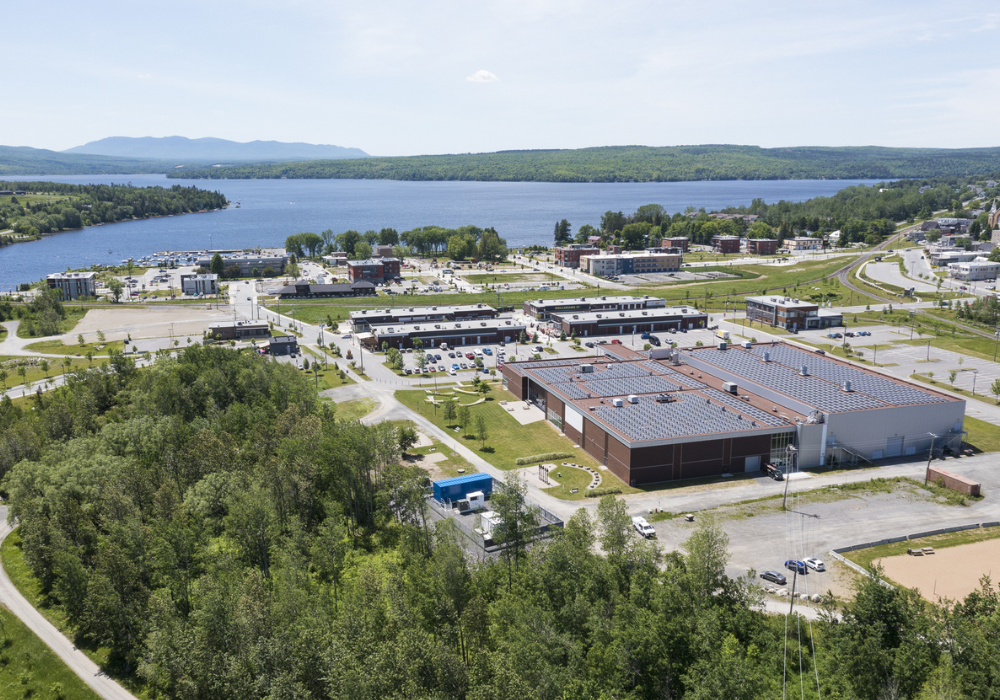
In the case of Kiashke Zaaging Anishinaabek, their solar-and-battery microgrid—owned entirely by the community—is expected to offset 130,000 litres of diesel annually. Similarly, the rebuilt downtown of Lac-Mégantic now utilizes a Hydro-Québec microgrid capable of "islanding." This allows the local grid to disconnect from the main provincial system during outages, powering 30 buildings independently through solar and battery storage.
MacArthur cautions, however, that the term "community energy" is sometimes used loosely. She distinguishes between projects that are truly owned and governed by residents—like co-ops or Indigenous-led initiatives—and those backed by private developers who merely offer "benefits agreements" to local populations. The distinction is vital for understanding where the long-term equity and decision-making power reside.
Overcoming the Information and Capital Gap
Despite the success of individual projects, Canada has yet to see the widespread proliferation of local energy systems that proponents believe is possible. Basma Majerbi, an associate professor of finance at the University of Victoria and lead researcher for the Accelerating Community Energy Transformation initiative, suggests that the primary obstacle is not a lack of available capital, but a lack of strategic information.
Majerbi’s research indicates that many community groups default to seeking government grants and cease their search once those funds are exhausted or denied. They often overlook the "capital stack"—a combination of various funding sources including community bonds, co-op equity, private partnerships, and loan guarantees. To address this, the University of Victoria launched the Community Energy Finance Navigator in May 2026. This pilot database tracks 86 projects across the country, detailing how they were financed and structured to provide a roadmap for future developers.
Majerbi argues that for these projects to scale, financing must be treated as a primary strategic consideration from the outset, rather than an afterthought once the technical parameters are defined. This "blended finance" approach—layering different types of capital to de-risk projects for more conservative lenders—is seen as the key to moving beyond one-off pilot projects toward a national standard for community energy.
Broader Impact and Future Implications
The shift toward community-financed energy has profound implications for the Canadian economy and the resilience of its national grid. As climate change increases the frequency of extreme weather events, decentralized microgrids offer a level of security that centralized systems cannot match. When a main grid fails, a community with its own generation and storage capacity can remain functional, powering essential services and emergency shelters.
From an economic development perspective, community bonds and co-operatives keep wealth within the region. Instead of energy payments flowing to multinational corporations or distant shareholders, the interest on community bonds is paid back to local residents, who then reinvest that capital into the local economy. This democratization of energy not only empowers citizens but also creates local jobs in maintenance, operation, and waste management.
As Canada moves toward its 2030 and 2050 climate targets, the lessons learned from ZooShare and Indigenous-led microgrids will be essential. The transition to a net-zero economy requires more than just large-scale wind farms and nuclear plants; it requires a patchwork of local, resilient, and community-owned solutions that turn local liabilities—like zoo manure and grocery waste—into regional assets. The success of these initiatives demonstrates that when citizens are given the tools to invest in their own infrastructure, the result is a more equitable, sustainable, and reliable energy future.
